
Last videos
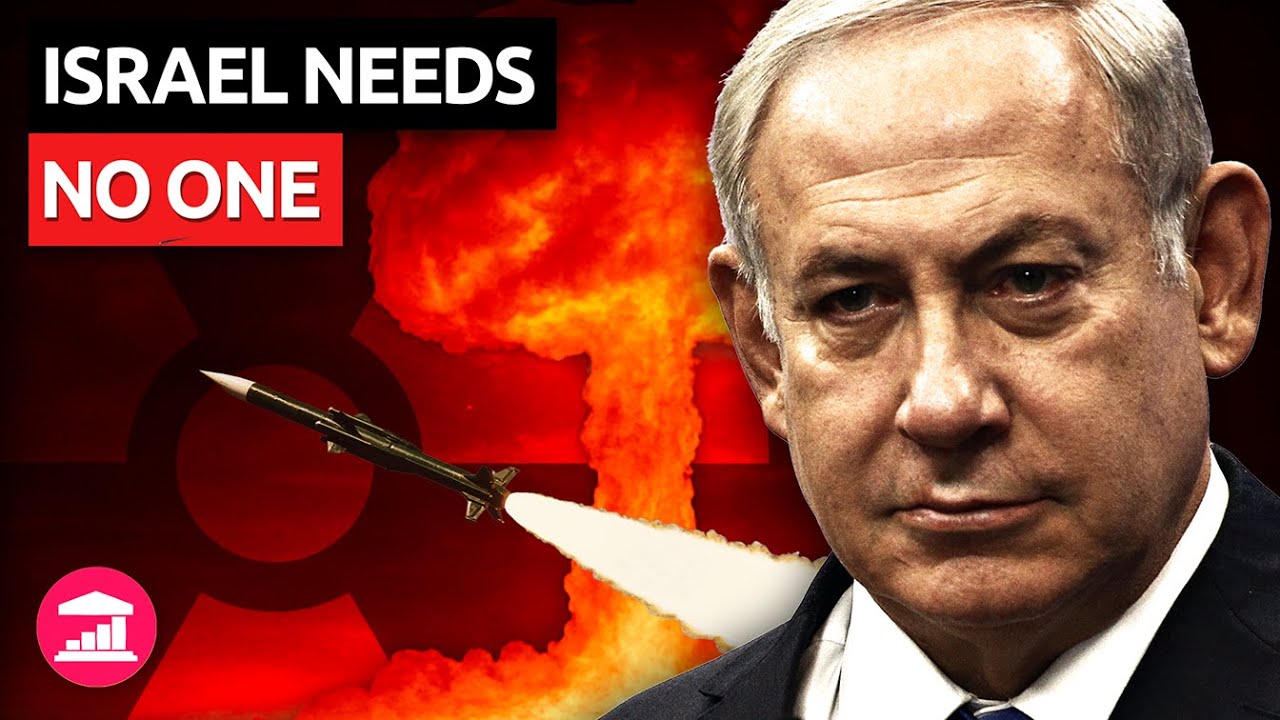
Israel's Covert Nuclear Rise
Israel’s emergence as a nuclear power is one of the most secretive and controversial developments in modern geopolitics. While the country has never officially confirmed or denied possessing nuclear weapons, it is widely believed to have developed a sophisticated nuclear arsenal. This article explores the key milestones and strategies that enabled Israel to become a nuclear power while maintaining a policy of deliberate ambiguity.The Early BeginningsThe origins of Israel’s nuclear program trace back to the 1950s, shortly after the nation’s establishment in 1948. In 1952, the Israel Atomic Energy Commission was created, led by Ernst David Bergmann, a scientist who saw nuclear weapons as essential for Israel’s survival amid regional threats. The young nation, surrounded by hostile neighbors, sought a deterrent that could ensure its security.A critical step occurred in the late 1950s when Israel began constructing the Dimona nuclear facility in the Negev desert. With significant assistance from France, which provided technology and expertise, the facility was built under a veil of secrecy. Officially labeled a "textile factory," Dimona became the heart of Israel’s nuclear ambitions. By the mid-1960s, it is believed that Israel had produced its first nuclear weapon, though no official records confirm this timeline.The Policy of Nuclear AmbiguityCentral to Israel’s strategy is its policy of "nuclear ambiguity." This approach avoids explicit confirmation or denial of nuclear weapons possession, allowing Israel to maintain deterrence without triggering an arms race or international backlash. Israeli leaders have adhered to this stance for decades, rarely commenting on their capabilities. However, in 2006, then-Prime Minister Ehud Olmert briefly listed Israel among nuclear-armed states in an interview, a rare slip that was swiftly minimized.The Whistleblower’s RevelationThe secrecy surrounding Dimona was shattered in 1986 when Mordechai Vanunu, a former technician at the facility, leaked photographs and details to the public. His revelations suggested that Israel possessed between 100 and 200 nuclear warheads, confirming suspicions about its capabilities. Vanunu’s actions led to his abduction by Israeli intelligence and an 18-year prison sentence, underscoring the lengths Israel would go to protect its nuclear program.Advanced Delivery SystemsIsrael’s nuclear arsenal is thought to be supported by a range of delivery systems. The Jericho series of ballistic missiles, initially developed with French assistance, can reportedly carry nuclear warheads over thousands of kilometers. Additionally, Israel’s fleet of Dolphin-class submarines, acquired from Germany, is rumored to be equipped with nuclear-tipped cruise missiles, offering a second-strike capability that enhances its deterrence.International Stance and Regional TensionsIsrael has never joined the Nuclear Non-Proliferation Treaty (NPT), a decision that has drawn criticism, especially from regional rivals like Iran. Israeli officials maintain that they will not be the first to introduce nuclear weapons into the Middle East, a statement crafted to preserve ambiguity. In recent years, tensions with Iran over its nuclear program have spotlighted Israel’s own capabilities, with Israeli leaders advocating strong measures to prevent Tehran from achieving similar status.A Lasting LegacyIsrael’s journey to nuclear power relied on strategic partnerships, covert operations, and a steadfast commitment to secrecy. While the full scope of its arsenal remains undisclosed, its status as a nuclear power is rarely questioned today. This reality continues to influence Middle Eastern geopolitics, shaping both regional dynamics and global efforts to curb nuclear proliferation.
Spain defies NATO's 5% goal
Spain has recently taken a bold stance by rejecting the North Atlantic Treaty Organization's (NATO) proposal to increase defense spending to 5% of its Gross Domestic Product (GDP). This decision has ignited debates across the international community, questioning Spain's dedication to NATO and the alliance's future defense strategies.Background of the proposalAt a recent NATO summit held in The Hague, member states deliberated a significant proposal to elevate defense spending to 5% of GDP by 2035. Championed notably by the United States under President Donald Trump, this increase aimed to counter escalating security threats, particularly from Russia. However, Spain, under the leadership of Prime Minister Pedro Sánchez, has firmly opposed this target, highlighting a clash of priorities within the alliance.Reasons for Spain's rebellionSpain's economy faces challenges with a high debt-to-GDP ratio and persistent budget deficits. Committing to a 5% GDP defense spending target would necessitate severe cuts in critical sectors such as healthcare, education, and social welfare. Prime Minister Sánchez has labeled this potential shift as "unreasonable and counterproductive," stressing that it could destabilize Spain's economic recovery and social cohesion.Strategic perspectiveGeographically distant from Russia's borders, Spain perceives less immediate threat compared to Eastern European NATO members. This distance influences Spain's defense priorities, leading Sánchez to argue that Spain can fulfill NATO's capability requirements efficiently without adhering to the proposed spending hike. He advocates for resource allocation based on strategic necessity rather than a uniform percentage.Reactions and repercussionsSpain's stance has elicited mixed responses. Within NATO, some member states and U.S. officials have voiced concerns, suggesting that this could undermine the alliance's collective defense strength and signal vulnerability to adversaries. President Trump has even hinted at retaliatory measures, such as imposing higher tariffs on Spanish exports.Conversely, Spain stands firm, proposing a more tailored approach to defense contributions. Sánchez suggests that NATO should assess member contributions based on specific defense needs and capabilities, promoting fairness and flexibility across the alliance.Broader implicationsThis rebellion underscores a growing rift within NATO regarding defense spending priorities. It challenges the alliance to reconsider how it measures and distributes defense responsibilities, balancing collective security with the diverse economic realities of its members. Spain's position could prompt a broader dialogue on adapting NATO's strategies to contemporary global security demands.Conclusion of allSpain's rejection of NATO's 5% GDP defense spending target reflects a complex interplay of economic limitations, strategic considerations, and political resolve. While it has strained relations within the alliance, it also opens the door for NATO to refine its approach, ensuring resilience and unity in addressing future threats.
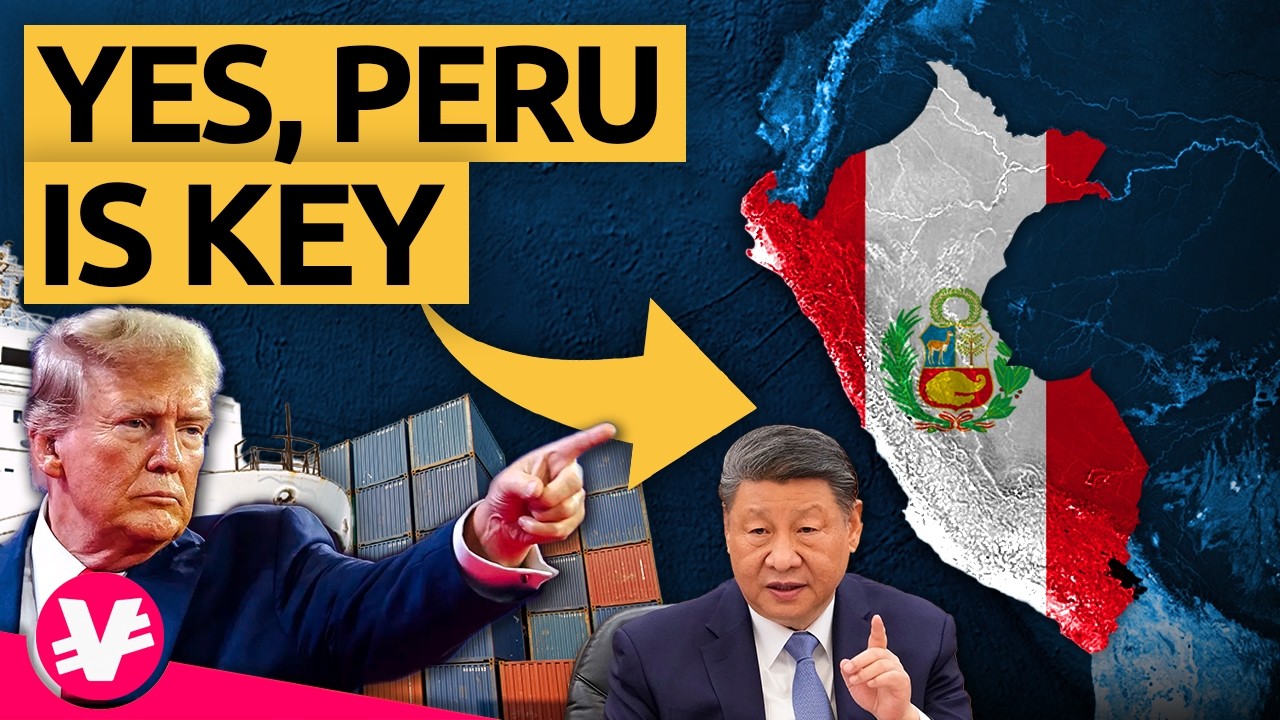
Geopolitics: Peru's balancing act
In the evolving landscape of global politics, the competition between the United States and China for influence and control has become increasingly pronounced. This rivalry is not confined to their own borders but extends to regions across the world, including Latin America. Peru, a country rich in resources and strategically located on the Pacific coast, has found itself at the center of this geopolitical tug-of-war. Far from being a passive player, Peru has been actively engaging with both superpowers, leveraging its position to advance its own interests and secure its place in the new world order.Peru's Strategic ImportancePeru's strategic importance is underscored by its vast natural resources, including significant deposits of copper, gold, and silver, which are crucial for global industries. Its location on the Pacific coast makes it a key gateway for trade between Asia and Latin America. Moreover, Peru's active participation in regional organizations like the Pacific Alliance and its hosting of international events like the APEC summit highlight its growing influence in the region.Strengthening Ties with ChinaChina has been steadily increasing its presence in Peru, particularly through investments in the mining and energy sectors. The construction of the Chancay mega-port, a project led by Chinese state-owned companies, is set to transform Peru into a major trade hub between Asia and Latin America. This port is expected to significantly reduce shipping times and costs, thereby boosting Peru's economy and enhancing its role in global trade.Deepening Relations with the USAThe United States, a long-standing partner of Peru, has also been actively engaging with the country. The Peru-United States Trade Promotion Agreement, which came into effect in 2009, has facilitated trade and investment between the two nations. Additionally, the USA's Americas Partnership for Economic Prosperity aims to promote economic competitiveness in the region, including Peru. However, the USA has also expressed concerns about China's growing influence in Peru and other Latin American countries, viewing it as a potential threat to its own interests.Navigating the Superpower RivalryPeru has been carefully navigating the competition between the USA and China, striving to maintain good relations with both while advancing its own interests. By signing free trade agreements with both powers and welcoming investments from both, Peru has positioned itself as a neutral player in this geopolitical rivalry. Moreover, Peru's active participation in regional organizations like the Pacific Alliance demonstrates its commitment to regional cooperation and integration, which can serve as a counterbalance to the influence of external powers.Challenges and RisksHowever, Peru's strategy is not without risks. The country must carefully manage its relations with both the USA and China to avoid becoming overly dependent on either. Additionally, as the competition between the two powers intensifies, Peru may find itself caught in the crossfire, facing pressure to choose sides. Nevertheless, Peru's pragmatic approach and its focus on regional cooperation suggest that it is well-positioned to navigate these challenges and secure its place in the new world order.Conclusion of allIn conclusion, Peru's strategic importance and its proactive engagement with both the United States and China have positioned it as a key player in the new world order. By leveraging its resources, location, and regional influence, Peru has managed to navigate the competition between the two superpowers, advancing its own interests while maintaining a delicate balance. As the global landscape continues to evolve, Peru's role is likely to become even more significant, underscoring the importance of its pragmatic and forward-looking approach.
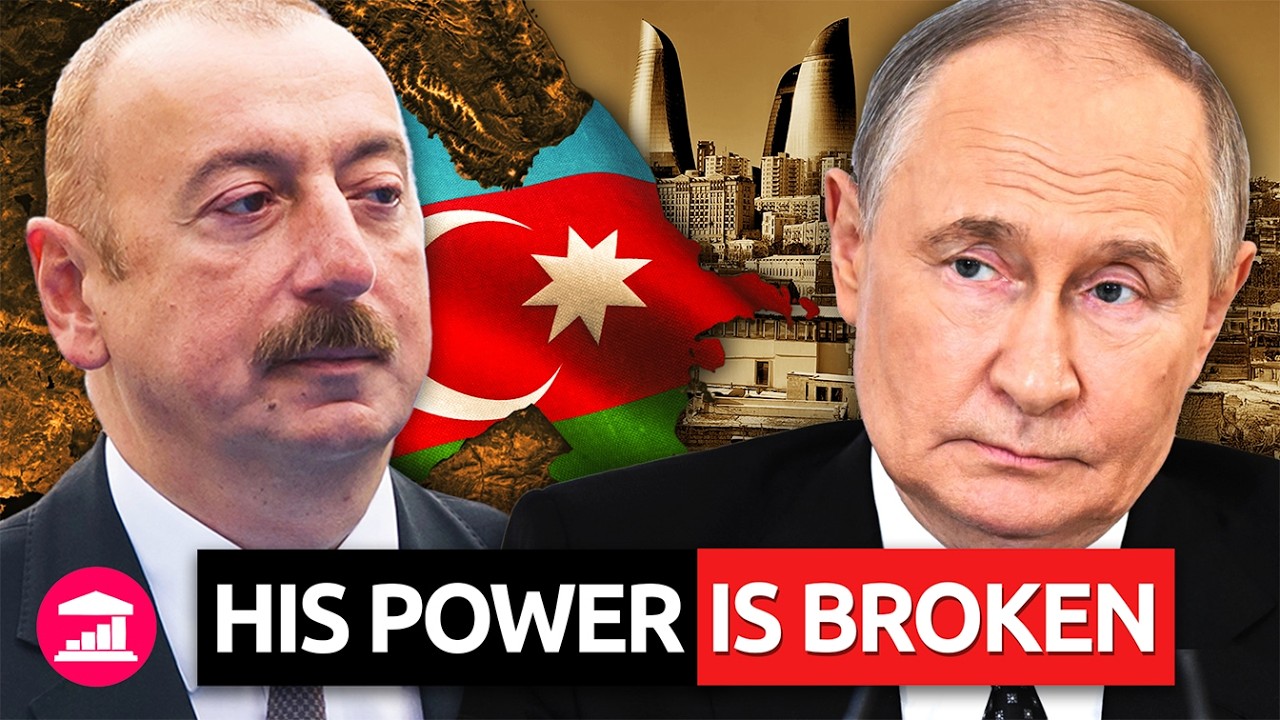
Azerbaijan defies Russia
Since the death of two Azerbaijanis in Russia, the conflict between the two countries has escalated. Since the war in Ukraine, Baku's autocrat Ilham Aliyev has been acting much more confidently towards Moscow. Relations between Azerbaijan and Russia, which for years were characterised by pragmatic cooperation, have deteriorated dramatically in recent months. The conflict unfolding in the Caucasus has far-reaching geopolitical implications and could permanently alter the balance of power in the region.Background to the relationsRelations between Azerbaijan and Russia have long been characterised by mutual benefit. Russia was considered the protective power of Armenia, Azerbaijan's neighbour and rival, but at the same time Moscow maintained economic and political ties with Baku. Azerbaijan, rich in oil and gas reserves, played a key role in regional energy policy. However, this balance was upset when Azerbaijan strengthened its independence from Russia after its victory in the Nagorno-Karabakh conflict in 2023 and established closer relations with Turkey and the West.Trigger for the current tensionsThe current conflict began with the death of two Azerbaijani brothers in the Russian city of Yekaterinburg in June 2025. The men were arrested during a raid by the Russian domestic intelligence service and died shortly afterwards in unclear circumstances. While Russian authorities claimed that the deaths were natural, an Azerbaijani autopsy revealed serious injuries, sparking allegations of torture and ethnically motivated violence. This incident sparked a wave of outrage in Azerbaijan and set off a chain of events that exacerbated tensions.Escalating eventsIn response to the incident, Azerbaijan cancelled all planned Russian cultural events and raided the offices of a Russian foreign broadcaster in Baku, arresting several journalists. Another high point was the crash of an Azerbaijani passenger plane in December 2024 on its way to Grozny in Chechnya. The accident claimed the lives of 38 people. While Russia attributed the crash to a bird strike, Azerbaijan suspects that a Russian missile was responsible. President Aliyev then threatened legal action at the international level.Reactions from both sidesAzerbaijan has strengthened its position by moving closer to the West and supporting Ukraine in its war against Russia. At the same time, the country has expanded its energy exports to Europe in order to secure its economic independence. Russia, on the other hand, sees itself weakened by the war in Ukraine and is responding with a mixture of threats and appeasement. Official spokespeople warned Azerbaijan against a deterioration in relations, while nationalist voices in Russia called for tougher measures against Azerbaijani migrants.Consequences for the CaucasusThe South Caucasus is a strategically important region that serves as a transit corridor for energy exports and connects Europe with Asia. An escalating conflict could jeopardise Europe's energy supply and undermine the stability of the region. Russia's waning influence, coupled with the growing role of Turkey and the West, is changing the geopolitical landscape. The conflict could also strain relations between Russia and Turkey, which have different interests in the region.Outlook for the political futureThe future remains uncertain. Some warn of further escalation that could lead to military confrontation. Others are counting on diplomatic solutions, possibly through mediation by international actors such as the European Union. What is clear, however, is that relations between Azerbaijan and Russia have reached a low point and that the Caucasus faces an uncertain future.
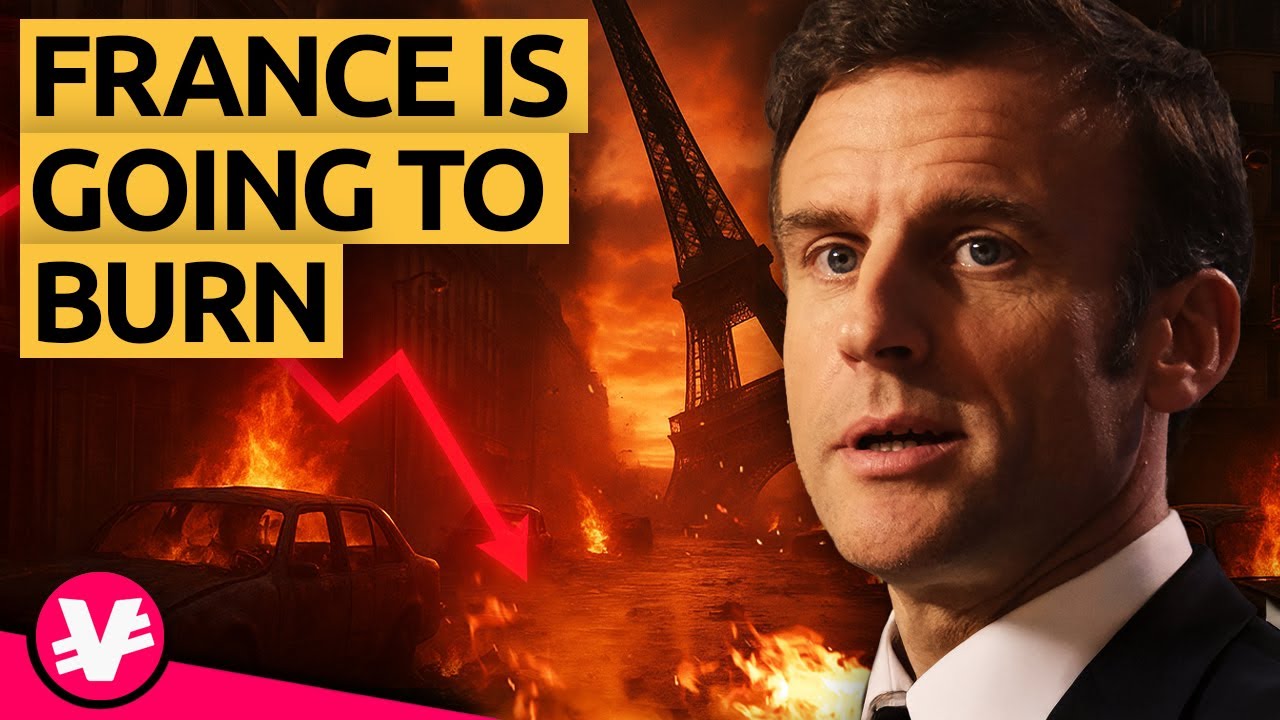
France's debt is growing
France is facing an unprecedented financial challenge. With public debt exceeding €3.2 trillion, representing more than 110% of gross domestic product (GDP), the eurozone's second-largest economy is on a dangerous path. The budget deficit is around 5.5% of GDP and is expected to rise to over 6% this year. These figures significantly exceed EU targets, which allow a maximum deficit of 3% and a debt ratio of 60% of GDP. The financial markets are becoming increasingly nervous, and interest rates on French government bonds are climbing to record levels. What has led to this debt chaos, and how can France avoid the looming abyss?The roots of the crisis run deep. For decades, France has had a relaxed attitude towards debt, which differs from the strict budgetary discipline of other countries such as Germany. During the coronavirus pandemic and the energy crisis resulting from the war in Ukraine, the government pumped billions into the economy to support households and businesses. Subsidies for electricity prices and generous social benefits kept the economy stable but led to a sharp rise in debt. Since 2017, when President Emmanuel Macron took office, public debt has grown by almost one trillion euros. Critics accuse the government of delaying necessary structural reforms, while the government's spending ratio is just under 60% of GDP – one of the highest in the world.The political situation is exacerbating the crisis. Following early parliamentary elections in the summer of 2024, parliament is fragmented and majorities are difficult to form. Prime Minister François Bayrou, who has been in office since autumn 2024, has presented an ambitious austerity programme to reduce the deficit to below 3% by 2029. The measures include the abolition of two public holidays, a freeze on pensions and social benefits, the elimination of 3,000 civil service jobs and higher taxes on high incomes. However, these plans are meeting with fierce resistance. The right-wing nationalist party Rassemblement National and left-wing parties are threatening votes of no confidence, which could bring down Bayrou's government. His predecessor, Michel Barnier, was forced to resign after only three months in office when his draft budget failed.The financial markets are watching the situation with suspicion. Interest rates on French government bonds are now exceeding those of Greece in some cases, which is an alarming sign. France spends around 50 billion euros a year on debt servicing alone, and the trend is rising. Experts warn that this figure could climb to between 80 and 90 billion euros by 2027, making investment in education, infrastructure and climate protection virtually impossible. Rating agencies such as S&P and Moody's still rate France's creditworthiness as solid, but have threatened downgrades if the deficits are not reduced.The crisis also has European dimensions. France is systemically important for the eurozone, and an uncontrolled rise in debt could jeopardise the stability of the single currency. Unlike the Greek debt crisis in 2008, when rescue funds were used, a bailout package for France would be almost impossible to finance. The EU has launched disciplinary proceedings against France to exert pressure for budget consolidation, but political instability is hampering reforms.What can France do? Bayrou's austerity plans are a first step, but their implementation is uncertain. Tax increases are politically sensitive, as France already has one of the highest tax rates in Europe. Spending cuts could slow economic growth, which is just over 1% this year. At the same time, experts are calling for structural reforms to increase productivity and reduce dependence on the public sector. Without clear political majorities, there is a risk that France will slide further into debt.Citizens are already feeling the effects of the crisis. Strikes and protests against austerity measures are on the rise, and social tensions are running high. Many French people feel caught between high living costs and impending cuts. The government faces the challenge of regaining credibility without losing the trust of the markets or the population.A way out of the debt chaos requires courage and a willingness to compromise. Bayrou has described the situation as ‘the last stop before the abyss.’ Whether France can overcome this crisis depends on whether politicians and society are prepared to make tough decisions. Time is pressing, because the financial markets will not tolerate any further delays. France is at a crossroads – between reform and risk.
Iraq vs. Iran – The end?
Since the fall of Saddam Hussein in 2003, Iran has significantly expanded its influence in Iraq, particularly through its support for Shiite militias and political parties. However, this has led to growing discontent among large sections of the Iraqi population, who are demanding greater national sovereignty and an end to foreign interference.In recent months, protests have intensified in Iraq, particularly in Baghdad and the southern provinces. The demonstrators are protesting against corruption, unemployment and, above all, Iranian influence. An impressive example of this resistance was the storming of the Iranian consulate in Karbala in October 2023, during which angry demonstrators set the building on fire. This incident underscores the deep frustration felt by many Iraqis over Tehran's perceived dominance in their country.In addition, political groups and tribal leaders in the south of the country have begun to openly reject Iranian influence. They are demanding measures to curb the activities of Iranian-backed militias, which are seen as an extension of Tehran's power. Iraqi Prime Minister Mohammed Shia al-Sudani faces a difficult task: he must balance relations with Iran and the United States while responding to his citizens' demands for independence.Iran is alarmed by these developments and is trying to strengthen its allies in Iraq. There are indications that Iranian-backed militias have increased their presence, possibly to suppress the protests or consolidate their position. At the same time, attacks on US military bases in Iraq attributed to these militias have led to retaliatory strikes by the US, further fuelling tensions in the region.The situation has not gone unnoticed internationally either. The United States, which maintains a strong presence in Iraq and wants to contain Iranian influence, is following events with great attention. Other regional players such as Saudi Arabia could also intervene to support anti-Iranian forces and influence the balance of power in the Middle East.The question remains: could this resistance be the final blow against the Ayatollahs in Iran? Some observers see it as the beginning of the end of Iranian hegemony in Iraq, but others urge caution. The Ayatollahs have proven in the past that they have considerable resilience and numerous means at their disposal to secure their influence. Nevertheless, it is clear that pressure on Iran in Iraq is growing and that events have the potential to permanently alter the balance of power in the region.
Japan's financial precipice
Japan is grappling with a dire financial crisis as interest rates have surged, doubling to a staggering 0.50%—the highest level since the 2008 global financial crisis. This dramatic shift, orchestrated by the Bank of Japan, marks the end of a prolonged era of ultra-low borrowing costs, leaving the nation teetering on the edge of economic ruin. The people, long accustomed to near-zero rates, now face unprecedented financial pressure as the cost of living soars and debt burdens mount.For decades, Japan wrestled with stagnation and deflation, a period often dubbed the "Lost Decades." Ultra-low interest rates were a lifeline, keeping borrowing affordable and sustaining a fragile economy. But that lifeline has been severed. Inflation has climbed past the central bank's 2% target, fueled by a tight labor market and rising wages. Emboldened by these signs of economic vigor, the Bank of Japan has pushed forward with its rate hikes, aiming to normalize monetary policy after years of caution.Yet, this bold move comes at a steep cost. Japan's public debt, one of the largest in the world, now looms larger as servicing costs rise with the higher rates. Households, once shielded by cheap loans, are buckling under increased mortgage and credit payments. Businesses, too, face a reckoning—many small firms, the backbone of the economy, fear they won't survive the tightened conditions. "The shift is too sudden," one economic observer noted, echoing widespread unease. "Families and companies need time to adjust, but time is a luxury we don’t have."The timing couldn’t be worse. Global uncertainties, from trade disruptions to geopolitical tensions, cast a shadow over Japan’s recovery. Some experts caution that the rate hike could choke off growth just as the economy begins to stir, plunging the nation back into the stagnation it fought so hard to escape. "We’re walking a tightrope," another voice warned, highlighting the delicate balance between curbing inflation and preserving stability.As Japan stands at this financial precipice, the Bank of Japan faces mounting pressure to monitor the fallout closely. The path ahead is fraught with risk—too aggressive, and the economy could collapse under the weight of debt; too lenient, and inflation could spiral out of control. For now, the people of Japan brace for hardship, their resilience tested once more as the nation navigates this perilous turning point.

Trump vs. EU: A good deal?
At the end of July 2025, US President Donald Trump and EU Commission President Ursula von der Leyen presented a transatlantic trade agreement at the Turnberry golf resort in Scotland, signalling a surprise agreement after months of escalating threats of punitive tariffs. At its heart is a 15% cap on almost all EU goods exported to the United States, while Brussels will in return scrap all tariffs on US industrial goods – a paradigm shift from the previous ‘zero tariff symmetry’.In addition, the European Union has committed to purchasing US energy worth 750 billion dollars by 2028 and investing 600 billion dollars in American sites. These commitments are intended not only to improve the US trade balance, but also to reduce European dependence on third countries. Steel, aluminium and copper are exempt from the 15 per cent cap – here, surcharges of 50 per cent remain in place, which will hit traditional EU export industries particularly hard.The legal framework for implementation is a presidential order signed on 31 July, which comes into force seven days later and adjusts the US Harmonised Tariff Schedule accordingly. Washington is selling the result as a ‘historic recalibration’ of trade relations; Brussels emphasises that it has averted an escalation of the announced 30% punitive tariffs and gained planning security.But criticism in Europe is loud: German Chancellor Friedrich Merz warns of ‘considerable damage’ to competitiveness, while French Prime Minister François Bayrou speaks of a ‘dark day’ for industry. Economists expect many EU companies to have to choose between sacrificing margins and adjusting prices in the US – with potential inflationary and demand effects on both sides of the Atlantic.In the medium term, the agreement is likely to cause massive shifts in supply chains: the US energy and defence sectors will benefit immediately, while European car and machine manufacturers will increasingly build up production capacities in North America – a trend that is already evident in current investment plans and reveals the complete incompetence of European politicians! However, before the package becomes legally binding, the 27 EU member states and the European Parliament must ‘still’ give their approval; several MEPs have announced a detailed review of the ‘asymmetrical agreement’.Whether the agreement represents a stable new trade order or merely a respite depends on whether Brussels forces renegotiations – and whether Washington honours its commitments on market opening, investment and tariff reductions in the long term.

Seven-Day Sanctions Showdown
With just one week remaining before a new U.S. sanctions package enters into force, the Kremlin is facing its most perilous economic moment since the start of the full-scale invasion of Ukraine. President Donald Trump has set an 8 August deadline for Moscow to agree to a cease-fire or confront measures designed to choke off the few remaining arteries that still feed the Russian economy.With its criminal actions, the terrorist state of Russia is approaching the unjustified, murderous and completely unjustifiable war (murder of the Ukrainian civilian population, rape and terror by Russian soldiers against civilians in Ukraine) against its peaceful neighbour, Ukraine, and is now heading for economic ruin – and that is a good thing for any objective observer!The forthcoming order widens the financial dragnet beyond Russian entities themselves. Foreign banks clearing energy payments will be subject to “full-blocking” penalties, while buyers of Russian crude and refined products risk losing access to U.S. markets and the dollar system altogether. U.S. officials say the rules mirror the toughest Iran sanctions—but scaled for a G-20 economy—and will apply to oil lifted after 7 August, when a parallel tariff hike on 68 countries also takes effect.Energy is the Kremlin’s fiscal backbone, accounting for roughly a quarter of federal revenue. Yet oil-and-gas takings already fell more than 30 % year-on-year in June, and analysts warn the new secondary sanctions could erase what is left of that stream, forcing deeper budget cuts or a rapid drawdown of reserves.President Vladimir Putin has shown no sign of yielding. Speaking alongside Belarusian leader Alexander Lukashenko on 1 August, he insisted battlefield momentum favors Russia and repeated calls for “quiet, private” negotiations—language Washington interprets as stalling. The Kremlin claims to be stockpiling yuan and expanding barter channels, but traders report a renewed slide in the ruble and growing demand for dollars on the Moscow Exchange.Global markets are already on edge. Brent crude rose nearly three percent after Trump shortened his timeline, while Indian refiners paused new purchases of Russian Urals pending clarity on penalties. Beijing, facing its own trade disputes with Washington, has remained publicly non-committal but is discreetly canvassing Gulf suppliers about replacement volumes.European partners have welcomed the pressure. The EU’s 18th sanctions package, adopted on 18 July, tightens its own embargo on Russian energy technology and expands a ban on access to EU financial messaging services—moves designed to dovetail with the U.S. assault on dollar clearing. Unless Moscow capitulates or Washington relents, the world will know in seven days whether Russia’s war economy can survive a concerted strike against its last hard-currency lifeline. For businesses still exposed to Russian trade, the calendar—and the compliance clock—has never ticked louder.

Zelenskyy anti-graft gamble
President Volodymyr Zelenskyy entered office as the public face of a reformist wave, yet today he stands accused of dismantling the very anti-corruption architecture that underpinned his legitimacy. On 22 July Ukraine’s parliament fast-tracked amendments that place the National Anti-Corruption Bureau (NABU) and the Special Anti-Corruption Prosecutor’s Office (SAPO) under the effective control of the prosecutor general, a political appointee answerable to the presidency.The new law empowers the prosecutor general to reassign high-profile graft cases “when circumstances make NABU’s work impossible,” a clause critics describe as a licence for political interference. Within hours Zelenskyy signalled support, calling the changes a wartime necessity—only to trigger the largest street protests in Kyiv since the first months of the invasion. Demonstrators draped parliament with banners warning of a return to pre-revolution impunity and chanting “EU or bust,” a reference to Brussels’ demand that Kyiv maintain independent watchdogs as a core accession pre-condition.Financial stakes rose immediately. The European Commission privately told Kyiv that up to €18 billion in macro-financial aid could be frozen unless the rollback is reversed, while several donor governments paused disbursement of recovery funds earmarked for 2025-26. Foreign investors, already wary of doing business in a war zone, saw bond yields spike to a three-month high as rating agencies flagged “governance slippage”.Domestically, the chill reached law-enforcement corridors. NABU agents reported surprise searches of their offices by state-security operatives, officially justified as a hunt for “foreign infiltration.” Anti-graft officials countered that the raids aimed to seize case files implicating influential wartime contractors.Under pressure, Zelenskyy invited agency heads and civic groups to negotiate a face-saving compromise. Yet even a cosmetic fix may not repair the reputational damage: polls released this week show confidence in the president’s anti-corruption agenda falling below 40 percent for the first time since 2022. Meanwhile, NABU’s most sensitive investigations—ranging from drone-procurement fraud to embezzlement in frontline logistics—remain in limbo, jeopardising both battlefield efficiency and public morale.Analysts warn that weakening the investigative firewall could hard-wire patronage into Ukraine’s post-war reconstruction boom. Billions in future EU and World Bank contracts risk flowing through a system perceived to be politically captured, raising the prospect of donor fatigue at a moment when Kyiv’s fiscal gap already exceeds 20 percent of GDP. What began as a procedural tweak is thus morphing into a strategic gamble: Zelenskyy can retreat and reassure partners—or press ahead and test whether Ukraine’s allies will prioritise unity against Moscow over governance standards at home. Either path will define his presidency long after the guns fall silent.

Why China props up Putin
Beijing’s refusal to condemn Moscow’s full-scale assault on Ukraine has hardened into active, if carefully calibrated, material support. Customs and corporate-registration data show Chinese firms now dominate the flow of critical metals, micro-electronics and dual-use components that keep Russia’s defence industry alive, even as Western sanctions tighten.Recent investigative dossiers detail how small export-intermediaries in coastal provinces label drone engines as “industrial refrigeration units,” allowing them to cross Eurasia by rail and re-appear inside Shahed-style loitering munitions launched against Odesa and Kyiv.The trade underpinning this pipeline is immense. Despite a 9 % year-on-year dip, bilateral turnover still exceeded $106 billion in the first half of 2025, with Chinese car parts, machine tools and consumer electronics filling gaps left by departing Western brands. Energy sits at the core of the partnership. Xi Jinping and Vladimir Putin agreed in May to fast-track the 50 bcm-per-year “Power of Siberia 2” gas link, which would lock in discounted Siberian gas for decades and give Moscow a lifeline as European demand evaporates.Financial ties deepen in parallel. By late 2024 more than a third of Russia’s trade was settled in yuan, helping the Kremlin skirt dollar clearing and accelerating Beijing’s long-term bid to internationalise its currency. Yet 98 % of Chinese banks now refuse direct rouble deals, a sign of how carefully Beijing manages sanctions exposure. Strategically, Chinese planners see virtue in a protracted conflict that drains U.S. and European arsenals, diverts NATO bandwidth, and tests Western sanctions architecture—all while avoiding outright Russian collapse that could leave a NATO-leaning vacuum on China’s northern frontier.Washington and Brussels are responding. The EU is preparing its first penalties on Chinese banks accused of laundering Russian transactions, while Kyiv has black-listed several mainland suppliers implicated in drone production.Still, Beijing judges the benefits—energy security, discounted commodities, a pliant strategic partner, and valuable combat data for its own doctrine—outweigh the risks. The partnership remains officially “no-limits,” but in practice it is bounded by one overriding calculation: help Moscow enough to bleed Ukraine and frustrate the West, yet not so openly that secondary sanctions threaten China’s wider economic ambitions.

Alert in Trump’s America
In recent weeks, JPMorgan Chase CEO Jamie Dimon has issued a series of sobering warnings about the fragile state of the U.S. economy—warnings that ring particularly alarmingly in light of the aggressive economic policies advanced under Donald Trump. Dimon cautioned that the nation's bond market is on the brink of a serious "crack," fueled by ballooning budget deficits and deepening investor skepticism. With the national debt already exceeding $36 trillion and credit ratings under pressure, he warned that without decisive reforms, a reckoning is all but inevitable.Dimon’s concerns extend beyond bonds. In his quarterly report, he described the U.S. stock market as "kind of inflated," noting that asset valuations currently rank among the top 10–15 percent of historical levels. He attributed this overheating to sustained deficit spending, inflationary pressures, and geopolitical tensions. Trade measures, particularly tariffs adopted by the Trump administration, have further intensified those pressures—raising the risk of slower growth, inflation, and market instability.Emerging trends indicate volatility in Treasury yields, a jittery bond market, and mounting fears that markets may be underpricing systemic risks. Dimon voiced alarm that such mispriced optimism could lead to sudden market shocks, even as he sought to reassure stakeholders that the financial system remains fundamentally sound.Taken together, these warnings paint a picture of a U.S. economy that appears robust on the surface—buoyed by high valuations and bullish sentiment—but is in fact navigating mounting macroeconomic vulnerabilities. Under the Trump-era policies of elevated deficits, protectionism and regulatory uncertainty, Dimon is urging policymakers to act swiftly: not to stoke the bubble, but to defuse it before it bursts.

China’s profitless push
Can we keep up? Chinese companies are sacrificing margins—sometimes incurring outright losses—to win global market share in strategic industries from electric vehicles and batteries to solar and consumer tech. The tactic is turbocharging exports, pressuring Western competitors and forcing policymakers in Europe and the United States to erect new defenses while they scramble to lower costs at home.Electric vehicles: a race to the bottom on price. In late spring 2025, China’s largest carmakers unleashed another round of steep price cuts, with entry-level models reduced to mass-market price points. Regulators in Beijing have since urged manufacturers to rein in the bruising price war, citing risks to industry health and employment. Yet the incentives keep coming as dozens of brands fight for share in the world’s most competitive EV market. The financial fallout is visible: leading pure-play EV makers continue to post substantial quarterly losses, while ambitious new entrants have acknowledged that their car divisions remain in the red even as sales surge.Green tech: overcapacity meets collapsing margins. China’s build-out in solar has morphed from a growth engine into a profitability trap. Module and polysilicon prices have fallen so far that key manufacturers forecast sizeable half-year losses, and producers are now discussing a coordinated effort to shutter older capacity. Industry reports describe spot prices for feedstocks dipping below production costs, a hallmark of cut-throat competition that spills over into export markets and undercuts rivals globally.Trade blowback intensifies. The U.S. has moved to quadruple tariffs on Chinese-made EVs and lift duties on batteries, chips and solar cells. The European Union has imposed definitive countervailing duties on Chinese battery-electric cars and opened additional probes across green-tech supply chains. Brussels and Beijing have even explored minimum export prices to reduce undercutting—an extraordinary step that underscores how acute the pricing pressure has become.Deflation at the factory gate. China’s factory-gate prices remain in negative territory year on year, reflecting slack domestic demand and excess capacity. That weakness transmits abroad via cheaper exports, squeezing margins for manufacturers elsewhere and complicating central banks’ inflation-fighting calculus. Beijing has rolled out an “anti-involution” campaign to curb ruinous discounting and steer investment toward “high-quality growth,” but implementation is uneven and local governments still depend on industrial output to stabilize employment.Scale, speed—and logistics. Chinese champions are not only cutting prices; they are redesigning logistics to keep them low. One leading EV maker has built its own fleet of car carriers and is localizing production via overseas factories to sidestep tariffs and port bottlenecks. Such vertical integration magnifies the advantage from sprawling domestic supply chains in batteries, motors and power electronics.What this means for Western competitors. The immediate effect is a margin squeeze across autos, solar and adjacent sectors. The strategic response taking shape in Europe and the U.S. is three-pronged: (1) trade defense to buy time; (2) industrial policy to catalyze domestic gigafactories and clean-tech manufacturing; and (3) consolidation to rebuild pricing power. Companies that cannot match China’s cost curve will need to differentiate—through software, design, brand and service—or partner to gain scale. Even in China, the current “profitless prosperity” looks unsustainable: consolidation is inevitable, and state guidance now favors capacity rationalization over raw volume.The bottom line. China’s price-first strategy is remaking global competition. Whether others can keep up will hinge on how quickly they can de-risk supply chains, compress costs and innovate without hollowing out profitability. For now, the contest is being fought as much on balance sheets as it is on assembly lines.

Embraer’s 950% surge
Embraer has rewritten the aerospace playbook. From a once-overlooked regional specialist, the Brazilian manufacturer has emerged as the industry’s quiet juggernaut—outpacing its far larger rivals in shareholder returns and converting a focused product strategy into record commercial momentum. Since the pandemic trough, Embraer’s New York–listed shares have risen by well over ninefold, vaulting from single digits to new highs and putting a spotlight on how a disciplined “middle-of-the-market” bet can beat scale.At the heart of the surge is a portfolio calibrated for today’s constraints. Where Boeing fights through quality and compliance crises and Airbus wrestles with capacity limits and engine supply headaches, Embraer has leaned into the 70–150 seat segment with its second-generation E-Jets, expanded a resilient business-jet franchise, and steadily racked up wins for its C-390 Millennium airlifter. The result: an all-time-high firm order backlog nearing $30 billion this summer, alongside quarter-record revenues and deliveries. In a supply-choked world, dependable execution is a strategy—and it shows.Commercial aviation is the spear tip. Flagship orders in 2025—from Japan’s ANA for E190-E2s to a landmark SAS deal for up to 55 E195-E2s—signaled that network planners across developed markets want lower trip costs without sacrificing comfort or range. E2 economics have given carriers a credible alternative to deploying larger narrowbodies on thin or regional routes, and Embraer’s cabin design (no middle seat, fast turns) aligns neatly with post-pandemic route rebuilding. New-market beachheads in Mexico and continued growth with operators in Europe and the Americas are translating into delivery growth that’s outpacing last year.Defense has become the dark horse. The C-390 Millennium, once a niche challenger, has turned into Europe’s go-to Hercules alternative, notching selections and orders across NATO and beyond. Beyond mission flexibility and speed, Embraer’s willingness to localize industrial footprints in Europe has strengthened its political and logistical case. As defense budgets rose, that combination—performance plus partnership—pulled the program into the mainstream and diversified group earnings just as commercial demand returned.Then there is executive aviation, an underestimated earnings engine. Phenom and Praetor jets continue to compound on the back of strong utilization, fleet replacements, and aftermarket growth. Together with services and support, these businesses have added ballast to Embraer’s cash generation and helped smooth cyclicality—another reason the equity rerated higher rather than snapping back to pre-crisis multiples.The competitive contrast is stark. Airbus remains the global delivery leader with a gargantuan backlog—but constrained slots mean years-long waits, particularly in single-aisles. Boeing, meanwhile, is still working through a prolonged manufacturing and oversight reset that has capped output and sapped buyer confidence. Embraer isn’t “bigger” than either; it’s simply been better positioned to deliver reliable capacity now, in exactly the seat ranges airlines can actually crew, fuel, and fill profitably. In public markets, timing and credibility compound.None of this is risk-free. The E2 family’s reliance on geared-turbofan technology ties Embraer to an engine ecosystem still normalizing after widespread inspection programs. Trade policy is a new wild card, with tariff chatter periodically jolting shares. And the urban-air-mobility bet via Eve remains a long-dated option, not a 2025 cash cow. But the core machine—commercial E-Jets, executive jets, C-390, and services—is running at record velocity with improving mix and scale.“Destroyed” may be the language of headlines; what’s indisputable is the scoreboard: since its pandemic low, Embraer has delivered a stock performance that has eclipsed both transatlantic giants, while building a backlog and delivery cadence that validate its strategic lane. In today’s aerospace cycle, the middle seat wins.

Bolivia at breaking point
In recent months, Bolivia has lurched from crisis to crisis. Long queues at gas stations, sporadic road blockades, and clashes between rival political camps have fed fears of a broader internal conflict. A year after a failed military putsch shook La Paz, the country now faces a decisive political transition against the backdrop of a rapidly deteriorating economy. As of August 18, 2025, preliminary results point to an October 19 runoff that ends two decades of dominance by the ruling movement—an inflection point that could steer the country toward stabilization or push it closer to a dangerous spiral. A political rupture with violent undertonesBolivia’s governing bloc fractured into warring factions after the split between President Luis Arce and his onetime mentor, former president Evo Morales. That rift spilled into the streets this year: blockades, counter-mobilizations, and deadly confrontations were recorded in mining towns and highland corridors, with church leaders warning of a “spiral of violence.” Those tensions sit atop the still-raw memory of June 26, 2024, when armored vehicles briefly surrounded the presidential palace before the putsch collapsed and commanders were arrested.The economic picture is grim. In January, a major rating agency cut Bolivia to CCC-, citing vanishing foreign-exchange buffers and looming external payments; by its estimate, the country faced around $110 million in Eurobond coupons this year with only about $47 million in liquid reserves at one point. Fuel imports—long subsidized—have repeatedly faltered, triggering national transport strikes, border disruptions, and days-long lines for gasoline and diesel. Inflation, once among South America’s lowest, surged to multi-decade highs through mid-2025. A chronic dollar shortage has fractured the currency regime: while the official rate stayed near 6.96 bolivianos per dollar, a thriving parallel market developed. By late July the street rate hovered around 14 BOB per USD—stronger than its worst levels earlier in the year, but still far from the peg—underscoring lost confidence. As households and small firms struggled to access currency, some turned to crypto and informal finance as workarounds. Gold and gas: lifelines with limitsTo scrape together hard currency, authorities leaned on the country’s booming (and often opaque) gold trade, monetizing bullion to raise billions in fresh dollars—an emergency bridge, not a structural fix. Meanwhile, the gas engine that powered Bolivia for two decades has sputtered. Exports to Argentina ended in 2024 as output slumped, and in a symbolic reversal this year, Argentina began shipping Vaca Muerta gas through Bolivia toward Brazil using Bolivian pipelines—signaling how far the regional energy balance has shifted. Why fears of wider conflict are not far-fetchedNo single spark guarantees a slide into civil war, but several risk factors now overlap: factionalized parties with loyal street bases, pockets of armed actors and hardliners, a legitimacy fight around barred candidacies and court rulings, and an economy that can no longer cushion shocks with cheap fuel or a steady dollar supply. Independent monitors have recorded lethal violence tied to the intra-left feud, while civic leaders in blockaded towns report confrontations between residents, protesters, and security forces. Each new blockade erodes livelihoods, deepens scarcity, and shortens tempers—a classic recipe for escalation. The runway to October—and what comes afterThe first-round result has upended Bolivia’s political map: two opposition figures advanced and the ruling movement’s candidate finished far behind, all amid the worst macro stress in a generation. Whoever wins in October will inherit unpopular choices: rationalizing fuel subsidies, rebuilding reserves, restoring a functional FX market, and reviving the gas sector while speeding up transparent lithium and gold governance. Failure risks further shortages, more street battles over scarcity, and a dangerous normalization of political violence. Success demands a credible stabilization plan, broad buy-in from unions and regional elites, and early signals—like targeted cash transfers and a clear, time-bound subsidy path—to keep social peace while reforms bite.
Adobe down 40%: Kodak moment?
Adobe’s stock has spent the summer trading roughly 40% below its 52-week high, a striking reversal for a company long treated as a bellwether of the creative economy. The sell-off reflects a convergence of pressures: intensifying AI-driven competition, regulatory scrutiny of subscriptions, controversial pricing changes, and a shifting center of gravity from applications to underlying AI infrastructure. The question hanging over the market is whether Adobe faces a Kodak-style disruption—or is merely navigating a bruising but temporary reset.The slide behind the headlineAs of mid-August, shares remain about 40% beneath last year’s 52-week high, underscoring how swiftly sentiment has flipped from euphoria around generative AI to worries about commoditization. The drop has also been amplified by analyst downgrades that argue value may be migrating from application-layer software to AI infrastructure and platforms.Competitive shock: AI eats software (and design)The rise of text-to-image and text-to-video tools has lowered creative barriers for individuals and enterprises alike. Web-first design platforms and AI-native video apps are courting Adobe’s core audience with lower prices, simpler workflows, and collaborative features that feel “good enough” for many use cases. Adobe’s aborted attempt to buy a fast-growing design rival left that competitor independent—and emboldened. Meanwhile, a separate deal created a powerful alternative bundle for creative pros by combining a mass-market design platform with a full professional suite.Pricing, packaging and customer trustAdobe is hiking and repackaging parts of Creative Cloud, rebranding “All Apps” to “Creative Cloud Pro” with expanded generative features. For some customers, the shift promises more AI value; for others, it reinforces “subscription fatigue” and raises the risk of churn to cheaper alternatives. Compounding the perception problem, U.S. regulators have sued Adobe over alleged “dark patterns” in subscription cancellations—claims the company denies. Regardless of the legal outcome, the episode has kept pricing and trust squarely in the headlines.Product reality check: far from standing stillIt would be a mistake to equate a falling share price with a failing product engine. Adobe continues to ship at pace: newer Firefly models add higher-fidelity image generation and expanding video features; core apps like Photoshop, Illustrator and Lightroom keep absorbing AI-assisted tooling; and the company is pushing “content credentials” and indemnities aimed at enterprises wary of copyright risk. Under the hood, the financial machine still hums: record quarterly revenue, double-digit growth in its Digital Media segment, and a large recurring-revenue base suggest substantial resilience.Buybacks vs. disruptionManagement has been retiring shares under a multi-year, $25 billion repurchase authorization—classic playbook for signaling confidence and supporting EPS. But buybacks don’t answer the existential question: if AI ultimately turns many creative tasks into commodity services, can Adobe preserve pricing power and premium margins at application level?Is this really a “Kodak moment”?Kodak’s mistake wasn’t missing a feature—it was clinging to a cash-cow business model while the medium itself changed. Adobe’s risk rhymes, but is not identical:- The bear case: If AI creation and editing consolidate into low-cost, browser-based suites and assistants embedded by cloud and OS giants, Adobe’s subscription pricing could face sustained pressure. Regulatory and reputation hits around subscriptions or data use could accelerate defections at the margin.- The bull case: Creative workflows remain multi-step, brand-sensitive, and quality-obsessed. Enterprises still prize compliance, provenance, and integration across design, marketing, and document ecosystems—areas where Adobe is deeply entrenched. If Firefly and Acrobat AI become indispensable “copilots,” Adobe can monetize AI inside a platform customers already trust.- Most likely near-term: A grind. Revenue and ARR continue to grow at a healthy clip, but multiples reflect uncertainty about long-run AI economics. Execution on pricing, retention, and enterprise AI value will decide whether this reset becomes a rerating upward—or a slow leak. Enterprise AI adoption of Firefly and Acrobat AI (features used at scale, not just trials). Regulatory outcomes in the U.S. subscription case and any spillover into practices globally.Partner ecosystem—how deeply Adobe’s AI models integrate with (or get displaced by) hyperscaler stacks. Adobe’s 40% drawdown signals a market repricing of app-layer software in the AI era—not proof of a Kodak-style collapse. The company still has brand, distribution, and cash flow on its side. Whether that’s enough will depend less on dazzling demos and more on something prosaic: making AI raise productivity, reduce friction, and earn its keep for paying customers.

Adobe down 40% and now?
Adobe’s stock has spent the summer trading roughly 40% below its 52-week high, a striking reversal for a company long treated as a bellwether of the creative economy. The sell-off reflects a convergence of pressures: intensifying AI-driven competition, regulatory scrutiny of subscriptions, controversial pricing changes, and a shifting center of gravity from applications to underlying AI infrastructure. The question hanging over the market is whether Adobe faces a Kodak-style disruption—or is merely navigating a bruising but temporary reset.The slide behind the headlineAs of mid-August, shares remain about 40% beneath last year’s 52-week high, underscoring how swiftly sentiment has flipped from euphoria around generative AI to worries about commoditization. The drop has also been amplified by analyst downgrades that argue value may be migrating from application-layer software to AI infrastructure and platforms.Competitive shock: AI eats software (and design)The rise of text-to-image and text-to-video tools has lowered creative barriers for individuals and enterprises alike. Web-first design platforms and AI-native video apps are courting Adobe’s core audience with lower prices, simpler workflows, and collaborative features that feel “good enough” for many use cases. Adobe’s aborted attempt to buy a fast-growing design rival left that competitor independent—and emboldened. Meanwhile, a separate deal created a powerful alternative bundle for creative pros by combining a mass-market design platform with a full professional suite.Pricing, packaging and customer trustAdobe is hiking and repackaging parts of Creative Cloud, rebranding “All Apps” to “Creative Cloud Pro” with expanded generative features. For some customers, the shift promises more AI value; for others, it reinforces “subscription fatigue” and raises the risk of churn to cheaper alternatives. Compounding the perception problem, U.S. regulators have sued Adobe over alleged “dark patterns” in subscription cancellations—claims the company denies. Regardless of the legal outcome, the episode has kept pricing and trust squarely in the headlines.Product reality check: far from standing stillIt would be a mistake to equate a falling share price with a failing product engine. Adobe continues to ship at pace: newer Firefly models add higher-fidelity image generation and expanding video features; core apps like Photoshop, Illustrator and Lightroom keep absorbing AI-assisted tooling; and the company is pushing “content credentials” and indemnities aimed at enterprises wary of copyright risk. Under the hood, the financial machine still hums: record quarterly revenue, double-digit growth in its Digital Media segment, and a large recurring-revenue base suggest substantial resilience.Buybacks vs. disruptionManagement has been retiring shares under a multi-year, $25 billion repurchase authorization—classic playbook for signaling confidence and supporting EPS. But buybacks don’t answer the existential question: if AI ultimately turns many creative tasks into commodity services, can Adobe preserve pricing power and premium margins at application level?Is this really a “Kodak moment”?Kodak’s mistake wasn’t missing a feature—it was clinging to a cash-cow business model while the medium itself changed. Adobe’s risk rhymes, but is not identical:- The bear case: If AI creation and editing consolidate into low-cost, browser-based suites and assistants embedded by cloud and OS giants, Adobe’s subscription pricing could face sustained pressure. Regulatory and reputation hits around subscriptions or data use could accelerate defections at the margin.- The bull case: Creative workflows remain multi-step, brand-sensitive, and quality-obsessed. Enterprises still prize compliance, provenance, and integration across design, marketing, and document ecosystems—areas where Adobe is deeply entrenched. If Firefly and Acrobat AI become indispensable “copilots,” Adobe can monetize AI inside a platform customers already trust.- Most likely near-term: A grind. Revenue and ARR continue to grow at a healthy clip, but multiples reflect uncertainty about long-run AI economics. Execution on pricing, retention, and enterprise AI value will decide whether this reset becomes a rerating upward—or a slow leak. Enterprise AI adoption of Firefly and Acrobat AI (features used at scale, not just trials). Regulatory outcomes in the U.S. subscription case and any spillover into practices globally.Partner ecosystem—how deeply Adobe’s AI models integrate with (or get displaced by) hyperscaler stacks. Adobe’s 40% drawdown signals a market repricing of app-layer software in the AI era—not proof of a Kodak-style collapse. The company still has brand, distribution, and cash flow on its side. Whether that’s enough will depend less on dazzling demos and more on something prosaic: making AI raise productivity, reduce friction, and earn its keep for paying customers.

Tariffs roil U.S.–India ties
A rupture is widening between the world’s largest and oldest democracies, and its shockwaves are already rippling through trade, technology, and security. In Washington, tariffs have become the blunt instrument of choice. In New Delhi, officials weigh retaliation and diversification. Between them lies a relationship strained by economic coercion, immigration politics, and unresolved security grievances.In early August, the United States announced an additional blanket import tax on Indian goods—on top of existing duties—pushing levies on some exports to levels few partners face. The measure is framed as punishment for India’s continued purchases of Russian crude and as part of a broader “reciprocal” tariff agenda. Whatever the intent, the signal is unmistakable: trade, once the ballast of the partnership, is now a pressure point.The economic fallout is immediate and visible. Export orders for high-exposure sectors have slowed sharply, and factories in India’s most globally connected clusters report cuts to shifts and payrolls. U.S. buyers, facing higher landed costs, are postponing or cancelling shipments; Indian suppliers, squeezed between thin margins and weak demand, are trimming production. Prices for some U.S. imports are set to climb, with industry groups warning of pass-through effects for consumers.Immigration, for decades a bridge between the two nations, is becoming another fault line. With new rulemaking floated in Washington, the H-1B program—through which Indian professionals make up the overwhelming majority of skilled visas—is again under the knife. Proposals to favor only the highest wages and public calls to “pause” the program altogether have rattled tech workers and employers alike. That uncertainty threatens one of the most resilient pillars of U.S.–India ties: the human capital pipeline that fuels American innovation and anchors Indian diaspora influence.Security cooperation, meanwhile, is caught between momentum and mistrust. On one hand, defense-industrial collaboration has never looked more ambitious, with negotiations to co-produce advanced jet engines on Indian soil and a long-horizon framework to deepen interoperability. On the other, a lingering law-enforcement case from late 2024—U.S. prosecutors alleging a foiled plot to assassinate a government critic on American soil—has left scar tissue that resurfaces whenever tensions rise. The two governments say they are working the issue quietly; it still shadows the relationship.Geopolitically, the timing could hardly be worse. Washington’s stated priority remains balancing China in the Indo-Pacific. Yet coercive tariffs on India, a cornerstone of that strategy, risk pushing New Delhi to hedge—reopening trade channels with Beijing and doubling down on groupings where Washington lacks leverage. Allies from the Pacific to Europe are watching: if tariffs replace diplomacy, informal coalitions like the Quad become harder to sustain.In New Delhi, policymakers are calibrating their response. India’s energy calculus—discounted Russian crude that helps tame domestic inflation—has not fundamentally changed. Nor has its preference for strategic autonomy. But the costs are rising. If the new U.S. duties take full effect and persist, expect targeted countermeasures, accelerated efforts to localize critical supply chains, and fresh bids to diversify export markets away from an increasingly volatile United States.For American business, the risks are symmetrical. Tariffs function as a tax on U.S. consumers and a drag on companies that rely on Indian inputs and talent. The more Washington signals unpredictability—on trade, visas, and technology transfers—the more boardrooms will dust off contingency plans: dual sourcing, near-shoring, or shifting investment to jurisdictions with steadier policy.This is where leadership matters. Wise statecraft distinguishes leverage from self-harm. Diplomacy tests arguments before testing alliances. Foresight weighs tactical wins against strategic drift. When unilateral tariffs and campaign-style messaging substitute for patient negotiation, the costs compound: higher prices at home, weaker coalitions abroad, and partners who conclude that hedging is safer than alignment.None of this is irreversible. A disciplined off-ramp exists: suspend escalatory tariff tranches pending structured talks; ring-fence high-impact sectors with temporary exemptions; codify a transparent process for visa reform that preserves merit-based mobility; and firewall law-enforcement cases from trade retaliation. Pair that with a clear roadmap on defense co-production and export controls, and the relationship can re-center on mutual interests rather than mutual recriminations.Something serious is indeed happening between India and the United States. Whether it becomes something truly terrible depends on choices made in the coming weeks. Prudence, diplomacy, and foresight are not luxuries here—they are the strategy.

After Europe’s capitulation
“Europe’s capitulation” has become a popular shorthand for policy drift, budget fatigue, and messy coalition politics. Yet on the ground and in Brussels, the picture is more complicated. Europe has locked in multi-year macro-financial support for Ukraine, is funnelling windfall profits from frozen Russian assets to Kyiv, and has extended protection for millions of displaced Ukrainians. At the same time, gaps in air defence, artillery supply and manpower—plus energy-system devastation—continue to shape Ukraine’s battlefield prospects and its economy. The fate of Ukraine will hinge less on a sudden European surrender than on whether Europe can sustain, coordinate, and accelerate support while managing domestic headwinds.Money and political guarantees, not a white flagThe EU’s four-year Ukraine Facility—up to €50 billion through 2027—was designed precisely to replace short, crisis-driven packages with predictable financing tied to reforms and reconstruction milestones. Beyond that baseline, member states agreed to capture and channel windfall profits generated by immobilised Russian sovereign assets, adding a new, recurring revenue stream to help service Ukraine’s debt and fund defence-critical needs. Accession talks have formally opened, giving Kyiv an institutional anchor point inside Europe’s legal and regulatory orbit even as the war continues. None of this resembles capitulation; it is a bet that strategic patience and budgetary endurance can outlast the Kremlin’s war economy.Guns, shells and jets: the pace problemIf Ukraine’s fate turns on combat power, Europe’s challenge is speed. A Czech-led initiative has become a central workaround to global shell shortages, aggregating ammunition from outside the EU and delivering at scale this year. Meanwhile, NATO governments have moved additional air-defence systems to Ukraine and opened the pipeline for F-16s, but the timing and density of deliveries matter: months of lag translate into increased damage to infrastructure and pressure on the front. Europe’s defence industry is expanding 155 mm output, but capacity reached the battlefield later than hoped, forcing Ukraine to ration artillery while Russia leaned on its larger stockpiles and foreign resupply.Energy war: keeping the lights—and factories—onMoscow’s winter-spring campaign of missile and drone strikes has repeatedly targeted power plants, substations and fuel infrastructure, degrading a grid that already lost most thermal capacity and leaving cities to cycle through blackouts. The immediate consequence is civilian hardship; the second-order effect is economic—factories halt, logistics slow, and government revenues suffer. Every delay in repairing large plants pushes Ukraine to rely on imported electricity, mobile generation and EU emergency equipment. As the next cold season approaches, the balance between new air defences, dispersed generation, and repair crews will determine whether critical services can be kept running under fire.Manpower and mobilisation: a hard domestic trade-offUkraine has tightened mobilisation rules and lowered the draft age to sustain force levels. Those moves are politically and socially costly, but unavoidable if rotations are to be maintained and newly trained F-16 units, air-defence crews and artillery batteries are to be staffed. The calculus is brutal: without people, even the best kit sits idle; without kit, personnel face unacceptable risks. Europe’s role here is indirect but decisive—trainers, simulators, and steady flows of munitions reduce the burden on Ukraine’s society, shorten training cycles, and improve survivability at the front.Refuge, resilience—and the long road homeMore than four million Ukrainians remain under temporary protection across the EU, a regime now extended into 2027. Host countries have integrated large numbers into schools and labour markets, which improves family stability and builds skills but also creates a future policy dilemma: how to encourage voluntary, safe return when conditions allow, without stripping Ukraine of a critical labour force needed for reconstruction. The longer protection lasts, the more return requires credible security guarantees, jobs and housing back in Ukraine—another reason why European investment planning and city-level reconstruction projects will be as strategic as any weapons shipment.Politics: cracks vs. consensusEuropean politics are not monolithic. A small number of leaders have advocated “talks now” and pursued freelance diplomacy with Moscow, drawing rebukes from EU institutions and many member states. But the broader centre of gravity still favours sustained support tied to Ukraine’s sovereignty and territorial integrity. That consensus is reinforced by practical security concerns: if Russia is rewarded for conquest, Europe’s eastern flank becomes less stable, defence spending must increase further, and deterrence becomes costlier over time. The debate, therefore, is not whether to support Ukraine, but how fast, how much, and with what end-state in mind.Scenarios for Ukraine’s fateScenario 1: Sustained European backing, measured gains.If macro-financial flows remain predictable, air defence density rises, and artillery supply meets operational demand, Ukraine can stabilise the front, shield key cities and infrastructure, and preserve manoeuvre options. Economic growth would remain modest but positive under IMF programmes, with reconstruction projects accelerating where security allows.Scenario 2: Stagnation and a frozen conflict.If delivery timelines slip and political bandwidth narrows, Ukraine could face a grinding positional war—no immediate collapse, but mounting strain on the energy system, the budget and demographics. A de-facto line of contact hardens, complicating EU accession and reconstruction while keeping risks of escalation high.Scenario 3: Coercive “peace” under fire.Should air defences and ammunition fall short while Russia intensifies strikes, pressure for a ceasefire on Russia’s terms would grow. That would not end the war; it would reset it. Without enforceable security guarantees and rearmament, Ukraine would face renewed offensives after any pause, while Europe would inherit a wider, more expensive deterrence mission.What will decide the outcomeThree variables will decide whether talk of “capitulation” fades or becomes self-fulfilling: (1) delivery tempo—how quickly Europe translates budgets and declarations into interceptors, shells, generators and spare parts; (2) industrial scale—how fast EU defence production closes the gap between promises and battlefield need; and (3) political stamina—whether governments can explain to voters that the cheapest long-term security for Europe is a sovereign, defended Ukraine integrated into European structures. On each front, Europe still holds agency. Ukraine’s fate is not sealed; it is being written, week by week, by logistics, legislation and the will to see the job through.

Trump vs Intel: Chip endgame?
When the White House converted previously pledged chip subsidies into a near-10% equity stake in Intel, it did more than jolt markets. It marked a break with decades of hands-off policy toward private industry and thrust the United States government directly into the strategy of a struggling national champion at the center of the global semiconductor race. Coming just days after the president publicly demanded the resignation of Intel’s chief executive, the move has raised urgent questions: Can state-backed Intel credibly become America’s comeback vehicle in advanced manufacturing—or does politicized ownership risk slowing the very turnaround it seeks to accelerate?The deal gives Washington a formidable position in one of the world’s most strategically important companies without taking board seats or formal control. For Intel, the cash and imprimatur of national backing arrive amid a high-stakes transformation of its manufacturing arm and an intensifying contest with Asian foundry leaders. For the administration, it signals a willingness to intervene decisively where markets have been reluctant to finance multiyear, cap-ex-heavy bets with uncertain payoffs.The optics were dramatic. On August 7, the president blasted Intel’s new CEO, alleging conflicts over historic business ties and calling for his immediate resignation. Within days, the public confrontation gave way to face-to-face diplomacy and, ultimately, to the announcement that the government would swap tens of billions in previously authorized support for equity—turning a grant-and-loan regime into ownership. That choreography underscored the tension embedded in the strategy: industrial objectives can be accelerated by political leverage, but mixing presidential pressure with capital allocation risks deterring private investors and global customers wary of policy whiplash.Intel’s operational backdrop remains demanding. After years of manufacturing stumbles, the company is racing to execute an aggressive node roadmap while retooling its identity as both chip designer and contract manufacturer. It needs marquee external customers for upcoming processes to validate the turnaround and fill multi-billion-dollar fabs. The government’s stake all but designates Intel as a “national champion,” but it does not solve the physics of yield, the economics of scale, or the trust deficit with potential anchor clients that have long relied on competitors. Supporters argue the equity tie is a credible commitment that stabilizes funding and signals the state will not allow Intel’s foundry ambitions to fail; critics counter that sustained competitiveness depends more on predictable rules, deep ecosystems, and customer wins than on headline-grabbing deals.The domestic manufacturing picture is mixed. Flagship U.S. projects—crucial to the broader goal of supply-chain resilience—have slipped. Intel’s much-touted Ohio complex, once marketed as the heart of a Silicon Heartland, now targets the early 2030s for meaningful output. Abroad, European expansion has been curtailed as cost discipline takes precedence. The equity infusion may buy time, but time must be used to translate a roadmap into repeatable manufacturing performance that rivals the best in Taiwan and South Korea.Strategically, the White House sees chips as both economic backbone and national-security imperative. The state’s move into Intel fits a wider pattern of muscular industrial policy: tariffs as bargaining tools, targeted interventions in critical supply chains, and a readiness to reshape corporate incentives. Inside the tech sector, that posture is reverberating. Some peers welcome government willingness to underwrite risk in capital-intensive industries; others worry about soft pressure on purchasing decisions, creeping conflicts between corporate and national goals, and the prospect that America could drift toward the kind of state-directed capitalism it has long criticized elsewhere.Markets are split. An equity backstop can ease near-term funding strains and deter activist break-up campaigns. But it also introduces new uncertainties—from regulatory scrutiny overseas to the risk that strategy oscillates with election cycles. Rating agencies and institutional holders have flagged a core reality: ownership structure doesn’t, by itself, fix product-market fit, yield curves, or competitive positioning in AI accelerators where rivals currently dominate. Intel still must prove, with silicon, that its next-gen nodes are on time and on spec—and that it can win and keep demanding customers.The politics of the deal may matter as much as the financials. Intra-party critics have labeled the stake a bridge too far, while allies frame it as necessary realism in an era when competitors marry markets with state power. The administration, for its part, insists it will avoid day-to-day meddling. Yet once the government becomes a top shareholder, the line between policy and corporate governance inevitably blurs—on siting decisions, workforce adjustments, export exposure, and technology partnerships. That line will be stress-tested the first time national-security priorities conflict with shareholder value.What would success look like? Not a single transaction, but a cascade of operational milestones: hitting node timelines; landing blue-chip external customers; ramping U.S. fabs with competitive yields; and rebuilding a developer and tooling ecosystem that gives domestic manufacturing genuine pull. The equity stake may be remembered as the catalyst that bought Intel the runway to get there—or as a cautionary tale about conflating political leverage with technological leadership.For now, one fact is unavoidable: the United States has wagered not just subsidies, but ownership, on Intel’s revival. Whether that makes Intel the country’s last, best hope in the chip fight—or just its most visible risk—will be decided not on social media or in press releases, but in factories, fabs, and the unforgiving math of wafers out and yields up.
Operation Venezuela: Scenario
The United States has surged naval power into the southern Caribbean under the banner of “enhanced counter-narcotics” operations, while Venezuela has mobilized forces and militias at home. Against this backdrop, security planners are gaming out a scenario sometimes dubbed “Operation Venezuela”: a coercive campaign designed to capture or incapacitate Nicolás Maduro’s ruling circle without a prolonged occupation. What follows is a non-fiction analysis—anchored in current, publicly reported facts—of how such an operation would likely be built.Phase 0: Political framing and legal scaffoldingBefore the first shot, Washington would frame action as a transnational crime and regional security problem—drug-cartel interdiction, hostage/prisoner issues, and the defense of maritime commerce—while tightening energy and financial sanctions to constrict cash flows. Expect parallel diplomacy at the Organization of American States, quiet outreach to Caribbean partners for port and air access, and coordination with the Netherlands (Curaçao/Aruba) and Colombia on overflight and logistics. The immediate aim is legitimacy, basing, and intelligence sharing—without conceding that regime change is the objective.Phase 1: Maritime and air “quarantine,” intelligence dominanceWith destroyers, a cruiser, and an amphibious assault ship already in theater, the opening move would be sea control: persistent patrols, air and surface interdictions, and boarding of suspect craft outside Venezuelan territorial waters. Overhead, ISR aircraft and space-based assets would build a detailed picture of Venezuelan command-and-control, air defenses, and leadership movements. Electronic warfare and cyber units would probe networks, map radar coverage, and seed access for later disruption.Phase 2: Blinding the air defenses (SEAD/DEAD)Any kinetic step ashore would first require suppressing Venezuela’s layered air defenses, which include long-range S-300-class systems, medium-range batteries, and a radar network anchored around key urban and oil-infrastructure hubs. The likely playbook: stand-off jamming, decoys, cyber effects against air-defense command nodes, and precision strikes on select radars and launchers. The objective isn’t to raze the entire integrated air defense system, but to carve a time-limited corridor for special operations aviation and maritime helicopters.Phase 3: “Decapitation” raids and denial of escapeIf the operation sought to detain Maduro or senior figures, special mission units would move near-simultaneously against leadership safe sites, communications hubs, and key airports (to deny flight). Maritime teams could sabotage executive transport and pier-side escape options, while airborne elements secure runways for short windows. The template is historical: neutralize mobility, isolate the inner circle, exploit surprise—and exfiltrate quickly if the political costs spike.Phase 4: Precision punishment without invasionShould detention prove unworkable, an intermediate option is calibrated strikes against regime-critical assets: intelligence headquarters, military logistics depots, and select revenue nodes tied to illicit finance—while avoiding broad infrastructure damage. This keeps the campaign within days, not months, and reduces the risk of urban combat in Caracas or Maracaibo.What could go wrongAir denial is not trivial. Even a partially functional S-300 umbrella complicates rotary-wing ingress near the capital. Urban complexity. Caracas favors defenders; militias and security services could draw raids into dense neighborhoods. External spoilers. Advisers from partner states, and offshore intelligence support to Caracas, can raise the cost and duration of any action. Regional blowback. Mexico and others oppose foreign intervention; without a clear regional mandate, sustained operations risk isolating Washington diplomatically. Oil shock and migration. Renewed sanctions and kinetic action could squeeze supplies and push new refugee flows toward Colombia, Brazil, and the Caribbean.Signals to watch if the crisis escalates- Additional amphibious shipping or Marine aviation assets entering the theater.- Surge of aerial refueling tankers and electronic-attack aircraft to forward locations.- Cyber disruptions at Venezuelan ministries, state media, or airport systems.- “Maritime safety” notices suggesting wider exclusion zones off the Venezuelan coast.- Expanded coordination cells announced by U.S. Southern Command with regional partners.Bottom lineThe most plausible U.S. approach is coercive capture—short, sharp, and intelligence-led—nested inside a broader maritime and sanctions squeeze. A full-scale invasion is unlikely and unnecessary for the campaign’s immediate aims. Yet even a limited raid carries real risks: air-defense attrition, urban friction, regional polarization, and economic blowback. In crisis management terms, the escalatory ladder is crowded—and every rung is slippery.