
Last videos
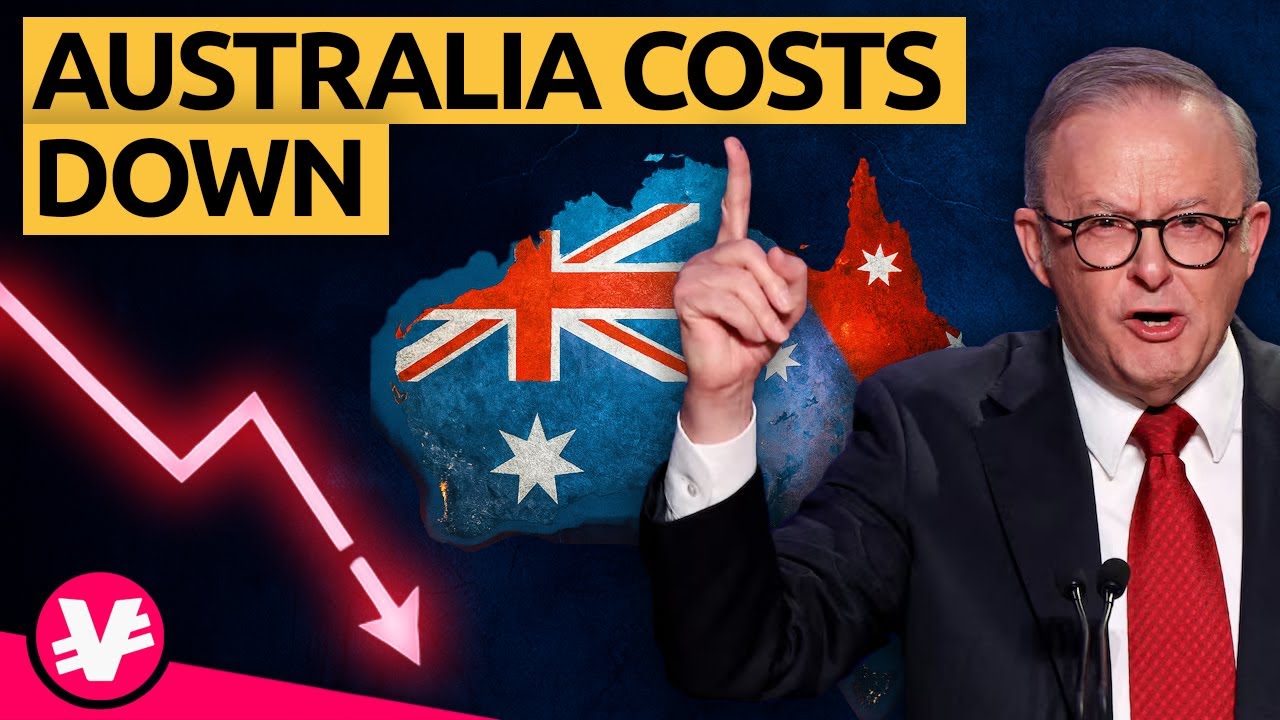
Australian economy Crisis
Australia is facing a suite of troubling economic trends. Growth is slowing, prices are rising and people’s living standards are slipping. Despite a headline unemployment rate that remains around 4.3 %, officials warn that the economy may be trapped in a slow‑growth, high‑inflation environment unless investment and productivity improve. Households are feeling the strain as wages fail to keep pace with costs and the housing market becomes increasingly inaccessible.Official national accounts show that the economy grew by only 0.6 % in the June 2025 quarter and by 1.3 % over the year; the terms of trade fell and the household saving ratio slid to 4.2 %. Living cost indexes rose between 0.6 % and 1.5 % in the September quarter, with housing and recreation costs making the biggest contribution. Consumer prices increased 1.3 % in the September quarter and 3.2 % over the year, while wages grew only 0.8 % in the June quarter and 3.4 % annually. The resulting squeeze on household budgets is causing real incomes to stagnate.Underlying inflation has accelerated to around 3 %, reflecting higher electricity, fuel and services prices. The September inflation pulse overshot forecasts and dashed hopes of a quick rate cut; electricity prices jumped 9 % in the quarter, holiday travel costs rose 2.5 % and local government charges climbed 6.3 %. Analysts note that real wages are unlikely to regain their 2011 purchasing power until the latter part of this decade.Housing is the most visible symptom of the malaise. About one‑third of households rent, and median advertised rents have increased by roughly 48 % over the past decade; they rose 5.5 % between the first quarter of 2024 and the first quarter of 2025. More than 1.26 million low‑income households spend over 30 % of their disposable income on housing, including 44.5 % of mortgage holders and 20.5 % of renters. Median house prices have risen by 8.6 % in the past year, far outpacing incomes, and home values rose 1.1 % in October alone. Investor lending now accounts for two in every five new home loans, with the value of these loans rising 17.6 % and calls emerging for regulators to curb landlord credit growth. A government scheme allowing first‑home buyers to borrow with a 5 % deposit effectively grants buyers the equivalent of a $120 000 deposit on an $800 000 home; critics warn that this incentive fuels investor speculation and pushes up prices.Mortgage stress is spreading. Research shows that 27.9 % of mortgage holders were at risk of stress in the three months to August 2025, with 17.9 % extremely at risk. Nearly one million Australians now work two or more jobs – 6.6 % of the employed population – because rising living costs and inflation are outpacing wage growth. Taking on additional employment has become a coping strategy for households trying to meet mortgage repayments and other bills.Young Australians are particularly pessimistic. A national survey found that 85 % of young people experienced financial difficulty in the past year and almost four‑fifths believe they will be worse off than their parents. Fewer than half expect to own a home, and about 44 % have experienced unemployment while 60 % have endured underemployment. Poverty is widespread: more than one in seven people (14.2 %) and one in six children live below the poverty line, defined at 50 % of median after‑tax household income, and more than 57 % of low‑income renters are in housing stress. Rents in major cities have risen between 34 % and 41 % since 2021, deepening financial hardship.Beneath the veneer of a modestly strong labour market lie deepening structural problems. Per‑capita economic output has contracted at various points over the past two years, and productivity growth has slowed. Officials acknowledge that without a revival of investment and productivity, the country risks a prolonged period of sluggish growth and persistent inflation. Rising housing costs, real wage stagnation, mortgage stress and youth pessimism all point to an economy that is leaving many behind. Unless these issues are addressed with urgency, something terrible will indeed continue to happen in the Australian economy.
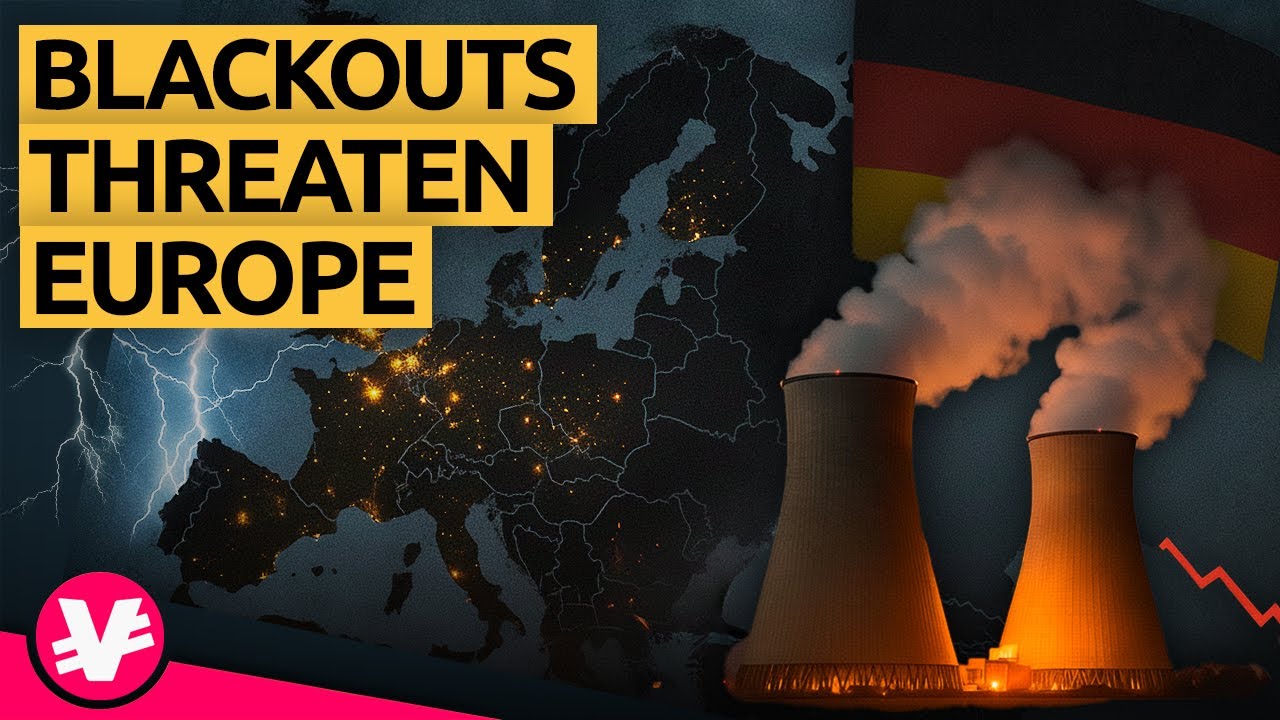
Europe’s power shock
On 28 April 2025, an unprecedented power failure plunged most of Spain and Portugal into darkness. Within seconds the Iberian Peninsula lost around 15 gigawatts of generation—roughly 60 % of demand. Flights were grounded, public transport stopped, hospitals cancelled routine operations and emergency services were stretched. Spain’s interior ministry declared a national emergency, deploying 30 000 police officers, while grid operators scrambled to restore power. The outage, thought to have originated in a failed interconnector with France, highlighted the fragility of Europe’s interconnected grids. An industry association later reported that it took 23 hours for the Iberian grid to return to normal capacity.Energy analysts noted that the blackout was not only a technical failure but also a structural one. Spain and Portugal depend heavily on wind and solar power, which provide more than 40 % of Spain’s electricity and over 60 % in Portugal. These sources supply little rotational inertia, so when the France–Spain interconnector tripped the system lacked the flexibility and backup capacity to stabilise itself. Reliance on a single interconnector also left the peninsula “islanded” and unable to import power quickly.A continent on edgeThe Iberian blackout came against a backdrop of soaring energy prices, economic malaise and rising electricity demand from data centres and electrified transport. Europe has spent the past two years grappling with the fallout from Russia’s invasion of Ukraine, which cut cheap gas supplies and forced governments to scramble for alternative fuels. Germany’s Energiewende, once a model for the energy transition, has been strained. After shutting down its last three reactors on 15 April 2023, Germany shifted from being a net exporter of electricity to a net importer; by November 2024 imports reached 25 terawatt‑hours, nearly triple the 2023 level. About half of the imported electricity came from France, Switzerland and Belgium—countries whose power systems are dominated by nuclear energy. Germany’s gross domestic product shrank 0.3 % in 2023 and was expected to contract again in 2024, and a survey of 3 300 businesses found that 37 % were considering reducing production or relocating because of high energy costs; the figure was 45 % among energy‑intensive firms.The collapse of domestic nuclear generation has increased Germany’s reliance on coal and gas. In the first half of 2025 the share of fossil‑fuel electricity rose to 42.2 %, up from 38.4 % a year earlier, while power from renewables fell by almost six percent. Coal‑fired generation increased 9.3 % and gas‑fired output 11.6 %; weak winds cut wind output by 18 %, even as solar photovoltaic production jumped 28 %. The result has been higher emissions and greater dependence on imports.Yet Germany’s grid remains resilient: the Federal Network Agency reported that power disruptions averaged 11.7 minutes per customer in 2024—one of the lowest figures in Europe—and the energy transition has not compromised supply security. Nevertheless, researchers warn that unexpected shocks like the Iberian blackout could occur if investment in grid flexibility and storage does not keep pace.Nuclear renaissance across EuropeThe energy crisis has prompted many European governments to re‑examine nuclear energy. Belgium has repealed its nuclear‑phase‑out law and plans new reactors, arguing that nuclear power provides reliable, low‑carbon electricity. Denmark, Italy, Poland, Sweden and Spain have all signalled interest in building new plants or extending existing reactors. Italy intends to bring nuclear power back by 2030, while Denmark and Sweden are exploring small modular reactors. The European Union already has about 100 reactors that supply almost a quarter of its electricity. Nuclear plants emit few air pollutants and provide round‑the‑clock power, making them attractive for countries seeking to cut emissions and reduce reliance on gas. Critics remain concerned about waste disposal and the possibility that investment in nuclear could divert resources from renewables.This shift is visible at the political level. In September 2025, France and Germany adopted a joint energy roadmap that recognises nuclear energy as a low‑carbon technology eligible for European financing. The roadmap aims to end discrimination against nuclear projects and represents a departure from Germany’s long‑standing opposition. It does not alter national policies but signals a shared stance in forthcoming EU negotiations.Germany’s political U‑turnGermany’s nuclear exit has become a central issue in domestic politics. Surveys show that two‑thirds of Germans support the continued use of nuclear energy, and more than 40 % favour building new plants. A 2024 report argued that there are no significant technical obstacles to restarting closed reactors and that three units could be back online by 2028 if decommissioning were halted, adding about 4 gigawatts of capacity. The same report noted that a moratorium on dismantling reactors and amendments to the Atomic Energy Act are urgent prerequisites.During the February 2025 election campaign, conservative leader Friedrich Merz pledged to revive nuclear power and build 50 gas‑fired plants to stabilise the grid. His party’s manifesto proposed an expert review on restarting closed reactors and research into advanced technologies such as small modular reactors. In a surprising political shift, Merz’s government subsequently stopped blocking efforts at the European level to recognise nuclear power as a sustainable investment. At a Franco‑German summit in Toulon, he and French president Emmanuel Macron agreed on the principle of non‑discrimination for nuclear projects in EU financing.However, the internal debate is far from settled. Katherina Reiche, Germany’s economy and energy minister, ruled out a return to conventional nuclear plants, saying that the phase‑out is complete and that companies lack the confidence to invest. She argued that the opportunity to extend the last three reactors during the crisis had been missed and emphasised the government’s focus on developing a domestic fusion reactor and potentially small modular reactors. Reiche also insisted on a “reality check” for renewable expansion and called for up to 20 gigawatts of new gas‑fired backup capacity. Her position reflects caution within the coalition, and some experts note that restarting closed reactors may face legal and economic hurdles.Industrial relief and future challengesHigh energy costs continue to burden German industry. In November 2025 the ruling coalition agreed to introduce a subsidised power price of five euro cents per kilowatt‑hour for energy‑intensive companies until 2028, pending EU approval. The plan aims to ease the competitive disadvantage faced by manufacturers and includes tendering eight gigawatts of new gas‑fired capacity. Critics argue that subsidies are a stop‑gap and that longer‑term competitiveness requires affordable, low‑carbon baseload power and streamlined permitting for renewable projects.The Iberian blackout served as a warning that Europe’s future grid must be flexible and resilient. Analysts emphasise the need for more interconnectors, battery storage and demand‑side management to accommodate variable renewables. Germany’s grid reliability remains among the best in Europe, yet the country’s growing dependence on imports and fossil fuels raises concerns about security and climate targets. The energy crisis has revived nuclear energy as a serious option across Europe, forcing policymakers to balance decarbonisation with security of supply. Whether Germany fully embraces nuclear again remains uncertain, but the debate underscores a broader realisation: the energy transition requires a diversified mix of technologies, robust infrastructure and pragmatic policies rather than dogma.

New York’s lost Luster
New York City long prided itself on drawing the world’s brightest minds and deepest pockets. Yet the past decade has brought a slow ebb in the pool of people who power its economy. Population figures show the city’s ascent faltering: after years of growth, the number of residents began to decline in 2017 and then plunged by nearly half a million between April 2020 and July 2022. A modest rebound of about 120 000 people since 2022, largely through international migration, has not fully offset the losses. Domestic migration patterns reveal that most leavers initially head to suburbs around New York, but the states that gain the most are low‑tax, fast‑growing destinations such as Florida and Texas. High costs and quality‑of‑life concerns are recurring themes among those who leave.Recent estimates released in 2025 show that New York’s pandemic‑era population decline is reversing. The city added about 87 000 residents between July 2023 and July 2024, lifting its total population to roughly 8.478 million. The state as a whole gained around 130 000 residents over the same period, recouping one‑third of the half‑million people lost between April 2020 and July 2022. These two consecutive years of growth reflect improved counts of international migration and shelter populations. Nevertheless, net domestic outmigration remains substantial—around 121 000 people in 2024—though that figure marks the lowest level since 2013 and is largely driven by low‑ and middle‑income households.Millionaires and high‑earners: shrinking share of the nation’s wealthNew York’s public services depend heavily on a small number of wealthy residents. In 2022 millionaires represented less than 1 % of tax filers yet provided 44 % of state and 40 % of city personal‑income tax revenue. That reliance is threatened by a marked decline in the city’s share of national wealth. From 2010 to 2022 New York’s share of the United States’ millionaire households fell from 12.7 % to 8.7 %, dropping the state from second to fourth place behind California, Florida and Texas. While the number of millionaires in New York almost doubled during that period, comparable households more than tripled in California and Texas and quadrupled in Florida. Had New York retained its 2010 share of millionaires, the state and city would have collected about US$13 billion more in personal‑income tax in 2022.The erosion is visible in migration data. Between 2019 and 2020, tax filings show that the number of city residents earning between US$150 000 and US$750 000 fell by nearly six percent, while those making more than US$750 000 dropped by almost ten percent. A study of address‑change data compiled by the state’s tax department found that in 2020 and 2021 more than six percent of millionaire households updated their addresses to locations outside New York; by 2023 that rate had fallen to below three percent, but it remains higher than before the pandemic. Meanwhile, high earners pay a combined state and city marginal tax rate that can exceed 13.5 %, a national high. Moving to nearby Connecticut can save a household earning US$1 million more than US$70 000 a year in state and local income taxes, and a US$5 million property can attract roughly US$23 000–48 000 less in annual property taxes. Such disparities give affluent households incentives to move without losing access to New York’s cultural attractions.The pull of the Sun Belt and other competitorsThe magnetism of Florida and Texas rests not only on their sunny climates. Neither state levies an income tax, and both boast lower living costs. Census data released in January 2025 show that Florida gained around 64 000 residents from other states between July 2023 and July 2024, while Texas added more than 85 000. During the same period New York recorded a net domestic migration loss of roughly 121 000 people. A report tracking wealth flows found that between 2013 and 2022 New York lost about US$517.5 billion in cumulative resident income as households moved away, while New Jersey lost US$170.1 billion; Florida on the other hand gained over US$1 trillion. Average incomes of people relocating from New York to Florida’s Miami‑Dade and Palm Beach counties exceeded US$266 000 and US$189 000 respectively.Low taxes are not the only attraction. A detailed look at job trends reveals that New York is slowly losing ground in industries it once dominated. Since 1990 the share of city workers employed in finance and insurance has slipped from 11.5 % to 7.7 %. Of the 233 000 finance jobs created nationwide over the past five years, the state captured only 19 000. Major firms have been shifting managers and back‑office staff to lower‑cost markets such as Dallas, Salt Lake City, Alpharetta (Georgia) and Charlotte. New York’s combined state and local corporate tax rate can exceed 18 %, according to business associations; regulatory mandates on hiring practices and the high cost of compliance further add to operating expenses. These pressures encourage both start‑ups and established institutions to look elsewhere.Lifestyle factors compound the economic calculus. Median monthly rent in the city now exceeds US$3 600, more than twice the US$1 700 average across the 50 largest U.S. cities. Annual nursery‑care fees average about US$26 000 and basic car insurance costs roughly US$1 729—both among the highest in the country. The federal cap on state‑and‑local tax deductions introduced in 2017 has increased effective tax rates for wealthy residents. High costs of living and limited deductions are cited by some of the city’s billionaire investors, including Paul Singer and Carl Icahn, who moved to Florida in recent years.Business relocations and the corporate dripConcerns over the city’s direction intensified after proposals for higher income and corporate taxes gained traction in the 2025 mayoral election. In the weeks following the vote, state records in Florida show that at least 27 firms registered by New York owners applied to expand operations there, while nine filed to relocate entirely. The mayor of Boca Raton reported that four corporate headquarters are already planning moves to his city, and he has received “too many to count” inquiries since the election. Local economic‑development officials in South Florida confirm that investment bankers and hedge‑fund managers are increasingly scouting office space. Civic leaders have responded by offering targeted incentives and promising to address growing pains such as housing and transport.At home the city’s business landscape is changing. A moving‑industry report based on 24 million recorded moves found that from May 2024 to October 2025 New York lost 8 400 jobs in finance and more than 1 200 chain retail stores closed. While the data do not capture every corporate decision, they suggest that the losses are concentrated in high‑paying sectors that underpin the city’s tax base. Job growth since the pandemic has been skewed toward lower‑paid fields such as home healthcare and social assistance. Inflation‑adjusted private‑sector wages in New York fell 9 % between January 2020 and August 2025, whereas national wages rose 3 %.Not just the wealthy: the middle‑class exodusThe narrative of billionaires fleeing masks a broader challenge. Data from the same moving‑industry report reveal that households earning between US$51 000 and US$200 000 account for the largest number of departures from New York City. People making US$51 000–100 000 recorded 66 158 outflows, followed closely by the US$101 000–200 000 group with 62 209. In contrast, departures among high‑income residents fell after the 2025 primary election. The report also notes that 88 % of newcomers earn under US$200 000, signalling a shift toward a lower‑income demographic. Working‑class and middle‑income households cite rising housing costs and the cost of raising children as primary reasons for leaving.Research by an independent fiscal institute offers further nuance. After analysing eight years of migration records, the institute found that high earners typically move out of New York State at about one‑quarter the rate of other residents. The surge in wealthy departures during 2020 and 2021 was largely a temporary response to pandemic‑induced remote work. Migration rates for high earners returned to pre‑pandemic levels by 2022, and the state gained 17 500 millionaire households from 2020 through 2022 despite losing about 2 400. Statistical analysis showed no significant evidence that recent tax increases prompted high‑income migration; when affluent New Yorkers do move, they often choose other high‑tax states. Independent fact‑checkers note that working‑class New Yorkers, particularly Black and Hispanic residents and families with young children, leave at much higher rates than wealthy households.Policy debates and social costsDespite an improving population count, structural pressures remain. New York spends US$9 761 per resident on welfare and education—72 % more than Texas and 130 % more than Florida. Low‑income renters now devote 54 % of their income to rent, up from under 40 % in 1991; even a well‑paid professional must earn at least US$151 600 annually to ensure that rent on a studio consumes only 30 % of income. Without a rebound in finance or a dramatic housing boom, business leaders warn that New York could devolve into an “economically ordinary” US city, burdened by high rents and expanding welfare obligations.Political debates have sharpened these tensions. The 2025 mayoral frontrunner, Zohran Mamdani, proposes adding a two‑percentage‑point surcharge on incomes above US$1 million and raising the corporate income‑tax rate to 11.5 % to fund universal childcare and free buses. Experts point out that tax‑induced mobility among high earners is small: studies by Northwestern University, the EU Tax Observatory and the Fiscal Policy Institute indicate that wealthy households rarely move solely because of tax differentials. Nevertheless, policy analysts caution that imposing the nation’s highest marginal rates could gradually erode the tax base.Statistics from the Citizens Budget Commission show that more than 125 000 New Yorkers relocated to Florida between 2018 and 2022, carrying nearly US$14 billion in adjusted gross income. Such figures fuel both sides of the debate: proponents of higher taxes argue that migration flows are limited, while opponents warn that revenue losses could accelerate. The city’s 2025 “City of Yes” zoning reforms spurred construction of about 34 000 apartments in a single year, but housing supply remains tight. The interplay between taxes, housing costs and public services will determine whether New York regains its footing or continues to lose ground to lower‑cost competitors.A city at a crossroadsNew York’s appeal has always rested on its ability to offer unmatched cultural life, economic opportunity and diversity. The recent outflows of wealth, talent and businesses threaten this model. With millionaires comprising less than one percent of residents yet contributing nearly half of personal‑income tax revenue, the departure of even a few thousand people can blow a hole in public finances. The value proposition for middle‑income families is equally in jeopardy as housing and childcare costs soar. Meanwhile, the definancialisation of the local economy and the relocation of corporate headquarters erode the city’s job base. Taken together, these trends give credence to the image of a city that is “sinking” under the weight of its own costs.Yet the picture is not one of unrelenting decline. International migration, natural population growth and inbound investment continue to sustain New York. Surveys show that residents still value the city’s parks, cultural institutions and transit network despite concerns about safety and affordability. The challenge for policymakers is to balance progressive social aims with economic competitiveness: to improve public services and housing affordability while keeping tax rates and business costs from driving away the very people and companies who fund them.

Hidden Cartel crisis in USA
Organised crime in the Americas is dominated by drug‑trafficking cartels that have grown ever richer and more violent. Public debate often focuses on border security and cross‑border smuggling, yet there are deeper, largely unspoken dynamics that underpin the cartel problem. These include the international supply chain for synthetic drugs, sophisticated money‑laundering networks, cybercrime operations and the complicity of domestic gangs. Understanding these hidden dimensions is essential for any realistic attempt to stem the flow of drugs and violence.A lethal wave of synthetic drugsThe most pressing concern in the United States is the synthetic opioid fentanyl, which has become the deadliest drug in the country. In 2023 fentanyl‑related overdoses claimed around seventy‑five thousand lives and the economic cost of opioid deaths and addiction was estimated at about $2.7 trillion. A dose of two milligrams can kill an adult, and a single gram can be lethal to five hundred people. Despite increased seizures at ports and border crossings, the drug is usually trafficked in small consignments; the median fentanyl seizure in 2024 was just over a kilogram, but each packet holds tens of thousands of lethal doses.China banned the manufacture of fentanyl variants in 2019, but Chinese companies remain the primary suppliers of the precursor chemicals needed for fentanyl production. These substances are shipped from ports such as Hong Kong to Mexican ports like Lázaro Cárdenas and Manzanillo, where cartel groups collect them. Two Mexican organisations, the Sinaloa cartel and the Jalisco New Generation cartel, dominate the production of fentanyl for the U.S. market. U.S. law enforcement notes that four‑fifths of individuals arrested for fentanyl trafficking are American citizens, which underscores the domestic dimension of the crisis.Money laundering and Chinese networksCartels rely on complex financial operations to move billions of dollars in proceeds. Recent enforcement actions reveal a growing partnership between Mexican cartels and Chinese money‑laundering organisations. These brokers offer low commissions and anonymity through the use of social‑media apps and cryptocurrencies; they settle transactions via WeChat and blockchain without leaving paper trails, making it harder for authorities to interdict funds. Payments to Chinese companies for drug precursors have reportedly risen by roughly 600 percent between 2022 and 2023. Investigations show that a vast majority of Chinese precursor manufacturers accept cryptocurrency, mainly Bitcoin and Tron, and there has been a significant increase in the use of Ethereum for these payments.Chinese money‑laundering cells are typically small, family‑run operations that nonetheless handle enormous sums. They now provide services not only to Mexican cartels but also to European mafia groups. The cross‑border flow of funds is thus both global and decentralised, using technology to hide transactions from law enforcement. This reality challenges the common narrative that cartel profits are mainly funnelled through traditional banking systems.Corruption and heavy armsAnother overlooked element is the source of the cartels’ weaponry. It is widely assumed that American firearms fuel cartel violence, but much of the heavy arsenal used by cartels—machine guns, rocket‑propelled grenades and shoulder‑launched missiles—is not sold in U.S. gun shops. Intelligence experts report that these weapons are acquired through corruption in Mexico’s security forces. The diversion of military stockpiles in Mexico and Central America gives cartels access to war‑grade arms, amplifying their firepower while complicating efforts to demilitarise the conflict.Corruption also permeates government institutions. Former Mexican defence minister Salvador Cienfuegos and ex‑security chief Genaro García Luna were accused of aiding the Sinaloa cartel. This corruption allows cartels to operate with impunity, undermines public trust and complicates international cooperation. It also explains why direct military intervention by the United States is fraught with risks; any operation would have to distinguish between reliable partners and corrupt officials who may leak intelligence to the enemy.The rise of cyber‑cartelsBeyond drug smuggling and violence, cartels increasingly exploit digital technologies. Organised crime groups in Mexico have embraced cybercrime, buying malware kits and network access from the burgeoning “cybercrime‑as‑a‑service” marketplace. These so‑called cyber‑cartels use dark‑web markets and cryptocurrency to launder money and sell drugs anonymously. One group hacked banking systems to steal over $15 million, proving that cartels are no longer confined to street violence.The threat extends to personal security. Investigative reports describe how cartels access government intelligence platforms, such as a database that aggregates voter records, phone logs and credit‑bureau data. Cartels allegedly purchase this access on the black market, enabling them to geolocate rivals and disappear them without leaving traces. Such capabilities highlight the convergence of organised crime and cyber espionage, suggesting that cartel violence could be complemented by doxxing campaigns or attacks on critical infrastructure if provoked.Cartels and domestic gangsWithin the United States, the cartel problem is not restricted to border areas. Federal investigations reveal that transnational criminal organisations have formed alliances with domestic gangs. More than six thousand active gang investigations are under way, and there are roughly 6,000 cases targeting cartel leadership. Groups such as the 18th Street gang, the Mexican Mafia, the Bloods and the Crips partner with cartels to distribute drugs, launder money and carry out acts of violence. These partnerships underscore that the cartel business model relies on local networks for sales, enforcement and logistics, making it as much a domestic issue as an international one.Government responses and enduring challengesThe U.S. government has responded to cartel expansion with new institutions and sanctions. The formation of the Counter Cartel Coordination Centre and the creation of Homeland Security task forces have led to thousands of arrests and significant drug seizures. Financial sanctions, such as designating the La Línea organisation under anti‑narcotics authorities, aim to disrupt the revenue streams of violent cartels. Moreover, Washington has pressed Beijing to curb precursor exports; cooperation resumed in late 2023 after a period of diplomatic strain.Despite these efforts, experts caution that enforcement alone will not solve the crisis. Sustainable solutions require reducing domestic demand through addiction treatment and education, as well as investing in economic opportunities in Mexico to offer alternatives to the illicit economy. Without addressing root causes, a heavy‑handed approach risks sparking retaliation; cartels could use their cyber capabilities to sow panic or target critical infrastructure in response.Towards a nuanced understandingThe cartel problem no one talks about in the United States is not a single issue but an interlocking system. It begins with precursor chemicals shipped from East Asia, is financed through crypto‑laundered transactions and relies on corrupt officials and domestic gangs. Cartels have adapted to the digital age, developing cyber‑crime capabilities and exploiting government databases to intimidate rivals and undermine public trust. While American political debates often focus on building walls and militarising the border, the more difficult task is confronting the underlying networks that make cartels resilient.To address this hidden crisis, policy must extend beyond border security. It should encompass international cooperation to control chemical precursors, financial regulation to disrupt crypto‑based laundering, measures to root out corruption within security services and cyber‑security initiatives to prevent cartels from acquiring sensitive data. Above all, demand reduction through treatment and economic development both in the United States and Mexico remains indispensable. Recognising these unseen dimensions is the first step toward crafting a strategy that can stop the lethal tide of fentanyl and weaken the cartels’ hold on the hemisphere.

Argentina's radical Shift
Argentina is in the middle of a historic experiment. When libertarian economist Javier Milei took office on 10 December 2023, he inherited an economy gripped by triple‑digit inflation, a fiscal deficit equal to around 15 % of GDP, negative foreign‑exchange reserves and a country risk premium that made external financing almost impossible. Weekly price jumps were eroding purchasing power and nearly half of Argentines lived in poverty. In the 1990s a reform wave under President Carlos Menem introduced a currency board, privatized state companies and liberalised trade; those changes briefly stabilised prices but unravelled after persistent fiscal deficits led to a sovereign default in 2001. Milei argues that this earlier programme did not go far enough and has promised “the largest structural reform in Argentine history,” which he says is eight times larger than Menem’s and will transform the country into “the freest nation on the planet”.Shock Therapy and AusterityWithin days of taking office, Milei unleashed a package of policies that he called shock therapy. His finance minister devalued the peso by more than 50 %, set a crawling peg for the currency, halved the number of ministries and announced a fiscal adjustment of around 5 % of GDP. Government ministries were slashed from 18 to nine, thousands of public‑sector contracts were terminated and many public works projects were cancelled. A plan to shrink the state by roughly a third included closing state‑owned news agencies and eliminating subsidies for culture and the arts. Energy and transport subsidies — which had cost the treasury US$12 billion in 2022 — were cut sharply, while a tax amnesty was introduced to lure dollars stashed abroad back into the banking system. Import and export restrictions were lifted, price controls removed and the central bank stopped financing the treasury, ending a practice that economists blame for Argentina’s chronic inflation.The “chainsaw” approach shocked a society accustomed to state intervention. Public sector workers, construction employees and pensioners were hit hard. Tens of thousands lost their jobs or saw salaries and pensions lag behind prices. Construction activity collapsed after public works were frozen, costing an estimated 200,000 jobs, and austerity measures reduced funding for universities and hospitals. Unemployment and poverty surged in early 2024; some surveys reported poverty peaking at around 53 %. Milei acknowledged the pain but insisted that “there is no money” and that the alternative was hyperinflation.Early Results and Second‑Year ProgressThe shock therapy delivered results faster than many economists expected. After spiking briefly, monthly inflation plunged from roughly 25.5 % in December 2023 to 2.7 % by October 2024. Fiscal austerity and the elimination of money printing produced Argentina’s first budget surplus in more than a decade. By mid‑2024 the economy ran a trade surplus and improved its trade balance by more than US$18 billion, reflecting a decline in imports and an export boom driven by agricultural products and the Vaca Muerta shale field. Country‑risk indicators fell to their lowest levels in years, bonds rallied and the gap between official and parallel exchange rates narrowed sharply. A tax‑amnesty programme drew some US$19 billion back into the banking system, boosting reserves. Monthly inflation continued to fall into 2025, reaching around 2 %, a deceleration described by analysts as unprecedented.Second‑Year ProgressBy the middle of 2025 the government began to point to clear signs of economic turnaround. Output data show that GDP grew by 6.3 percent and investment by 32 percent year‑on‑year in the second quarter of 2025 after contracting early in Milei’s term. International institutions forecast overall growth of 4.7–5.5 percent for 2025. Annual inflation, which had reached 289 percent early in his administration, fell to 34 percent, equivalent to roughly 2 percent per month, and the poverty rate dropped from 53 percent to 32 percent, lifting more than 11 million people above the poverty line. Consumption and exports recovered, and employment started to grow.The administration attributes these gains to aggressive cuts and deregulation. It claims to have reduced the federal budget by 30 percent, balancing it by Milei’s second month in office. Public debt fell by about 12 percent, and the president vowed never again to run a deficit. A new ministry dedicated to deregulation abolished ten ministries, merged agencies and fired over 53,000 public employees. As of August 2025, the government had enacted 1,246 deregulations, roughly two per day, cutting red tape in energy, agriculture, real estate and health. The programme also repealed 22 taxes and reduced export duties, scrapped import licences and raised the limit on duty‑free purchases. These measures lowered prices for many goods — for example, home appliances fell 35 percent after import licences were abolished — and allowed livestock producers to import vaccines at a third of the previous cost. Rental deregulation tripled housing supply and cut real rents by around 30 percent, and mortgage lending has surged from a handful of loans in 2023 to a tripling of new mortgages in 2024. Together these changes are intended to create the freest economy in Argentina’s history.Milei used this momentum to claim that his government was “the best in history” and that his fiscal adjustment was the largest ever attempted. In an interview he declared that his administration had already executed a structural reform eight times larger than Menem’s and that his deregulation ministry was scrapping “between one and five regulations every day,” with more than 3,200 reforms still pending. The reforms have propelled Argentina up 90 places in an international economic‑freedom index, the president bragged, and he vowed to keep pushing until the country surpasses Ireland, Switzerland and New Zealand.Social Costs and Rising DissentDespite the improvement in macro indicators, the social consequences of Milei’s programme are severe. Real wages have fallen, and poverty, though down from its peak, still affects almost half of the population. Retirees have seen the real value of pensions eroded, with the average minimum pension hovering around US$300. Cuts to university budgets have left some campuses struggling to pay electricity bills. High interest rates — imposed to defend the peso — have frozen bank lending and provoked a steep drop in economic activity, especially in construction and manufacturing. Critics argue that opening the economy too quickly exposes local industries to cheap imports and risks deindustrialisation. Protests by pensioners, students and public‑sector unions have become more frequent, and opposition politicians warn that the recession will deepen if austerity continues unabated.Milei dismisses such criticisms as coming from the “political caste” he has vowed to defeat. He believes the temporary pain is a necessary price for eliminating structural distortions. To mitigate hardship, the government doubled the universal child allowance and increased food assistance, but for many households the support has not offset the effects of subsidy cuts and high inflation.Midterm Mandate and Reform BlitzArgentina’s October 2025 midterm elections turned into a referendum on Milei’s policies. The libertarian alliance La Libertad Avanza (LLA) captured more than 40 percent of the vote and more than doubled its share of seats in Congress. Preliminary results show the party winning 13 of the 24 Senate seats up for election and 64 of the 127 seats contested in the lower house, while the main Peronist coalition fell to second place. This landslide, combined with a turnout of 67.9 percent — the lowest since Argentina’s return to democracy — handed Milei the political capital he needs to advance reforms. Analysts say the midterm win “raised the prospect of structural change on a scale Argentina has not seen in decades”, and investors see it as a positive sign that a more market‑friendly Congress will back his agenda.U.S. support played an important role. In the weeks before the vote Washington offered a twenty‑billion‑dollar currency swap line and another twenty‑billion‑dollar loan facility to shore up Argentina’s reserves. After the election, analysts noted that U.S. backing of up to US$40 billion would encourage longer‑term investment in Argentine assets. Investors anticipate that Milei will now pursue sweeping labour and tax reforms that could unlock billions of dollars in foreign investment. Plans under discussion include simplifying the tax system, making labour contracts more flexible and reducing pension costs. A simplified tax regime, flexible labour laws and lower pension obligations are seen as prerequisites for Argentina’s competitiveness and will be key components of Milei’s “Pacto de Mayo” programme.The election also cemented investor confidence in the government’s Régimen de Incentivos para Grandes Inversiones (RIGI). Under this scheme, companies investing more than US$200 million receive 30‑year guarantees of legal and tax stability and a reduced corporate income tax of 25 percent, down from the standard 35 percent. Observers say the combination of a strengthened Congress and the RIGI regime will attract more foreign capital to mining, energy and infrastructure projects.International investors have taken note. Improved fiscal accounts and the promise of structural reform have attracted pledges of major investments. Energy companies have committed US$25–30 billion to build a liquefied natural gas terminal at Vaca Muerta, a project expected to create 50,000 jobs and generate US$300 billion in exports over two decades. Mining firms plan a US$15–17 billion copper and gold project in San Juan, described as the largest private investment in Argentine history. A technology consortium led by a U.S. artificial‑intelligence company has announced a US$25 billion data‑centre project in Patagonia. The United States has signalled support with a US$20 billion swap line and potential additional financing. Analysts believe that a simpler tax regime, flexible labour laws and lower pension costs could unlock billions in mining, energy and infrastructure investment.Yet Milei must still build alliances to turn proposals into law. Even after the midterms his party lacks a majority in both houses, and he needs support from centrist and provincial parties to enact reforms. Some lawmakers remain cautious; one Peronist congressman suggested the government must seek consensus rather than impose a programme unilaterally. Allies warn that fiscal discipline is non‑negotiable, but labour reforms could face resistance from unions and courts. Failure to build durable coalitions could stall the reform blitz and undermine investor confidence.Comparing with the 1990sThe last time Argentina attempted such sweeping changes was during the early 1990s. Hyperinflation in 1989–90 forced a political consensus for reform, and the government introduced a Convertibility Plan in 1991 that fixed the peso at par with the U.S. dollar and privatised most state enterprises. The package included trade liberalisation, tax reforms, and the replacement of the pay‑as‑you‑go pension system with private capitalisation. For a time the economy boomed and inflation collapsed, but the plan’s rigid exchange‑rate peg and lack of fiscal discipline eventually contributed to the devastating 2001 crisis. Milei argues that those reforms were incomplete and financed with debt. His programme goes further by eliminating monetary financing, balancing the budget, liberalising currency controls and aggressively deregulating markets. By claiming that his reforms are eight times more extensive than Menem’s, he positions his agenda as the largest structural change since the 1990s.Outlook: Promise and PerilMilei’s experiment has altered Argentina’s economic narrative. A year of aggressive austerity has stabilised inflation and restored fiscal discipline, leading to cautious optimism among investors. Massive energy, mining and technology projects could transform the export mix and relieve Argentina’s perennial foreign‑exchange constraint. Support from the United States and multilateral lenders provides a financial cushion while reforms take root. If labour, tax and pension bills pass, Argentina could enjoy a more competitive tax code, flexible labour market and sustainable social‑security system, changes that companies say are necessary for long‑term investment.But risks are substantial. Despite the fiscal surplus and lower inflation, Argentina remains in a deep recession; output fell 3.4 percent in the first half of 2025 and is expected to decline almost 4 percent for the year. Consumer demand has collapsed and unemployment has risen to about 8 percent, while nearly half of workers lack formal contracts and social security. Tens of thousands of public‑sector jobs have been cut, and many households now rely on multiple jobs because wages lag behind inflation. The peso remains overvalued: after an initial devaluation, the government has maintained a 2 percent per month crawling peg, causing the gap between the official and unofficial exchange rates to widen again. Import taxes of 17.5 percent and licensing requirements make trade unpredictable, and the administration plans to reduce the levy to 7.5 percent only gradually. These barriers, together with currency controls that limit citizens to changing US$200 of currency per month, continue to discourage investment and could prolong the recession.High interest rates and a strong peso threaten to squeeze exporters, while rapid import liberalisation risks deindustrialisation. Poverty remains high and social unrest could erupt if growth fails to materialise or if reforms are seen as benefiting only elites. Analysts warn that the currency remains vulnerable; mismanagement could reignite inflation or force a disorderly devaluation. Politically, Milei must shift from a confrontational approach to consensus‑building. Although the midterm strengthened his hand, he still lacks an outright majority and needs to negotiate with provincial governors and centrist lawmakers to pass labour, tax and pension bills. His ability to convert ambitious reforms into enduring state policy will determine whether Argentina’s new era becomes a sustainable success or another aborted experiment.

Al-Qaida’s growing ambitions
In recent years, Al‑Qaida has quietly restructured and expanded key elements of its network — from training camps and regional affiliates in Afghanistan and beyond, to renewed focus on propaganda and recruitment through modern communications. This resurgence, though still fragmented, increasingly suggests that Al-Qaida is laying groundwork not only for sporadic terror attacks, but for establishing durable footholds which could evolve into de facto zones of control — a development that should alarm European security institutions.Once seen as largely diminished with the removal of high-profile leadership, Al-Qaida has demonstrated remarkable resilience. Its decentralized “network of networks” model enables local affiliates and loosely connected cells to operate with considerable autonomy, while still drawing ideological coherence and logistical support from the core. This model lowers entry barriers for local militant groups inspired by its ideology — a subtle but potent evolution from the classic “top-down” terror organization.Moreover, Al-Qaida’s adoption of new technologies complicates detection. Terrorist actors increasingly rely on encrypted platforms, the dark web, and even generative-AI tools to recruit, radicalize and coordinate operations. This digital shift enables remote radicalization and planning, reducing the need for physical sanctuaries — but also masking activities from traditional intelligence and law-enforcement scrutiny.Regions of instability — such as parts of the Middle East, North Africa, and the Sahel — have become fertile ground for Al-Qaida’s expansion. These zones, often neglected in public discourse, now serve as incubators for networks that may aim to export influence, operatives, or refugees toward Europe. Historical experience shows that even small cells — when radicalized, organized, and motivated — can inflict damage beyond their geographical origins.For Europe, the threat lies not only in headline-grabbing terror attacks, but in the gradual erosion of security through infiltration, radicalization, sleeper-cells, and covert networks. Should Al-Qaida succeed in consolidating territories or safe havens, the challenge would shift from reactive counterterrorism to a strategic struggle over long-term stability.Now more than ever, European governments and institutions must treat Al-Qaida as a dynamic, evolving network — not a relic of the past. Proactive, coordinated efforts in intelligence-sharing, deradicalization, monitoring of migration flows, and disruption of online propaganda are crucial. Ignoring the signs of Al-Qaida’s silent reorganization would be a dangerous gamble: the consequences could redefine Europe’s security landscape for decades.

Saudi shift shakes Israel
Saudi Arabia has initiated a series of strategic decisions that are quietly but fundamentally altering the balance of power in the Middle East. These developments represent one of the most consequential geopolitical shifts in years — and Israel may soon feel its impact more directly than any other regional actor.Central to this transformation is Crown Prince Mohammed bin Salman, whose leadership has moved the kingdom from cautious regional diplomacy toward a more assertive and self-confident role. Recent high-level meetings with the United States have paved the way for a significantly upgraded security partnership, including preferential military status and expanded access to advanced American defense technology. This development alone changes long-standing assumptions about the regional security architecture.At the same time, Saudi Arabia’s long-discussed normalization with Israel remains theoretically possible — but under conditions that have changed dramatically. Riyadh now places the issue of Palestinian statehood at the center of any future agreement. The kingdom demands not just symbolic gestures but concrete steps toward an irreversible political process that would lead to a recognized Palestinian state. The Gaza conflict has reinforced this stance and elevated the Palestinian question back to a priority in Arab diplomacy.For Israel, this shift generates several strategic concerns:1. Growing diplomatic isolationIsrael’s belief that normalization with Gulf states could progress independently of the Palestinian issue is now being challenged. Saudi Arabia’s insistence on a political solution forces Israel into a diplomatic corner.2. Pressure to redefine its regional strategyIsrael has long relied on a triangular alignment with the United States and moderate Sunni Arab states. The new U.S.–Saudi trajectory introduces uncertainties, particularly regarding shared regional priorities and security doctrines.3. Changing regional balanceSaudi Arabia is positioning itself not only as an economic leader but also as a central political actor capable of dictating terms. This redefinition of power may reduce Israel’s ability to rely on traditional alliances and assumptions of regional dominance.4. Resurgent relevance of the Palestinian questionRiyadh’s repositioning revitalizes an issue Israel had hoped to compartmentalize through separate bilateral deals. Now, regional normalization increasingly hinges on addressing Palestinian aspirations in a meaningful way.Analysts warn that these changes are not temporary. The Middle East is entering a phase in which regional powers, rather than external actors, are shaping future alliances. Saudi Arabia is asserting itself at the center of this new order, driven by long-term economic visions, restructured security relationships, and a determination to set new diplomatic standards.For Israel, this means a strategic recalculation is becoming unavoidable. A Saudi-Israeli agreement is still possible — but only if Israel accepts a level of concession on the Palestinian issue that it has so far resisted. Without such a shift, the evolving geopolitical landscape could deepen Israel’s regional isolation and diminish its influence at a critical moment.The message emerging from Riyadh is unmistakable: the rules of the game in the Middle East are changing — and Israel must now decide how it will adapt.
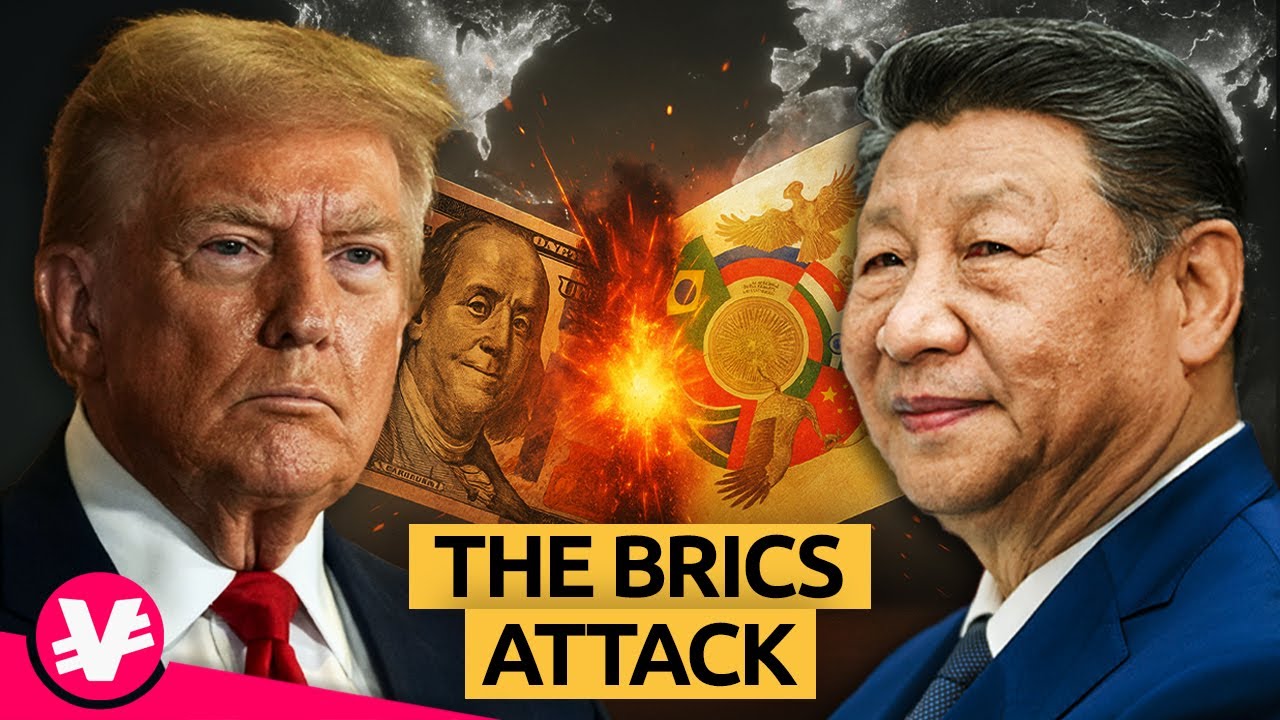
BRICS-Dollar challenge
The BRICS countries are quietly mobilizing economic forces that could destabilize the US dollar’s long-standing dominance — at a time when the dollar appears increasingly vulnerable. Over the past months a clear shift has emerged: the grouping of major emerging economies is focusing on decreasing dollar dependency through bilateral trade in national currencies, while strengthening independent payment systems.Under its 2025 rotating presidency, one of the flagship initiatives is the expansion of BRICS PAY — a payment messaging platform designed to allow member states to settle transactions without using the dollar or traditional Western-dominated banking rails. This development signals a subtle, yet significant, attempt to reshape international trade and finance.Although plans for a single unified “BRICS currency” have been shelved for now — according to recent statements by officials from the presidency country — the strategic pivot toward local-currency settlements and alternative systems for cross-border payments remains very much alive. The goal appears to be less about instant replacement of the dollar, and more about gradual erosion of its monopoly.The motivations are manifold. Many BRICS governments view the dollar’s status not simply as an economic norm, but as a lever of political pressure. Given recent sanctions regimes, trade wars, and sharp swings in US fiscal and monetary policy, trusting a currency so tightly linked to US geopolitical decisions has become increasingly unpalatable. The emerging economies behind BRICS are leveraging their growing share of global trade, commodities, and population to assert greater independence — both economic and political.Analysts warn that while the dollar will likely remain dominant for the foreseeable future — due to its deep liquidity, global acceptance, and entrenched role in reserves and trade — the erosion of its role could have ripple effects. A sustained move by a major bloc of countries to settle trade in local currencies may gradually reduce demand for dollar-denominated reserves, alter global asset flows, and weaken the influence of US financial leverage.For countries and investors around the world, the underlying message is: the financial order may be entering a period of structural transition. While immediate displacement of the dollar seems unlikely, the steady developments within BRICS hint at a future where global transactions are more multipolar, diversified and less US-centric.In short: A large-scale challenge to the USD hegemony is being built not through bold proclamations, but through practical infrastructure and shifting economic habits — and its effects may unfold quietly, yet profoundly.

Trap laid, Ukraine walked in
The geopolitical landscape surrounding the war in Ukraine has shifted dramatically in recent weeks, leading many to argue that a trap was set — and Ukraine stepped straight into it. As pressure mounts around a new peace initiative promoted by former 45. and now 47. U.S. President Donald J. Trump, the debate is intensifying over whether Ukraine has been cornered and whether European nations share a shameful responsibility for the current predicament.The proposed peace framework circulating since late November presents a stark reality: Ukraine would be required to make painful territorial concessions, scale back parts of its military capabilities, and abandon long-term ambitions for deeper integration with Western defence structures. The rationale behind the proposal is packaged as a “pragmatic” path to ending the war, yet the implications would cement strategic gains for Russia and fundamentally weaken Ukraine’s sovereignty.European governments reacted with unease and internal division. Publicly, they emphasise the need for adjustments and caution against any agreement that reshapes borders under pressure. Privately, however, several capitals fear being left alone to shoulder long-term financial and military support should the United States pull back. Some European leaders recognise that approval of the plan could stabilise parts of the continent in the short term, yet at the cost of undermining the very principles they have defended since the war began.For Kyiv, the situation is even more delicate. Ukraine’s leadership has signalled willingness to examine the proposal, but throughout the country the sentiment is overwhelmingly hostile. Soldiers, civil society, and much of the population view the plan as nothing short of a surrender. After years of devastating losses, the idea of codifying territorial fragmentation and weakening national defence is seen as a direct threat to the nation’s survival.To many observers, the timing and structure of the proposal appear intentional. By presenting a plan that heavily favours Russian interests while portraying it as the “only realistic path forward,” Trump effectively places Ukraine under immense diplomatic pressure. If Kyiv rejects the plan, it risks losing political support; if it accepts, it risks losing the country it has fought to preserve.This dynamic also places Europe in an uncomfortable spotlight. While European nations have repeatedly voiced support for Ukraine, the reality is that they have long relied on U.S. leadership for strategic direction, intelligence coordination, and military supplies. Critics argue that Europe’s inability to develop a cohesive and independent defence posture has left Ukraine vulnerable to geopolitical gambits. Now, as the United States reshapes its stance, Europe must confront its shortcomings.The central question is no longer whether Ukraine wants to resist, but whether it still can — and whether Europe will meaningfully help. A peace agreement that weakens Ukraine risks redefining the security architecture of an entire continent, emboldening aggressive revisionism, and eroding confidence in the West’s commitment to defending democratic nations under threat.Whether this moment becomes the beginning of Ukraine’s political end or a turning point in Europe’s strategic awakening depends on the choices made now. What remains clear is that Ukraine cannot afford to be treated as a bargaining chip — and Europe cannot pretend that its own security is separate from Ukraine’s fate.
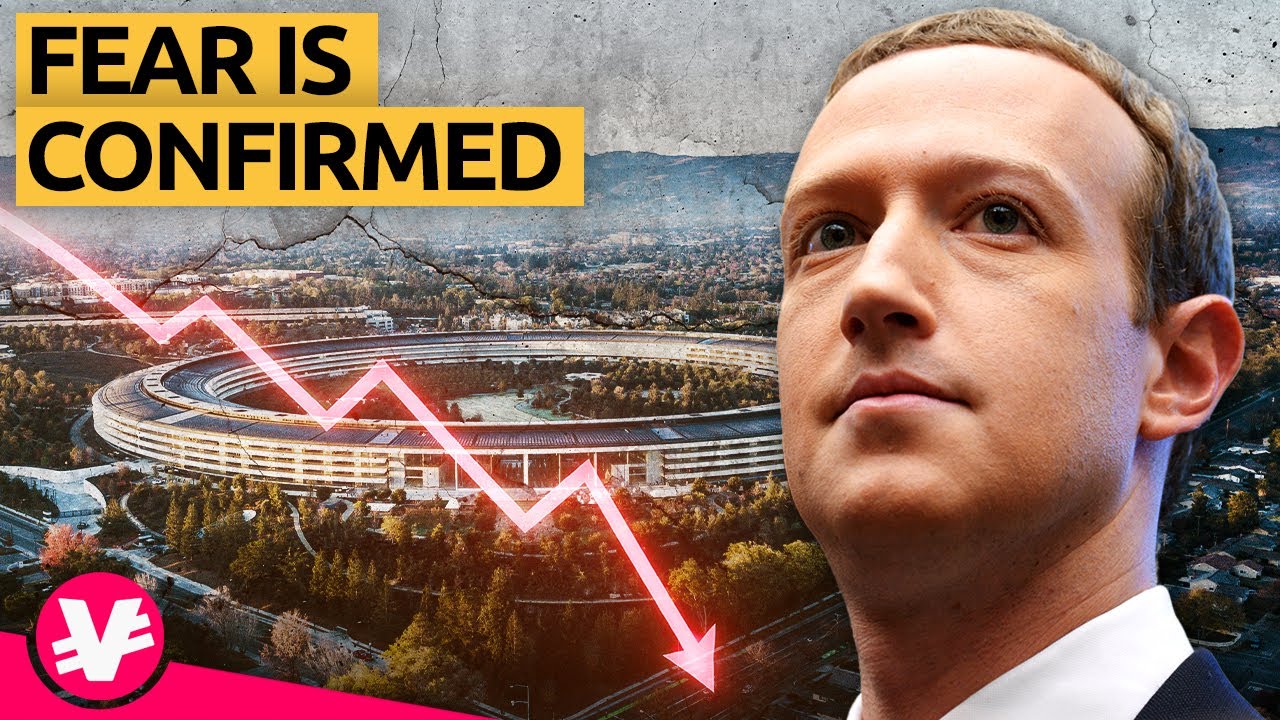
AI bust: Layoffs & Rent surge
The promise of artificial intelligence lit a fuse under California’s economy. Silicon Valley investors showered startups with capital, corporations rushed to build data centers and new AI tools were heralded as the next gold rush. But behind the glossy marketing lies a darker reality: tens of thousands of workers have been laid off and an influx of high‑paid employees has pushed rents to record levels.A wave of cuts across industriesCalifornia’s job market has been hammered in 2025. Employers in the state announced more than 173,000 job cuts in the first eleven months of the year, a rise of almost 14 % compared with the same period last year. By October, about 158,700 job losses had been announced – the highest tally of any state except the District of Columbia. While some cuts stem from weak consumer demand and film industry slowdowns, the adoption of AI has become a major driver. Industry trackers say that automation and new AI projects have been cited in over 48,000 job losses nationwide this year, with more than 31,000 of those cuts occurring in October alone. Since 2023, the introduction of AI tools has been mentioned in roughly 71,000 layoffs.The technology sector has borne the brunt. Companies once seen as secure employers – from chip makers to software giants – have trimmed headcounts amid restructuring and cost‑cutting. Through November, tech firms announced more than 75,000 job cuts in California. Workers at Amazon, Intel, Salesforce, Meta, Paramount, Warner Bros. and Walt Disney have all been affected, and even Apple has joined the list of firms that rarely cut staff. Elsewhere, production studios have slashed positions after pandemic‑era strikes and slower streaming growth. Government austerity measures have compounded the pain, contributing to the highest U.S. layoff total since the first year of the pandemic.Economists note that the layoffs are not limited to one sector. Warehousing, retail and services firms are also cutting staff as automation and AI make some roles redundant. Nationwide, employers announced more than 1.17 million layoffs this year, a five‑year high. The surge has pushed California’s unemployment rate to around 5.5 %, the highest of any state except Washington, D.C. Job seekers are finding it harder to secure new roles; labour market experts say it now takes longer to land a position than it did two or three years ago, a sign of softening demand.An investment boom fuels speculationParadoxically, these job cuts coincide with feverish investment in artificial intelligence. Venture capital firms poured billions of dollars into AI companies in 2025, and California captured nearly 70 % of U.S. venture spending in the first half of the year. Private investment in AI topped $109 billion, while big tech firms collectively committed more than $400 billion to build data centres and purchase advanced chips. Amazon alone said it would invest up to $50 billion to expand supercomputing services. Such outsized spending has prompted warnings from economists and real‑estate forecasters: they argue that an AI‑fuelled stock market bubble is forming, reminiscent of the late‑1990s dot‑com boom, and that investor confidence could sour if expected returns fail to materialise.Analysts at Challenger, Gray & Christmas highlight artificial intelligence as the second‑most common reason for layoffs after general cost‑cutting. In October, AI accounted for 31,039 announced job reductions, while cost‑cutting was responsible for 50,437. The firm’s data show that employers cited AI in nearly 48,400 job cuts during the first ten months of 2025. Hiring plans are also shrinking; companies have announced fewer than half a million new positions this year, the lowest level since 2011. Observers say the combination of aggressive hiring during the pandemic and rising interest rates has made employers more cautious, preferring to streamline operations and invest in automation rather than expand payrolls.Housing costs soar amid an influx of AI talentWhile thousands are losing jobs, a new wave of highly paid engineers and entrepreneurs is arriving to build the AI future. This influx has intensified California’s long‑running housing crisis and sent rents skyrocketing. The Bay Area is ground zero. In San Francisco, demand from AI start‑ups has made securing an apartment feel like a full‑time job. Prospective tenants submit résumés, offer several months’ rent in advance and often bid well above asking prices. Relocation consultants say strategic offers can run $2,000 over the advertised rent.Specific examples illustrate the frenzy. A two‑bedroom apartment on Hayes Street recently leased for $4,500 a month, about 25 % higher than a year earlier. Across the city, the average rent for a two‑bedroom unit has climbed to roughly $4,600, a 14 % annual increase; rents on three‑bedroom homes are up 15 %, and four‑bedroom homes are up 17 %. One high‑end leasing agent reported listing a two‑bedroom unit in Pacific Heights for $12,000 a month, only to see it rent within 24 hours for $14,500. In North Beach, average two‑bedroom rents have reached $5,475 – a 79 % jump from last year – while the typical three‑bedroom in Russian Hill now costs around $12,500, also up 79 %. In the Mission District, rents on four‑bedroom homes have more than doubled from a year ago. Even mid‑market properties are seeing steep increases; one agent said a unit that cost $6,500 last year now goes for $9,800, a 50 % hike.The situation is similar in other tech hubs. In San Jose, median rent across all unit types hovers near $2,900 per month, more than double the national median. One‑bedroom apartments average about $2,934, and two‑bedrooms about $3,506. Luxury units in downtown towers easily exceed $5,000. Vacancy rates around 4 % to 5 % indicate little slack in the market, and roughly 44 % of households rent rather than own. Los Angeles and Orange counties aren’t far behind: average rents were around $2,336 and $2,776 in late 2025 and are projected to rise over the next two years unless construction accelerates. Limited housing supply, high interest rates and strong job growth in aerospace and defense mean rents are likely to keep climbing.For individuals caught in this squeeze, even modest accommodations can be unaffordable. One AI founder recently told of paying $2,300 a month for a tiny room in an Airbnb near the Mission district, sharing a bathroom with a dozen strangers. Young engineers describe spending weeks touring dozens of properties only to be outbid by wealthier newcomers. Some landlords demand tenant résumés, personal references and perfect credit scores before entertaining an application.Looking aheadCalifornia’s simultaneous surge of layoffs and soaring rents underscores the volatility of the current economic moment. On the one hand, artificial intelligence is driving innovation and attracting billions of dollars in investment. On the other, companies are trimming jobs, automating tasks and relying on smaller workforces. The mismatch between labour demand and housing supply has created a perfect storm: a softening job market for many workers and a brutal housing hunt for those still cashing in on the boom.Economists caution that without significant increases in housing construction and more transparent investment practices, the state could repeat the cycles of past tech bubbles. Rising interest rates and high levels of debt could make financing new projects more expensive, while a sudden reversal in AI valuations could leave investors and employees alike exposed. For now, Californians are left navigating an economy where prosperity and precarity coexist, with mass layoffs and sky‑high rents serving as the starkest signs that the AI bubble’s promise comes with significant risks.

COSTCO profits from Fees
Costco’s cavernous warehouses and legendary bargain bins hide an unusual business secret: the company makes surprisingly little money from the products rolling through its tills. Instead, the bulk of its earnings come from selling the right to shop there. Shoppers pay annual fees – US$65 for a basic membership or US$130 for an executive tier – and those dues power almost the entire enterprise. Costco’s chief executive has even remarked that the most important item the retailer sells isn’t a giant jar of mayonnaise but the membership card itself.A Subscription Model in DisguiseWhile rival supermarkets mark up goods by 25 % to 50 %, Costco keeps its average merchandise markup at around 11 %, essentially passing most of the savings to customers. After wages and utilities are accounted for, the retailer retains only a fraction of its sales as profit. In its 2025 fiscal year the company generated roughly US$270 billion in net sales but just over US$5 billion in operating income before taxes. What makes the model work are those membership dues. More than 80 million paid memberships produced about US$5.3 billion in revenue in the year ending August 2025, a figure that was almost pure profit. Renewal rates remain extraordinarily high – above 92 % in the United States and nearly 90 % globally. In essence, the fee income covers Costco’s overhead, allowing it to sell goods at razor‑thin margins and still generate solid earnings.Winning Loyalty Through ValueThe club’s low prices and quality goods have cultivated a near‑cult following. Perks such as the US$1.50 hot dog and soda combo or the US$5 rotisserie chicken often cost the company money, yet they draw in shoppers who fill their carts with other items. Costco’s private‑label Kirkland Signature line also delivers savings of 15–20 % compared with national brands. Employees earn comparatively high wages and enjoy generous benefits, fostering a customer‑friendly culture. The result is a virtuous cycle: low prices attract members, high renewal rates give Costco scale, and scale enables even lower prices.Adjusting the Membership FormulaAs inflation and supply-chain challenges have pushed costs higher, Costco has nudged up its dues for the first time in years. Since September 2024 the basic fee has risen by about US$5 and the executive tier by US$10. Even so, members continue to renew at elevated rates. Management views the current dip in global renewal rates – down to around 89.8 % because of a surge in younger, digitally acquired members – as temporary. Fee income rose 14 % year on year in the fourth quarter of 2024 to US$1.72 billion, underscoring the resilience of the subscription model.Costco has also tightened enforcement of its club rules. To prevent freeloading, store entrances now require members to scan their cards or smartphone QR codes. The company even stopped selling the famous food‑court hot dog combo to non‑members. In September 2025 a new, controversial policy granted executive members exclusive early shopping hours on weekdays and weekends. Although fewer than half of cardholders belong to this tier, they accounted for more than 74 % of net sales in the fourth quarter. The perk has added roughly 1 % to weekly U.S. sales and encouraged some members to upgrade.Expansion and E‑CommerceThe warehouse chain isn’t standing still. Costco operated 914 warehouses worldwide at the end of August 2025 and plans to grow to around 944 by the end of fiscal 2026. Digital sales rose more than 13 % year on year, with online apparel and electronics leading the way. Though e‑commerce margins are slimmer and tariffs remain a concern, management believes its membership base and private‑label strategy provide a buffer against volatility. The Kirkland brand, which now generates more revenue than some famous apparel labels, continues to strengthen loyalty.Risks and OutlookRelying on recurring fees does carry risks. A prolonged economic slowdown could dampen renewals and spending, and younger customers acquired through promotions or online sign‑ups may prove less loyal. Expansion comes with costs that squeezed operating margins to around 2.9 % in mid‑2025. Nevertheless, the company’s net income climbed to US$8.1 billion in fiscal 2025. Executives argue that as long as Costco maintains its value proposition and treats employees well, members will keep paying for the privilege to shop. In the words of the company’s leader, culture is a business strategy, and the warehouse club will continue to prioritise the membership card over the shopping cart.

Trump's threats to Colombia
The relationship between Washington and Bogotá is being tested by an escalating dispute that has the potential to destabilise the wider region. During a White House cabinet meeting in early December 2025, the United States president declared that any country shipping illegal drugs into the U.S. “is subject to attack.” He singled out Colombia, saying he had heard the South American nation “makes cocaine” and warned that its leader would “be next” if he did not “wise up.” Those remarks, delivered with television cameras rolling, came after months of spiralling tensions and signalled a significant departure from decades of cooperation between the two countries on counter‑narcotics policy.At the heart of the confrontation is the war on drugs. Colombia remains the world’s largest producer of coca, the shrub used to produce cocaine, with more than 250,000 hectares under cultivation according to recent United Nations estimates. The U.S. government has long provided billions of dollars in aid to support eradication campaigns, but the current administration argues that those efforts are failing. In September it took the unprecedented step of “decertifying” Colombia’s anti‑narcotics programme for the first time since the late 1990s, effectively declaring Bogotá an unreliable partner and threatening hundreds of millions of dollars in assistance. Officials in Washington also imposed personal sanctions on Colombia’s president, his family members and senior advisers, revoked his visa, froze any assets under U.S. jurisdiction and hinted at broader economic penalties.Military muscle has accompanied the diplomatic pressure. Over the past several months, the United States has deployed its largest aircraft carrier and nearly 15,000 troops to the Caribbean Sea while launching more than twenty missile strikes on small vessels it claims were transporting drugs. The bombardments have killed dozens of people, including at least two Colombian citizens. Human rights organisations and some U.S. lawmakers have condemned the attacks as extrajudicial killings, noting that the government has not provided public evidence to justify them. Even so, the president has suggested that the campaign may soon expand to land targets; during the same cabinet meeting he asserted that “the land is much easier” and that “anybody” who sells drugs into the United States could be bombed. He later seized a Venezuelan oil tanker to punish Caracas for alleged sanctions violations, hinting that Colombia could be the next target if it did not fall into line.These actions are closely linked to a personal and ideological clash with Colombia’s head of state. The Colombian leader, a former guerrilla who became the country’s first left‑wing president in 2022, has used his platform to call for a new approach to drug policy and to criticise the U.S. military’s bombing of small boats in the Caribbean. He also condemned the president’s support for Israel’s war in Gaza and refused to accept deportation flights when Colombian migrants were shackled, leading to an early diplomatic spat. In response, Washington slapped tariffs on Colombian exports of up to 50 percent, revoked the president’s U.S. visa after he joined a pro‑Palestinian demonstration in New York and labelled him a “drug lord”. The animosity escalated when the Colombian president suggested U.S. soldiers should disobey any order they consider unlawful; soon after, the U.S. placed financial sanctions on him and his family and removed Colombia from its list of trusted counter‑narcotics partners.Colombia has not taken these provocations lying down. In a series of social‑media messages and public statements, its president warned that threatening the country’s sovereignty “is to declare war” and cautioned the U.S. leader not to “awake the jaguar”. He invited his counterpart to visit Colombia to witness the destruction of drug‑processing laboratories, noting that his government dismantles a laboratory every forty minutes and has destroyed more than eighteen thousand facilities. He also emphasised that Colombian security forces have carried out more than a thousand ground operations against criminal networks, seized more than 2,700 tonnes of cocaine and conducted thirteen aerial bombings during his administration. “If any country has helped stop thousands of tons of cocaine from being consumed by Americans, it is Colombia,” he said, adding that missile strikes on fishermen “are not fighting narco‑terrorists” and serve only to punish the poor. His administration argues that crop substitution, peace talks with armed groups and attacking criminal financial networks offer a more humane and effective path than mass eradication.The confrontation has reverberated across Colombia and the wider region. The National Liberation Army (ELN), the country’s largest remaining rebel group, announced in mid‑December that it would conduct military drills and ordered civilians to stay off roads and rivers for several days in preparation for a possible U.S. intervention. The Colombian defence minister dismissed the directive as “criminal coercion” but pledged to keep troops in place. Human rights experts at the United Nations and regional organisations have warned that any U.S. attack on Colombian soil would violate international law and risk reigniting an internal conflict that the country has spent years trying to end. Analysts also caution that decertification and aid cuts could weaken Colombia’s security forces, undermining efforts to combat armed groups and increasing violence. Critics see the U.S. president’s tough talk as part of a strategy to project strength, rally domestic supporters and reassert U.S. dominance in Latin America under a rebranded “Monroe Doctrine,” while potentially paving the way for regime change in neighbouring Venezuela.There is also a broader strategic dimension. Some observers believe Washington’s focus on drugs masks a desire to control Venezuela’s vast oil reserves and punish left‑leaning governments across the region. Others point to the timing of the threats, noting that Colombia will hold elections in 2026 and that the U.S. president has a history of intervening in other countries’ political processes. By revoking visas, imposing sanctions and threatening tariffs, Washington could influence voter sentiment and weaken the incumbent’s reform agenda. Meanwhile, Colombia has sought closer ties with China and the European Union to offset the potential loss of U.S. aid, signalling a shift in geopolitical alliances.The stakes are high. Colombia has been a crucial partner in U.S. intelligence operations, and cooperation has disrupted many criminal networks. If relations continue to deteriorate, both countries risk losing valuable intelligence, weakening counter‑drug efforts and allowing armed groups to expand. In the short term, the rhetoric has already caused anger and fear among ordinary Colombians and has emboldened rebel groups. In the long term, a U.S. strike on Colombian territory could plunge the region into a wider conflict and unravel years of progress toward peace.

United Kingdom vs Immigration
In late 2025 the British government unveiled the most radical overhaul of its immigration system in decades. Ministers described the measures as a determined effort to “take back control” of the border and dismantle the incentives that attract people to Britain. The package amounts to a multi‑front campaign against unauthorised migration, asylum abuse and what ministers call an “open borders experiment.”Temporary refugee status and a 20‑year path to settlementAt the heart of the new approach is a fundamental change to asylum. Under the previous rules most refugees received five years of protection and could apply for permanent settlement once that period expired. From January 2026 new claimants will be granted a 30‑month leave to remain that must be renewed every two and a half years. Government papers confirm that indefinite leave to remain will not be available until a refugee has spent twenty years in the country, quadrupling the old standard. Officials say the longer timeframe will discourage irregular journeys while giving authorities more flexibility to return people whose home countries become safe.The changes also revoke the statutory duty to provide housing and subsistence payments for people who claim asylum. Support will be discretionary and restricted to those who genuinely cannot work; anyone with the right to work who refuses to do so, or anyone who breaks the law or refuses relocation, will lose state assistance. Ministers argue that automatic entitlements have become a pull factor for irregular migration; cutting them is meant to dismantle what they call a “golden ticket.”Earned settlement and tougher visa rulesThe government’s wider immigration white paper, published in May 2025, signals a shift from automatic routes to an “earned settlement” model. Under the proposals the standard qualifying period for permanent residence would be doubled from five to ten years. Applicants would need to demonstrate good conduct, high‑level English and sustained economic contribution, and the starting point could be extended for those who have claimed public funds. Refugees on “core protection” would face a 20‑year qualifying period, while health and care workers could wait 15 years, though accelerated routes would remain for highly skilled migrants. Conversely, exceptional contributions—such as paying high levels of tax or volunteering in public services—could shorten the wait. The consultation document makes clear that settlement is no longer an entitlement but a privilege to be earned through integration and contribution.Other proposals target legal migration channels. The white paper recommends shrinking the list of occupations eligible for sponsorship, ending a special exemption for social‑care recruitment from overseas and imposing a levy on international student fees. English language requirements for work visas will be raised, the Graduate visa allowing foreign students to work after university will be shortened from two years to 18 months, and the government has begun to tighten the right‑to‑work list. These measures are intended to reduce net migration by shifting the labour market towards domestic training while favouring highly skilled applicants.Cracking down on illegal working and small‑boat crossingsThe overhaul is accompanied by a law‑enforcement push. Immigration enforcement conducted around 11,000 raids in the year to September 2025 and issued over 2,100 civil penalties to employers who hired people without permission, raising more than £117 million in fines. More than 1,000 foreign nationals encountered during these operations have since been removed. Ministers plan to move asylum seekers out of hotels and into large camps on disused military and industrial sites, arguing that paid‑for hotel beds act as a draw to would‑be migrants.The English Channel crossings have become a defining political issue. Government figures show that small‑boat arrivals reached 20,000 during the first half of 2025, a nearly 50 % increase on the same period in 2024. Despite a four‑week pause attributed to bad weather, crossings resumed in December and had already exceeded 39,000 arrivals for the year by mid‑December, making 2025 the second‑highest year on record. Around 70 people died attempting the journey in 2024, underscoring the human cost of the crisis. Ministers say that rising support for the anti‑immigration Reform UK party, which has at times led the polls, has hardened public expectations for decisive action.To attack the smuggling networks behind the crossings, Britain imposed sanctions on twenty‑four people and a Chinese boat manufacturer accused of facilitating small‑boat journeys. Bank accounts and assets will be frozen and international partners have been urged to cooperate. The foreign secretary vowed to pursue smuggling gangs “from Europe to Asia” and make them pay. The government has also struck agreements with food‑delivery companies to share the locations of asylum accommodation in order to stop illegal work promised by smugglers.In August 2025 ministers announced a new criminal offence targeting online adverts for small‑boat crossings and fake travel documents. Under an amendment to the Border Security, Asylum and Immigration Bill, posting or promoting material that facilitates breaches of immigration law would carry a prison sentence of up to five years. Investigators say around 80 % of migrants arriving via small boats consulted social media during their journeys, prompting the crackdown. The offence will also apply to adverts promising illegal work. Officials argue that shutting down online propaganda will starve smuggling gangs of customers and deter migrants tempted by false promises.Suspending family reunion and “one in, one out” returnsIn September 2025, the home secretary suspended new applications for refugee family reunion, citing soaring demand and pressure on housing. Under the existing scheme, people granted indefinite leave to remain can bring spouses and children under 18. The suspension will remain until new rules are introduced and will likely lengthen waiting periods for family members. To manage numbers and appease critics, the UK and France agreed to pilot a “one in, one out” arrangement in which people approved in France will be resettled in Britain while Britain returns an equivalent number of asylum seekers. A new independent body will handle appeals, but tens of thousands of people remain in accommodation awaiting decisions.Public reaction and criticismThe crackdown has sparked heated debate. Asylum claims reached 109,343 in the year to March 2025, the highest number since records began and a 17 % increase on the previous year. Critics warn that punishing refugees with temporary status and long settlement timelines will leave people in limbo and may breach international obligations. More than 100 British charities signed an open letter accusing the government of scapegoating migrants and fuelling racism. The Refugee Council’s chief executive argued that refugees who work hard deserve secure lives and the chance to contribute, while organisations such as Safe Passage said suspending family reunion would push people into the hands of smugglers.Human rights groups have also raised concerns about new enforcement powers. The Border Security, Asylum and Immigration Bill allows officials to seize suspected traffickers’ phones and creates offences for supplying articles useful in immigration crime; critics say these counter‑terrorism‑style powers could be misused. The bill repeals the controversial plan to deport asylum seekers to Rwanda but retains heavy penalties for illegal entry. Migrant advocacy organisations liken the current approach to the previous “hostile environment” policy and warn that publicising immigration raids risks normalising discrimination.Political calculations and uncertaintyPrime Minister Keir Starmer told a press conference that the immigration white paper would “take back control” and end what he described as an “open border experiment.” He argued that net migration reached almost a million in 2023 and that the previous government had chosen to allow numbers to rise. In his words, an immigration system without strong rules risks turning the country into “an island of strangers”. His government aims to reduce net migration significantly while ensuring business still attracts high‑skilled talent. Critics accuse him of adopting rhetoric borrowed from the far right, but his ministers insist that fair but firm enforcement is essential to maintain public confidence.The white paper outlines ambitions to reduce net migration by around 100,000 a year by 2029, though implementation depends on future consultations and parliamentary votes. Many elements require secondary legislation or amendments to existing laws, and timelines remain uncertain. Political analysts note that the crackdown may not win back voters from the Reform UK party and warn that focusing on immigration could distract from other priorities. Business groups worry about labour shortages if recruitment from abroad is curtailed, while think tanks argue that integration could suffer if migrants have to wait a decade or more to settle.OutlookBritain’s “war on immigration” is reshaping the country’s humanitarian and economic landscape. Temporary protection and long waits for settlement will drastically alter refugees’ lives, while employers face higher thresholds and stricter compliance checks. The enforcement blitz against smugglers, illegal working and online propaganda represents a new front in border management. Yet the long‑term effectiveness of these measures remains contested. As parliamentary debates continue into 2026, the challenge will be balancing public demands for control with the country’s need for labour and its obligations under international law.

UK politics: Outlook for 2026
Barely six months after the landslide general election of late 2024, the new Labour government entered 2025 with high expectations and a hefty parliamentary majority. That optimism quickly gave way to impatience as voters confronted a cost‑of‑living crisis, strained public services and a sense that promises of “change” had yet to translate into tangible improvements. Opinion polls showed unprecedented volatility, with Reform UK and the Greens capitalising on frustration to peel supporters away from both major parties. By late summer the combined backing for “insurgent” parties outstripped that of Labour and the Conservatives, signalling a shift toward multi‑party politics and a deadlock between loosely defined left‑ and right‑leaning blocs.Domestic politics were rarely short of drama. In January, Economic Secretary to the Treasury Tulip Siddiq resigned following controversy over her financial ties to relatives abroad, and Home Secretary Yvette Cooper announced a nationwide review into grooming gangs. February saw Health Minister Andrew Gwynne dismissed for sending abusive messages, and the government cut international aid to boost defence spending to 2.5 % of GDP by 2027, prompting the resignation of International Development Minister Anneliese Dodds. In March, Reform UK MP Rupert Lowe was suspended after publicly attacking Nigel Farage’s leadership, exposing fissures within the rising populist movement.April brought a reminder of the state’s willingness to intervene in industry. Parliament was recalled over Easter to fast‑track the Steel Industry (Special Measures) Act, enabling ministers to take control of the Scunthorpe steelworks. The emergency law prevented the closure of Britain’s last blast furnaces, safeguarded thousands of jobs and gave the government powers to direct the board and workforce while a rescue plan was put in place. The episode underscored a new willingness to wield state power to protect “nationally critical” capabilities.Local elections in May deepened the sense of volatility. Reform UK captured 677 of roughly 1,600 contested council seats, while the Liberal Democrats gained 160 seats and seized control of several county councils. Labour’s majority proved brittle as dozens of backbench MPs publicly opposed proposed cuts to disability benefits. In June the government was forced into a climb‑down over winter fuel payments and faced the emergence of two break‑away movements from Reform UK: Advance UK, led by Ben Habib, and Restore Britain, led by Rupert Lowe.July delivered a landmark for foreign and domestic policy alike. Prime Minister Keir Starmer hosted German Chancellor Friedrich Merz in London to sign the so‑called Kensington Treaty—an ambitious friendship pact that included plans for a direct high‑speed rail link between London and Berlin and deeper cooperation on energy, security and climate action. The agreement set up a joint taskforce to overcome regulatory barriers and signalled an aspiration to strengthen European connectivity and decarbonise long‑distance travel. The month also saw Conservative leader Kemi Badenoch reshuffle her shadow cabinet, and former Labour leader Jeremy Corbyn teamed up with backbencher Zarah Sultana to launch a new left‑wing party, provisionally titled Your Party.Political scandals returned in late summer. Housing and homelessness minister Rushanara Ali resigned in August after criticism over a rent hike at a property she owned. In September, Deputy Prime Minister and Labour deputy leader Angela Rayner stepped down after admitting she had underpaid stamp duty on her Hove flat. Her departure forced a sweeping reshuffle: David Lammy became Deputy Prime Minister, Yvette Cooper moved to the Foreign Office and Shabana Mahmood took over as Home Secretary. United States President Donald Trump’s second state visit that month added to the diplomatic circus. October’s Caerphilly by‑election delivered a shock when Plaid Cymru overturned a Labour seat for the first time since the Senedd was established in 1999. At Labour’s conference in Liverpool, grassroots dissatisfaction manifested when Lucy Powell defeated Education Secretary Bridget Phillipson to become deputy party leader, signalling demands for a more left‑wing agenda. The year’s final months offered no respite. Home Secretary Shabana Mahmood announced that elected police and crime commissioners would be abolished from 2028, while First Minister John Swinney said the Scottish government would issue its first bonds in 2026‑27. In late November, Chancellor Rachel Reeves presented the Autumn Budget, which scrapped the two‑child benefit limit and raised the National Living Wage, but funded some measures through “stealth taxes” such as freezing income tax thresholds. Embarrassment followed when the Office for Budget Responsibility mistakenly published its economic and fiscal outlook online 40 minutes before Reeves delivered her statement, causing market turbulence. The leak triggered an investigation and the resignation of OBR chair Richard Hughes in December. By year’s end, Labour’s poll ratings had plummeted. Reform UK led national surveys, while the Greens approached parity with the Conservatives. Speculation mounted about potential leadership challenges and the likelihood that the May 2026 local and devolved elections could determine the fate of Starmer’s premiership.Foreign policy and the enduring war in UkraineDespite domestic turmoil, the UK sought to reclaim a leadership role abroad. The most significant act was the signing of a century‑long partnership with Ukraine. During his first trip to Kyiv as prime minister in January, Starmer promised that Britain would support Ukraine “beyond this terrible war” and into a future where it was free and thriving. The One Hundred Year Partnership commits the UK to providing at least £3 billion in military assistance annually until 2030/31—and for as long as needed thereafter. It also pledges cooperation on defence production, training, air and missile defence, intelligence sharing and joint innovation. The pact is broad, covering economic recovery, scientific collaboration and cultural ties, and was accompanied by commitments to supply mobile air‑defence systems and 150 artillery barrels. The agreement was signed against a backdrop of shifting geopolitics. With the United States under the new Trump administration reluctant to approve additional Ukraine funding and publicly advocating for a negotiated settlement, European nations assumed greater responsibility for security on the continent. The UK and Germany took over leadership of the Ukraine Defence Contact Group, which coordinates military assistance, while London and Paris pushed for a “coalition of the willing” to guarantee any future peace deal. European governments simultaneously expanded sanctions against Russia, agreed to increase defence spending and launched new funding mechanisms to procure equipment directly from industry. Bilateral donations of weapons gave way to initiatives aimed at joint production and financing Ukraine’s defence industry, with the UK and other allies emphasising rapid innovation and resilience.This alignment with Kyiv reflected the government’s belief that Russia’s invasion threatened European security and the international rules‑based order. Starmer’s visit to Kyiv underscored the immediacy of the threat: during a press conference with President Volodymyr Zelenskyy at the Mariinskyi Palace, a Russian drone buzzed overhead, prompting anti‑aircraft fire. The incident reinforced London’s argument that Ukraine’s defence is inseparable from Europe’s security and that the UK must play a long‑term role in ensuring Ukrainian sovereignty.Looking ahead to 2026: challenges and choicesThe coming year promises to be pivotal. On the domestic front, the May 2026 local and devolved elections will be a referendum on Labour’s first 18 months in office. Polling experts expect Labour to suffer heavy losses across English councils, the Welsh Senedd and the Scottish Parliament. With Reform UK leading national polls and the Greens surging under new leader Zak Polanski, Labour faces pressure from both left and right. The Conservatives, led by Kemi Badenoch, hope to rebuild after their 2024 drubbing, while new parties such as Advance UK, Restore Britain and Your Party could fragment the vote further. A poor showing in May could trigger a leadership challenge against Starmer and Chancellor Rachel Reeves or prompt calls for an early general election. Economic headwinds remain severe. Fiscal space is limited, and the government is locked into pledges to keep borrowing within strict limits while funding rising welfare costs, investing in healthcare and increasing defence spending. The NHS will continue to test the government’s ability to deliver: ministers have promised a ten‑year plan centred on prevention, technological innovation and neighbourhood‑based care, yet reforms take time to translate into improved outcomes, and staffing shortages persist. Housing, transport and net‑zero commitments also demand urgent attention, especially as opposition parties champion radically different energy policies.Internationally, Ukraine will remain at the centre of British foreign policy. The 100‑year partnership binds the UK to provide at least £3 billion annually in military aid and to deepen industrial cooperation with Ukraine. With Washington signalling reduced support and Russia showing no sign of halting its aggression, European nations must fill the vacuum. Britain’s leadership of the Ukraine Defence Contact Group and its role in brokering peace‑keeping guarantees will require sustained diplomatic and financial investment. Maintaining domestic consensus for such assistance in the face of economic hardship will be challenging, yet failure to support Ukraine could embolden an increasingly authoritarian Russia and undermine Europe’s security architecture.2025 revealed both the fragility and resilience of Britain’s political system. Voters demonstrated that they are willing to abandon traditional allegiances, while ministers discovered that big majorities offer little protection when expectations run high and delivery is difficult. The year ahead will test whether the government can stabilise public services, manage economic constraints, and articulate a compelling vision that counters the insurgent appeal of Reform UK and the Greens. Above all, it will test Britain’s capacity to balance domestic discontent with its moral and strategic commitment to supporting Ukraine’s struggle against Russian aggression.

Trump preps Allies for Ven Op
The United States has entered a new and perilous phase of its confrontation with Venezuela. After securing another term in November 2024, President Donald Trump broadened what had long been a maximum‑pressure campaign into a formal military offensive aimed at alleged narco‑terrorists. Officials in Washington now routinely describe the offensive as a war against cartel‑run shipping networks, yet the mission also seeks to force President Nicolás Maduro from power and seize control of Venezuela’s vast energy resources. The shift has reshaped the strategic landscape in the Caribbean and Latin America, and Washington is marshaling regional allies to prepare for what insiders call the third phase of the operation.The first land strike and the build‑up at seaAfter months of bombing vessels suspected of carrying cocaine, the United States moved ashore for the first time in late December. Trump confirmed that U.S. forces—working through the Central Intelligence Agency—used drones to destroy a dock on the Venezuelan coast that had been used to load boats with narcotics. He described a “major explosion” and said that all of the vessels at the site were destroyed. The covert strike, which caused no casualties because workers were absent, marked the first acknowledged land operation in Venezuela. It came after more than thirty attacks on alleged drug boats in the Caribbean and eastern Pacific that killed over one hundred people. These raids, authorized without congressional approval, have been accompanied by the seizure of at least two oil tankers carrying Venezuelan crude, signalling that the operation is as much about energy as it is about drugs.The dock strike coincided with an extraordinary U.S. military build‑up. By December the Pentagon had deployed about 15,000 troops and nearly a dozen Navy ships—among them the aircraft carrier USS Gerald R. Ford—to waters near Venezuela. Air assets including F‑35 fighter jets, AC‑130J gunships and P‑8A maritime patrol aircraft operate out of Puerto Rico and the Dominican Republic. The U.S. Coast Guard has increased patrols and is interdicting tankers suspected of smuggling sanctioned oil. Officials have also installed radars and long‑dwell robotic vessels in the Caribbean to track shipping. Defense Secretary Pete Hegseth has compared the mission to the “war on terror,” arguing that lethal force is necessary to deter traffickers. Human rights advocates argue that the killings are extrajudicial executions and that the United States is not legally at war with drug cartels; they have called on other governments to resist complicity in what they see as unlawful operations.Recruiting partners across the hemisphereA hallmark of the operation has been the quiet diplomacy used to secure regional support. Over the span of a few weeks in December, Washington concluded security agreements with Paraguay, Ecuador, Peru and Trinidad and Tobago. These deals grant U.S. forces access to airports, permit joint operations against so‑called narco‑terrorists and allow the temporary deployment of troops. Similar arrangements already exist with the Dominican Republic, Panama, and Guyana, while the U.S. territory of Puerto Rico serves as the nerve centre of the build‑up, hosting thousands of troops, F‑35 fighters and MQ‑9 drones. El Salvador’s Comalapa airbase hosts U.S. AC‑130J aircraft and P‑8 patrol planes, and joint training has expanded in Panama. Trinidad and Tobago’s prime minister has publicly endorsed the U.S. naval build‑up, promising to provide airspace and ports if Venezuela retaliates against its neighbours. Meanwhile, Ecuador, Paraguay and Argentina have designated the Venezuelan military’s Cartel de los Soles as a terrorist organization, providing legal cover for Washington’s campaign.This network of bases and partnerships effectively surrounds Venezuela and is seen by analysts as a prelude to more direct action. Officials at the Defense Department say that having access to runways, refueling points and radar sites across the Caribbean would be essential if Washington decided to conduct wider airstrikes or an invasion. Critics describe the strategy as “gunboat diplomacy on steroids,” arguing that the United States is rewarding compliant governments and intimidating those that refuse to cooperate. Countries such as Brazil and Chile have remained neutral or sceptical, while Colombia’s President Gustavo Petro has warned that an invasion could destabilize the region and questioned whether the strikes truly target the drug trade. Canada and the United Kingdom, which once cooperated closely in maritime interdiction, have reportedly scaled back intelligence sharing over legal concerns.Domestic politics and strategic aimsAt home, the operation has been championed by Trump as evidence that he is tough on crime. He has repeatedly said that Venezuela “emptied its prisons into the United States” and that the U.S. will “kill people that are bringing drugs into our country.” In October he quietly authorized the CIA to conduct lethal operations in Venezuela. He also doubled the reward for Maduro’s arrest to $50 million and designated the Cartel de los Soles a foreign terrorist organization. A newly released national security strategy frames the campaign as part of a broader doctrine that reasserts U.S. dominance in the Western Hemisphere; it revives the rhetoric of the 19th‑century Monroe Doctrine by declaring that the hemisphere is America’s “neighbourhood” and that Washington will not tolerate external influence or hostile regimes.These moves have coincided with turmoil inside the Pentagon. Admiral Alvin Holsey, head of U.S. Southern Command, retired two years early in December. Three U.S. officials told reporters that Defense Secretary Hegseth forced him out amid frustration over planning and a desire for more aggressive action. The administration has also created a new West Hemisphere Command to oversee operations against Venezuela and designated Peru a major non‑NATO ally, further integrating partners into the campaign. Human rights lawyers and some members of Congress, however, challenge the administration’s assertion that it is engaged in an armed conflict, noting that only Congress can authorize the use of force. Legislators from both parties have demanded greater oversight after reports that a second strike was ordered to kill survivors of an earlier attack on a boat.Venezuela’s response and regional falloutIn Caracas, Maduro has branded the campaign a neo‑colonial aggression and insisted that Venezuela will “resist by any means.” He has mobilized hundreds of thousands of militia volunteers across 284 “battlefronts” and announced plans for a massive deployment of ground, air, naval and militia forces. Venezuelan state media reports that nine foreign aircraft have been shot down and that government forces destroyed nine drug‑trafficking planes. Officials have also said that any country allowing its territory to be used for attacks would be considered an enemy. Venezuela has sought help from Russia, China, Iran and Cuba, but analysts say those nations are unlikely to intervene directly.The climate of confrontation has strained diplomatic relations throughout the hemisphere. Panama, whose vast shipping registry includes many of the tankers targeted under U.S. sanctions, has begun de‑flagging ships that violate maritime rules. Guyana, embroiled in a territorial dispute with Venezuela, has welcomed U.S. military cooperation; its officials say American presence deters aggression. Other governments, mindful of public opinion and their own sovereignty, have offered only political support or have remained silent. The resulting patchwork of cooperation and abstention underscores how divisive Washington’s campaign has become.Preparing for an uncertain futureWhether a full‑scale invasion will materialize remains unclear. In interviews, Trump has refused to rule out “regime change” and suggested that seized Venezuelan oil should be kept to repay the costs of intervention. The Pentagon continues to augment its forces and test new robotic vessels and drones that could support amphibious landings. The CIA strike on the dock is widely seen as a trial balloon to gauge international reaction. For now, the United States appears committed to a campaign of attrition: destroying boats, seizing tankers and pushing Venezuela’s economy toward collapse.As the new year begins, the people of Venezuela and neighbouring countries watch anxiously. Trump’s operation has inflamed debates over sovereignty, international law and the militarization of counternarcotics efforts. By enlisting regional allies and framing the mission as a fight against narcoterrorists, the White House has prepared a platform for further escalation. Whether that escalation leads to regime change, prolonged guerrilla warfare or diplomatic compromise may depend as much on regional solidarity as on Washington’s resolve.

France's debt spiral Crisis
France’s economic outlook at the start of 2026 is bleaker than at any time in recent memory. After years of debt‑fuelled budgets and incremental reforms, the eurozone’s second‑largest economy finds itself mired in a crisis of slow growth, skyrocketing debt and political gridlock. Public borrowing now exceeds €3.3 trillion—roughly 114 percent of national output—and official projections suggest the ratio will climb past 118 percent by 2026 and could breach 120 percent by the end of the decade. Investors and policymakers increasingly fear that, without a radical shift, France may be on course for a painful financial reckoning.A debt mountain and soaring interest costsSuccessive governments have promised to rein in spending, yet the deficit remains the highest in the euro area. In 2024 the gap between revenues and expenditures reached almost 6 percent of GDP, and by mid‑2025 it still hovered around 5.4 percent—nearly double the European Union’s 3 percent ceiling. Hopes of reducing the shortfall to below 5 percent in 2026 were dashed in December 2025 when parliament failed to agree a budget, forcing ministers to roll over the previous year’s spending. The emergency finance law allows the state to collect taxes and issue debt from 1 January 2026 but contains no savings measures, prompting warnings that the deficit could exceed 5 percent yet again.These chronic deficits have propelled debt to alarming heights and swollen the cost of servicing it. Audit officials warn that annual interest payments, already more than €59 billion in 2026, will reach €100 billion before the decade is out—making debt service the largest single budget item. Economists estimate that interest outlays could rise from about 2 percent of GDP today to close to 4 percent in the early 2030s, squeezing resources for education, healthcare and infrastructure. The prospect of higher global interest rates only compounds the risk.Political paralysis and a cascade of collapsed governmentsAttempts at fiscal consolidation have been derailed by political turmoil. Since President Emmanuel Macron lost his parliamentary majority in 2024, four prime ministers have been ousted, and each budget season has produced a new standoff. In autumn 2025 Prime Minister François Bayrou sought to push through a package of €43.8 billion in savings for 2026 by freezing public‑sector hiring, limiting pension indexation and even scrapping two public holidays. Facing a fractious National Assembly, he tied the plan to a confidence vote; lawmakers toppled his government in September and the measures were shelved. His successor Sébastien Lecornu likewise failed to forge consensus: in December, a joint committee of senators and deputies spent less than an hour on talks before abandoning them, leaving France without a 2026 budget.The impasse has forced the government to rely on stopgap measures. The emergency finance law adopted on 23 December 2025 rolls over 2025 expenditure and authorises tax collection and debt issuance until a full budget can be passed. Central bank governor François Villeroy de Galhau has cautioned that such a temporary fix merely delays difficult decisions and risks producing a deficit “far higher than desired.” Lawmakers from across the political spectrum agree that a proper budget is needed, but ideological divides over spending cuts versus tax increases have proved insurmountable. The government’s minority position means it cannot implement austerity without support from either the left or the right, both of whom oppose its proposals for different reasons.Weight of high spending and a rigid economic modelUnderlying the fiscal morass is a structural imbalance between generous public services and a growth engine that has lost momentum. Government expenditure stands at around 57 percent of GDP—the highest in the European Union—while tax revenues amount to roughly 51 percent. The state subsidises employment and businesses to the tune of about €211 billion a year in an effort to compensate for rigid labour laws that discourage hiring and keep unemployment above the eurozone average. Despite this heavy support, productivity growth remains sluggish and many public services, from hospitals to universities, suffer from underinvestment.Demographic pressures add to the strain. The pension system remains structurally in deficit even after the retirement age was raised to 64, and without further reform it will place growing demands on the budget. High social contributions and protective job regulations make employers reluctant to hire, particularly younger workers, entrenching long‑term unemployment and eroding the tax base. These rigidities mean that even when the economy expands—as it did by a modest 1.1 percent in 2024—growth quickly slows. The European Commission forecasts that GDP will expand only 0.7 percent in 2025 and 0.9 percent in 2026, rates insufficient to stabilise the debt ratio.Market jitters, downgrades and external warningsInvestors have begun to charge a higher risk premium for French debt. Spreads between French and German 10‑year bonds widened throughout 2025 and briefly surpassed those of Greece and Spain after the government’s collapse in September. Yields on France’s benchmark bonds approached Italy’s levels by the end of the year, reflecting doubts about fiscal discipline. Credit‑rating agencies have responded by downgrading France’s sovereign rating and placing it on negative outlook, citing persistent deficits, political uncertainty and rising interest costs. Such downgrades increase borrowing costs further, creating a vicious cycle.International institutions have issued increasingly urgent warnings. The International Monetary Fund’s most recent assessment highlighted that France already spends a larger share of its GDP than any other EU country and called for a front‑loaded structural fiscal effort of about 1 percent of GDP in 2026, alongside reforms to simplify the tax system, rationalise social benefits and harmonise pensions. The European Commission’s autumn 2025 forecast projects that the budget deficit will still be 4.9 percent of GDP in 2026 and that public debt will climb to 118 percent of GDP, rising to 120 percent by 2027 despite modest economic growth and slight revenue increases. Without additional measures, interest payments alone are expected to rise to 2.3 percent of GDP by 2026.Why a collapse seems inevitableTaken together, these factors paint a dire picture. France is caught in a debt spiral: large primary deficits require constant borrowing; rising interest rates increase the cost of that borrowing; political fragmentation prevents the adoption of credible adjustment plans; and structural rigidities hold back growth. Each attempt at austerity sparks fierce opposition and social unrest, leading to the fall of governments and further delays. Meanwhile the window for gradual adjustment is closing as markets demand higher returns and global interest rates remain elevated.Unless a broad consensus emerges to overhaul public finances—combining spending restraint, tax reform, labour‑market flexibility and targeted investment in productivity—France will remain locked in a cycle of rising debt and stagnation. In that scenario, a financial crisis could be triggered by a sudden spike in bond yields or an external shock, forcing international intervention and painful adjustment. The timeline is uncertain, but many economists now warn that France’s economic collapse is not a question of if, but when.

Brexit's broken promises
When Britain voted to leave the European Union in June 2016, its advocates framed the decision as a liberation. “Take back control,” the slogan promised, conjuring images of a sovereign nation freed from Brussels’ shackles, setting its own rules, striking its own trade deals and funnelling the cost of EU membership into public services at home. Nearly a decade on, the gulf between promise and reality is stark. Far from ushering in a new era of prosperity, Brexit has acted as a slow‑burn drag on growth, decimated trade, hollowed out industries and left the nation diminished on the global stage.A Smaller, Poorer EconomyThe most striking measure of Brexit’s damage is the economy itself. By the start of 2025, Britain’s gross domestic product per capita was estimated to be about six to eight percent lower than it would have been had the country remained in the EU. Investment, once buoyed by London’s status as a gateway to Europe, is twelve to eighteen percent lower than it otherwise would be. Employment and productivity are both three to four percent below the counterfactual trajectory. These losses did not arrive overnight. Rather, uncertainty after the referendum delayed business decisions, diverted management time and encouraged firms to hold cash rather than expand. The protracted negotiations and repeated renegotiations – from the withdrawal agreement to the Trade and Cooperation Agreement and the Windsor Framework – sustained that uncertainty for years, causing what economists describe as a “slow‑burn hit” that accumulated over a decade.Before the referendum, Britain grew at roughly the same pace as comparable economies. After 2016 the lines diverged. By early 2025, UK GDP per head had grown six to ten percentage points less than similar advanced economies, placing the country near the bottom of the league tables. Those patterns carry through to investment, employment and productivity. Much of the slump reflects higher trade barriers that reduced external demand, discouraged foreign direct investment and increased administrative burdens on companies that once seamlessly supplied both sides of the Channel.Trade: From Gateway to BottleneckBrexit champions argued that leaving the single market would allow Britain to strike its own global trade deals. In reality, most “new” deals have simply rolled over agreements the UK already enjoyed as an EU member. The government’s own analysis shows that the flagship agreements with Japan and Australia are expected to add around 0.1 percentage points to GDP over fifteen years – rounding errors compared with the estimated four‑percent productivity hit inflicted by the Trade and Cooperation Agreement (TCA) with the EU. At the same time, British exporters have faced a thicket of paperwork, border checks and rules of origin requirements that add two to eight percent to the cost of shipping goods to the EU. Goods exports collapsed in early 2021 when the transition period ended and, despite partial recovery, remain below 2019 levels in real terms. Services exports have fared a little better but have still lost market share in key sectors such as financial services, where London’s dominance is slipping as companies move staff and trading activity to Paris, Frankfurt and Amsterdam.The impact is not confined to exports. Imports from the EU are lower as well, meaning higher prices and less choice for consumers and businesses. Trade flows between Great Britain and Northern Ireland have been particularly strained. The Windsor Framework’s dual “green lane” and “red lane” system was meant to ease frictions, yet trade data show a persistent decline. Between 2020 and 2024‑25 the share of GB businesses selling to Northern Ireland fell from 5.7 percent to 3.9 percent; in manufacturing it dropped from 20.1 percent to 12.9 percent. In the year to April 2025, more than 15 percent of businesses reported lower sales to Northern Ireland and more than eight percent stopped trading altogether. Smaller firms have been hit hardest, deterred by complex customs forms, “Not‑For‑EU” labelling and the need to register as trusted traders. Agrifood exports have fallen by more than one fifth, while imports are down seven percent, hurting both farmers and consumers.Labour: A Self‑Inflicted Shortage“Freedom of movement” was among the key battlegrounds of the Brexit campaign. Leave proponents promised that ending it would reduce pressure on public services and open job opportunities for British workers. Instead, sectors that relied on EU labour are struggling to find staff. The post‑Brexit immigration system introduced a Skilled Worker visa, but it excludes many lower‑skilled occupations. Hospitality, hotels, warehousing, meat processing and construction – all industries that depended on EU workers – report acute shortages. The haulage industry faces a deficit of thousands of HGV drivers despite emergency visa schemes, because EU drivers prefer permanent employment in member states. A 2022 survey by the National Farmers’ Union found that at least £60 million worth of crops had been left to rot due to a lack of pickers, with nearly 40 percent of farmers reporting crop losses and farms operating with workforce gaps of around fourteen percent. Three years later, labour shortages remain a recurring complaint across the food supply chain, care homes and logistics firms.The consequences of these shortages go beyond unharvested crops. Employers must pay higher wages and offer incentives to attract scarce staff, driving up costs. Many businesses cannot fill orders or expand because they lack workers. The promise that British workers would seamlessly replace EU migrants has not materialised, and training programmes take time to deliver results. Even sectors that qualify for visas, such as butchery and meat processing, struggle with bureaucratic barriers that prevent skilled workers from entering. Industry leaders warn that viable factories are at risk of closure simply because they cannot hire.Public Finances and ServicesOne of the referendum’s most potent claims was that leaving the EU would release funds for the National Health Service. Instead, Brexit has strained the NHS. Hospitals relied heavily on EU doctors, nurses and carers; many have returned to the continent or chosen not to move to the UK under the new visa system. Shortages in social care mean hospitals cannot discharge patients because there is no one to look after them in the community, exacerbating waiting lists. Meanwhile, the cost of imported medicines and medical equipment has increased due to the weaker pound and new trade barriers. Far from a windfall, the Office for Budget Responsibility estimates that the long‑term impact of the TCA will reduce productivity by around four percent, lowering tax revenues and leaving less money to fund public services.Political and Global StandingBrexit was supposed to restore Britain’s sovereignty and global clout. Instead, it has sown division at home and diminished the UK’s influence abroad. The need to renegotiate access to the EU’s single market has consumed successive governments, leaving little energy for domestic reform. Scotland and Northern Ireland have strengthened ties with Europe and revived debates over independence and unification, respectively. On the world stage, London’s ability to shape EU policies from inside the club has vanished; it now must lobby from the outside. Businesses once viewed the UK as a bridge into Europe. Today many multinationals choose Dublin or Amsterdam instead.Even officials who maintained neutrality now concede the scale of the damage. In October 2025 the governor of the Bank of England, Andrew Bailey, said that Brexit will weigh negatively on UK economic growth “for the foreseeable future.” He linked a decline in the UK’s potential growth rate from around 2.5 percent to 1.5 percent to lower productivity, an ageing population and post‑Brexit trade restrictions. Though he expressed hope that technological innovation could eventually offset the drag, his comments underscore how far the country has fallen from the confident predictions of 2016.Conclusion and FutureA decade on, Brexit’s legacy is one of contradiction. Promises of economic renewal have given way to slower growth, weaker investment and stagnant living standards. The pledge to control borders has produced labour shortages that leave crops unpicked, factories understaffed and care homes desperate. The dream of unencumbered trade has led to higher costs, administrative headaches and a steady erosion of the UK’s position as a trading nation. Even the vaunted recovery of sovereignty has proved hollow as ministers spend their days negotiating with Brussels to mitigate the damage of their own decision. Far from delivering what was intended, Brexit has made Britain poorer, more divided and less influential – the opposite of what its architects promised.
Iran's collapse fuels Revolt
Over the past year the Iranian economy has slid into its most severe crisis since the 1979 revolution. The national currency, the rial, has lost nearly half of its value against the United States dollar in the space of a year, with exchange rates in the open market climbing from around 817,000 rials per dollar at the start of 2025 to well over 1.4 million by the end of December. In parallel, inflation has remained above 40 per cent for several consecutive years, and the cost of staple foods has skyrocketed – bread and grains have almost doubled in price and fruit has climbed by more than 70 per cent in the past twelve months. Years of international sanctions, particularly on oil exports, have eroded government revenues and restricted access to hard currency. A multi‑tier exchange system has allowed importers linked to the political elite to buy dollars at preferential rates, reinforcing perceptions of deep economic injustice. These structural weaknesses have been exacerbated by external shocks. A twelve‑day war with Israel in mid‑2025 damaged infrastructure across several cities and caused further economic disruption. In September 2025 the United Nations re‑imposed sanctions linked to Iran’s nuclear programme, and a new tier in the national fuel subsidy system introduced in December raised petrol prices for many households. The cumulative effect has been a sharp decline in purchasing power for ordinary Iranians and a contraction in gross domestic product that is forecast to continue through 2026. Protests ignite across the countryThe acute deterioration in living standards reached a tipping point on 28 December 2025. Merchants and shopkeepers in Tehran’s Grand Bazaar closed their premises in protest at soaring prices and the collapsing currency. Their grievances quickly resonated with a wider cross‑section of society. Within days, demonstrations had spread to the provinces and to university campuses. Students, workers, oil sector employees and lorry drivers joined the strikes, turning an economic protest into a nationwide movement challenging the legitimacy of the Islamic Republic. Protesters chanted slogans that harked back to Iran’s monarchical past and openly called for the resignation of key figures in the Islamic government. They denounced corruption and the dominance of the Revolutionary Guard Corps in sectors ranging from oil to construction. Anxiety about price volatility – the inability of merchants to set stable prices for imported goods – was as potent a driver as the level of inflation itself. The convergence of bazaaris, students and industrial workers signalled a new and dangerous alliance for the regime, recalling historical moments when alliances between merchants and clerics had toppled previous governments. Government response and growing casualtiesFaced with the largest challenge to its authority in years, the government of President Masoud Pezeshkian acknowledged that the crisis was self‑inflicted and promised to listen to “legitimate demands”. The central bank governor was dismissed and a monthly food coupon system was introduced to cushion the poorest households, while officials talked of institutional reforms and new subsidies to support essential goods. At the same time, security forces moved swiftly to suppress the unrest. Police and Revolutionary Guard units deployed tear gas, batons and, in some cases, live ammunition. Internet access was throttled across the country, leaving citizens cut off from one another and from the outside world.Rights organisations estimate that thousands of protesters and members of the security forces have been killed since late December. Tens of thousands have been arrested. The authorities have not issued official casualty figures but concede that many security personnel have died. Footage circulating on social media shows large crowds chanting in support of the exiled Pahlavi heir, burning portraits of the Supreme Leader and attacking symbols of the state. International implications and the path aheadThe turmoil has reverberated far beyond Iran’s borders. Diplomatic missions were briefly shut, and governments in Europe and North America summoned Iranian ambassadors to protest at the crackdown. The United States, which reimposed unilateral sanctions in 2018 and was involved in recent military strikes against Iran’s nuclear facilities, has warned that further violence against demonstrators could trigger intervention. Calls for the Iranian government to respect fundamental freedoms have come from allied governments and international organisations. Internally, the protests reveal deep structural tensions within the Islamic Republic. The concentration of economic power in the Revolutionary Guard Corps has deprived elected officials of the means to manage the economy, while corruption and opaque networks of patronage have alienated the bazaar merchants who once underpinned the system. A prolonged drought, air pollution and energy shortages have further undermined the regime’s legitimacy. Whether this wave of unrest will bring about immediate political change remains uncertain. Iran has witnessed large‑scale protests in 2009, 2017, 2019 and 2022, all of which were eventually suppressed. The current movement is remarkable for its geographic reach – demonstrations have been reported in all 31 provinces – and for the diversity of participants. However, opposition factions remain fragmented, and there is as yet no universally recognised figurehead capable of unifying the disparate groups. The security apparatus remains loyal to the Supreme Leader, and there are few signs of internal splits that could precipitate a rapid collapse of the regime.Nevertheless, the economic crisis shows no sign of abating. With oil revenues constrained, inflation entrenched and the currency in freefall, the government’s tools for stabilisation are limited. Many Iranians believe that nothing short of a fundamental transformation of the political system will end decades of hardship. The protests of late 2025 and early 2026 may therefore mark the beginning of a new chapter in Iran’s modern history – a turning point where economic desperation accelerates the decline of a revolutionary regime that has dominated the country for almost half a century.

Iran unrest and US threats
Throughout the winter of 2025–26, the Islamic Republic of Iran has been shaken by its most extensive wave of civil unrest in decades. What began as a series of shopkeeper strikes in Tehran’s Grand Bazaar on 28 December 2025 quickly swelled into nationwide demonstrations. Anger over spiralling inflation, the collapse of the Iranian rial and subsidy reforms spilled into calls for political change. The movement spread rapidly through all 31 provinces, drawing in university students, bazaar traders and unemployed youth alike. Crowds took to the streets in at least 185 cities, chanting against the clerical establishment and sometimes waving the pre‑revolutionary lion‑and‑sun flag. Within days the crisis came to be seen as the greatest challenge to Iran’s theocratic leadership since the Woman, Life, Freedom uprising of 2022.Economic grievances spark nationwide uprisingThe immediate trigger for this unrest was an economic collapse that accelerated after a 12‑day war with Israel in June 2025. Iranian air defences, nuclear facilities and ballistic‑missile infrastructure were severely damaged during that conflict, and more than thirty senior officers of the Islamic Revolutionary Guard Corps were killed. The United States joined Israel in the strikes, and renewed sanctions from Washington and Europe further squeezed Tehran’s finances. By the end of 2025 the rial had lost over forty per cent of its value, inflation exceeded forty per cent and food prices outpaced wages. Fuel subsidies were slashed, and new pricing structures were announced for government‑subsidised gasoline. Merchants accustomed to supporting the regime suddenly faced empty shelves and desperate customers. When bazaaris closed their shops in protest, ordinary Iranians saw an opportunity to vent long‑simmering frustrations.The unrest grew as labourers, teachers and university students joined demonstrations. Strikes shut down markets in dozens of cities and disrupted industrial facilities. Protesters lamented not only the cost‑of‑living crisis but also decades of repression and international isolation. Many participants were too young to remember the 2009 Green Movement yet were emboldened by the memory of the 2022 protests sparked by the death of Jina Mahsa Amini. The scale of this mobilisation quickly eclipsed previous rounds of unrest. Human‑rights monitors reported demonstrations in every province, with chants of “death to the dictator” echoing from Tehran to Tabriz. Video clips circulating before the government’s internet shutdown showed huge night‑time marches, women removing headscarves and groups toppling portraits of the Supreme Leader.Government crackdown and communications blackoutIranian authorities responded with a mixture of concessions and severe repression. In early January the government promised small monthly stipends of about US$7 to help cover basic foodstuffs. At the same time the annual budget proposal increased spending on security by nearly 150 per cent while raising wages by less than half the inflation rate. Security forces were mobilised across the country: units of the Revolutionary Guard, the regular military and the Basij militia were deployed to disperse crowds with tear gas, birdshot and live ammunition. Physicians described mass‑casualty conditions in hospitals, with gunshot wounds and shrapnel injuries overwhelming medical staff. Morgues in Tehran’s outskirts filled with hundreds of bodies; videos circulated showing forensic personnel cataloguing victims while bereaved families tried to identify relatives.Determining an accurate death toll has been difficult. Britain’s foreign secretary told Parliament on 13 January that her government believed at least 2,000 people had been killed and feared the number could be higher. Human‑rights activists on the ground suggested that more than 2,400 deaths had been confirmed, and some Iranian sources claimed the figure might exceed 12,000. Government‑aligned outlets acknowledged injuries among police and Basij forces, but independent reports indicate casualty ratios heavily favouring the state’s violence. Thousands of demonstrators have been detained; Iran’s attorney general warned that participants would be treated as “enemies of God,” a charge carrying the death penalty.On 8 January authorities instituted a near‑total internet and telephone blackout. Domestic mobile service was cut and international communications disrupted, with connectivity reportedly falling to about one per cent of ordinary levels. Even Starlink terminals smuggled into Iran by non‑governmental organisations were jammed. The blackout served two purposes: it hindered protesters’ ability to organise and prevented foreign observers from documenting the crackdown. Isolated pockets of connectivity persisted through illicit satellite links, but possession of such equipment was risky and punishable.International dynamics and the U.S. responseThis domestic turmoil unfolded amid heightened regional tensions and drew immediate attention from abroad. The United States, which had participated in the June airstrikes on Iranian nuclear sites, signalled that it was closely watching the situation. President Donald Trump publicly warned that the United States would not stand idle if Iranian security forces carried out mass killings. In several statements and interviews he said that Washington was “locked and loaded,” promising to take “very strong action” and to hit Iran “very hard” if the authorities began executing protesters. He emphasised that such action would not involve a ground invasion but could include targeted strikes, cyber operations or other measures designed to pressure the regime. At one point the president wrote that Iran was on the cusp of freedom and assured Iranians that help was on the way. He later said he would speak to technology entrepreneurs about restoring internet access.These pronouncements emboldened many demonstrators who saw U.S. support as a deterrent against an even bloodier crackdown. Analysts noted that some people may not have joined the protests without the belief that Washington would intervene. Critics warned that limiting American involvement to rhetoric could be perceived as betrayal. Behind the scenes Iranian officials reportedly contacted U.S. envoys, offering to discuss the nuclear dossier while conveying a different tone than their public defiance. The White House confirmed that the president had been briefed on a range of response options, including low‑level strikes, economic assistance and diplomatic engagement.Tehran’s leaders responded with a combination of bellicose threats and guarded overtures. The foreign minister declared that Iran was prepared for war while still open to negotiations. The Supreme Leader blamed “vandals” manipulated by foreign powers and vowed that the Islamic Republic would not back down. Military commanders warned that any aggressor’s “hand would be cut off.” At the same time, Iran’s defence council issued a statement implying the country might adopt a more proactive defence doctrine, hinting at pre‑emptive strikes against perceived adversaries. Iran’s strategy of deterrence was already weakened; its proxy networks in Iraq, Lebanon and Syria had been eroded and its ballistic‑missile arsenal depleted during the previous summer’s war. Yet the Revolutionary Guard’s navy continued to harass U.S. naval assets in the Persian Gulf and repeatedly threatened to close the Strait of Hormuz, which would endanger global oil supplies.Historical context and significanceThe scale and intensity of the current uprising recall earlier episodes of mass dissent in Iran. The 2009 Green Movement and the 2019 fuel‑price protests exposed cracks in the Islamic Republic, but both were ultimately suppressed. The 2022 Woman, Life, Freedom protests, triggered by the death of a young woman in morality‑police custody, broadened the base of anti‑government activism. What distinguishes the 2025–26 uprising is the convergence of domestic hardship and external pressure: a collapsing economy, military defeat in the June war and the perception of humiliation at the hands of Israel and the United States. Moreover, there is no functioning reform movement inside the establishment; even politicians long considered moderates have defended the crackdown. The president elected in 2025, Masoud Pezeshkian, initially urged conciliation but soon joined hardliners in accusing foreign agents of fomenting unrest.The protests also gained a monarchist dimension rarely seen in recent years. Chants praising Reza Pahlavi, the exiled son of Iran’s last shah, became common. Speaking from Europe, Pahlavi urged demonstrators to keep their movement disciplined and as large as possible, and he called on them to prepare to seize and hold city centres. While few Iranians appear to desire a restoration of monarchy, Pahlavi symbolises an alternative to clerical rule. Some analysts suggested his calls could mark a turning point, particularly if discontent grows within the security forces. So far, however, there have been no significant defections among the Revolutionary Guard, Basij or the regular army, all of which remain structured to ensure loyalty to the Supreme Leader.Prospects for change and international implicationsExperts are divided on the likely trajectory of the unrest. Many believe that, in the absence of external intervention or major splits within the security apparatus, the Islamic Republic has the means and the will to suppress the protests. Iran’s internal security forces were forged in the brutal Iran–Iraq War and have shown a high tolerance for violence. A near‑total blackout further obscures the regime’s actions and reduces pressure from international media. Some anticipate a return to the status quo after weeks of repression, while warning that underlying grievances—runaway inflation, unemployment, water shortages and corruption—make renewed unrest in the near future almost inevitable.Others argue that the protests expose deep vulnerabilities. The broad, cross‑class nature of the movement, combined with the regime’s foreign policy failures and economic mismanagement, has eroded the legitimacy of clerical rule. Iran’s decision to prioritise security spending over social welfare has fuelled anger even among traditional supporters. Observers are watching for signs of fissures within the elite and the security apparatus. Should senior commanders break ranks or mass defections occur, a negotiated transition or even a collapse of the regime becomes conceivable. In such a scenario the Revolutionary Guard could attempt to consolidate power, potentially working with hardline clerics to maintain some form of the Islamic Republic. Alternatively, a power vacuum could lead to violent struggles among rival factions, with profound implications for regional stability and global energy markets.For the United States and other regional actors the stakes are high. Gulf monarchies, though privately relieved at the prospect of a weakened Iranian adversary, fear the contagion of mass protests. Israel regards the potential downfall of the Ayatollah as strategically advantageous but worries about the security of Iran’s missile and nuclear stockpiles. Western governments must weigh the moral imperative of supporting popular demands for freedom against the risks of military escalation and wider conflict. Any U.S. intervention would almost certainly prompt Iranian retaliation against American assets and allies in the Middle East. Iranian officials have signalled that U.S. bases, shipping lanes and global energy supplies could be targeted if Washington acts.Conclusion and FutureIran’s ongoing unrest is rooted in a convergence of economic desperation, political repression and strategic weakness. The demonstrations that began as a response to rising prices have evolved into a nationwide uprising against clerical rule. The regime has responded with lethal force and communications blackouts, while offering only minor economic relief. Internationally, the crisis has been inflamed by U.S. warnings of intervention and by Iran’s threats of retaliation. Whether this movement will lead to meaningful change depends on factors both inside and outside Iran: the resilience of the protesters, the cohesion of the security forces and the willingness of foreign powers to act. What is clear is that the Islamic Republic faces a level of dissent and external pressure unprecedented in recent years, and the outcome will shape not only Iran’s future but also the dynamics of the wider Middle East.

Venezuela’s economic roadmap
Following the dramatic removal of Nicolás Maduro from power in early January 2026, U.S. President Donald Trump set out a bold vision for Venezuela’s economic transformation. At a press conference after the operation that brought Maduro to U.S. custody, the White House announced that Washington would oversee Venezuela’s recovery, manage its oil sector and steer it toward democracy. The administration’s three‑phase strategy – stabilisation, recovery and transition – is described as an “economic revolution” that will lift the country out of a humanitarian and financial abyss. Critics, however, warn that the plan effectively turns the South American nation into a protectorate and underestimates the scale of the challenge.Phase 1 – Stabilisation and controlThe first phase began immediately after Venezuelan forces loyal to Maduro were neutralised and U.S. special forces escorted the former president to a waiting aircraft. Stabilising the country and preventing chaos has been the stated priority. To achieve this, the United States has assumed temporary control of Venezuela’s oil exports, pledging that revenue from sales will be channelled into essential services rather than siphoned off by corrupt networks. A significant naval and air presence remains near Venezuela’s coast to deter smuggling and protect critical infrastructure.U.S. officials argue that proceeds from oil sales will fund the ongoing presence in Venezuela, meaning the operation will not “cost” the United States. Energy analysts caution that this is unrealistic. Production collapsed from about 3.2 million barrels per day in 2000 to roughly one million barrels per day by 2024, and the national oil company PDVSA lacks investment and expertise. Venezuela’s reserves consist mainly of heavy, sour crude, which is expensive to extract and sells at a discount. Restoring output to previous levels will require billions of dollars and years of work, and refineries already operating at high capacity would struggle to process the crude. Without major reforms and greater political stability, oil revenues alone cannot finance the stabilisation effort.Phase 2 – Economic recovery and reconciliationOnce order is secured, the administration plans to revive Venezuela’s shattered economy. U.S. Treasury officials have begun easing some sanctions to allow limited oil sales and encourage foreign investment. At a televised meeting in Washington on 9 January 2026, Trump sat down with chief executives from Chevron, Exxon Mobil, ConocoPhillips and European oil majors. He urged them to commit at least $100 billion to modernise Venezuela’s oil infrastructure and pledged to open new fields.Industry leaders responded cautiously. Exxon Mobil’s chief executive warned that the country was “un‑investible” under current legal and commercial conditions. Others pointed out that security, property rights and repayment of old debts must be guaranteed before they could justify multibillion‑dollar investments. Analysts noted that lifting sanctions, reforming the tax and royalty structure and breaking PDVSA’s monopoly will be essential to attract capital. Without these changes, even optimistic scenarios suggest production could rise by only a few hundred thousand barrels per day.Phase 2 also includes a national reconciliation programme. Secretary of State Marco Rubio outlined plans to release political prisoners, grant amnesty to opponents, invite exiled leaders to return and rebuild civil society. He said U.S. oversight of oil revenues would ensure that funds benefit Venezuelan citizens rather than entrenched elites. The success of this phase depends on whether interim authorities—currently headed by Delcy Rodríguez, a Maduro loyalist—can deliver services and curb corruption while working under Washington’s guidance.Phase 3 – Political transitionThe final stage envisions a transition to a new political order. Rubio has described this phase as the moment when Venezuelans will choose their own future, suggesting elections and constitutional reforms. Yet the timeline and mechanisms remain vague. Critics inside and outside Congress note that the plan risks entrenching U.S. influence and undermining sovereignty. Some lawmakers said they left classified briefings with more questions than answers, including concerns about the role of opposition leader María Corina Machado and the interim government’s legitimacy.Challenges and prospectsExperts warn that the three‑phase strategy overlooks the scale of Venezuela’s institutional decay. Rebuilding the oil sector will require not only capital but also profound legal reform and technological upgrades. Foreign companies burned by past nationalisations remain wary of returning. Moreover, the plan’s heavy reliance on oil risks repeating the very dependency that fuelled past crises. Political stability is far from guaranteed; factions within the ruling party and opposition are vying for power, and U.S. control may trigger nationalist backlash.Nevertheless, many Venezuelans welcome Maduro’s removal and hope that renewed international engagement can halt the humanitarian collapse. The three phases offer a roadmap for recovery if accompanied by transparent governance, institutional reform and broad participation from Venezuelan society. Whether Trump’s economic revolution succeeds will depend not on rhetoric but on delivering tangible improvements—from reliable electricity and healthcare to restored oil output and fair elections.

Cuba’s bleak oil crisis
The arrest of Venezuelan president Nicolás Maduro in early January 2026, and the subsequent pledge by Washington to reroute Venezuela’s oil away from its Caribbean ally, has jolted Havana into a new economic crisis. Cuba’s lifeline to cheap Venezuelan crude has shrivelled; the last tanker from the state oil company PDVSA left Venezuela’s José port in mid‑December and arrived in Havana with its transponder off, carrying about 600,000 barrels. In 2025 Venezuela supplied roughly 26,500 barrels per day, a third of Cuba’s daily needs, while Mexico contributed about 5,000 barrels. After Maduro’s capture, Venezuelan fuel deliveries stopped altogether and U.S. officials declared a virtual blockade on Caracas’ tankers, leaving Cuba with insufficient oil reserves and only modest shipments from Mexico. Energy analyst Jorge Piñón of the University of Texas warned that there is “no light at the end of the tunnel” for Cuba to survive the next few months without Venezuelan oil.An energy grid in freefallCuba’s antiquated, oil‑fired power grid has lurched from crisis to crisis in recent years. A nationwide grid collapse in March 2025 plunged millions into darkness after a transmission line shorted near Havana, forcing a restart of the entire system and leaving both of the island’s main power stations idle. The collapse followed months of rolling blackouts outside the capital that peaked at 20 hours a day, with entire rural areas losing electricity for longer than they had power. Residents resorted to charcoal fires for cooking and scrambled to obtain ice to keep food cold. Cuba’s top electricity official warned that repairs would be slow, while shortages of fuel, medicine, water and food made life “unbearable”.Blackouts have triggered social unrest. In March 2024, crowds in Santiago de Cuba banged pots and demanded “power and food” when the lights went out at a state‑run market. Residents interviewed by reporters spoke of electricity outages exceeding 10 hours a day. Energy minister Vicente de la O’Levy publicly acknowledged that shortages of power “provide the spark for any protest”. In November 2024, the government warned that it would not tolerate “public disorder” as scattered demonstrations erupted following another nationwide blackout caused by Hurricane Rafael; prosecutors announced the preventive detention of protesters on charges of assault and vandalism. The state responded by distributing emergency rations and accelerating repairs, but rolling blackouts continue across the country.Blackouts and sanctions squeeze the economyCuba’s economy was already contracting before the current crisis. The pandemic and the near‑total shutdown of tourism caused a 10.9% drop in GDP in 2020, according to international statistics. Minor growth in 2021 and 2022 (1.3% and 1.8%) gave way to a return to recession in 2023–24. The United Nations forecasts a 1.5% decline for 2025, leaving Cuba and Haiti as the only Latin American economies still shrinking. Official statistics show that 11 of the country’s 15 economic sectors are contracting: sugar output is down 68%, fishing 53% and agriculture 52%, while manufacturing has fallen 41%. Export earnings fell by $900 million in 2024 and imports were 18% below forecast. Cuban economists estimate that the economy shrank about 4% in 2024, on top of a 1.9% contraction in 2023.Blackouts amplify these losses. Economists inside Cuba say that the power crisis has paralysed industry and curtailed transport. Households lose refrigeration; water pumps and medical facilities falter; and businesses without generators lose productive hours. In many provinces, blackouts of 20 hours a day have become routine. A human‑rights blog citing utility reports noted generation shortfalls of 1,300 to 1,700 megawatts, meaning that nearly half of national demand went unmet during peak periods.The collapse of Venezuelan oil supplies will aggravate this deficit. Cuba produces less than half of the electricity it needs and already imports most of its fuel. PDVSA shipments under the long‑standing “oil for doctors” programme once kept Cuba’s thermoelectric plants running; without them, generation capacity is set to plunge. No other ally is stepping in: energy researcher Piñón notes that Angola, Algeria, Brazil and even Russia have not offered significant support. Mexico’s occasional cargoes of 85,000 barrels are insufficient to “keep the lights on across the island”.Political strain and regime anxietyThe political ramifications are severe. U.S. President Donald Trump has portrayed the seizure of Maduro as part of a broader crackdown on Latin American regimes. During a January 4 press conference, he said that “Cuba looks like it’s ready to fall”, declaring that the island’s government had no income now that Venezuelan oil was cut off. He threatened further military action against Caracas if the remaining officials did not cooperate, and suggested that Colombia and Mexico could also be targets. Trump’s comments have fuelled speculation about regime change, and have unsettled Cuba’s leadership.U.S. intelligence reports acknowledge the island’s grim economic state but are ambivalent about whether hardship will topple the government. Confidential assessments described key sectors like agriculture and tourism as “severely strained” by frequent blackouts and trade sanctions. Analysts warned that the loss of oil imports from Venezuela could make governing more difficult. One official said that blackouts outside Havana were lasting an average of 20 hours a day. Yet the assessments concluded that economic suffering does not necessarily translate into regime collapse.Cuban leaders nevertheless display signs of alarm. President Miguel Díaz‑Canel vowed that “nobody tells us what to do” and pledged to defend the homeland “until the last drop of blood”. The prosecutor’s office warned that it would not tolerate disorder during the blackouts and detained protesters for “assault, public disorder and vandalism”. Energy minister Vicente de la O’Levy admitted that power cuts fuel social tensions. Local officials have rushed to deliver subsidised food to calm restive communities in Santiago and other provinces. Behind the scenes, the government is quietly reassigning fuel supplies, rationing diesel for hospitals and planning emergency imports of floating power plants.A humanitarian and demographic crisisThe economic implosion is driving an unprecedented exodus. Independent demographers estimate that Cuba’s population has fallen 25% in four years, dropping below nine million as hundreds of thousands migrate annually. A U.S. intelligence official cited by the press suggested that the population is likely under nine million. The loss of younger people erodes the labour force and saps the regime’s support base; an emeritus professor, Richard Feinberg, warns that when people are “really hungry,” they focus on survival rather than politics.Human development indicators are slipping. The United Nations ranked Cuba 97th in its 2025 human development index, down from 57th in 1990. The energy crisis is battering public health and education. Persistent power cuts of up to 22 hours a day in Santiago de Cuba have undermined hospitals and schools. Diplomats note that Cuba produces less than half of the electricity it needs and argue that “the collapse has already happened”.Outlook: collapse or endurance?The fall of Nicolás Maduro removes the central pillar of Cuba’s energy system and intensifies the island’s descent into darkness. Without Venezuelan fuel, Cuba faces longer blackouts, deeper economic contraction and heightened social unrest. Yet history cautions against assuming an imminent regime collapse. The Cuban state retains powerful security services, a one‑party political structure and the ability to ration scarce resources. It has weathered decades of sanctions, the collapse of the Soviet Union and previous “special periods” of hardship.What is different now is the confluence of crises: an energy grid on the brink, an economy mired in recession, a demographic haemorrhage and the pressure of a hostile U.S. administration. Whether these forces will finally overwhelm the Cuban regime remains uncertain. For ordinary Cubans enduring darkness, ration lines and empty shelves, however, the immediate reality is clear: the fall of Maduro has pushed their country towards its most severe crisis in decades.