
Last videos

Can the FANB shield Maduro?
Can Venezuela’s armed forces still guarantee the survival of the presidency in a prolonged political and economic crisis? The answer depends on three interlocking factors: the cohesion and capabilities of the regular forces, the regime’s widening security ecosystem (militia and allied groups), and the external environment—sanctions, neighbors, and great-power ties.Order of battle vs. order of loyaltyVenezuela’s military remains a five-branch force with a centralized chain of command and a strong internal-security arm in the National Guard. Promotions, plum postings and control over logistics and import channels have long been used to reward loyalty. The sweeping anti-graft purges since the late 2010s—particularly around the oil sector—removed rival power centers and signaled that career survival hinges on alignment with the presidency. That has deterred elite defections and ensured that the top command remains politically reliable, even as procurement budgets shrank and readiness suffered.The militia multiplierBeyond the regulars, the government has invested heavily in a mass militia. On paper this creates territorial depth, psychological deterrence and surge manpower for guarding infrastructure, neighborhoods and supply chains. In practice, militia units vary widely in training and equipment. Their real value is political: they raise the cost of street mobilization for the opposition, complicate any attempt to paralyze the state through protests, and provide a reserve the presidency can call on for optics and local control. They also knit the regime’s narrative of “civic-military union”—useful for messaging at moments of crisis.Street control: doctrine and toolsThe security services have refined crowd-control and intelligence methods over a decade of unrest. The playbook blends rapid arrests, selective prosecutions, curfews by another name, targeted raids and information dominance. Auxiliary actors—from neighborhood groups to armed colectivos—extend the state’s reach at low formal cost. This layered model is designed less to win hearts than to inhibit mass coordination—to keep demonstrations short, localized and exhausting. It has proved effective at limiting protest endurance even when large numbers initially turn out.Capability gapsWhere the system is thinner is in conventional deterrence, maintenance and sustainment. Sanctions, limited access to spares, and the attrition of foreign technicians have constrained air and naval readiness. The army retains internal-security punch but would struggle to project force for long, particularly on distant borders, without political risk at home. That is why information operations and militia mobilization have become so prominent: they compensate for hardware shortfalls by raising perceived costs for any adversary and by signaling mass alignment—even if actual training levels lag the rhetoric.The regional chessboardExternal pressure cuts both ways. Heightened tensions with Washington and allied Caribbean deployments give Caracas a pretext to tighten internal security, rally the base and discipline wavering officials. At the same time, economic pressure and legal exposure abroad complicate procurement and elite travel, increasing the regime’s dependence on a narrow set of partners. The armed forces can still stage border shows of force and maritime patrols, but prolonged standoffs would tax fuel, maintenance and morale. Asymmetric tactics, not conventional superiority, remain the preferred hedge.What could break the shield?Fragmentation at the top. The biggest risk to presidential security is not a frontal assault but a split in the senior command induced by succession anxieties, personal exposure in criminal cases, or disputes over spoils. Purges have reduced that risk—but have not eliminated it.Synchronized urban pressure. The security architecture is built to suppress rolling protests. Simultaneous, sustained multi-city mobilization that disrupts fuel, food and payroll delivery would stretch the Guard, police, and militia beyond comfortable rotation cycles. Security-service overreach. Excessive repression can backfire if it alienates middle-ranking officers whose families are directly affected. Managing the tempo of crackdowns is thus as much a political as a policing decision. Economic shock. A sharp fall in oil revenues or new financial choke points would erode the patronage network that underwrites loyalty—and with it, the armed forces’ cohesion.Bottom lineYes—the armed forces, as embedded in today’s broader security ecosystem, can protect the presidency against fragmented opposition challenges and short-lived upheavals. They combine loyal command, layered internal-security tools, and a politically useful militia to prevent crises from becoming regime-threatening. But their shield is resilience through control, not surplus capacity. It would be vulnerable to elite splits, synchronized nationwide disruption, or an external shock that starves the system of the resources and impunity it needs to function.

Venezuela braces after Strike
The first kinetic U.S. strike aimed at a suspected cartel vessel departing Venezuela has jolted the region and pushed Caracas onto a war-footing. In Washington, officials frame the action as a necessary escalation in a broader campaign against transnational crime. In Caracas, leaders denounce it as a pretext for intervention. Between these poles lies a volatile mix of military signaling, legal ambiguity, and the risk of miscalculation.In the early hours of this week’s operation, a U.S. Navy asset destroyed a speedboat that American officials said was transporting narcotics and crewed by members of a violent gang with roots in Venezuela. The attack, which killed multiple occupants, marked a departure from the long-standing pattern of maritime interceptions and arrests in the Caribbean. It was a strike designed to deter—and to advertise a new threshold. Inside the United States, the move sits within a sharper doctrine: treating major Latin American criminal organizations as terrorist entities and, when judged necessary, applying military force beyond U.S. borders. Recent designations and rhetoric have been used to justify an expanded toolset—sanctions, asset freezes, forward deployments, and, now, lethal action at sea. Critics warn that such steps outpace statutory authorities and established international law. Supporters counter that cartels operate as militarized networks and should be met accordingly. In the days following the strike, senior officials signaled that more operations are on the table. Additional U.S. aircraft have moved into the Caribbean theater, and planners are weighing options that range from intensified maritime interdiction to potential strikes on cartel infrastructure. The visible buildup—paired with high-profile statements from the White House—aims to deter trafficking networks and pressure Caracas to curb their reach. Venezuela has answered with its own show of force. President Nicolás Maduro ordered troop surges to coastal and border states identified as smuggling corridors, while defense chiefs pledged large-scale counter-narcotics operations under national command. The message is twofold: sovereignty will be defended, and Caracas—not Washington—will police Venezuela’s territory and adjacent waters. The moves underscore how quickly an anti-cartel push can harden into state-to-state confrontation.The legal terrain remains unsettled. Absent a specific congressional authorization for the use of force against Venezuela, and without a U.N. mandate, scholars question the durability of a self-defense rationale for strikes beyond interdiction at sea. Even advocates of a tougher line acknowledge that expanding targets inland would raise qualitatively different questions about sovereignty and escalation. The administration’s rebranding of counter-drug policy with overt military framing has amplified these debates at home and abroad. Markets and migration add further complexity. Any spiral that interrupts Venezuelan oil logistics, triggers new sanctions rounds, or heightens insecurity could reverberate across regional energy flows and displacement patterns. Neighboring states, wary of spillover violence and politicized migration surges, are urging restraint even as they cooperate on interdiction and financial tracking. Early diplomatic readouts suggest quiet shuttle efforts to prevent misreads at sea from becoming catalyst events. For now, the strategic picture is clear enough. Washington has crossed a visible line with a highly publicized strike meant to reset cartel risk-reward calculations. Caracas has mobilized to signal resolve and control. Both sides are testing how far they can push without tipping into a broader clash. The coming weeks—defined by whether operations stay offshore, how each side messages its red lines, and whether third countries can shape rules of engagement—will determine if this “first strike” becomes an inflection point or an isolated warning shot.

Tokyo’s Housing playbook
Tokyo is the global outlier: a megacity that keeps housing comparatively affordable by continually adding homes where people want to live. While most world capitals saw rents and prices surge over the past decade, Tokyo’s core has absorbed population and job growth with steady construction, friction-light planning, and transport-led density. The result is a market that feels tight, but not prohibitive, especially measured against incomes and against other alpha cities.A supply engine that rarely stallsBy-right building and flexible zoning. Tokyo’s national and metropolitan rules concentrate on managing externalities (sunlight, noise, fire safety) rather than prescribing narrow building forms. With broad residential/commercial categories and generous floor-area ratios on transit corridors, projects that meet code typically proceed without political hearings or discretionary up-zoning battles.Short, predictable approvals. Standardized codes and professionalized review compress time-to-permit, lowering finance risk and encouraging small and mid-sized developers to build continuously rather than only in booms.Rebuild culture. Earthquake codes, depreciation schedules and a consumer preference for new stock mean frequent teardown-and-rebuild cycles. Even on tiny lots, owners routinely add units or convert to small apartment buildings, incrementally densifying neighborhoods.Transit makes density livable—and bankablePrivate rail drives housing. Tokyo’s private railways integrate stations, shopping, offices and large volumes of mid-rise housing around their lines. Ticket revenue is only part of the business model; property income and development rights fund frequent service and station upgrades.Unlimited “15-minute” catchments. Because most residents live near frequent rail, mid-rise density scales across dozens of hubs, not just the CBD. That spreads demand—and construction—over a vast footprint, preventing a handful of postcodes from overheating.Institutions that add capacityPublic/semipublic landlords. Agencies such as the Urban Renaissance (UR) group, municipal corporations and housing cooperatives provide tens of thousands of no-frills, well-located rentals. These aren’t deep-subsidy projects; they are steady, middle-market supply that anchors rents.Condominiums and rentals grow together. Developers deliver both for-sale condos and purpose-built rentals, so investors don’t have to outbid first-time buyers to add stock. A liquid mortgage market and still-low borrowing costs support new starts even when global rates rise.Prices, rents and incomes: the relative picture- Rents are high—but not New York/London high. Typical inner-ward one-bedroom rents remain far below peer megacities when converted at purchasing-power parity. Commuter-line hubs two or three stops from Shinjuku or Tokyo Station offer modern 1LDK units at prices that service workers can realistically afford—without hour-long car commutes.- Incomes track shelter costs better than elsewhere. On standard measures (price-to-income, price-to-rent), Japan’s trend since the mid-2010s has been flatter than most OECD countries. Tokyo has seen pockets of luxury inflation, but the citywide rent and price indices have grown far more slowly than in North America or Western Europe.- Volume matters. Even with nationwide housing starts easing in 2023–2024, Greater Tokyo continues to add substantial numbers of dwellings each year, especially along infill rail corridors and in redevelopment districts (Shibuya, Shinagawa, Toyosu, Kachidoki).Why the system resists scarcity- Politics aligns with building. Because zoning is permissive citywide, there’s less incentive for neighborhood vetoes or speculative land banking tied to hearings.- Small lots, small builders. A fragmented development ecology turns thousands of micro-sites into duplexes and 3–10-unit walk-ups, the “missing middle” that many cities lack.- Elastic density near jobs. Station-area rules allow extra floor area for mixed-use, family-sized units and open space, so growth concentrates where services exist.What could change- Aging construction workforce may raise costs and slow output unless training and immigration expand.- Materials inflation and redevelopment of marquee sites can pull contractors toward luxury segments if not counterbalanced by steady mid-market programs.- Demographic shifts—Tokyo’s net in-migration has already slowed—could rebalance demand across the metro, altering where affordability is best.The takeaways for other megacities- Make most housing legal by default; reserve politics for genuine impacts, not routine approvals.- Let transit operators profit from development so they have reason to add service and stations.- Cultivate small builders and small lots; mass only high-rises won’t close the gap.- Keep a neutral, middle-market rental sector that adds units year-in, year-out.- Measure success in permits and completions, not just plans.Tokyo’s achievement isn’t magic. It is a long-running, systems-level commitment to abundant, transit-served housing—and a regulatory culture that treats new homes as a feature, not a problem.

Tel Aviv’s Wartime rally
Israel’s equity benchmarks have climbed to fresh records even as the country wages simultaneous conflicts. The blue-chip index has advanced sharply in recent months, with the broader market notching new highs during intense geopolitical escalations. Gains accelerated after major security events in June and continued into September, leaving year-to-date performance near the top of the global league tables.A market built for resilience. The Tel Aviv market is unusually heavy in banks, software, pharmaceuticals, and defense technology—sectors whose earnings are either globally diversified or directly insulated from domestic demand shocks. Banks benefit from still-elevated policy rates that support net interest margins, while leading software and cybersecurity names draw the majority of sales from overseas clients, muting local disruption. Defense contractors have logged outsized backlogs and new export orders as regional tensions lifted procurement cycles, translating quickly into revenue and earnings beats. Policy cushions under the market. The central bank has held rates steady at 4.5% this year, balancing inflation control with financial-stability aims. That stance—combined with a well-telegraphed readiness to act in FX markets—has limited shekel volatility and anchored discount-rate assumptions in equity models. A more stable currency lowers the risk premia investors demand and supports multiples on exporters’ future cash flows. War spending and external backstops. Wartime budgets channel orders into domestic defense supply chains and supporting services, while external security aid and strong diaspora/foreign flows mitigate balance-of-payments stress. For listed primes and tier-one suppliers, firm multi-quarter visibility on contracts reduces earnings uncertainty; investors price that visibility at a premium during crises. Recent quarterly results from a flagship defense name showed double-digit revenue and EPS growth alongside large new awards, reinforcing the thesis. Sentiment mechanics: “buy bad news.” After initial drawdowns around major flare-ups, Israel’s market has often staged fast recoveries. Traders cite three dynamics: (1) systematic money returning once volatility spikes subside; (2) local pensions and provident funds averaging in on weakness; (3) foreign funds reassessing tail-risk after rapid, decisive military responses. That pattern was visible around the late-June strikes, when the main indices jumped across all five sessions and pushed to records. Micro drivers: banks and defense lead, tech follows. Bank shares, a heavy index weight, re-rated on net interest income resilience and benign credit metrics. Defense stocks rallied on expanding backlogs and export deals; one leading contractor surged on earnings and a multi-billion-dollar award. Software and cyber names, with dollar-linked revenues, benefited from a firmer shekel and ongoing AI/digitization demand. Together, these groups offset pockets of weakness in domestically exposed small caps. FX and rates as valuation levers. Equity multiples in Tel Aviv are sensitive to real yields and the ILS path. A steady policy rate and contained FX swings keep discount rates from ratcheting higher, while any signal of future cuts would, at the margin, lift present values for long-duration growth names. Central-bank communication this summer emphasized market stabilization alongside inflation convergence—guidance that helped compress risk premia. boi.org.ilGlobal context: flows chase relative strength. In a year of choppy global equities, relative-momentum strategies and ETF rebalancing tend to channel flows into the best-performing markets. As Israel’s benchmarks outperformed, incremental passive and active allocations reinforced the move, pushing indices to successive highs. Daily print data in early September captured that continued grind higher. What could stop the rally- Escalation risk. A broader regional conflict that disrupts critical infrastructure or mobilization on a much larger scale would hit earnings expectations and risk appetite. Short, sharp flare-ups have been “buyable”; a drawn-out expansion may not be. - Policy disappointment. A surprise tightening or a disorderly FX episode would lift discount rates and pressure valuations, especially in tech and rate-sensitive financials. - Earnings air-pockets. If defense deliveries slip or banks guide to weaker credit growth/fees, the index’s two pillars wobble. Recent prints were strong but leave little room for execution errors. - Valuation gravity. After a swift re-rating, some strategists warn momentum may outpace fundamentals; breadth indicators already flag froth in mid-caps. A modest pullback would not be surprising. The bottom lineIsrael’s stock surge is less a paradox than a reflection of market structure, policy buffers, and profit visibility in key sectors. Banks, software exporters, and defense suppliers can thrive even when domestic demand is strained; stable currency policy and predictable funding reinforce that resilience. The setup remains constructive while earnings and policy hold—yet highly sensitive to escalation, policy missteps, or an abrupt turn in global risk appetite.

After Kirk: Speech at Risk
The killing of Charlie Kirk at a public campus event has sent shock waves through the United States and far beyond. It was not only the murder of a high‑profile activist in full view of students; it was an attack on the premise that contentious ideas can be debated in open air without fear. Authorities say a young man has been taken into custody, and investigators have not publicly established a motive. The urgency and breadth of the response—from law enforcement, universities, policymakers and tech platforms—make clear that this is a pivot point for how democracies balance security, speech and civic peace.Campus speech under a new security regimeKirk’s signature format—unscripted outdoor debates that drew both supporters and critics—now looks like a security planner’s worst case. In the days since the shooting, elected officials and campus leaders have begun moving events indoors, postponing rallies, and reassessing perimeter control, rooflines, and vantage points. Expect a rapid shift away from spontaneous outdoor gatherings toward credentialed, magnetometer‑protected forums with controlled ingress and overwatch. That will keep more people safe. It will also narrow the public square: fewer ad‑hoc debates, more ticketed events, more distance—literal and figurative—between speakers and the people who would challenge them.The information war: virality, moderation and hoaxesFootage of the shooting spread instantly across major platforms. Within hours, game platforms and social networks were forced to remove content that trivialized or re‑enacted the killing. Alongside the genuine evidence came a familiar wave of misinformation: recycled images falsely identifying the shooter; out‑of‑context videos; and speculative narratives that hardened into tribal “truths” before investigators could brief the public. This cycle—violence, virality, platform triage, and rumor—now shapes public understanding of political crime. The likely consequence is more aggressive emergency moderation rules for graphic content and for posts that glorify or game‑ify real‑world attacks. That, in turn, will revive older debates about who decides what counts as “glorification,” and whether private enforcement against certain kinds of speech chills legitimate reporting or commentary.Condemnation is broad; polarization remainsThe killing drew rapid denunciations from across the political spectrum and from leaders overseas. Yet the same feeds that carried condolences also carried celebrations and taunts from a small but visible fringe. University communities abroad were forced to distance themselves from individuals who appeared to cheer the violence. This is the paradox of the moment: mainstream figures on the left and right condemned the assassination, but the incentives of online life still reward performative cruelty. For conservatives, the episode reinforces what many already believe—that tolerance on the contemporary left often ends where non‑left ideas begin. For many progressives, the fear is that any backlash will be used to muzzle dissent, not to protect dialogue. Both narratives will harden; neither will reduce risk on their own.Policy whiplash: security first, speech laterIn Washington and in state capitals, the immediate response is security‑first: improving event protection, tightening coordination between campus police and federal agencies, and closing obvious gaps in venue hardening. Expect committees to examine rooftop access, “line‑of‑sight” risks, and crowd screening standards for non‑government speakers whose events attract opposition. There are early signals, too, of measures aimed at those who praise or trivialize political violence—especially from outside the country—through visa scrutiny and other tools. While such steps may be lawful and defensible, they raise enduring questions: Where does punishing incitement end and punishing opinion begin? And who gets to draw that line at Internet speed?Universities at the fault lineAmerican campuses will bear the brunt of the near‑term change. Student groups will be asked to accept more intrusive security rules. Open‑air forums may be curtailed. Insurance and legal counsel will push institutions toward lower‑risk formats. Ironically, some of these moves will reduce the very exposure that made Kirk’s events attractive to his supporters: the willingness to be confronted, in public, by critics. Whether universities can design spaces that are both truly open and genuinely safe will be a defining governance challenge of the academic year.Global ripplesAbroad, leaders framed the killing as an assault on democratic norms and free inquiry. In Europe, it has already fed arguments about whether the rhetoric of American culture‑war politics is compatible with campus safety and pluralism. Expect more speech‑restrictive proposals in some jurisdictions, sharper scrutiny of U.S. speakers invited to foreign universities, and tighter platform enforcement against posts that celebrate political violence. At the same time, expect right‑of‑center parties to argue that tolerant societies must be intolerant of those who try to silence opponents by force.What changes next - Three shifts now look likely:1) Hardened venues, fewer spontaneous debates. Event organizers will accept higher costs and less spontaneity to reduce risk.2) Stricter emergency moderation. Platforms will move faster to throttle “glorification” content, with new escalation paths for law enforcement and public officials.3) A sharper line between words and violence. Political leaders are already insisting that speech—even harsh speech—must remain legal, while violence must be punished swiftly and severely. Whether that principle is applied evenly will determine whether this moment de‑escalates or further radicalizes the culture.Kirk’s killing will not end the argument over speech; it will intensify it. If institutions respond by protecting debate while resisting the impulse to criminalize mere offense, the public square may emerge narrower but sturdier. If, instead, security becomes a pretext to police ideology, the assassination will have succeeded in shrinking the space where disagreeable ideas can be aired without fear.The extreme left-wing scene in particular, as it exists in the Federal Republic of Germany, fuelled by a completely mindless gender craze coupled with ideological green agitation, leaves one speechless and demonstrates the downright anti-social brutalisation in Europe. Anything that does not share the same opinion must be met with decisive harshness, because democracy, no matter where on our planet, must not be intimidated by such undemocratic behaviour!

Milei suffers crushing Defeat
Argentina’s political earthquake arrived in its largest province. In Buenos Aires—home to roughly two out of every five Argentines and a third of national output—voters delivered a decisive rebuke to President Javier Milei’s libertarian experiment. The opposition’s double‑digit win there has redefined the battlefield ahead of the October 26 midterms and raised the most consequential question of Milei’s tenure: has the shock‑therapy project reached its political limits, or can it be reshaped to survive?The weekend vote was more than a provincial skirmish. Buenos Aires Province is the bellwether of national mood, the place where governing coalitions are tested against kitchen‑table realities. Since taking office in December 2023, Milei has cut public spending, torn up regulations, and promised to “chainsaw” a bloated state. The promise was stabilization and a return to growth. The reality, for now, is disinflation alongside recessionary pain—and a public impatient with the trade‑offs.The defeat capped a brutal week in Congress. Senators in a rare show of cross‑party force overturned the president’s veto of an emergency law for people with disabilities, the first time lawmakers have reversed a veto in his term. That vote exposed a governing weakness that polls had long foreshadowed: with only a small minority in the legislature, the administration needs allies to pass—or defend—its agenda. Without them, vetoes can be overridden and decrees can be struck down, turning executive maximalism into legislative stasis.The economic fallout was immediate. Investors who had priced in a tighter race in Buenos Aires marked down Argentine assets: the peso slid, local stocks tumbled, and dollar bonds sank. Those moves do not merely reflect skittish traders; they speak to a deeper concern about policy durability. Stabilization plans succeed when markets, businesses, and households believe governments can stick with them through the next election. A double‑digit loss in the country’s biggest province—on the eve of national midterms—casts doubt on that belief.Yet the macro scoreboard holds genuine wins. Monthly inflation, once galloping, is now down to the low single digits, with August clocking in at 1.9% and the annual rate falling to the mid‑30s—its lowest in years. That is not trivial in a country battered by recurring price spirals. But stabilization has not felt like relief. Unemployment climbed earlier this year, real wages are fragile, and public services—from universities to hospitals—have become flashpoints in street politics and Senate votes alike. In short, disinflation without growth has proved a hard sell.Politically, the map is shifting. The Peronist opposition emerges emboldened and more unified in the province that most shapes national outcomes. Moderate center‑right blocs, kingmakers on pivotal bills, now see greater leverage in demanding changes to the government’s approach. Meanwhile, the administration is fending off an ethics storm tied to the disability agency that, regardless of legal outcomes, has further complicated coalition building. Governance in Argentina has always been a game of arithmetic; after Buenos Aires, the numbers look harsher for the Casa Rosada.Milei’s response has been defiance and focus. He scrapped a high‑profile foreign trip and insisted the program will not retreat “one millimeter.” That message shores up his core base—and markets like clarity—but it also hardens the lines with potential legislative partners who bristle at being bulldozed. If the government wants to avoid paralysis, it faces a strategic choice: continue governing by confrontation, or translate a movement into a coalition that can last beyond a single news cycle.What would a survivable version of the project look like? First, a pivot from chainsaw to scalpel: prioritize a handful of reforms with broad support (tax rationalization, simplification of import/export rules, and credible, rules‑based monetary policy) over sprawling omnibus fights that unify the opposition. Second, institutionalize the stabilization: codify fiscal rules, improve budget transparency, and pre‑agree social floors (for disability benefits, school meals, essential medicines) that take the sting out of austerity. Third, build a minimum viable coalition: offer procedural concessions in Congress and genuine co‑ownership of reforms to centrists who can deliver votes and legitimacy.None of this is guaranteed. The midterms on October 26 could narrow or widen the path. A better‑than‑expected result for the ruling party would reduce veto risks and revive momentum; a worse‑than‑expected outcome would turn the next year into a trench war of vetoes, court challenges, and market flare‑ups. In either case, Argentina does not need to “fail again.” It needs a version of reform that is less theatrical and more durable—a politics that trades viral moments for legislative math.The Buenos Aires result was a verdict on pace, priorities, and tone. It was not a binding judgment on whether Argentina must choose between stabilization and dignity. The question now is whether the president can adjust his method without abandoning his aim—turning a shock into a strategy, and a plurality into a governing majority. If he can, the project may yet outlast the week’s defeat. If he cannot, the defeat may define the project.

Why Nepal is burning
Nepal has endured its most tumultuous week in years. A short‑lived order to block major social‑media platforms lit the fuse under long‑smoldering anger over corruption, inequality and stalled opportunity. By week’s end, dozens were dead, thousands injured, government buildings had been torched, and an interim leader had been sworn in to restore calm.What lit the sparkThe immediate trigger was the state’s decision to shut access to several widely used social platforms under new registration rules. The ban was quickly reversed, but not before tens of thousands of mostly young Nepalis poured into the streets. Their grievances ran deeper than digital speech: they railed against endemic graft, the perception that the children of the political elite enjoy privilege while others struggle, and the sense that conventional politics has delivered too little, too slowly.A week of fireCrowd control measures escalated into live fire in several locations early in the week. Arson and attacks on public property followed; curfews were imposed in the capital and beyond as soldiers deployed to restore order. Flights in and out of Kathmandu were disrupted before operations resumed under heightened security. Hospitals reported a surge of trauma cases. Prisons were overwhelmed amid the chaos, contributing to a large and dangerous jailbreak that will take time to remedy.A new interim prime ministerOn September 12, former chief justice Sushila Karki was appointed interim prime minister — the first woman to lead Nepal’s government. Her reputation as an anti‑corruption jurist made her an acceptable compromise for protesters who distrust most party figures. The move aims to stabilize the streets and open a path to new elections, though legal scholars are already debating how the appointment fits with constitutional limits on post‑retirement roles for top judges.Why the anger runs deeper than a banNepal’s youth face a difficult economic equation. Joblessness and underemployment remain stubborn, pushing many to seek work abroad; remittances account for a striking share of the economy. Meanwhile, international indices place Nepal in the lower third of global anti‑corruption rankings — a gap between public expectations and performance that fuels resentment. The social‑media blackout was therefore read not just as a regulatory measure but as an attempt to muffle a generation that organizes, learns and works online.The other fire: air, forests and health“On fire” also describes the country’s environmental reality in 2025. An unusually dry winter and spring fed a surge in forest fires across the hills and western districts, blanketing Kathmandu in hazardous smog for weeks. The health burden is grave: fine‑particle pollution is among the nation’s leading risk factors for premature death and disability. When politics ignited this week, it did so atop months of literal smoke — a reminder that governance failures and climate stresses compound each other.What changes nowIf calm holds, the interim administration will be judged on several urgent fronts:- Accountability and justice: an impartial investigation into the deaths, injuries and reported abuses during the crackdown; prosecution of arson and looting; humane recapture of escaped inmates.- Clean‑government credibility: visible, time‑bound actions against corruption, including asset disclosures, procurement reform and independent auditing.- Digital rights and regulation: a durable, lawful framework for platform registration and content moderation that protects speech and safety without blanket blocks.- Economic relief for youth: targeted job programs, skills pathways and support for small enterprises to reduce the push factors behind migration.- Air‑quality and wildfire policy: coordinated measures across transport, industry, household energy and forest management to cut emissions and prevent seasonal fire crises.The stakesNepal’s turmoil is not just a capital‑city story. Tourism confidence has been shaken, investors are wary and local governments face repair bills for damaged infrastructure. Families are grieving. Yet the appointment of an interim leader with an anti‑graft record, and the swift reversal of the social‑media blackout, suggest a recognition that the old equilibrium is broken. Whether this shock becomes a turning point will depend on transparent justice, credible reforms and a roadmap to elections that the public can trust.

Russia's Drone ploy in Poland
Poland’s downing of multiple Russian drones that violated its airspace in the night of September 9–10 was not a random spillover from the war in Ukraine. The scale, timing and flight profiles point to a deliberate probe designed to test NATO’s vigilance, rules of engagement and political cohesion — a calibrated move that stayed just below the threshold for a mutual‑defense response while forcing the Alliance to reveal parts of its playbook.A multi‑hour incursion, met with allied forceOver several hours, Polish and allied aircraft intercepted and shot down drone‑type objects crossing into Polish territory from the east. It was the first time in the current war that a NATO member engaged and destroyed Russian assets over allied soil. Authorities temporarily shut parts of Poland’s airspace and closed several airports; damage on the ground was limited — including a residential house struck in the Lublin region — and no casualties were reported. Officials recorded at least 19 incursions.Why the operation looks planned — not accidental1) Synchronization with mass strikes on UkraineThe crossings coincided with a large, coordinated Russian wave against Ukraine involving hundreds of drones alongside cruise and ballistic missiles. Pairing a cross‑border incursion with a high‑tempo strike package is consistent with a playbook aimed at saturating sensors, overloading command centers and creating ambiguity about intent. In such windows, “strays” can be plausibly denied even as they gather intelligence and trigger costly responses.2) Routes that matterPreliminary trajectory analysis noted flight paths consistent with probing Poland’s critical logistics chain — above all the Rzeszów hub through which military aid flows to Ukraine. Even a small number of slow, inexpensive aircraft can force high‑end assets into the air, compel temporary airport closures and expose the Alliance’s alert timeline and coordination procedures.3) Use of low‑cost and decoy‑like systemsPolish officials identified at least some of the intruding airframes as long‑range, low‑cost drones of a type Russia has used extensively. Such platforms are ideal for reconnaissance by provocation: they can map radar coverage, provoke emissions from air‑defense radars and fighters, and stress decision‑making — all with negligible risk to Russian aircrews and minimal political cost if shot down.4) Cover from neighboring exercises and electronic warfare narrativesThe incursion occurred as Russia and its ally Belarus prepared major exercises. That backdrop provides plausible deniability and alternative explanations (“lost course,” “jamming effects”) even as it positions assets near NATO borders and normalizes unusual air activity.5) Testing NATO’s political seamsWarsaw publicly rejected suggestions that the drones might have wandered into Poland “by mistake,” framing the event as deliberate. Differences in early public messaging among allies are analytically notable: they are exactly the fissures that probing operations seek to widen — without triggering Article 5.The allied answer — and what it signalsPoland activated NATO consultations and, within forty‑eight hours, the Alliance announced Operation Eastern Sentry, a flexible, integrated air‑and‑ground posture along the eastern flank. Additional fighters, surveillance platforms and air‑defense units from several member states are being positioned to rotate and adapt along the border arc — an approach designed to keep adversaries guessing while tightening reaction loops.Domestically, Poland imposed drone bans and restrictions on small aircraft in its eastern airspace and moved to harden critical nodes. Border measures with Belarus were stepped up. Internationally, an emergency session of the U.N. Security Council was convened at Warsaw’s request. European capitals summoned Russian envoys and signaled further steps on sanctions and air‑defense cooperation. Ukraine, with two years of hard‑won counter‑drone expertise, offered to deepen technical training ties with Poland.Strategic takeaways- Probing as doctrine. Russia’s war has demonstrated a systematic reliance on massed, low‑cost drones to saturate defenses, expose gaps and harvest targeting and EW data. Exporting that method into NATO airspace — in controlled doses — is a logical extension.- Ambiguity as a weapon. Unarmed or lightly modified drones crossing borders create maximum political friction for minimum military risk. They pressure alliances to choose between escalation and restraint, while providing Moscow with deniability narratives.- Deterrence requires tempo. The Alliance’s swift shoot‑downs, rapid consultations and the launch of Eastern Sentry are meant to raise the cost of future probes, deny intelligence value and compress decision time. The next phase will be about integrating layered counter‑UAS systems, improving cross‑border command‑and‑control and hardening civilian aviation procedures along the frontier.Bottom line:The pattern — timing with mass strikes, purposeful routing toward critical hubs, employment of expendable platforms, and orchestration under the cover of concurrent exercises — supports the assessment that the drone violations over Poland were a planned strategic probe. The Alliance’s response will now determine whether such tests become rarer — or more audacious.
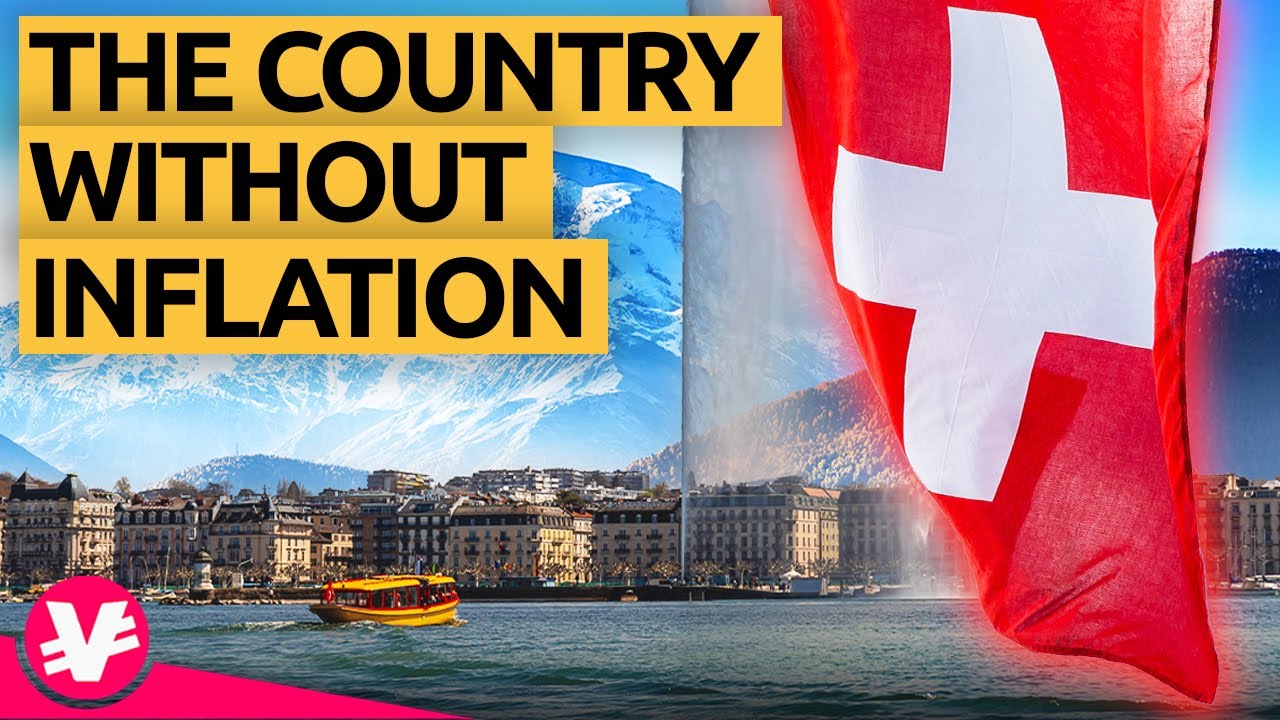
How Swiss Stocks tamed Prices
How Switzerland used equity-backed reserves to keep prices in check - Switzerland’s recent inflation performance is striking by any international standard. While much of the developed world grappled with price rises far above target, Swiss consumer-price inflation has been brought back to muted rates and, at times, hovered close to zero. The country did not stumble upon a miracle cure. Rather, it relied on an institutional playbook that blends a credible inflation target, a strong and freely moving currency—and, crucially, a uniquely structured central‑bank balance sheet in which roughly a quarter of foreign‑exchange reserves is invested in global equities.At the heart of the Swiss approach lies the exchange‑rate channel. For more than a decade the Swiss National Bank (SNB) accumulated very large foreign‑currency reserves to manage excessive upward pressure on the franc. Those reserves are diversified across currencies and asset classes, with a deliberately significant allocation to equities managed on a passive, market‑neutral basis. Building a portfolio that earns an equity risk premium over time was not an end in itself; it was a way to improve the risk‑return profile of the reserves while maintaining ample firepower for currency operations.That firepower proved pivotal when global energy and goods prices surged. In 2022 and 2023 the SNB shifted stance and used its reserves in the opposite direction—selling foreign currency to allow a measured appreciation of the franc. A stronger franc lowers the local‑currency price of imported goods and services, damping inflation via “imported disinflation”. Because the reserves had been amassed in earlier years, and because a sizeable slice was in equities that tended to deliver solid returns over time, the central bank could act decisively without jeopardising balance‑sheet resilience.The portfolio structure also matters for confidence. An equity share—held broadly across markets and sectors, with exclusions on ethical grounds and with no investments in Swiss companies—signals that the reserves are not a dormant hoard but a well‑diversified buffer aligned with long‑run value preservation. When equity markets rose strongly in 2024, gains on those holdings (alongside gold and currency effects) replenished the central bank’s financial buffers. That, in turn, reinforced the credibility of policy at precisely the moment when keeping inflation expectations anchored was most important.None of this should be mistaken for the SNB “using the stock market” as its primary inflation tool. Monetary policy still rests on an explicit price‑stability objective, a conditional inflation forecast and the policy rate. Indeed, as inflation returned to the target range, the policy rate could be reduced again in 2024–2025. But the equity‑backed reserves shaped the backdrop: they made it easier to tighten monetary conditions through the exchange rate when prices were accelerating, and they underpinned confidence in subsequent easing once inflation receded.Switzerland’s low and recently near‑zero inflation cannot be ascribed to reserves alone. The country’s energy mix and regulated price components dampened the direct pass‑through from global fuel shocks; the consumption basket assigns a smaller weight to energy than in many peers; and the franc’s safe‑haven status consistently mutes imported price pressures. What distinguishes the Swiss case is how these structural features were complemented by an ample, well‑diversified reserve portfolio—including global equities—that allowed timely foreign‑exchange operations without calling market confidence into question.The lesson is not that every central bank should load up on shares. Institutional mandates, legal frameworks, market depth and exchange‑rate regimes differ widely. Rather, Switzerland shows that, for a small open economy with a safe‑haven currency, a disciplined, transparent reserve strategy—one that tolerates equity exposure while avoiding conflicts of interest at home—can support the nimble use of the exchange‑rate channel. In the inflation shock of recent years, that combination helped bring prices back under control.As of late summer 2025, Switzerland’s inflation remains subdued and close to the midpoint of its price‑stability range. The franc is firm, policy is data‑driven, and the central bank’s balance sheet—anchored by highly liquid bonds and a passive equity allocation—retains the flexibility to lean against renewed price pressures or, if conditions warrant, to cushion the economy. Switzerland did not “magic away” inflation by buying shares; it designed a balance sheet that could do its day job when it mattered.
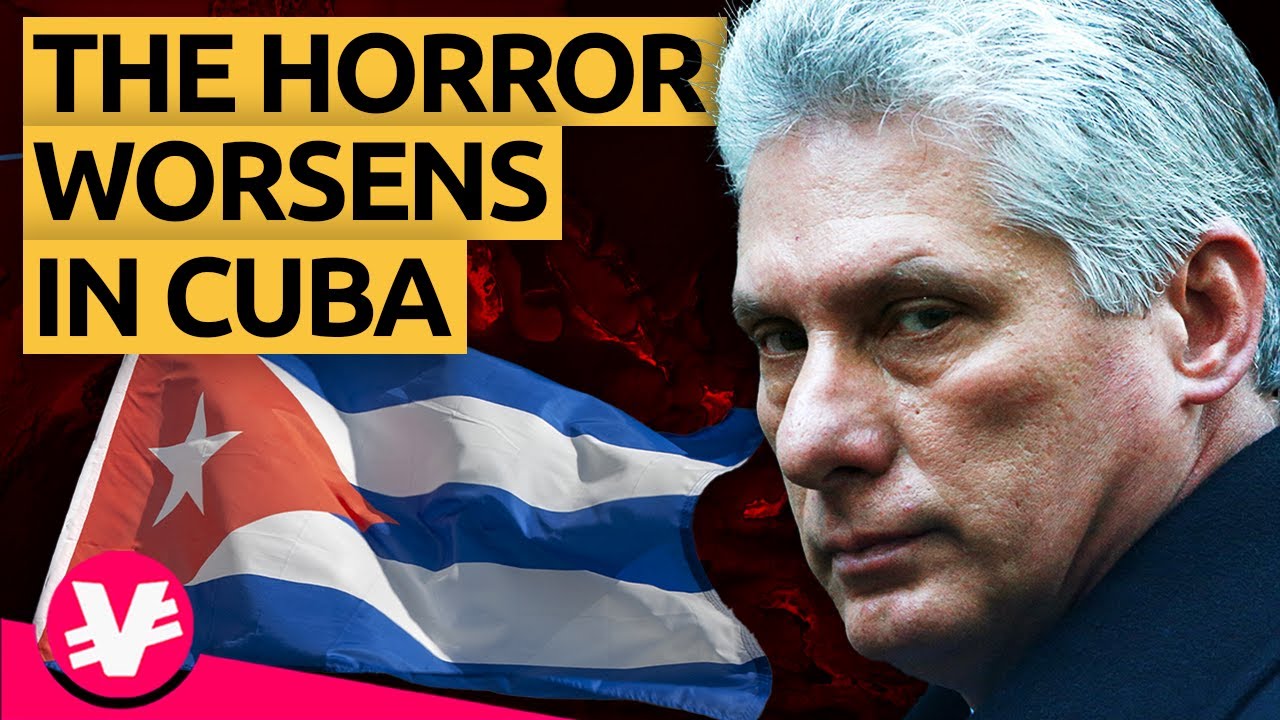
Cuba's hunger Crisis deepens
Cuba’s food emergency has sharpened into a pervasive hunger crisis. Queues for basic staples lengthen; subsidised rations arrive late or shrunken; prolonged black‑outs spoil what little families can buy. At the centre sits a long‑running question of policy as well as morality: should the United States lift—wholly or in part—its embargo?What is driving hunger?Cuba’s economy has been in a grinding downturn since 2020, with a steep loss of foreign currency, collapsing agricultural output and a power grid plagued by breakdowns. The island imports most of what it eats; when hard currency runs short, shipments of wheat, rice, oil and powdered milk stall. Ration books still guarantee a monthly “basic basket”, but the contents are smaller and more erratic than before. Long electricity cuts—now at times island‑wide—destroy refrigerated food and disrupt mills, bakeries and water systems. In March 2024, rare public protests erupted over black‑outs and empty shops; since then, outages and shortages have persisted well into 2025.Behind the empty shelves lies a structural farm crisis. Sugar—once the backbone of the economy—has withered to a fraction of historic output, starved of fuel, fertiliser, parts and investment. Cane shortfalls ripple into food, transport and export earnings. Livestock herds have thinned, and diesel scarcity makes planting and distribution harder. Even when harvests occur, logistics failures and power cuts mean produce rots before reaching markets.How far does the embargo matter?Two facts can be true at once. First, Cuba’s own policy choices—tight state controls, delayed reforms, pricing distortions and a faltering energy system—are central to the crisis. Second, U.S. sanctions amplify the shock. The embargo, codified in U.S. law, restricts trade and finance with Cuba’s state sector and deters banks and insurers from handling even otherwise lawful transactions. Although food and medicine are formally exempt, Cuba must typically pay cash in advance and cannot access normal commercial credit from U.S. institutions; compliance risk pushes up costs, slows payments and scares off shippers and intermediaries. Cuba’s continued designation as a “State Sponsor of Terrorism” further chills banking ties. In short: exemptions exist on paper, frictions mount in practice.There are countervailing trends. Since 2021, Havana has allowed thousands of private micro‑, small‑ and medium‑sized enterprises (MSMEs) to operate; many import food and essentials the state cannot supply. In 2024, Washington moved to let independent Cuban entrepreneurs open and use U.S. bank accounts remotely and to widen authorisations for internet‑based services and payments. Yet the political pendulum has swung back toward greater sanctions in 2025, and Cuba’s own tighter rules on the private sector have added uncertainty. The net effect is an ecosystem still too fragile to steady food supplies.Is this a “famine”?No international body has declared a technical famine in Cuba. That term has a high evidentiary threshold. But food insecurity is severe and widespread: calorie gaps, ration cuts, milk shortages for young children and recurrent bakery stoppages paint a picture of a humanitarian emergency in all but name. Global agencies have stepped in to help secure powdered milk and other basics; even so, distribution delays and funding shortfalls mean stop‑start relief.Should the United States lift the embargo?The humanitarian case is powerful. Lifting or substantially easing the embargo would lower transaction costs, restore access to trade finance, reduce shipping and insurance frictions, and widen suppliers’ appetite to sell. That would not, by itself, fix Cuba’s domestic constraints, but it would remove external bottlenecks that particularly harm food imports, farm inputs and power‑sector maintenance. In a context of ration cuts and soaring prices, fewer frictions mean more staples on plates.The governance caveat is equally real. Sanctions were designed to press for pluralism and human rights; critics fear that broad relief could entrench a state‑dominated economy with poor accountability, and that aid or hard currency could be diverted. Nor is a full lift simple: the embargo is written into statute and requires congressional action. In U.S. domestic politics, that bar is high.A pragmatic path throughGiven legal and political realities, three steps stand out as both feasible and fast‑acting:1) Create a humanitarian finance channel for food and farm inputs. Authorise insured letters of credit and trade finance for transactions involving staple foods, seeds, fertiliser, spare parts for milling, cold‑chain equipment and water treatment—available to private MSMEs and non‑sanctioned public distributors alike, with end‑use auditing.2) De‑risk payments for independent Cuban businesses. Lock in and broaden 2024 measures allowing Cuban private entrepreneurs to hold and use U.S. bank accounts remotely, and permit “U‑turn” transfers that clear in U.S. dollars when neither buyer nor seller is a sanctioned party. Pair this with enhanced due diligence to prevent diversion.3) Protect the food pipeline from energy failures. License sales of critical spares and services for power plants and grid stability that directly safeguard bakeries, cold storage, water pumping and hospitals. Where necessary, allow time‑bound fuel swaps for food distribution fleets under third‑party monitoring.Alongside U.S. actions, Cuba must do its part: secure property rights for farmers, ensure price signals that reward production, remove import monopolies that choke private wholesalers, cut administrative hurdles for MSMEs, and prioritise grid repairs that keep food systems running. Without these domestic adjustments, external relief will leak away in lost output and waste.The bottom lineCuba’s hunger crisis is the product of compounding internal and external failures. Ending or meaningfully easing U.S. sanctions on food, finance and energy‑for‑food lifelines would save time, money and calories; it is defensible on humanitarian grounds and achievable through executive licensing even if Congress leaves the core embargo intact. But durability demands reciprocity: Havana must unlock farm productivity and private distribution, and Washington should target relief where it most directly feeds Cuban households. Starvation risks are non‑ideological. Policy should be, too.
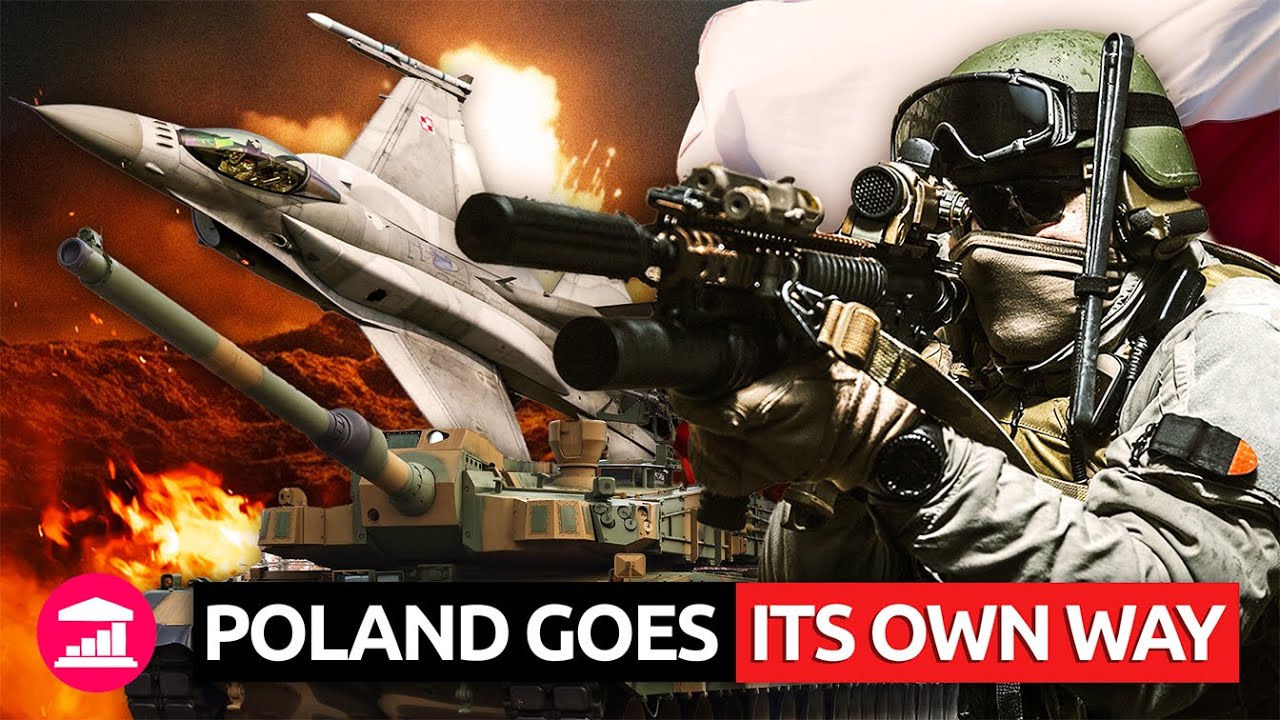
Poland trusts only hard Power
On Europe’s exposed north‑eastern flank, Poland is recasting its security doctrine around a stark premise: deterrence rests on hard power that is visible, ready and overwhelmingly national. Alliances still matter in Warsaw, but the country’s leaders are behaving as if, in the final analysis, neither Brussels nor Washington can be relied upon to act as swiftly—or as single‑mindedly—as Polish interests might require.At the heart of this shift is an unprecedented build‑up of fixed and mobile defences on the frontier with Belarus and Russia’s Kaliningrad exclave. The multi‑year East Shield programme, announced in 2024 and now well under way, blends traditional fortifications and obstacles with modern surveillance, electronic warfare and rapid‑reaction infrastructure along the entire eastern border. In mid‑2025, authorities confirmed the addition of minefields to parts of the project, underscoring a move from symbolic fencing towards denial‑by‑engineering designed to slow and channel any hostile incursion long enough for Polish artillery, air defence and ground forces to engage.This is not theory. Over the past 18 months, Polish airspace has been violated by Russian missiles and, most recently, waves of drones transiting from Belarus. In September 2025, Polish and allied aircraft shot down intruding drones—widely noted as the first kinetic engagement inside NATO territory linked to the war on Ukraine. Warsaw temporarily closed crossings with Belarus during Russia‑led military exercises and then reopened them once the drills ended, a sign of a government calibrating economic realities against a more volatile air‑and‑border threat picture. The message, repeated in official statements, is that incursions will be met with force when they are “clear‑cut” violations.The second pillar of Poland’s doctrine is money—lots of it. Poland now spends the highest share of GDP on defence in the Alliance, around the mid‑4% range in 2025, with plans signalled to push towards the high‑4s in 2026. That places Warsaw well beyond NATO’s post‑Hague summit ambition of substantially increasing “core defence” outlays across the Alliance in the coming decade. Crucially, a larger slice of Poland’s budget goes to kit rather than salaries: air‑and‑missile defences, long‑range fires, armour, and the infrastructure to sustain them.Procurement lists read like an order‑of‑battle overhaul. Deliveries of Abrams tanks from the United States are ongoing, alongside large tranches of K2 tanks and K9 self‑propelled howitzers from South Korea, with a follow‑on K2 order establishing long‑term assembly and manufacturing in Poland. The first Polish F‑35s are in training pipelines with in‑country deliveries scheduled to begin next year, while the Aegis Ashore ballistic‑missile defence site at Redzikowo has been declared operational and integrated into NATO’s shield. The permanent U.S. V Corps (Forward) headquarters in Poznań and a standing U.S. Army garrison in Poland anchor allied command‑and‑control on the Vistula. Yet, strikingly, Warsaw is not content to import its way to security; it is racing to on‑shore the industrial sinews of war, pouring billions of złoty into domestic production of 155 mm artillery shells and selecting foreign partners to build new ammunition plants that can feed both Polish units and European supply lines.Manpower policy is being re‑engineered with equal ambition. The government has set out plans to make large‑scale, publicly accessible military training available—ultimately to every adult male—while expanding volunteer pathways and aiming to train 100,000 people annually by 2027. This push complements growth targets for the active force and reserves, all intended to ensure that Poland can surge trained personnel quickly if the strategic weather turns.Where does Brussels fit into this? Relations have thawed on rule‑of‑law disputes, unlocking access to long‑delayed EU funds. But Warsaw has made plain it will not implement elements of the EU’s new migration pact that would compel acceptance of relocated migrants; it has also reintroduced temporary border checks with Germany and Lithuania, citing organised crime and irregular migration. On the security side, Poland is an enthusiastic driver of the emerging “drone wall” concept along the EU’s eastern frontier. Taken together, these choices sketch a posture of selective integration: take European money when it aligns with national priorities, but reserve sovereign latitude on borders and internal security.Nor is the reliance on force simply a European story. Across the Atlantic, U.S. signals have been mixed in recent years—from remarks that appeared to cast doubt on automatic protection for “delinquent” NATO members, to renewed assurances in 2025 that American troops will remain in Poland and might even increase. Polish officials welcome tangible U.S. deployments and capabilities, but they are plainly hedging against political oscillation in Washington by accelerating self‑reliance in their defence industry, stockpiles and training base. The governing logic is straightforward: alliances deter best when the ally in harm’s way can fight immediately and hold ground.Domestic politics amplify this course. The election of Karol Nawrocki as president in August 2025 has added a sovereigntist accent to Warsaw’s foreign‑policy soundtrack. In his inaugural framing, Poland is “in the EU” but will not be “of” the EU in any way that dilutes competences crucial to national security and identity. That stance intersects with hard security in one especially consequential area: mines. Alongside the Baltic states, Poland announced its intention in 2025 to withdraw from the Ottawa (anti‑personnel mine) treaty, arguing that Russia’s conduct and the geography of the Suwałki corridor demand maximum defensive optionality. Humanitarian advocates warn of the risks; the government replies that modern doctrine, marking and command arrangements can mitigate them.All of this costs money—and fiscal stress is visible. Ratings agencies have flagged high deficits and debt dynamics, shaped in part by defence outlays. Warsaw recently chose to trim the loan component of its EU recovery‑fund package, prioritising grants as deadlines loom. The balancing act is delicate: sustain deterrence at scale while keeping public finances credible and an economy already carrying the weight of war‑time disruptions competitive.Yet step back from the line items, and a coherent doctrine comes into view. Poland is not repudiating its alliances; it is re‑weighting the bargain. The country is building a fortified frontier and a war‑capable society on the assumption that credible force—owned, stationed and manufactured at home—will decide what happens in the first hours and days of any crisis. If Brussels and Washington arrive with reinforcements, all the better. But the governing bet in Warsaw is brutally simple: only hard power keeps the peace on the Bug and the Vistula.
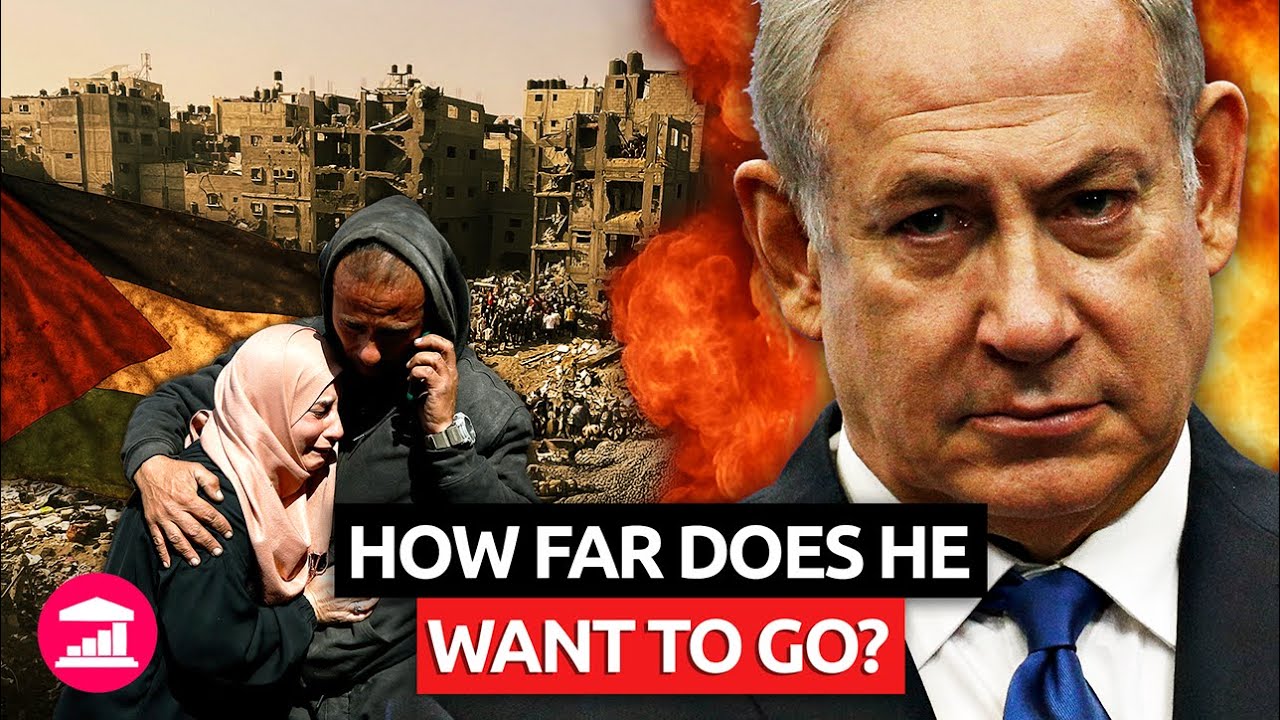
Tanks in Gaza - Hopes dim?
Israeli armour pushed deep into Gaza City this month, marking a renewed ground phase of the war that began after the 7 October 2023 Hamas attacks. The advance, supported by sustained air and artillery strikes, has driven fresh displacement from the north of the enclave and re‑ignited a diplomatic clash over Palestinian statehood.At the United Nations General Assembly on 26 September, Prime Minister Benjamin Netanyahu used a high‑profile address to rebuff mounting international pressure for a two‑state outcome. He derided the latest wave of recognitions of Palestinian statehood by key Western capitals and repeated his long‑stated position that sovereignty west of the River Jordan must remain under Israeli control. In the same breath, he pledged to continue the campaign in Gaza until Hamas is dismantled and hostages are returned.The duelling military and political tracks are tightly entwined. Israel’s ground manoeuvres, including tanks entering and encircling sectors of Gaza City, have coincided with a diplomatic realignment: the United Kingdom, Canada and Australia announced formal recognition of a Palestinian state during the week of 21–22 September, followed by France. Those moves, championed as an effort to salvage a two‑state horizon, were condemned by Israel as rewarding violence and dismissed by Mr Netanyahu as incompatible with Israel’s security imperatives. Washington, by contrast, has not joined the recognitions; the Trump administration has floated a new framework while urging progress on a hostage deal.Inside Gaza, the humanitarian picture is stark. According to Gaza’s Ministry of Health, relayed through UN briefings, at least 65,419 people had been killed and 167,160 injured as of 24 September 2025, with casualty tallies rising during the latest Gaza City offensive. UN humanitarian officials report that only 14 hospitals remain even partially functional across the Strip—none at full capacity—after a series of closures and damage in September. Aid pipelines have been repeatedly disrupted by insecurity, route closures and fuel scarcity, compounding the risk of famine in the north.The conflict’s spillover remains acute in the occupied West Bank, where hundreds of Palestinians have been killed or injured this year amid raids, settler violence and protests. Humanitarian monitors say the tempo of demolitions and displacement continues to rise, deepening the governance and security vacuum.Israel argues that Gaza City is now the last significant bastion of organised Hamas resistance; military officials say the current operation is designed to break that cohesion while pressing for the release of remaining hostages. Palestinian civilians, many displaced multiple times, describe an impossible calculus as evacuation orders repeatedly shift across neighbourhoods without the guarantee of safe passage or shelter.Diplomatically, recognition has symbolic punch but limited immediate effect on the ground. It hardens international expectations for a negotiated two‑state endgame even as Israel’s leadership rejects it; it also introduces new friction with allies over settlement expansion and the status of Jerusalem. For Palestinians, the cascade of recognitions confers legal and political standing, but cannot by itself halt fighting, deliver aid at scale or compel a ceasefire.That gap—between the armour on the streets of Gaza and the speeches in New York—defines the present moment. Tanks and bulldozers are redrawing realities block by block; chancelleries are redrawing their maps of legitimacy. For now, the military logic and Mr Netanyahu’s rhetoric point in the same direction: a prolonged campaign with no near‑term pathway to an independent Palestinian state.
Rare Earth Standoff
China’s dominance over the supply of rare‑earth elements has long been a source of leverage in its dealings with the West. Rare earths are a group of 17 metallic elements used in electric vehicles, wind turbines, semiconductors and defence systems. Because they are essential for magnets, lasers and radar systems in everything from smart phones to F‑35 fighter jets, the monopoly held by one country carries major strategic implications. The latest round of export curbs announced in early October has thrust rare earths back into the centre of global diplomacy.China tightens its gripIn Announcement No. 61 released by China’s Ministry of Commerce, Beijing expanded existing export restrictions by adding five rare‑earth elements—holmium, erbium, thulium, europium and ytterbium—to an already restrictive list. The ministry also required foreign companies to obtain licences to export magnets or semiconductor materials that contain more than 0.1 percent of heavy rare‑earth metals derived from China. These rules apply even when the finished products are made outside China, effectively extending Beijing’s jurisdiction to any product anywhere in the world that uses Chinese rare‑earth materials.Officials justified the restrictions by citing national security and the dual‑use nature of rare‑earth items. China said certain foreign organisations had been transferring or processing rare‑earth materials and then passing them on for military use, and that tighter oversight was necessary to prevent threats to national security. The commerce ministry argued that implementing export controls is a normal part of international practice, pointing out that other major economies have similar rules. Beijing emphasised that it remained open to dialogue and would approve licences for civilian uses.The timing of the announcement was significant. It came just weeks before a scheduled meeting between President Donald Trump and President Xi Jinping in South Korea and only days after U.S. lawmakers proposed tougher restrictions on chip exports to China. Analysts believe the move was designed to increase China’s leverage ahead of those talks and to pressure Washington to loosen its own export controls. Kristin Vekasi, an expert on Indo‑Pacific affairs, described it as “pre‑meeting choreography” intended to signal that Beijing is willing to weaponise its dominant position in the rare‑earths supply chain.The strategic importance of rare earthsRare earths are used in a wide range of civil and military technologies. According to research from a prominent security think‑tank, they are critical for fighter jets, submarines, Tomahawk missiles, radar systems and smart bombs. They also underpin the magnets used in electric vehicles and wind turbines and are essential for semiconductors that power artificial‑intelligence chips and advanced consumer electronics. China mines around 60 percent of the world’s rare‑earth ores, controls about 90 percent of separation and processing capacity, and manufactures roughly 93 percent of rare‑earth magnets. The United States imported 70 percent of its rare‑earth compounds and metals from China between 2020 and 2023.By restricting exports, Beijing signals that it is prepared to exploit this dominance. Although the rules will not fully take effect until November 8 and December 1, the mere threat has rattled defence contractors and technology companies in the United States. The restrictions bar overseas defence users from receiving licences and impose case‑by‑case scrutiny on export applications involving advanced semiconductors. This could delay shipments of magnets and chips vital to everything from drones to radar systems. China has also prohibited its citizens from assisting foreign rare‑earth projects without prior approval, tightening control over expertise as well as raw materials.Trump taps the brakes on tariff escalationWashington responded with an initial threat to impose 100 percent tariffs on all Chinese goods if Beijing did not roll back its measures. U.S. officials denounced the restrictions as a “global supply‑chain power grab”. Yet Treasury Secretary Scott Bessent and trade representative Jamieson Greer emphasised that the United States did not want to decouple from China; they hinted that a negotiated compromise was still possible. In the weeks that followed, the White House attempted to calm financial markets by pausing some of its own tariff hikes, moving to cut duties on Chinese imports from 145 percent to 30 percent for a 90‑day truce.This temporary reprieve, reached after talks in Geneva in mid‑May, included an agreement to slash steep tariffs on both sides and to lift earlier export countermeasures. China agreed to drop restrictions issued in April, while the United States reduced its tariffs for three months. Markets rallied, with global stock indices hitting new highs as traders welcomed the pause in hostilities. Critics, however, saw the move as a retreat by Washington rather than a Chinese concession; they noted that previous freezes had done little to resolve deeper disagreements over trade imbalances and fentanyl exports. A Reuters analysis described Trump’s on‑again off‑again tariff policy as a rollercoaster that has left investors struggling to plan for the next deadline.With the next truce set to expire in November, U.S. officials signalled they might extend the pause in exchange for a delay in China’s new licensing regime. Bessent suggested rolling over the 90‑day tariff reprieve for a longer period to give negotiators more time. At the same time, he warned that Washington was prepared to take further action if Beijing proved to be an unreliable supplier. The administration has also discussed taking strategic stakes in domestic rare‑earths companies and establishing price floors and stockpiles to reduce dependence on Chinese supplies. As Bessent told reporters, the goal is to ensure the United States is never again vulnerable to a single supplier for critical materials.Market and industrial reactionsChina’s move jolted commodity markets. Shares in Chinese rare‑earth producers surged when the announcement was made; U.S. rare‑earth miners such as MP Materials and Energy Fuels also jumped as investors anticipated higher prices. Chinese companies Northern Rare Earth Group and Shenghe Resources gained close to 10 percent, while U.S. firms Critical Metals Corp and Energy Fuels saw double‑digit increases. The price reaction underscored how sensitive markets are to supply‑side news in an industry dominated by a handful of players.The restrictions also triggered diplomatic ripples. Japan’s finance minister raised the issue at a meeting of the Group of Seven, calling for a coordinated response. European exporters, still recovering from the volatility unleashed by Trump’s “Liberation Day” tariffs in April, worried that another escalation could derail their recovery. Analysts noted that gold prices have risen sharply as investors seek a hedge against tariff‑induced inflation.U.S. manufacturers have been pressing the government to secure alternative supplies. Noveon Magnetics, currently the only U.S. manufacturer of rare‑earth magnets, recently partnered with Australia’s Lynas Rare Earths to build a domestic supply chain. The Department of War (formerly the Department of Defense) invested $400 million in MP Materials and extended a $150 million loan to expand its processing facility in California. These measures aim to add heavy rare‑earth separation capacity in the United States and ensure long‑term supply.A high‑stakes meeting on the horizonDespite the heated rhetoric, both sides appear keen to avoid a full‑blown trade rupture. Chinese officials have stressed that export licences for civilian use will be approved. They argued that the United States has long maintained similar rules and accused Washington of exaggerating the impact of the controls. Beijing also noted that U.S. export controls on advanced semiconductors and related equipment have been in place since the 1950s.For its part, Washington knows that an abrupt decoupling would harm both economies. The United States still depends heavily on Chinese rare‑earths, and high tariffs threaten to raise prices for consumers and industries. Polls suggest that volatile trade policies have shaken investor confidence. Moreover, because rare‑earth supply chains are global, any disruption would also hurt Chinese producers who rely on foreign buyers.As Trump prepares to meet Xi in South Korea, the rare‑earth dispute has become a litmus test for the broader U.S.–China relationship. Analysts say Beijing is unlikely to abandon the restrictions unless Washington offers concessions on chip exports or scales back tariff threats. At the same time, the United States will struggle to build an independent supply chain quickly enough to neutralise China’s leverage. The outcome of the meeting could determine whether the world’s two largest economies slide deeper into economic confrontation or find a path back to cooperation.ConclusionThe rare‑earth saga illustrates the complex interplay between economic security and geopolitical power. By expanding export controls, China has reminded the world that it holds a powerful card in its hands. The United States, in turn, has responded with tariff threats, pauses and plans to develop its own capacity. Both sides claim to seek cooperation even as they sharpen their negotiating tools. With the South Korea summit looming, the next moves will shape not only the future of the rare‑earths market but also the trajectory of U.S.–China relations and the global economy as a whole.
Why Russia can’t end war
Nearly four years into Moscow’s full‑scale invasion of Ukraine, there is no sign that the Kremlin is preparing to withdraw its troops or relinquish occupied territories. The war has devastated Ukrainian infrastructure and caused horrific human rights violations, yet the Russian government shows little appetite for ending the conflict. This refusal is rooted in ideology, domestic politics, military calculations, economic factors and public opinion. Understanding why Russia cannot end the war requires examining each of these dimensions.Ideological and historical motivationsAt its core, the conflict is driven by a belief that Ukraine belongs in Russia’s sphere of influence. The Kremlin demands that the West respect a kind of “Monroe doctrine” for Russia and stop bringing neighbouring states into the Western alliance. Preventing Ukraine from joining NATO and reasserting dominance over the former Soviet space are central goals. Russian leaders portray the war as an existential struggle against Western encirclement and a continuation of Russia’s fight for great‑power status. This ideological framing means that a negotiated end that leaves Ukraine free to choose its alliances is viewed as defeat. The war thus fulfils a narrative of historical justice and national revival, making withdrawal politically unpalatable.Regime survival and domestic politicsThe invasion has become a pillar of the Russian political system. Moscow’s leadership invests significant resources in the military‑industrial complex and dedicates roughly two‑fifths of its federal budget to defence and security. Reversing course could call into question the enormous human and economic costs already incurred—nearly a million Russian casualties—and undermine the regime’s legitimacy. Analysts note that President Vladimir Putin uses the war to consolidate patronage networks and justify increasing authoritarian control. Domestic opposition is suppressed, and state media portrays the conflict as necessary for Russia’s security. In this environment, there is little public pressure to end the war; volunteer recruitment continues thanks to high bonuses, replenishing losses, and those who favour peace often support a cease‑fire only if Moscow retains its territorial gains.Ending the war would also create a dilemma. A cease‑fire that left Russia occupying vast areas of Ukraine would require Moscow to maintain a huge army of conscripts and volunteers, consuming resources and risking domestic discontent. Demobilising this army could trigger unemployment and social unrest. For the Kremlin, continued fighting is therefore less risky than an abrupt peace that could threaten its grip on power.Military stalemate and strategic calculationsDespite substantial casualties and equipment losses, Russian forces continue offensive operations because Moscow believes time favours its strategy. Experts estimate Russia loses around 100–150 troops per square kilometre, yet the leadership expects to outlast Ukraine and the West. A cease‑fire that leaves Ukraine free to integrate with NATO is unacceptable to the Kremlin. Conversely, Ukraine refuses to renounce NATO membership or surrender occupied territories. This stalemate means neither side will compromise until the costs become unbearably high.Russia’s war machine has adapted to attritional fighting. Moscow has scaled up drone production and directed its industrial base toward a war economy, offsetting heavy losses in conventional arms. Analysts warn that each year of offensive operations costs Russia 8–10 % of its GDP and hundreds of thousands of casualties. Yet the regime calculates that these losses are sustainable if they help achieve strategic objectives. Until Ukraine’s armed forces and its foreign backers impose unbearable military costs, Moscow has little incentive to cease hostilities.War economy and financial resilienceThe Russian economy has proven more durable under sanctions than many expected. Years of tight fiscal policy allowed Moscow to accumulate large foreign exchange reserves and build a “Fortress Russia” economy. By early 2022, Russia held over $600 billion in reserves and kept public debt below one‑fifth of GDP. Current account surpluses and high energy revenues enabled the government to continue funding the war. War spending has stimulated industrial output and driven nominal GDP growth, while the departure of international firms has reduced competition, allowing domestic companies to gain market share.However, this resilience masks growing imbalances. Defence spending has added about $100 billion per year to the budget, and the combined economic losses from sanctions and war are estimated at trillions of US dollars. Economists note that real GDP growth is roughly a tenth smaller than it would have been without the war. The war economy has created labour shortages; up to two million Russians are abroad and hundreds of thousands have been killed or wounded. Industrial capacity is nearing its limits, inflation remains high, and Russia’s central bank has raised interest rates sharply. Analysts warn that this stagflationary environment could erode living standards and strain public finances. The state has been forced to draw down its National Wealth Fund and raise taxes to cover growing deficits. Yet the economic costs have not prompted a policy change; propaganda and repression continue to dampen discontent.Public sentiment and the social contractRussian society has largely adapted to wartime conditions. While surveys indicate that many Russians are weary of the conflict, most support peace only if it secures Moscow’s territorial gains. As long as the Kremlin presents the war as protecting Russian speakers and defending the nation against Western aggression, domestic support remains sufficient. Humanitarian gestures such as prisoner exchanges or grain exports can boost support for talks, but there is no broad movement demanding withdrawal. The combination of propaganda, control of the media and modest improvements in wages for some sectors has kept dissatisfaction at bay. Without a significant shift in public opinion, there is little internal pressure on leaders to end the war.International dynamics and peace prospectsExternal actors have limited leverage over Russia’s decision‑making. Western sanctions have slowed economic growth and restricted access to technology, but they have not forced Moscow to change course. Alternative supply chains through China, Iran and North Korea provide military inputs. Diplomatic efforts, including U.S.–Russia talks and European mediation, have yet to produce progress. Commentators note that Russia views negotiations as a means to impose its terms; absent recognition of its sphere of influence, it prefers to continue the war. Meanwhile, Western political fatigue and competing global crises reduce the likelihood of sustained pressure on Russia. Unless Ukraine and its partners can decisively shift the military balance or undermine the economic foundations of the war, the Kremlin is unlikely to agree to a settlement.ConclusionRussia’s inability to end the war in Ukraine stems from a combination of ideological ambitions, regime survival, military calculations, economic adaptation and public acquiescence. The conflict serves the Kremlin’s strategic goals of preventing Ukraine’s Western integration and reasserting Russian dominance.It sustains the domestic political order and justifies expanding authoritarian control. Despite immense losses and economic strain, Moscow calculates that continuing the war is less risky than accepting a negotiated peace that would leave its goals unmet. Until these underlying drivers change—through decisive military setbacks, deeper economic crises or a shift in public sentiment—Russia’s war in Ukraine is likely to endure.
Israel: Economy on the edge
After two years of fighting in Gaza and growing international isolation, Israel’s economy is facing unprecedented strains. Once a regional growth engine, the country now grapples with ballooning war costs, surging consumer prices, labour shortages, crumbling public finances and a declining credit standing. The signs of distress are evident across households, businesses and government accounts.War‑Related Damage and Fiscal StrainThe war in Gaza, which began after the October 7 2023 attacks, has inflicted both human and economic devastation. Gaza’s authorities estimate that more than 67 000 Palestinians have been killed and Israel reports that Hamas killed 1 200 people in the initial attack. Economic activity in Gaza and the West Bank has collapsed. The conflict has cost the Israeli economy about US$43 billion since October 2023 and has slowed GDP growth from high single‑digit rates to 0.9 % in 2024. Defence spending is expected to almost double compared with 2022, pushing the debt‑to‑GDP ratio from 61 % in 2023 to roughly 70 % in 2024 and swelling the budget deficit to 8.5 % of GDP.Israel has financed wartime expenditure through borrowing. The state raised US$8 billion on international markets in March 2024 and US$5 billion in February 2025, relying partly on US military aid. However, analysts warn that war‑related labour shortages and the ongoing mobilisation of reservists are stalling growth: the central bank trimmed its 2025 growth estimate to 2.5 %, down from 3.3 %, and sees the economy expanding only if hostilities end. A former deputy governor estimated that failure to achieve a lasting ceasefire could push debt above 90 % of GDP by 2030, triggering credit downgrades.Cost‑of‑Living Crisis and Tax HikesConsumers are feeling the pinch. Israel ranks among the developed world’s most expensive countries; its price levels are the fourth highest in the OECD. The Organisation for Economic Co‑operation and Development (OECD) attributes high prices to a mix of geographical constraints, steep tariffs on food imports, strict product‑market regulations and limited competition. Administrative red tape and complex planning rules restrict housing supply, while a vibrant high‑tech sector coexists with low‑productivity industries, creating large wage disparities. In 2025 the state comptroller warned that the cost of living was skyrocketing: prices for basic goods were 51 % higher than those in the European Union and 37 % above the OECD average, with three corporations controlling over 85 % of many food categories. These monopolistic structures enable retailers to raise prices during times of shortage.At the start of 2025, Israelis faced further blows. The value‑added tax was raised from 17 % to 18 %, increasing the cost of nearly all goods. National Insurance contributions were increased by ₪1 000–2 000 per household, income tax brackets were frozen so that salaries do not keep pace with inflation and the surtax on high earners rose from 3 % to 5 %. Municipal property taxes can rise 5.2 %, with higher levies on newer buildings, while electricity prices climb 3.5 % and water charges 2 %. These measures are intended to narrow the fiscal gap caused by wartime expenditure but further squeeze households’ disposable income and risk fuelling social unrest.High Cost of Living and Structural ProblemsIsrael’s cost‑of‑living problem is not new. Protests against soaring housing and food prices date back more than a decade, from the 2011 tent protests to the 2014 “Milky” boycott. Analysis by the OECD highlights deep structural causes. Israel’s distance from major trading partners and tense regional relations limit trade opportunities, while difficult border procedures, complex regulatory standards and tariffs on agricultural imports raise import costs. Limited competition and strict product‑market regulation slow productivity growth and prevent savings from being passed on to consumers. Housing is particularly unaffordable: administrative red tape restricts supply and planning obstacles make urban development sluggish.The OECD therefore recommends sweeping reforms: remove trade barriers and bureaucratic hurdles to strengthen competition, establish a “one‑stop shop” for business licensing and adopt a “silence is consent” principle for issuing permits, simplify import licensing and lower tariffs on vegetables, fruit and dairy. Easing planning regulations, accelerating urban renewal and investing in public transport would expand housing supply and reduce costs. Without such measures, high prices will continue to erode purchasing power.Labour Shortages, Inequality and the High‑Tech ExodusLabour markets have been disrupted on multiple fronts. The war caused schools and services to close and led to the suspension of Palestinian work permits, halving the share of non‑Israeli labour in total employment and cutting investment by 26 % in late 2023. Agriculture and construction struggled as Palestinian and foreign workers were barred, while the call‑up of reservists removed tens of thousands of Israelis from civilian jobs. The central bank warns that the economy will not recover fully until these supply constraints ease.Meanwhile, inequality has deepened. Before the war, Israel’s GDP per capita was 14 times higher than that of Gaza and the West Bank. In Gaza, GDP has shrunk by 86 % and multi‑dimensional poverty now afflicts 98 % of residents. Within Israel, labour‑force participation is low among ultra‑Orthodox men and Arab women, hindering growth. The OECD urges the government to end subsidies for yeshiva students, condition childcare support on fathers’ employment and equalise funding for Arab schools.Israel’s high‑tech industry, which accounts for about a fifth of GDP, more than half of exports and roughly a quarter of tax revenue, is facing its own crisis. In the nine months after the October 2023 attacks, 8 300 high‑tech employees left the country for year‑long relocations. High‑tech employment declined by 5 000 jobs in 2024, the first contraction in at least a decade. The Israel Innovation Authority warns that the exodus reflects uncertainty about the war’s duration, a lack of funding and the call‑up of reservists. It calls for investment in education and skills, tax incentives for returning professionals and policies to stabilise the business environment. Without such measures, a core driver of growth and tax revenue may erode.Housing Market SlumpThe real estate sector, once a key wealth store for Israeli households, has also stalled. In June 2025, housing sales fell to the lowest level in more than two decades; only 5 844 units were sold, a 29 % drop from a year earlier, and sales of new‑build homes collapsed by 46 %. These figures mark the lowest June sales since the early 2000s. The Ministry of Finance attributed the slump to war‑related uncertainty and tighter financing rules. The national housing price index declined by 1.3 % over four months, with Tel Aviv seeing a 4.2 % drop. Some Israelis are turning to real estate abroad, including Georgia, to protect wealth. Analysts warn that the market’s collapse reflects a broader decline in consumer confidence and investment.International Isolation and Credit DowngradesIsrael’s global standing has deteriorated. The war’s humanitarian toll has hardened attitudes in the European Union, Israel’s largest trading partner. Several EU states have frozen arms exports, and some have moved to ban imports from Israeli settlements. In September 2025 the European Commission proposed suspending trade benefits covering 37 % of Israeli exports, amounting to roughly €42.6 billion in annual trade. The plan, which would end preferential tariffs and impose sanctions on Israeli ministers, marks Brussels’ strongest action yet against Israel. Such measures threaten to curb exports, investment and access to technology.Credit rating agencies have responded by lowering Israel’s sovereign rating and warning of further downgrades. In February 2024 Moody’s cut the rating two notches from A2 to Baa1 and maintained a negative outlook. In early 2025, Fitch affirmed an “A” rating but retained a negative outlook, citing rising public debt, domestic political strains and the uncertain trajectory of the Gaza war. Fitch noted that renewed hostilities could last months, reducing reserves mobilised but still straining the economy. All three major agencies cut Israel’s score in 2024 due to ballooning defence and civilian costs, signalling that borrowing costs could rise and limiting fiscal flexibility.The Bank of Israel, which has kept its benchmark interest rate at 4.5 % for 14 consecutive meetings, warns that international isolation will harm trade and foreign investment. Governor Amir Yaron cautions that prolonged conflict could lower growth, widen the budget deficit and keep inflation high. Despite pressure from industry to cut rates, the central bank stresses that supply constraints, war‑driven budgets and a strong shekel justify caution. Inflation peaked at 3.8 % in January 2025 but moderated to 2.5 % in September, within the target range.Prospects and Necessary ReformsLooking ahead, forecasts hinge on peace. The OECD projects that if fighting eases, Israel’s economy could grow 3.4 % in 2025 and 5.5 % in 2026. A ceasefire allowing reservists to return to work could lift growth to 3.6 % in 2026, keeping debt below 70 % of GDP. However, the Bank of Israel’s staff anticipates only 2.5 % growth in 2025 and inflation around 3 %, with interest rates declining modestly in 2026. The 2025 budget aims to narrow the deficit to 4.3 %, but economists expect it could still reach 5 %.To avert lasting damage, structural reforms are essential. The OECD urges the government to relax product‑market regulations, reduce trade barriers and red tape, improve infrastructure and invest in education and labour‑market participation for ultra‑Orthodox and Arab citizens. It calls for ending subsidies that discourage work, tying childcare support to parental employment, and equalising funding for Arab schools. Investment in artificial intelligence and advanced skills is needed to sustain the high‑tech sector, which the innovation authority says must broaden its talent pool. The cost‑of‑living crisis requires the dismantling of monopolies, lowering tariffs on food imports and streamlining planning regulations.ConclusionIsrael’s economy is in serious trouble. Years of war have drained public finances, weakened growth and raised debt to unprecedented levels. Households face higher taxes, surging utility bills and some of the world’s highest consumer prices. Labour shortages, inequality and the exodus of high‑tech talent threaten long‑term competitiveness, while credit downgrades and EU trade sanctions signal growing international isolation. Without a durable peace and a bold reform agenda—spanning trade liberalisation, regulatory simplification, education and competition policy—the country risks prolonged stagnation and social unrest. The coming months will determine whether Israel can arrest its economic decline or whether the cracks widen into a full‑blown crisis.
Gaza on the cusp of civil war
In the days following a fragile ceasefire in early October 2025, the Gaza Strip – already devastated by two years of war – has been shaken by a wave of internecine violence. The militant group that has ruled the enclave for nearly two decades has responded to the power vacuum left by Israel’s withdrawal by turning its guns on rival militias and local clans. What began as an attempt to re‑establish order in lawless streets has degenerated into summary executions, sieges and pitched battles that many residents say risk pushing Gaza to the brink of civil war.From ceasefire to crackdownA United States‑brokered truce between Israel and the rulers of Gaza took effect in early October, ending a bloody two‑year conflict and leading to a prisoner‑hostage exchange. The agreement envisaged the group’s disarmament and the handover of civilian administration to a Palestinian technocratic committee under international supervision. Yet just days after the ceasefire, militants re‑emerged from their tunnels, freed the last living Israeli hostages and deployed thousands of fighters in uniform across Gaza’s ruined streets. Security officials say they killed thirty‑two members of a clan‑affiliated gang in Gaza City that they accuse of looting aid and collaborating with Israel, while losing six of their own men. A widely circulated video showed masked gunmen ordering seven blindfolded men to kneel before shooting them; bystanders shouted religious slogans and denounced the victims as traitors. The group later confirmed that the executions were real and justified them as punishment for treason.Officials sympathetic to the crackdown argue that the militants simply stepped into the vacuum created when Israeli forces targeted and dismantled the local police during the war. As the regular security apparatus collapsed, powerful families and armed factions – some reportedly receiving arms or cash from Israel – seized control of neighbourhoods, hijacked aid convoys and terrorised residents. According to Gaza’s truckers’ union, gangs “looted aid and killed people under the protection of the occupation”. Israeli sources acknowledge providing support to anti‑militant clans such as the Popular Forces led by Yasser Abu Shabab, though they deny involvement in theft. The result has been a patchwork of competing militias vying for influence in a landscape strewn with debris.Sieges and summary executionsThe militant rulers have sought to present their campaign as a restoration of law and order. Their newly formed Sahem (Arrow) unit comprises intelligence and enforcement personnel tasked with dismantling armed gangs and seizing weapons. In several neighbourhoods their fighters have directed traffic, appointed temporary administrators and offered an amnesty: anyone accused of collaboration who had not shed blood could surrender their arms and have their record expunged. Officials say more than seventy gang members have taken advantage of the offer and that over fifty “gang hubs” have been dismantled. Videos released by the group’s internal media arm depict uniformed officers patrolling markets and reassuring residents that a “merciful hand” awaits those who repent.Behind this veneer of due process lies a brutal reality. On the first day of the ceasefire, fighters surrounded the Doghmush family compound in Gaza City and laid siege for three days. Members of the Doghmush clan, one of Gaza’s most powerful families, were accused of murdering a journalist and a militant commander and of looting humanitarian aid. When seven men on Hamas’ wanted list refused to surrender, security forces stormed the neighbourhood and killed more than fifteen people. Witnesses described troops going door to door, verifying identities and torturing detainees; some victims had fingernails ripped out. Rights groups such as Al Mezan and the Palestinian Independent Commission for Human Rights have condemned these extrajudicial killings.Similar scenes unfolded in Khan Younis, where fighters targeted the Majadla clan after accusing them of murdering two resistance fighters. Local reports say the Israeli army intervened during the shoot‑out, killing seven militants. The militia later claimed to have killed Ahmad Tarabin, the right‑hand man of Yasser Abu Shabab, and to have attacked gangs led by Rami Hillis in Gaza City. In separate operations the Sahem unit publicly executed three men it accused of collaborating with Israel. Palestinian analyst Reham Owda says these actions are designed not only to punish collaborators but to demonstrate that the group’s security officers should be part of any future governing body.Clans, militias and the spectre of civil warThe violence has exposed deep fissures within Gaza’s social fabric. The Doghmush, Hilles and Majadla families have longstanding feuds with Hamas dating back to the movement’s takeover of the Strip in 2007. Many of these clans maintain their own armed wings and have at times aligned with Fatah or the Palestinian Authority. During the recent war they took advantage of the chaos to settle scores and, according to multiple reports, to cooperate with Israeli forces. Saleh Aljafarawi, a 28‑year‑old journalist who gained prominence for his war coverage, was shot dead while reporting on fighting between Hamas and the Doghmush clan; his body, still wearing a press jacket, was later recovered from a truck. Residents who fled the gunfire told reporters they were “running from their own people” rather than Israeli bombardment.The risk of wider civil strife grew when a new militia calling itself “The People’s Army – Forces of Northern Gaza” released a video declaring that it had taken control of parts of northern Gaza. Nine masked men, armed with rifles and seated around a table, pledged to rebuild the area and provide security but warned Hamas to stay away. The group’s statement promised “decisive force” against any attempt by Hamas to enter its territory and proclaimed that “the era of your tyranny has ended”. The emergence of this militia, coupled with ongoing clashes with established clans, has prompted fears that the Palestinian territory could descend into outright civil war.In addition to the People’s Army, militias led by Hussam al‑Astal in Khan Younis and Yasser Abu Shabab in Rafah continue to defy Hamas. These groups reportedly receive weapons from Israel and have recruited hundreds of fighters, paying attractive salaries. According to a security official quoted in local reports, Hamas had killed Abu Shabab’s lieutenant and was working to eliminate him. Abu Shabab has denied collaboration and vowed to resist. Sheikh Husni al‑Mughni, head of Gaza’s Higher Committee for Tribal Affairs, insists that the clans support the crackdown and that justice has been served, but many families now demand weapons to defend themselves. Human rights advocates warn that such dynamics could ignite a cycle of revenge killings.Political implicationsThe internal conflict has reverberated across Palestinian politics. The Palestinian Authority, which administers parts of the West Bank, condemned what it described as “horrible crimes” and “vile terrorism” in Gaza. Officials in Ramallah argue that the violence undermines efforts to unify Palestinian institutions under a single law and weapon. They accuse Hamas of bombarding clan houses with rockets and rocket‑propelled grenades in an attempt to “break the backbone of clans”. At least nineteen Doghmush members and eight Hamas fighters were killed in one confrontation, according to internal ministry sources.The United States, which brokered the ceasefire and proposed a 20‑point peace plan for Gaza, has offered mixed signals. On his way to the Middle East, President Donald Trump told reporters that Hamas had been granted a temporary green light to police Gaza. “They do want to stop the problems, and they’ve been open about it, and we gave them approval for a period of time,” he said. He later compared the crackdown to his own fight against violent gangs and said that killing gang members did not bother him. Nonetheless, he reiterated that Hamas must disarm and warned that if it refuses, it will be disarmed “quickly and perhaps violently”.Israeli leaders, meanwhile, insist that the war is not over until Hamas is dismantled. Prime Minister Benjamin Netanyahu has acknowledged arming clans opposed to Hamas, and Israeli forces remain in control of parts of northern Gaza and Rafah. Observers say the internal violence may provide Israel and its allies with leverage to force a demilitarisation deal. However, the sight of militants executing alleged collaborators in public squares has also drawn international criticism and could complicate the formation of a new governing authority.A fragile truce in jeopardyThe ceasefire that began with the release of Israeli hostages may yet collapse under the weight of Gaza’s internal wars. In addition to the Doghmush confrontation, reports have surfaced of clashes with the Majadla and Hilles clans, as well as targeted assassinations of suspected collaborators. In one weekend alone, at least twenty‑seven people, including a journalist and a son of a senior Hamas official, were killed in battles between Hamas and the Dughmush clan. Another report put the clan’s casualties at fifty‑two, with twelve militants killed, including the son of senior official Bassem Naim; witnesses said fighters used ambulances to storm the neighbourhood.Despite the bloodshed, some residents welcome the return of uniformed officers to the streets. A medic from Jabaliya refugee camp told reporters that seeing police again provided a sense of normalcy after months of anarchy. Others fear the crackdown has unleashed forces beyond anyone’s control. In social media posts, some Gaza residents argue that the gangs targeted by Hamas were “more dangerous than the occupation” itself and that swift justice was necessary. Critics counter that the extrajudicial killings violate international law and risk fuelling cycles of revenge.The outcome may hinge on whether the rival clans and newly formed militias decide to accept the amnesty or continue to fight. The interior ministry has set a deadline for suspects to surrender, warning that anyone who fails to do so will face arrest and prosecution. Hossam al‑Astal, a militia leader with ties to Israel, has already rejected the ultimatum, calling the fighters “rats” and urging them to repent before it is too late. As the deadline approaches, many Gazans brace for further bloodletting.ConclusionGaza is teetering on the edge. What was intended as a pause in the war with Israel has exposed the territory’s underlying fractures: feuding clans, armed gangs, foreign proxies and a ruling movement determined to hold onto its weapons. The current campaign may succeed in dismantling some militias and restoring a measure of order, but at the cost of deepening social rifts and undermining prospects for a peaceful transition. Unless a credible, inclusive security arrangement emerges – one that curbs the power of rival gangs and ensures accountability for all – the threat of civil war will continue to loom over the battered enclave.
The Fall of South Korea?
On 3 December 2024 the unthinkable happened in Seoul. President Yoon Suk Yeol, stung by allegations of corruption and facing sliding approval ratings, issued a midnight proclamation of martial law. He deployed special forces around the National Assembly and attempted to suspend the constitution. Video footage of parliamentarians climbing over fences, riot police blocking the legislature and helicopters circling above shocked the nation. Within hours, however, the attempted emergency rule collapsed. Lawmakers across party lines defied the order, reconvened under heavy security and voted unanimously to annul the decree. Enormous street protests erupted, demanding the restoration of democracy and Yoon’s resignation. By early morning the president rescinded his decree and insisted he had simply wanted to protect the state.The crisis did not end there. The opposition-led parliament impeached Yoon nine days later and refused to allow him back into office. In April 2025 the Constitutional Court unanimously upheld the impeachment, citing an unlawful attempt to paralyse the constitution. South Korea’s institutions thus repelled the first attempted coup in its modern democratic era. A snap presidential election took place on 3 June 2025. Lee Jae‑myung, a social democratic opposition leader, won with nearly half of the vote and turnout approaching 80 %. He pledged to heal the rifts caused by the upheaval, strengthen the rule of law and place the country back on a steady course. In his inauguration speech he called the failed coup a “watershed moment” that proved citizens’ commitment to democracy.Trade friction, not collapseThe political upheaval came against a backdrop of intense trade negotiations between Seoul and Washington. Former U.S. president Donald Trump returned to the White House in January 2025 and revived his campaign promise to rebalance trade with allies. In a phone call with president‑elect Lee in June 2025 he insisted on higher tariffs on South Korean vehicle exports and demanded that Seoul finance most of a proposed $350 billion investment fund for critical minerals. South Korea argued that such sums were unaffordable and offered phased funding instead. Negotiations stalled over Washington’s insistence on control over the fund.Contrary to claims of a trade breakdown, exports recovered. By October 2025 South Korea’s shipments were growing again, buoyed by strong demand for semiconductors and ships. A compromise deal reached on 29 October limited U.S. tariffs on South Korean vehicles to 15 % and split investment flows to protect Korea’s currency. This partially defused tensions, though negotiations on the investment fund continued. South Korean companies accelerated diversification of markets to ASEAN countries and Europe, while domestic stimulus cushioned households from higher import prices.Alliance strains and abandonment fearsEpisodes outside the trade talks fuelled fears that Washington was abandoning Seoul. In February 2025 U.S. immigration officers raided a battery factory jointly owned by Hyundai and LG in Georgia and detained over 300 South Korean technicians for alleged visa violations. The images of handcuffed engineers sparked outrage at home and calls for Seoul to invest more in its own nuclear deterrent. The fiasco came after Trump had publicly complained that South Korea was “unstable” and should pay more for stationing U.S. troops. Policymakers in Seoul worried that ambiguous statements about troop reductions could invite provocations from North Korea and China.Analysts caution that such fears often stem from misunderstandings rather than policy shifts. U.S. defence officials reiterated America’s security commitment and quietly increased joint exercises in the spring of 2025. Think‑tank studies noted that changes in the U.S. force posture should be accompanied by other deployments to reassure allies. President Lee has doubled down on the alliance and sought to deepen security cooperation with Japan and NATO. While domestic voices call for strategic autonomy, there is no evidence that the United States is planning a withdrawal.Resilience instead of collapseThe narrative of South Korea’s “fall” exaggerates and conflates real challenges. The attempted coup was thwarted within hours by constitutional institutions and mass mobilisation. The political crisis led to a lawful impeachment and free election, demonstrating democratic resilience. Trade friction with the United States has been bruising, but it has not upended South Korea’s export‑driven economy or its role in supply chains. Even at the height of negotiations, U.S. troops remained on the peninsula and the two governments reaffirmed their mutual defence treaty.South Korea faces serious questions about inequality, an ageing population, and dependence on exports. Yet rather than collapsing, it has adapted through political renewal and pragmatic economic policy. Early signs suggest that president Lee’s government is stabilising domestic politics, diversifying trade and working to rebuild trust with Washington. The “fall” narrative obscures a more nuanced reality: a vibrant democracy navigating turmoil, emerging chastened but intact.
A new vision for Japan
Sanae Takaichi’s election as prime minister in October 2025 has ushered in a historic and transformative period for Japan. She is the country’s first woman to hold the post and, with a small Conservative bloc in parliament, she must rely on cooperation from opposition parties to deliver her ambitious agenda. A protégé of the late Shinzo Abe and a keen admirer of Margaret Thatcher, she promised during her leadership campaign to reassert Japan’s economic might, strengthen national security and regain the trust of conservative voters lost to right‑wing rivals.Reviving the economy through fiscal firepowerTakaichi’s economic agenda centres on aggressive public spending coupled with targeted tax cuts. Within days of taking office she began drafting a fiscal package worth more than ¥13.9 trillion, surpassing the stimulus enacted in the previous year. The package aims to cushion households from inflation, expand investment in growth industries and support national security. Among the key measures under discussion are the abolition of a provisional gasoline tax that has been in place since 1974, lifting the income tax exemption threshold from ¥1.03 million to ¥1.6 million and combining income tax deductions with cash benefits to provide relief without increasing headline tax rates.A Growth Strategy Council has been established to steer these efforts. The panel will map out a medium‑term plan by next summer, identifying sectors such as artificial intelligence, semiconductors, shipbuilding, defence and telecommunications as priorities. Takaichi has already signalled her intention to invest roughly ¥1.7 trillion in Rapidus, Japan’s fledgling chipmaker, with the goal of tripling its overseas revenue by 2033. She has charged her ministers with developing domestic supply chains for semiconductors and AI and with supporting small and medium‑sized businesses through tax reforms and productivity‑boosting incentives. Her emphasis on “responsible and proactive fiscal policy” seeks to ensure that economic growth outpaces debt accumulation, even if the programme is financed through deficit bonds.In addition to the stimulus package, Takaichi has pledged to transform Japan into a global asset‑management hub and to create a national disaster‑prevention agency. She advocates establishing a “secondary capital” outside Tokyo to decentralise government functions, and she has called for social security reforms to balance benefits and costs in an ageing society. Recognising that recovery from the Fukushima nuclear disaster remains incomplete, she instructed the new economy minister to prioritise reconstruction alongside growth initiatives. Energy policy features prominently in her plan: she wants Japan to leverage renewable energy and nuclear power to secure a decarbonised yet stable electricity supply.Accelerating military modernisationNational security is another pillar of Takaichi’s platform. Breaking with decades of precedent, she intends to raise defence spending to 2 per cent of gross domestic product by the end of March 2026 — two years ahead of the timetable set by her predecessor. This acceleration will require an extra trillion yen through a supplementary budget and marks Japan’s largest defence build‑up since the Second World War. Her government has already begun revising the National Security Strategy, National Defence Strategy and Defence Buildup Programme to reflect the changing security environment, citing Russia’s invasion of Ukraine, regional conflicts in the Middle East and heightened pressure from China and North Korea.The new administration’s alliance with the Japan Innovation Party, which shares a hawkish stance on China, removes the moderating influence of the pacifist‑leaning Komeito and liberates her to pursue constitutional change. Takaichi is a long‑time advocate of revising Article 9 of the Constitution to acknowledge the Self‑Defence Forces and relax restrictions on arms exports. Her coalition partners have floated proposals for a nuclear‑sharing arrangement with the United States, a radical departure from Japan’s longstanding non‑nuclear principles. She hopes to deepen ties with Washington and has signalled she will quickly meet President Donald Trump to discuss ways to strengthen the bilateral alliance. In the face of calls from some U.S. officials to raise defence outlays to 3 or even 5 per cent of GDP, she is likely to present a package of purchases ranging from American vehicles and soybeans to natural gas and attract U.S. investment in Japanese industries. At the same time, she has pledged to maintain a constructive relationship with China and to work with South Korea, Australia and India to support a free and open Indo‑Pacific.A tougher line on immigration and foreign ownershipAlongside her economic and security initiatives, Takaichi has placed immigration at the heart of her domestic agenda. Despite acknowledging the need for foreign labour to offset Japan’s demographic decline, she has vowed to “set limits” on the number of foreign workers admitted through programmes designed to address labour shortages. In an early ministerial meeting on foreign nationals she argued that public anxiety stems from rule‑breaking by a minority of foreigners and announced plans to deny visa renewals to those who fall behind on pension or health‑insurance contributions. She has also instructed ministers to examine tighter regulations on land purchases by foreign nationals, particularly Chinese investors, and to develop a population strategy by fiscal 2026 with numerical targets for foreign residents.Takaichi’s cabinet includes a minister specifically responsible for economic security and harmonious coexistence with foreign nationals. This official, Kimi Onoda, has been tasked with coordinating immigration policy, enforcing compliance and examining regulations on property ownership. The prime minister insists that her approach is aimed at ensuring fairness rather than promoting xenophobia. Critics, however, argue that the rhetoric and policies reflect a broader nationalist turn within the ruling party. During the leadership race she built support by invoking isolated anecdotes to justify restrictions on foreigners, echoing the populist “Japanese First” platform championed by right‑wing groups. Opponents warn that such measures could undermine industries that rely on overseas labour and exacerbate social divisions.Managing minority rule and foreign relationsThe political context surrounding Takaichi’s premiership complicates the implementation of her agenda. Her coalition is two votes short of a majority in the lower house, compelling her to seek backing from centrist and opposition parties to pass budgets and constitutional amendments. While she enjoys strong approval ratings in the early days of her government, observers question whether she can sustain momentum when her spending plans face scrutiny over Japan’s already‑high public debt.Diplomatically, Takaichi must balance her hawkish instincts with regional realities. She reaffirmed Japan’s commitment to supporting Ukraine, pledged to secure the return of citizens abducted by North Korea, and called China an important neighbour despite labelling its actions a security challenge. In a symbolic nod to regional sensitivities, she refrained from visiting the Yasukuni war shrine during the autumn festival, a move interpreted as an attempt to ease tensions with Beijing and Seoul. Nevertheless, her regular visits in the past and her hard‑line views on wartime history continue to evoke suspicion abroad.Sanae Takaichi’s rise to Japan’s highest office brings a blend of economic populism, military assertiveness and cultural conservatism. Her vision seeks to rekindle growth through massive public investment while rewriting the rules that have governed Japan’s post‑war pacifism and demographic openness. Whether she succeeds in changing Japan forever will depend on her ability to steer her minority government through political turbulence, manage relations with powerful allies and competitors, and reconcile a rapidly ageing society with the demands of globalisation.
Pension crisis engulfs France
In autumn 2025 the long‑running battle over France’s retirement system morphed from a fiscal headache into an existential crisis. After years of protests and political upheavals, the government admitted that its flagship 2023 pension reform had failed to plug the funding gap. Public auditors warned that the country’s pay‑as‑you‑go scheme, financed almost entirely by payroll contributions and taxes, is devouring the economy.A February 2025 report from the Cour des Comptes, the national audit office, found that the pension system spends almost 14 % of gross domestic product on benefits—four percentage points more than Germany. Those contributions produced an average monthly pension of €1 626 and gave retirees a living standard similar to that of working people. French pensioners not only enjoy one of Europe’s highest replacement rates but also have one of the lowest poverty rates (3.6 %). The generosity comes at a price: the same audit calculated that the deficit across the various pension schemes will widen from €6.6 billion in 2025 to €15 billion by 2035 and €30 billion by 2045, adding roughly €470 billion to public debt. Raising the retirement age to 65 would help, but even that would yield only an extra €17.7 billion a year.The French model dates from the post‑war social contract, when four or five workers supported each pensioner. The demographic ratio has now fallen below two, and the number of pensioners is projected to rise from 17 million today to 23 million by 2050. Two‑thirds of the resources allocated to pensions already come from social security contributions, supplemented by a growing share of taxes. Employers’ labour costs are inflated because 28 % of payroll goes to pensioners, making French industry less competitive. Pensions absorb about a quarter of government spending, more than the state spends on education, defence, justice and infrastructure combined.Reform fatigue and political paralysisSuccessive administrations have tried to curb the rising bill but have been derailed by street protests and parliamentary rebellions. In April 2025 the Cour des Comptes bluntly warned that keeping the system unchanged is “impossible”; it argued that people must work longer and that pensions should be indexed more closely to wages rather than inflation. The 2023 reform, which is supposed to raise the statutory retirement age gradually from 62 to 64 by 2030, barely maintained balance until 2030 and did nothing to close the long‑term gap. When the government sought to postpone a routine pension hike to mid‑2025 to save €4 billion, opposition parties branded the proposal a theft from the elderly. Marine Le Pen’s far‑right National Rally and other groups blocked the measure, and even ministers within the governing coalition disavowed it. A 5.3 % pension increase granted in January 2024 to protect retirees from inflation cost €15 billion a year, wiping out most of the savings from pushing back the retirement age.Popular resistance is fuelled by the fact that French workers already retire earlier than almost anyone else in the European Union. Although the legal age is now 62, the effective retirement age is only 60.7 years. OECD data show that French men spend an average of 23.3 years in retirement, far longer than in Germany (18.8 years). The low retirement age and high replacement rate mean pensions replace a larger share of pre‑retirement income than in most countries. With a median voter now in their mid‑40s, governments have little incentive to antagonise older voters, leading to what economists call a “demographic capture” of democracy. Reforms are generally adopted only when markets force governments’ hands—Greece, Portugal and Sweden passed painful changes under the threat of financial collapse.Economic consequencesFrance’s public finances are straining under the weight of pension obligations. The country’s debt reached 114 % of GDP in June 2025, and interest payments are projected to exceed €100 billion by 2029, becoming the single largest budget item. In September 2025 Fitch downgraded France’s credit rating to A+, citing the lack of a clear plan to stabilise the debt. Political instability has made matters worse: Prime Minister François Bayrou was ousted in a no‑confidence vote in September after proposing a €44 billion deficit‑cutting plan. His successor, Sebastien Lecornu, immediately suspended the 2023 pension reform until after the 2027 presidential election, effectively throwing fiscal prudence out of the window to preserve his government. Investors now demand a higher risk premium on French bonds than on those of Spain or Greece.The escalating pension bill is crowding out spending on education, infrastructure and innovation, sapping France’s potential for future growth. Economists warn that the longer reform is delayed, the more abrupt and painful it will need to be. Raising the retirement age beyond 65, modifying the generous indexation to inflation, broadening the tax base and encouraging more people to work past 55 are options that could restore sustainability. Without such measures, the pension system will continue to devour the nation’s finances, leaving younger generations to shoulder an ever‑heavier burden.ConclusionFrance’s pension crisis is not unique in Europe, but its scale and political toxicity are. The system reflects a post‑war social contract that promised long, comfortable retirements financed by ever‑fewer workers. That contract is now broken. Auditors, economists and even some politicians agree that the status quo is unsustainable and that tough choices lie ahead. Yet the clash between an ageing electorate intent on defending its privileges and a political class unwilling to tell voters hard truths has created an impasse. Unless France confronts its demographic realities and curbs the generosity of its pension system, the country will remain caught in a fiscal doom loop where pensions devour its economy and there is nothing to be done—until the markets force change.

Miracle in Germany: VW soars
After years of sluggish performance and a dramatic plunge in profits, Volkswagen Group has stunned investors with a remarkable rebound. The company that once seemed mired in structural problems and market headwinds has recalibrated its strategy, restructured operations and embraced electrification to deliver a turnaround that many thought impossible. This article explains how the German carmaker fell so far and what has propelled its recent surge.The long slide: profits and shares collapseVolkswagen’s troubles became starkly apparent in late 2024. The group’s earnings before tax for the third quarter crashed almost 60 percent to €2.4 billion, down from €5.8 billion a year earlier. Sales slumped in China, its most important market, and costly electric vehicles (EVs) struggled to find buyers after Germany ended purchase subsidies. Management acknowledged that cutbacks were looming as it planned to close under‑utilised assembly lines and trim labour costs.The slump was mirrored in the stock market. By mid‑2024 the share price had tumbled 72 percent from its 2021 peak to a 14‑year low near €91, wiping billions from investors’ holdings. Analysts blamed structural problems: high wage costs and overstaffing in Germany, expensive energy, and the legacy of Dieselgate litigation. Its operating margin for the first nine months of 2024 was just 2.1 percent, far below peers, raising fears that Europe’s largest carmaker was becoming uncompetitive.Further pain arrived in early 2025. U.S. tariffs on cars exported from Europe, introduced by the Trump administration, led to a €1.5‑billion hit in the first half and forced Volkswagen to cut its sales and profit margin guidance. At the same time, the company booked a 4.7‑billion‑euro charge at Porsche related to a reversal of its electric‑vehicle strategy. The passenger‑car division’s operating profit plummeted 84.9 percent as electric models remained costly to build.Strategic reset: cost‑cutting and partnershipsRecognising the severity of the situation, chief executive Oliver Blume launched an aggressive restructuring programme. Management promised to cut over 35 000 jobs through natural attrition by the end of the decade and aimed to save €1 billion annually by trimming bureaucracy and simplifying product lines. The company also reduced its five‑year investment plan by €15 billion, focusing resources on core brands and promising to make electric models profitable.A key catalyst for renewed investor confidence was Volkswagen’s decision to accelerate electrification and seek external expertise. In June 2024 the group announced a joint venture with U.S. start‑up Rivian. Volkswagen committed to invest up to US$5 billion in Rivian and to develop a next‑generation software‑defined vehicle platform combining Rivian’s advanced electronics and software with Volkswagen’s scale. Executives highlighted that the partnership would allow both companies to share components, reduce costs and deliver connected vehicles faster.Volkswagen also expanded its battery‑cell operations through subsidiary PowerCo and renegotiated supply agreements to lower input costs. By building new battery plants in Germany, Spain and Canada, the group aims to secure up to 170 gigawatt‑hours of capacity, although some projects have been delayed in response to weaker near‑term EV demand.Electrification pays off: EV sales surgeThe pivot toward electrification began to bear fruit in 2025. In the first half of the year, the group’s battery‑electric vehicle (BEV) deliveries rose by about 50 percent compared with the previous year. Total BEV sales reached 465 500, raising the battery‑electric share of total deliveries from 7 percent to 11 percent. The improvement was driven by strong demand in Europe, where BEV deliveries jumped about 90 percent; the group captured roughly 28 percent of the European BEV market and became the regional leader. New models such as the long‑range ID.7 sedan and the refreshed ID.4 crossover helped attract customers, while Skoda and Audi expanded their electric line‑ups.Robust order inflows underscored growing confidence: the company reported that outstanding BEV orders in Western Europe were more than 60 percent higher than a year earlier. This surge indicated that the supply‑chain problems and software glitches that had plagued earlier launches were being resolved.Investor sentiment improvesDespite the heavy tariff hit, the second half of 2025 brought signs of stabilisation. In July the company trimmed its full‑year sales and margin guidance, acknowledging that tariffs and restructuring costs would weigh on results, but shares recovered from a 4.6 percent fall to end the day 1 percent higher as investors were reassured that losses were contained and that luxury brands Audi and Porsche would recover in 2026. Chief executive Blume told investors that cost‑cutting had to be accelerated and expressed confidence that a trade deal reducing U.S. tariffs from 25 percent to 15 percent would materially improve margins.In October, ahead of third‑quarter results, Volkswagen held a pre‑close call with investors. Analysts described the message as “reassuring”: management said operating profit would likely stay within guidance despite the tariff drag. Investors were comforted by solid sales momentum in the core brand, and the share price gained about 1.2 percent in early trading.The group’s long‑term outlook remains cautious. In March it forecast a 2025 operating profit margin of 5.5–6.5 percent, only slightly above 2024 levels, as the costs of ramping up EV and battery production and uncertainties around U.S. trade policy continue to weigh on earnings. Yet analysts noted that the upper end of the margin range exceeded market expectations and called the plan credible.Conclusion: from despair to cautious optimismVolkswagen’s dramatic rebound after a 60 percent profit collapse illustrates how quickly fortunes can change when decisive action meets shifting market dynamics. Aggressive cost‑cutting, a strategic partnership with Rivian and a renewed focus on battery‑electric vehicles have begun to lift profits and restore investor confidence. While challenges remain – including unresolved trade tensions, high manufacturing costs and intense competition from Chinese EV manufacturers – the German giant has demonstrated that it can adapt. The “miracle” is not a sudden transformation but the result of disciplined restructuring, technological collaboration and a growing appetite for electric vehicles. Investors who once despaired at sinking margins now see signs of a sustainable turnaround.

Israel’s Haredi Challenge
The ultra‑Orthodox, or Haredi, community in Israel has become the focus of intense national debate. When the state was founded in 1948, a small number of exceptional Torah scholars were allowed to devote themselves to study instead of serving in the military. Nearly eight decades later, the people who follow this stringent interpretation of Judaism make up almost one in seven Israelis. Their numbers are growing rapidly, their political parties wield outsized influence in coalition politics, and their educational and economic choices increasingly shape the country’s future. As Israel grapples with war in Gaza, coalition infighting and a fragile economy, many secular and modern‑orthodox Israelis view the Haredi sector as the most formidable challenge to national cohesion and prosperity.A population boom and its consequencesDemography is the most visible driver of change. Haredi families typically marry young and have large households: fertility rates average more than six children per woman, compared with about three across Israeli society. As a result, the community’s population has doubled in just fifteen years and now exceeds 1.3 million people. Demographers project that, by the start of the next decade, they will make up around one sixth of Israel’s citizens, and that their share of the 25‑29 age cohort will rise from 13 per cent in 2025 to 28 per cent by 2060. Around sixty per cent of Haredim are under the age of twenty. This youthful, rapidly expanding population concentrates in high‑density neighbourhoods in Jerusalem and Bnei Brak, placing intense pressure on housing, schools and local services.Education and the labour marketMost ultra‑Orthodox boys’ schools devote the bulk of the day to religious studies and neglect secular subjects such as mathematics, English and science. The government provides funding to schools that pledge to teach a “core curriculum”, but enforcement is weak and many Haredi schools either ignore or water down these subjects. Policy analysts argue that this educational deficit locks many Haredi men out of higher education and skilled employment.In the labour market, a gender divide has emerged. Haredi women, who often shoulder the financial burden while their husbands study, have made significant strides; about four fifths participate in the workforce. In contrast, employment among ultra‑Orthodox men has stalled at just over half, compared with around 85 per cent among other Israeli men. Many rely on stipends for yeshiva students and generous child allowances, reinforcing the incentive to remain outside the labour force. An OECD survey issued in April 2025 notes that budgetary support for yeshivas was increased significantly in recent years, deepening men’s disincentives to seek work. The same report stresses that reallocating funding toward schools that teach the full curriculum and conditioning childcare support on both parents’ employment could help narrow labour‑market gaps.The result of low male employment is acute economic disparity. Ultra‑Orthodox households tend to earn roughly two thirds of the income of non‑Haredi households and depend more heavily on public benefits. With the community’s share of the population rising steadily, these gaps threaten to undermine Israel’s fiscal base and widen social divisions.The conscription crisisIsrael’s defence doctrine rests on the principle of universal national service. Yet tens of thousands of Haredi men receive de facto exemptions because they are enrolled in religious seminaries. In June 2024, the country’s Supreme Court declared that, in the absence of a specific law distinguishing yeshiva students from other citizens, the defence service statute applies to them like anyone else. The justices decried the previous system as selective enforcement and a violation of equality, especially during wartime.The ruling has proved difficult to implement. Despite an urgent demand for additional combat troops in 2025, only a tiny fraction of eligible ultra‑Orthodox men have presented themselves at induction centres. Estimates suggest that fewer than five per cent responded to call‑up notices and barely one per cent were actually inducted. Many secular and modern‑orthodox Israelis, who have spent long stints on the front lines since October 2023, are angered by what they see as an unfair distribution of sacrifice. Ultra‑Orthodox leaders argue that Torah study is a form of national service and insist that conscription would erode their religious way of life. They cite fears of exposure to secular influences, mixed‑gender environments and the weakening of rabbinic authority.Protests and political turmoilThe dispute over military service has triggered some of the largest demonstrations in Israeli history. On 30 October 2025, hundreds of thousands of Haredi men converged on Jerusalem in a “million‑man march” to demand that yeshiva students remain exempt. The protest shut down highways and public transport, drew thousands of police officers and resulted in the death of a teenager who fell from a building. Banners proclaimed, “The people are with the Torah,” and speakers accused the government of betraying Judaism. The rally followed arrests of students who ignored draft notices.These events have destabilised the governing coalition. Ultra‑Orthodox parties hold roughly 18 of the Knesset’s 120 seats, making them indispensable partners for Prime Minister Benjamin Netanyahu. In July 2025 the United Torah Judaism party walked out of the government over the failure to pass a draft‑exemption law, and the Shas party resigned from its cabinet posts while continuing to vote with the coalition. Both insisted that they would not return until the status of yeshiva students was secured.In early November 2025 Netanyahu sought to break the impasse by advancing a conscription bill drawn up by Knesset Foreign Affairs and Defence Committee chair Boaz Bismuth. The proposal aims to enlist fifty per cent of each annual ultra‑Orthodox draft cohort within five years. Critics, including opposition leader Yair Lapid, denounce it as a draft‑evasion bill riddled with loopholes. It lowers the threshold for yeshiva students to qualify for exemptions and softens penalties; draft evaders would be allowed to travel abroad after age 26, and licence suspensions would be scrapped. Supporters argue that codifying a realistic target will stabilise the coalition and bring ultra‑Orthodox parties back into government. As of mid‑November, the bill’s fate remains uncertain, and any perceived capitulation could provoke further protests or even bring down the government.Gender segregation and the public sphereBeyond conscription and economics, the ultra‑Orthodox exert growing influence on daily life. Although Israel’s Supreme Court outlawed gender‑segregated public buses in 2011, incidents persist. In 2023 a bus driver ordered teenage girls to cover their bodies and sit at the back, asserting that the route was a religious line; the case ended in a legal settlement in 2025. Advocacy groups recorded dozens of complaints of gender exclusion on public transport that year.At the legislative level, coalition lawmakers have promoted initiatives that critics say blur the separation between religion and state. In October 2025 ministers proposed a bill requiring every public institution to affix a mezuzah and granting broad protections for religious rituals. Under the measure, interfering with Orthodox practices would become a criminal offence, and gender‑segregated prayer could be permitted if it reflected the worshippers’ tradition. Supporters framed the bill as protecting Jewish heritage; opponents warned that it would turn public spaces into ultra‑Orthodox domains and infringe upon democratic norms. Although some of the most controversial provisions were later removed, the episode underscored fears among secular Israelis that their society is being remoulded according to Haredi standards.Change from withinThe Haredi world is not uniform, and signs of change are visible. A survey published in October 2025 by researchers from the Hebrew University found that while the community retains conservative values, economic necessity has driven increasing acceptance of employment and professional education, particularly for women. Respondents described a “bounded pragmatism”: they adapt behaviour without renouncing ideology. Core religious studies and male higher education remain sensitive boundaries, but many respondents expressed openness to new national Haredi political frameworks. Opposition to mandatory military service was widespread and couched in moral terms.Another social shift involves those leaving the ultra‑Orthodox fold. A study by the organisation Out for Change in 2025 found that growing numbers of former Haredim remain religiously observant in varying degrees and maintain ties to their families. Contrary to stereotypes, departure from the community does not always entail a complete break with faith; for many it is a move towards a hybrid identity that balances tradition and modernity.Paths to integrationAddressing the ultra‑Orthodox challenge requires a multi‑layered approach. First, education policy must ensure that schools receiving state funds teach the full core curriculum; enforcement of funding conditions should be robust. Universities and vocational colleges can develop programmes tailored to ultra‑Orthodox students, offering separate campuses or hours to accommodate cultural norms. Financial incentives, such as earned‑income tax credits, should encourage men to seek employment rather than rely on stipends.Second, conscription policy needs to balance equality with respect for religious sensibilities. Creative solutions could include expanded civil‑service tracks, specialised military units that protect religious observance, or alternative service in healthcare and education. The goal should be to share the defence burden more equitably while acknowledging the community’s fears.Third, coalition politics should not treat public funds as bargaining chips. Transparent budgets, clear criteria for subsidies and accountability for yeshivas would reassure taxpayers that funds are being used responsibly. Dialogue between government ministers, army officials and rabbinic leaders is essential to design policies that are both just and workable.Finally, a pluralistic public sphere must be safeguarded. Laws should protect freedom of religion without imposing religious norms on unwilling citizens. Resolving disputes over gender segregation, Sabbath observance and kosher certification will require compromise and a renewed commitment to democratic principles.ConclusionIsrael’s ultra‑Orthodox community poses a unique challenge because its demographic momentum intersects with issues of economy, defence, politics and culture. The community’s deep commitment to tradition, combined with its growing size and political leverage, tests the country’s ability to remain both Jewish and democratic. Navigating this challenge will demand a delicate balance of enforcement and accommodation: enforcing equal obligations and educational standards while accommodating religious identity and autonomy. If Israel can foster integration without coercion and encourage responsibility without alienation, the Haredi challenge could become an opportunity to strengthen social cohesion and economic vitality.