
Last videos
Trump's hesitation in Iran
The ongoing mass protests in Iran since the end of December 2025 have plunged the country into one of its most serious crises since the 1979 revolution. Despite a strict internet and telephone blackout, millions of people took to the streets to demonstrate against inflation, corruption and the arbitrariness of the spiritual rulers. Security forces cracked down brutally: according to reports from human rights organisations, thousands of demonstrators were killed, hundreds of bodies piled up in makeshift morgues, and doctors reported overcrowded emergency rooms. In addition, more than ten thousand people were arrested, while the state largely cut off the country from the internet to hide the enormity of its actions. The anger of the population was no longer directed at individual reforms, but at the entire system of the Islamic Republic.US President Donald Trump, who had already bombed Iranian nuclear facilities in June 2025 and had presented himself as a ‘peacemaker’ during his election campaign, responded to the violence with sharp threats. On social media, he promised help to the demonstrators and threatened the Tehran leadership with consequences if they continued to kill their own people. His words raised high expectations at home and abroad, as many Iranians hoped for international support. At the same time, he raised fears of a renewed escalation in the Middle East.Reasons for the hesitationDespite his bellicose tone, Trump has so far shied away from another military strike against Iran. Several factors explain this hesitation:- Danger of a war spiralling out of control:The Iranian leadership openly threatened to attack American bases and allies in the Middle East in the event of an attack. If missiles were to strike US bases in Qatar, Saudi Arabia or Kuwait, Washington would have to expect massive retaliation. A limited air strike could quickly escalate into a regional conflagration or a protracted ground operation – scenarios that Trump is wary of due to the risk to American soldiers and the danger of cyber and terrorist attacks on the homeland.- Economic risks:A war could block the Persian Gulf and the Strait of Hormuz, through which around a fifth of the world's oil is transported. Experts warn of skyrocketing energy prices and global inflation, which would hit the US economy hard. Trump keeps a close eye on oil prices and has always seen the state of the economy as a measure of his popularity.- Regional diplomacy:According to diplomats, neighbouring Arab states such as Saudi Arabia, Qatar, Oman and Egypt urgently asked the US president not to strike. They fear refugee flows, retaliatory attacks and instability. These countries, which host American bases, pointed out that a war against Iran would also jeopardise their security and further destabilise the already unstable region. Trump then signalled that he wanted to give Iran a chance after important channels informed him that the killings had stopped and no executions were planned.- Domestic political pressure:Surveys in the US show that the majority of the population rejects new foreign missions. Many of his supporters voted for him because he promised to end ‘endless wars’. A war against Iran could jeopardise his re-election and destroy his image as a supposed peacemaker.- Lack of strategy:Experts point out that there is no clear plan for what comes ‘afterwards’. A targeted strike would hardly topple the regime, but rather strengthen nationalist reflexes and make the security apparatus even more brutal. A full-scale war would be extremely costly and politically risky. That is why the US government is currently focusing primarily on sanctions, tariffs and diplomatic channels.- Advice from within his own camp:Within the administration, some top politicians are urging restraint. They emphasise that the US is also involved in other conflicts and that another front would tie up resources. Advisers are therefore pushing ahead with talks with Tehran to once again explore a diplomatic solution for the nuclear programme and the future of the country.The victory of violence?The question of whether the Islamic leadership has won by taking bloody action against its own population can only be answered provisionally. The protests were crushed with extreme brutality. Thousands of deaths, thousands of injuries and more than ten thousand arrests have brought the movement to a standstill for the time being. Due to the total ban on communication, the tragedy has remained largely hidden from the world, while fear and shock reign in the country. At the same time, these massacres have further widened the deep divide between the government and society. The fact that the leadership regards its own population as its greatest enemy and is prepared to crush any resistance reveals its weakness and the erosion of its legitimacy.In this situation, the causes of the uprisings – economic hardship, oppression, lack of freedom – have not disappeared. The combined violence of the regime and reprisals has only brought about a short-term victory. Many analysts see the US president's cautious behaviour not as fear, but as political calculation: on the one hand, he does not want to be seen as weak, but on the other, he does not want to risk a war with an uncertain outcome. The Iranian leadership interprets his threats as bluff, but uses them for propaganda purposes to distract from its own crimes.What happens next?Whether Trump orders a military strike against Iran depends on many variables: the further course of the protests, the behaviour of the Iranian security authorities, the position of regional actors and the mood in his own country. At present, there are many indications that Washington is relying on economic pressure, cyber operations and targeted sanctions. Open war remains the horror scenario that all parties involved want to avoid, despite their bellicose rhetoric. The mullah leadership may have achieved a temporary victory with its unprecedented violence, but the price is a society that is even more determined to demand freedom. The final chapter of this crisis has therefore not yet been written.
Greenland Deal – and now?
Since the beginning of 2026, a diplomatic thriller has been unfolding around the Arctic island of Greenland. US President Donald Trump, who already wanted to buy the island in 2019, has made his claim state doctrine in his second term in office. He justifies this with geopolitical and security policy arguments and threatens European allies with punitive tariffs. Although the US and NATO have drawn up a preliminary framework agreement in Davos, the situation remains tense – and the inhabitants of Greenland continue to reject the takeover.A conflict with a historyTrump had already started a trade war with the EU in the spring and summer of 2025. At that time, the Union relented in order to protect its ailing economy. With the mediation of Chancellor Friedrich Merz, Brussels accepted an asymmetrical agreement that abolished all tariffs on US goods, while Washington imposed a basic tariff of 15 per cent on imports from Europe and even higher tariffs on certain products. This ‘tariff turnaround’ served as a model for how the US president uses economic pressure to achieve political goals. When Trump renewed his threat in January 2026, he once again took a heavy toll on the trade front: from 1 February, tariffs of 10 per cent were to be imposed on goods from Germany, Denmark, France, Great Britain, Norway, Sweden, Finland and the Netherlands, rising to 25 per cent from 1 June – unless Denmark sold Greenland. For Germany's export-oriented industry, whose shipments to the US had already slumped by almost ten per cent in 2025, further tariffs would be a severe blow. Industry association representatives warned that the loss of confidence caused by Trump's unpredictability was jeopardising investment.Threats and military signalsTrump justifies his demand for the takeover of Greenland by pointing out that Russia and China could gain a military foothold there. On 9 January, he declared that the US would not allow other powers to occupy the island; if Denmark did not sell, Washington would have to act ‘in a pleasant or more difficult manner’. In his short message service, he emphasised that the US had subsidised Europe for decades and that it was ‘time to give something back’. Words like these provoke memories of the Alaska and Louisiana purchases of the 19th century.Europe responded to the threat not only with outrage, but also with action. Because talks between Denmark and the US had remained fruitless, several NATO countries sent a reconnaissance contingent to Greenland in mid-January; 15 German soldiers also took part. The mission was intended to assess the conditions for joint manoeuvres and to draw a ‘red line’ in the ice. The EU also issued a joint statement: it stood by the principle of sovereignty and territorial integrity, customs threats endangered transatlantic relations, and it would respond in a united and coordinated manner. Vice-Chancellor Lars Klingbeil warned that Europe must not allow itself to be blackmailed. At the political level, individual states reacted differently: French President Emmanuel Macron and British Prime Minister Keir Starmer openly condemned the threats, while German Chancellor Merz initially remained silent. Italian Prime Minister Giorgia Meloni called the tariffs ‘a mistake’ and called for de-escalation.Trump's actions were also controversial in the US. Senate Minority Leader Chuck Schumer announced his intention to stop the additional tariffs, with both Democrats and Republicans warning that higher tariffs would increase prices for families and businesses. Several governors – including Andy Beshear of Kentucky and Gretchen Whitmer of Michigan – described Trump's claim to Greenland as ‘stupid’ and emphasised that Americans did not want a takeover. Even Republican Governor Kevin Stitt admitted that the US could already establish military bases on the island and did not need to own it.The supposed breakthrough in DavosOn the sidelines of the World Economic Forum in Davos, Donald Trump met with NATO Secretary General Mark Rutte on 21 January 2026. He then made a surprise announcement that a ‘great solution’ was in sight: a framework agreement had been reached, so the tariffs planned for 1 February would not be imposed for the time being.Rutte confirmed that there was a rough plan and that further talks would follow. According to information from participants, the draft consists of four points: First, Washington will refrain from imposing the planned punitive tariffs for the time being; second, the 1951 stationing agreement is to be revised, taking into account the ‘Golden Dome’ missile defence project for a greater US presence in the Arctic; Thirdly, the US will have a say in investments in Greenland in order to prevent influence from China and Russia. Fourthly, European NATO countries will commit to greater involvement in the Arctic.However, many questions remain unanswered. Neither Trump nor Rutte mentioned the sensitive issue of sovereignty, which Rutte said was ‘not an issue’. Observers therefore warn that this is merely a rough draft. European governments are urging caution and view the turnaround more as a respite. The EU special summit on the customs crisis is to take place despite the supposed deal in order to discuss a joint strategy.Why Greenland is so covetedGreenland is the world's largest island, rich in rare earths, gold, diamonds, uranium, zinc, lead and potential oil and gas reserves. Strategically located on the shortest route between North America and Europe, it already hosts a US air force base with an early warning system for ballistic missiles. Climate change is opening up new shipping routes, making the Arctic more economically attractive. For Washington, it is crucial that no other major power gains a foothold on the island. The Biden administration has already agreed on extensive access to the base in stationing agreements with Denmark; expansion would be possible even without a change of ownership.Greenlanders say no – the people are fighting backWhile politicians haggle over geopolitical treaties, the people of Greenland are speaking out. A survey conducted by the opinion research institute Verian on behalf of the Greenlandic newspaper Sermitsiaq and the Danish daily Berlingske found that 85 per cent of residents reject integration into the US; only six per cent would agree to annexation, while nine per cent are undecided. Deutschlandfunk also reported on a survey according to which 85 percent of Greenlanders reject the US plans.Former head of government Múte B. Egede already stated in early 2025: "We don't want to be Danes. We don't want to be Americans either. We want to be Greenlanders." This statement sums up the mood of many citizens who have been campaigning for greater independence from Denmark for years but do not want to accept a new colonial ruler. Greenland's current head of government, Jens-Frederik Nielsen, is also pursuing a cautious path to independence. On 17 January 2026, under his leadership, thousands of demonstrators marched to the US consulate in Nuuk to protest against Trump's claims.Europe between dependence and self-assertionThe Greenland dispute highlights how dependent European security is on the US. Several guests on the ZDF talk show ‘Maybrit Illner’ pointed out that Europe would not be viable today without NATO; the US provides the nuclear umbrella and many important capabilities. Experts therefore warned against an escalation that could lead to a breakdown of the alliance. On the programme, CDU foreign policy expert Norbert Röttgen remarked: ‘What is he supposed to do if the Greenlanders say no? Should he send 10,000 soldiers into the ice?’ Former Foreign Minister Annalena Baerbock, now President of the UN General Assembly, referred to the United Nations Charter: states have no right to invade the territory of other states, and the law of the strongest must not apply.Nevertheless, there is a growing desire in Europe to become more independent. During Trump's first term in office, the EU laid the foundation for a European defence union with the ‘Permanent Structured Cooperation’ (PESCO). But true military sovereignty is still a long way off; many states fear they would be vulnerable without US support. At the same time, observers point out that Trump's pressure could also be directed against European regulations such as digital taxes or data protection guidelines.Analysis and short-term outlookThe announcement of a framework agreement in Davos has defused the conflict over Greenland, at least for the time being. However, the alleged deal is based on vague wording. The central issue of sovereignty has been left out, and even US negotiators admit that the details still need to be worked out. The four agreed pillars – suspension of tariffs, reassessment of the stationing agreement, US say in investments and stronger European engagement – could be delayed indefinitely in practice. As long as Washington is not granted the right to annexation, Trump will continue to exert pressure.For the EU, it remains a balancing act: on the one hand, it does not want to jeopardise its most important economic relations with the US; on the other hand, it must show that it defends the sovereignty of its members and partners. The conflict has reignited the debate on European autonomy. At the same time, cracks in the transatlantic partnership will not heal by themselves.Meanwhile, the people of Greenland have made it clear that they are not prepared to sell their island. As long as this attitude persists, Trump will not be able to impose his will without resorting to massive force. And as Norbert Röttgen mockingly asked on a talk show, this would probably require sending 10,000 soldiers into the snow – a scenario that is not very popular even in Washington. In this respect, it seems likely that the dispute over Greenland will continue to strain transatlantic relations until a solution is found that respects both the security interests of the US and the sovereignty of the island's inhabitants.
Trump's attack on the Dollar
An unprecedented conflict between the US President and the Federal Reserve is causing unrest on the financial markets. In mid-January 2026, it was announced that the US Department of Justice had issued grand jury subpoenas to the Federal Reserve System. Officially, the investigation concerns allegedly overpriced renovation work on historic administrative buildings, but the chairman of the Federal Reserve, Jerome Powell, stated in a video message that these investigations were being used as a pretext. The threat of punishment was aimed solely at subjugating the Federal Reserve's independent interest rate policy. Powell emphasised that the Federal Reserve fully complies with Congress's statutory oversight rights and called the investigation an unprecedented political interference. He fears that the issue at stake is whether monetary policy is based on data or controlled by political pressure.Since his return to the White House in January 2025, the US President has repeatedly insulted Powell in a completely questionable manner and urged him to resign. Because the Federal Reserve only lowered interest rates gradually in 2025 and attributed the high inflation largely to the US government's protectionist course, the President increased the pressure. He called the central bank chief a ‘moron’ and a “bonehead” and threatened to sue him for ‘incompetence’. Behind the investigation is the prosecutor he appointed in Washington, who used the renovation costs as a reason to initiate criminal proceedings. According to reports, neither the Attorney General nor her deputy were informed in advance.Reactions from politicians and expertsThe legal offensive sparked sharp criticism across party lines. Several Republican senators made it clear that they would not confirm any nominations to the Federal Reserve Board while the investigation was ongoing. Democratic lawmakers described the move as an attack on the rule of law and a step towards autocracy. They warned that the President wanted to ‘lock up’ the Fed chairman simply because he did not align his interest rate policy with the White House's ideas. Former Fed chairmen and leading economists also warn that this is reminiscent of countries with weak institutions where the government controls the central bank – often with fatal consequences for price stability and the economy. Even market liberals warned that the misuse of criminal prosecution could drive away investors and undermine confidence in the United States.Internationally, numerous central bankers expressed solidarity with Powell. They pointed out that an independent monetary policy is essential to ensure long-term price stability and a functioning economy. Some observers compared the current developments with authoritarian practices in Turkey or Venezuela, where populist governments attempted to control monetary policy, triggering hyperinflation.Impact on the financial marketThe markets reacted sensitively to the escalation. After the threat of sanctions became known, the US dollar fell significantly against major currencies. The dollar index, which measures the strength of the US currency against a basket of other major currencies, slipped by almost half a percent. The euro rose above 1.16 US dollars, the Swiss franc reached a ten-year high against the US currency, and investors fled to safe havens such as gold and silver. Analysts explained that the threat of losing central bank independence and the prospect of even higher US debt in the future are deterring investors. Gold rose to over $4,600 per troy ounce, and silver prices also reached record highs.Uncertainty about future interest rate policy caused yields on long-term US government bonds to rise as investors demanded higher risk premiums. At the same time, the stock market initially recorded losses, but technology stocks later supported prices. Some analysts warn that sustained political pressure on the Federal Reserve could lead to higher inflation, capital flight and a depreciation of the dollar. Nomura currency strategists also pointed out that, in addition to geopolitical risks, it is above all the loss of confidence in US monetary policy that is weighing on the dollar.Possible consequences for the dollarThe president's attacks on the Federal Reserve are not a new phenomenon. Back in 2025, the US currency had already lost significant value following repeated public insults directed at the head of the central bank. Analysts noted that the dollar index posted double-digit losses over the course of the year and that the extreme volatility on the currency markets was linked in particular to attempts to exert political influence on monetary policy. Then, as now, protectionist tariff policies and efforts to force interest rate cuts are driving up inflation. Investors fear that a politically compliant central bank will cut interest rates too sharply, triggering a spiral of inflation.In addition to domestic political tensions, international factors are also weighing on the US dollar's status as the world's reserve currency. The global community is watching closely to see whether the US will continue to pursue a predictable monetary policy or whether political interests will weaken the reserve currency. If investors withdraw from the dollar on a large scale, alternative reserve currencies such as the euro or the Chinese yuan could gain in importance. Digital central bank currencies could also benefit from this.Looking ahead ‘for the time being’Jerome Powell is expected to remain Chairman of the Federal Reserve until the end of his term in May 2026, even though the White House is already sounding out potential successors. If the President appoints a loyal candidate, the Senate could delay the appointment due to ongoing investigations. Some observers believe that Powell – whose term as governor does not end until 2028 – could remain on the board despite the threat of sanctions in order to defend the independence of the central bank.The coming months will show whether the United States can maintain its traditionally strong central bank independence. The conflict between the president and the Federal Reserve chief is already having a noticeable economic impact and is calling into question confidence in the US dollar as a global reserve currency. Economists warn that an independent monetary policy is a cornerstone of economic stability and must not be sacrificed to day-to-day politics.

Cuba Strangled by US Pressure
The island nation of Cuba is facing its most severe economic crisis in decades. Recent months have seen a perfect storm of external pressure and internal fragility. The United States has tightened long‑standing sanctions and, through a combination of executive orders and diplomatic threats, has targeted the two pillars that have kept the Caribbean country afloat: imported oil and tourism. As fuel shortages deepen, blackouts become routine and visitors stay away, many Cubans are comparing the present hardship to the “Special Period” of the 1990s. This article examines how the latest U.S. measures are choking the Cuban government, the social and economic repercussions on the population, and the responses from Havana and the broader international community.Washington’s New OffensiveIn late January 2026, the U.S. president declared a national emergency regarding Cuba and signed a sweeping executive order that uses tariffs as a weapon against any country that supplies the island with oil. The order empowers the State and Commerce Departments to designate countries that provide fuel to Cuba and allows the White House to raise duties on unrelated imports from those nations. The U.S. administration claims the move is necessary because Havana allegedly supports hostile governments and armed groups, hosts foreign intelligence facilities and engages in human rights abuses. While the order has not yet been fully implemented, it has already sown uncertainty among Cuba’s remaining fuel suppliers, most notably Mexico and Russia.This tariff threat comes on the heels of a dramatic U.S. military operation. On 3 January 2026 elite U.S. forces captured Venezuelan President Nicolás Maduro and his wife and flew them to a U.S. naval vessel. Venezuela had been Cuba’s closest ally and its main oil supplier for two decades. The operation severed that lifeline overnight. Mexico, which filled the void by shipping nearly 20,000 barrels of oil per day in 2025, paused deliveries in late January as it weighed the risk of U.S. retaliation. With Venezuela offline and Mexico hesitant, Cuba now depends on small shipments from Russia and Algeria, leaving it with only a few weeks of fuel reserves.Energy Shortages and Tourism CollapseFuel scarcity has transformed daily life across Cuba. Rolling blackouts lasting several hours have become common even in the capital, Havana. Public transportation is grinding to a halt as buses and shared taxis run out of diesel, forcing people to walk long distances or hitch rides. Businesses and hospitals struggle to operate without reliable electricity and fuel. The government produces only about 40 % of its energy domestically, making imported oil essential to power the grid, irrigate crops and keep factories running.The fuel crisis has compounded an already steep decline in tourism, once a $3 billion annual industry for Cuba. Visitor numbers plunged from 4.8 million in 2018 to roughly 2.3 million between January and November 2025. Sanctions enacted over the past five years—including bans on cruise ships and restrictions on flights—had already deterred many travelers. The collapse of Venezuela’s oil shipments and the global pandemic worsened the situation, but the current blockade threatens to bring the sector to a standstill. Drivers of classic cars in Havana report that they now receive only one or two customers a day and have cut their prices by more than half to attract business. Sightseeing buses that once shuttled crowds around the capital now leave nearly empty.People who make a living from tourism are among those suffering most. Street vendors of snacks such as chivirico—deep‑fried flour sprinkled with sugar—have seen sales plummet as visitor numbers drop and locals have less disposable income. Small businesses, including guesthouses and restaurants that mushroomed during Cuba’s brief tourism boom, are closing their doors. The exodus of tourists also means fewer euros and dollars in circulation, exacerbating the island’s currency shortages.Humanitarian AlarmInternational observers warn that the energy squeeze could lead to a humanitarian catastrophe. The secretary‑general of the United Nations urged all parties to seek dialogue and respect international law, warning that Cuba’s situation will “worsen if not collapse” if its fuel needs are not met. The UN noted that the General Assembly has repeatedly called for an end to the U.S. trade embargo and reminded Washington of its obligations under international law.The U.S. government dismisses these warnings and says the humanitarian crisis is the result of Havana’s mismanagement rather than sanctions. Washington has announced an additional $6 million in aid to be delivered through the Catholic Church, bringing the total U.S. assistance since last year’s Hurricane Melissa to $9 million. Cuban officials deride the aid as hypocrisy, saying it is impossible to provide “soup & cans for a few” while denying the country access to fuel.Cuba’s ResponseFaced with dwindling oil supplies, Cuba has unveiled a sweeping rationing plan designed to protect essential services. Government ministers say fuel will be guaranteed for sectors such as agriculture, healthcare, water supply, education and defence. Tourism and export industries, including the famous cigar sector, will also receive priority to generate foreign currency. Domestic and international flights are expected to continue for now, though drivers will see restrictions at petrol stations until supplies normalise.Officials have also announced plans to plant 200,000 hectares of rice and expand renewable energy and animal traction to offset the lack of fuel for irrigation and ploughing. Schools have been told to adopt a hybrid system combining in‑person and remote learning to save energy. The government’s message is resolute: “We are not going to collapse,” said Commerce Minister Oscar Perez‑Oliva.President Miguel Díaz‑Canel has called for solidarity and resilience. In public remarks he compared the current crisis to the 1990s and urged Cubans to prepare for “further sacrifices”. He criticised Washington’s measures as “fascist, criminal and genocidal” and declared that the United States had hijacked its own citizens’ interests for personal gain. Cuba’s foreign minister described the U.S. actions as an “unusual and extraordinary threat” and announced that Havana was declaring an international emergency.Public MoodOn the streets of Havana, the mood swings between anger and resignation. Some residents liken the situation to war and say the only thing missing is bombing. Many recall the Special Period following the collapse of the Soviet Union, when oxen replaced tractors and power cuts were the norm. Elderly Cubans who lived through that era say today’s shortages of fuel, food and medicine feel worse. Younger adults, who have never known anything but economic crisis, are nonetheless shocked by how quickly buses have disappeared and fuel lines have lengthened.Workers in essential services worry about the impact on vulnerable populations. Parents wonder how to keep schools open without electricity; farmers ask how to till soil without fuel; hospital administrators scramble to secure diesel for generators. Some are already walking long distances to work or using bicycle taxis. A growing number of people say they feel trapped: they cannot afford to leave the country, yet staying means enduring increasingly harsh conditions.Regional and Global ImplicationsThe U.S. offensive against Cuba’s oil suppliers has unsettled relations across Latin America. Mexico, currently negotiating a trade agreement with Washington, is caught between its solidarity with Havana and the risk of damaging its own economy. Mexican officials say they are using all diplomatic channels to find a way to continue supplying oil without triggering U.S. tariffs. Russia has hinted that it will continue sending oil despite the sanctions, viewing the standoff as another front in its broader confrontation with the West. Analysts caution that the U.S. tariff framework could extend far beyond energy producers, disrupting supply chains for a wide range of goods.For the Cuban government, the stakes are existential. Oil and tourism provide the foreign currency that allows the state to import food, medicine and spare parts. Without them, the economy could collapse and social unrest could intensify. U.S. officials hope that financial pain will force Havana to negotiate or trigger internal change, while Cuban leaders argue that the measures are a form of collective punishment designed to topple their system without regard for human suffering. The coming months will reveal whether Washington’s strategy succeeds in forcing concessions or whether it pushes Cuba to deepen ties with other powers.Conclusion and FutureBy targeting fuel supplies and tourism, the United States has opened a new chapter in its decades‑long confrontation with Cuba. The measures have already plunged the island into deeper crisis, leaving millions to grapple with blackouts, empty streets and an uncertain future. Whether the strategy will weaken the government in Havana or merely inflict greater hardship on ordinary Cubans remains to be seen. What is clear is that, in the absence of oil and visitors, the Cuban economy cannot function as it has for the past thirty years. As the world watches, Cuba must once again summon resilience and ingenuity to survive another period of scarcity.
Power at the Heart of Iran
For more than four decades the Islamic Republic of Iran has combined the structures of a republic with those of a theocracy. The state’s founder, Ayatollah Ruhollah Khomeini, argued that political authority should flow from religious legitimacy under the theory of vilayat‑e faqih (the rule of the jurist). Iran therefore has an elected president and parliament, but these officials operate beneath a clerical hierarchy that answers to a single authority: the Supreme Leader. Ayatollah Ali Khamenei has held that office since 1989 and his title is literal—he has the ultimate say on all major policy decisions and presides over parallel power structures staffed by his loyalists. Recent mass protests, a plummeting economy and external military pressure have raised new questions about the future of the regime and who truly wields power.The Supreme Leader’s Authority and OversightUnder Iran’s constitution the Supreme Leader serves as head of state for life and sets national policy. He commands the armed forces, appoints the chiefs of the military and security services and influences key ministerial appointments. He also appoints half of the twelve‑member Guardian Council, which vets election candidates and can veto laws passed by parliament. While the Assembly of Experts is empowered to select and, in theory, dismiss the Supreme Leader, the body has never challenged Khomeini or his successor. In practice there are informal checks on the leader through elite consensus, but his authority remains the cornerstone of the system.Despite Khamenei’s age—he is 86—and rumours about his health, he has not named a successor. Several figures are floated, including his son Mojtaba Khamenei and Hassan Khomeini, a grandson of the republic’s founder. The prospect of a hereditary succession has fuelled public anger and reinforced perceptions of a closed, unaccountable elite. Until the Assembly of Experts exercises its oversight powers, the Supreme Leader will continue to shape Iran’s domestic and foreign policies.Elected Institutions with Limited AutonomyIran holds elections for president and parliament, but the scope of these offices is tightly circumscribed. The president implements laws, nominates ministers and manages the budget, yet he must operate within parameters set by the Supreme Leader. The parliament has lawmaking authority but its members and bills are screened by the Guardian Council. Reformist former president Mohammad Khatami saw many of his initiatives blocked by this vetting process.The June 2024 presidential election, triggered by the death of President Ebrahim Raisi, produced a surprise reformist victory. Masoud Pezeshkian won after a second‑round vote with turnout of around 50 percent. As a moderate, he has advocated for easing social restrictions and reintegrating Iran into the global economy. Yet his room for manoeuvre is limited. Hard‑liners control the parliament following uncompetitive elections in 2020 and 2024, and the Guardian Council can block his policies. The parliament’s speaker, former Revolutionary Guards commander Mohammad Baqer Qalibaf, underlines the dominance of security insiders within ostensibly civilian institutions.The Revolutionary Guards: A Parallel StateOutside the formal hierarchy stands the Islamic Revolutionary Guard Corps (IRGC). Formed after the 1979 revolution to defend the new Islamic order, the IRGC answers directly to the Supreme Leader and is not bound by the constitution. It has become a multifaceted organisation that functions as a militia, political party and economic conglomerate, with around 190 000 members and its own auxiliary force, the Basij. According to researcher Arash Azizi, the Guards control roughly half of Iran’s economy and act as a parallel state, shadowing the regular military and maintaining a pervasive presence in government ministries and state enterprises. They oversee large construction projects through their engineering arm, Khatam al‑Anbiya, and their Quds Force projects power abroad by supporting allied militias across the Middle East.The IRGC has been central to recent crackdowns. When nationwide protests erupted on 28 December 2025 over economic grievances and demands for a more accountable government, security forces responded with unprecedented brutality. Amnesty International reports that the IRGC, its Basij battalions and police units used live ammunition and other unlawful force, resulting in mass killings and thousands of arrests. By early January 2026 the authorities cut off internet access to conceal the violence. Such actions reveal how the Guards sustain the regime through coercion—and how the regime relies on their loyalty.Internally, the IRGC is not monolithic. It began as an ideological militia but has evolved into a network of elites pursuing power and wealth. Azizi notes that many commanders are pragmatic rather than doctrinaire; they may prioritise preserving their own privileges over defending the regime’s ideology. Some analysts therefore speculate that a future political transition could involve elements of the Guards if an opposition movement proves strong enough to negotiate with them.Clerical Councils and Judicial PowerComplementing the Supreme Leader and the Guards are clerical bodies that shape law and succession. The twelve‑member Guardian Council ensures legislation conforms to Islamic principles and oversees all elections, disqualifying candidates deemed insufficiently loyal. The Expediency Council mediates disputes between the Guardian Council and parliament but is appointed entirely by the Supreme Leader, ensuring that the arbitration mechanism is not independent. The judiciary, led by clerics appointed by Khamenei, enforces conservative social codes and has overseen harsh sentences against dissidents and protesters. These bodies collectively entrench clerical oversight across the political system.A Regime Under PressureMultiple factors now threaten this complex hierarchy. Externally, Iranian nuclear facilities and senior IRGC commanders were targeted in Israeli strikes in June 2025, exposing vulnerabilities in the country’s air defences and shaking public confidence. International sanctions have battered the economy, causing currency collapse, double‑digit inflation and shortages of essential goods. The winter 2025 protests were sparked by shopkeepers and quickly spread nationwide, with demonstrators calling for an end to the Islamic Republic and demanding basic rights and dignity. The deadly crackdown that followed has not resolved the underlying grievances; observers note that the regime has yet to regain equilibrium.Internally, generational change is looming. Many Iranians, particularly women and youth, are demanding social freedoms and economic opportunities that the current system seems unable to provide. The death of President Raisi and the election of a reformist successor show that even within the regime there are competing visions. Yet as long as the Supreme Leader commands the loyalty of the IRGC and controls the clerical councils, meaningful change is unlikely to emerge from within the system.Who Really Rules?The Islamic Republic is often portrayed as a monolith, but power is distributed across overlapping institutions. The Supreme Leader remains the ultimate arbiter of policy, deriving his authority from religious doctrine and controlling key appointments. Elected officials carry out administrative functions but are constrained by clerical vetoes. The Revolutionary Guards enforce domestic order, advance Iran’s regional ambitions and dominate large swathes of the economy. Clerical councils and the judiciary ensure that Islamic ideology permeates legislation and succession processes.In practice, the regime functions through constant negotiation among these centres of power. The Supreme Leader cannot govern without the Guards’ muscle and economic might; the Guards require his religious legitimacy and legal cover. Presidents and parliaments inject some responsiveness to public demands but remain subordinate. As protests shake the streets and external pressures mount, the real question is not whether one individual or institution rules Iran, but how long this coalition of theocratic authority and military-economic power can hold. The state’s survival depends on its willingness to reform or its ability to sustain ever‑greater repression. The coming years will determine whether the Islamic Republic’s current rulers can adapt to rising demands for change or whether a new constellation of forces will emerge to decide Iran’s future.
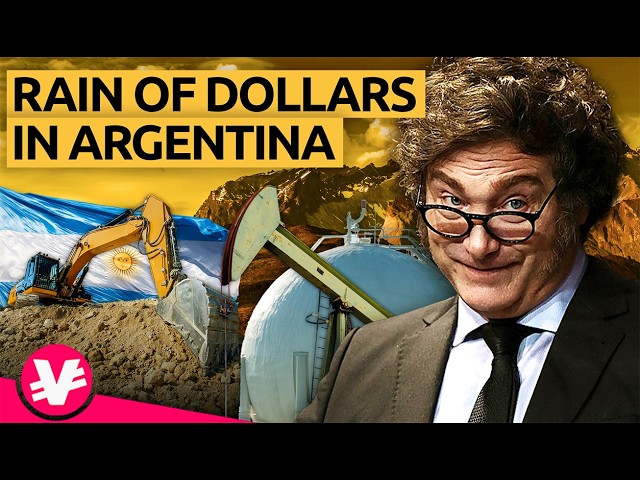
Argentina reshapes oil
For decades Venezuela was synonymous with oil wealth. With more than 300 billion barrels of crude in the ground, the country was once among the top global producers, pumping more than 3 million barrels per day in the late 1990s. Today that legacy has been squandered. A combination of nationalization, decades of under‑investment, corruption and increasingly severe sanctions left the once‑mighty industry in disrepair. Production fell to roughly half a million barrels a day during the pandemic and only recovered to about one million barrels per day by the end of 2025. Analysts warn that reviving output to historic levels would require annual investments of around US$10 billion for at least a decade.The heavy, extra‑viscous crude that constitutes most of Venezuela’s reserves requires diluents such as condensate to flow through pipelines and be exported. With domestic production of light hydrocarbons down to a few tens of thousands of barrels per day, the industry depends on imports to make its oil marketable. Infrastructure has also deteriorated: many refineries operate at a fraction of their capacity, pipelines leak into Lake Maracaibo and other waterways, and some equipment has been cannibalized for spare parts. Even modest increases in exports in early 2026 were achieved under tight supervision from the United States and did little to change the structural problems afflicting the sector. In short, the country with the world’s largest crude reserves is unlikely to flood the market any time soon.Argentina’s shale revolutionWhile Venezuela languishes, Argentina has emerged as a bright spot in Latin American energy. At the heart of this renaissance is Vaca Muerta, an 8.6‑million‑acre shale formation in the Neuquén Basin. Energy officials estimate it contains roughly 16 billion barrels of technically recoverable shale oil and more than 300 trillion cubic feet of natural gas resources. Until recently these riches were largely untapped, but a combination of technological advances in horizontal drilling and hydraulic fracturing, favourable global oil prices, and improved infrastructure have unleashed a wave of production. Argentina’s oil output surged 50 % from early 2021 to September 2024, with unconventional wells providing the lion’s share of growth. By September 2025, total crude oil production averaged 833,874 barrels per day, a record for the country, and unconventional output alone hit 550,881 barrels per day — a 30 % increase year on year. Oil from Vaca Muerta now accounts for roughly two‑thirds of national output, while the same formation provides almost three‑quarters of Argentina’s natural gas.Vaca Muerta’s geology makes it a highly attractive asset. Its shale layers are thicker than those of the Eagle Ford and Bakken plays in the United States and comparable in quality to the Permian Basin. Wells drilled there boast high productivity and low breakeven costs; estimates suggest producers can make money at US$36 to US$45 per barrel. The crude is light and low in sulfur, making it easier to refine and resulting in a smaller carbon footprint than many other petroleum grades. Yet only about a tenth of the formation is currently under development, hinting at decades of growth potential.Infrastructure and policy – turning resources into exportsRapid growth in shale output has forced Argentina to rethink its infrastructure. A wave of new pipelines and policy reforms is turning the country from a net importer of hydrocarbons into a potential exporter. On the oil side, the Vaca Muerta Norte pipeline to Chile came into service in 2023, and the massive Vaca Muerta Oil Sur (VMOS) project — now under construction — will connect the shale patch to the Atlantic coast with an eventual capacity of 180,000 barrels per day by late 2026. Five huge storage tanks, each more than 30 metres tall and 87 metres across, are being built to handle the flow. Crude oil exports rose by about one‑third per year between 2017 and 2023 as pipeline bottlenecks were eased, and new capacity is expected to unlock even more shipments.On the gas side, the Perito Francisco Pascasio Moreno pipeline began operations in 2023, transporting up to 0.7 billion cubic feet per day northwards. A second phase will increase capacity to 1.2 billion cubic feet per day by 2028. Work is also underway to reverse the flow of the Gasoducto Norte pipeline so that Vaca Muerta gas can be exported to Brazil. These projects have already reduced Argentina’s dependence on imported natural gas; liquefied natural gas imports were down 43 % in the first nine months of 2024, and pipeline imports from Bolivia ended entirely in September 2024. Talks are underway to send Argentine gas through Bolivia to Brazil, underscoring the region’s shifting energy flows.Policy has been just as important as bricks and mortar. In mid‑2024 the Argentine Congress approved the so‑called “Ley Bases,” sweeping economic reforms that limit government intervention in energy markets, allow permit holders to transport and export hydrocarbons freely, and authorize long‑term liquefied natural gas export licences. A complementary large‑investment regime offers 30 years of tax stability, duty‑free import of capital goods and free mobility of capital to investors in energy, mining and infrastructure projects. Together with the Plan Gas programs, which guarantee prices and long‑term contracts for producers, these measures have catalyzed investment from both domestic and foreign companies. The energy ministry envisions US$30 billion in annual energy exports by 2030. A consortium led by Argentina’s state‑controlled YPF, along with Pan American Energy, Pampa Energía and Harbour Energy, is fast‑tracking a floating LNG project expected to start shipping liquefied natural gas in 2027. The first phase has secured approval to export 11.5 million cubic metres of natural gas per day under a 30‑year licence, potentially generating about US$1 billion a year in revenue.Economic impact and regional dynamicsThis shale boom is reshaping Argentina’s economy. In 2025 the energy trade balance recorded a surplus of about US$7.8 billion — the largest in more than three decades. Energy exports reached record levels, providing much‑needed foreign currency to a country long plagued by chronic shortages. President Javier Milei’s administration sees the sector as a pillar of his broader strategy to stabilize public finances and attract private investment. Investors have responded: new drilling has propelled Argentina into the top tier of Latin American producers. By late 2025 the country ranked fourth in the region behind Brazil, Venezuela and Guyana, having briefly overtaken Colombia before Guyana’s offshore megaprojects came online. With projections for shale output to exceed one million barrels per day by the end of the decade, Argentina could soon challenge Venezuela’s fading dominance in regional oil markets.The shift also has geopolitical implications. Argentina’s gas will soon flow north to Chile, Uruguay and potentially Brazil, reducing those countries’ reliance on Bolivian and LNG supplies. Meanwhile, Venezuela’s stagnation and the uncertainty surrounding sanctions have created openings for other producers. Even with some restrictions eased in early 2026 to allow U.S. companies to trade Venezuelan oil, production constraints remain and exports are effectively supervised by Washington. Export volumes around 800,000 barrels per day in early 2026 were still below what the country shipped a decade ago. As a result, Latin American refiners and importers are increasingly looking to Argentina’s light sweet crude and Brazil’s offshore barrels, rather than Venezuela’s heavy grades.Challenges and prospectsDespite the upbeat trajectory, Argentina faces challenges. Rapid production growth has outpaced pipeline and storage capacity, leading to occasional flaring or forced well shut‑ins. Unconventional gas output dipped in late 2025 due to maintenance and infrastructure bottlenecks. The success of the energy export strategy hinges on finishing major pipelines on time, maintaining policy consistency across changes of government, and managing environmental impacts. Shale development requires large volumes of water and can provoke local opposition if not handled responsibly. Additionally, although the Ley Bases and investment regime are promising, Argentina’s history of policy reversals makes long‑term investors cautious.Still, the contrast with Venezuela could not be starker. While one country struggles to maintain basic production amid sanctions, corruption and crumbling equipment, the other is building pipelines, signing long‑term LNG contracts, and capturing the attention of global energy investors. For those watching Latin America’s oil map, the message is clear: the future of the region’s hydrocarbon story may lie in the shale fields of Neuquén rather than the degraded refineries of Carabobo. The era when Venezuela’s vast reserves automatically translated into influence is over. Argentina, once a minor player, is now poised to become a significant exporter and a driver of regional energy integration. Investors, policymakers and neighbours are increasingly looking south of the Andes for supply security and economic opportunity.

EU misstep on mercosur Deal
The European Union has spent decades negotiating a comprehensive trade agreement with the Mercosur bloc of South American nations. The pact would create a market of more than 700 million people and eliminate tariffs on over 90 percent of bilateral trade, allowing European manufacturers to sell more cars, machinery and wines to Argentina, Brazil, Paraguay and Uruguay, while letting South American producers export beef, poultry, sugar and other agricultural commodities to Europe. It is intended to secure access to raw materials, diversify supply chains and demonstrate Europe’s commitment to multilateralism at a time when global trade relations are under strain.Long negotiations and last‑minute hesitationThe deal, however, has repeatedly stalled because of domestic European politics. French lawmakers demanded that their government refer the agreement to the EU’s Court of Justice, arguing that the way Brussels sought to bypass national parliaments violated EU treaties. France’s president assured protesting farmers that he would not support the agreement until stronger safeguards were added, reflecting longstanding fears that cheap South American imports would undercut European producers and that lax environmental rules in Brazil could lead to further deforestation. Austria, Poland, Ireland and Hungary sided with Paris and called for a “blocking minority” in the Council of Ministers. Italy, a potential swing vote, also hesitated until Brussels offered extra funding and a strengthened safeguard clause to protect sensitive products. In the European Parliament, a group of 145 members petitioned to send the accord to the EU Court, a move that would freeze ratification.This domestic resistance provoked mass demonstrations. Thousands of farmers drove tractors into Brussels, Paris and other European capitals, blocking roads and throwing potatoes at police. They fear the pact would allow imports produced under looser health and environmental standards, undermining local markets and depressing prices. French unions demanded “mirror clauses” requiring Mercosur producers to meet EU pesticide rules and stricter inspections at the border. Brussels responded by including a legally binding safeguard mechanism in the agreement that would allow tariffs to be re‑imposed if imports from Mercosur harmed EU farmers. Supporters, led by Germany and Spain, argue that Europe cannot afford to turn inward. They warn that Chinese firms are expanding across Latin America and that failing to ratify the pact would leave the EU isolated.Trump’s tariff offensiveThe debate within Europe coincides with an aggressive trade posture from Washington. President Donald Trump has recast U.S. trade policy around tariffs, imposing broad levies on steel, aluminium and automobiles. Negotiators seeking a U.S.–EU trade accord reported in June 2025 that Washington was insisting on a 10 percent baseline “reciprocal tariff” on most European goods, and some officials acknowledged it would be difficult to avoid such duties. European carmakers such as Mercedes and Stellantis have already pulled earnings guidance because of uncertainty over U.S. tariffs. Failing to secure a new trade arrangement could expose European industry to levies of up to 50 percent.On 17 January 2026, Trump escalated tensions further. In a post on his social network, he announced that additional 10 percent tariffs on goods from Denmark, Norway, Sweden, France, Germany, the Netherlands, Finland and Great Britain would take effect on 1 February and rise to 25 percent on 1 June. He linked the levies to an extraordinary demand that Denmark sell Greenland to the United States. European leaders rejected the threat and warned that using tariffs to force the sale of a territory undermined alliances. Trade experts noted that such measures would erode the basis for a U.S.–EU deal and encourage Europeans to look elsewhere for markets.Europe’s self‑inflicted woundAgainst this backdrop of mounting tariffs, the EU’s hesitance to ratify its largest free‑trade agreement looks like a self‑inflicted wound. The Mercosur pact would give European exporters a new market just as the U.S. threatens to close its own. It would offer Latin American partners an alternative to Chinese investment and send a message that Europe remains open for business. Delaying or blocking the deal not only frustrates South American allies but also signals that the EU lacks the capacity to act decisively in its own interest.Critics in Europe acknowledge that domestic concerns must be addressed but argue that these are not insurmountable. The latest version of the agreement includes a safeguard mechanism that would temporarily reintroduce tariffs if imports surge. It also strengthens cooperation on digital trade and protects critical raw materials, reflecting lessons from Russia’s war in Ukraine. The pact commits both regions to uphold the Paris climate agreement and provides for stricter monitoring of deforestation. Supporters believe these measures strike a balance between protecting European farmers and promoting free trade.Geopolitical ramificationsThe stakes go beyond economics. In the days before the Mercosur signing ceremony, U.S. tariff threats and talk of a possible military seizure of Greenland drew condemnation from European officials. At the same time, Latin American leaders warned they would not wait indefinitely; Brazil’s president suggested he would abandon the deal if it were not signed soon. Europe’s credibility as a global actor depends on demonstrating that it can deliver agreements without being held hostage by internal politics. The more Europe hesitates, the more it encourages partners to seek alternatives with China or the United States.A call for strategic clarityEurope cannot insulate itself from global shocks by retreating behind national borders. Protectionism at home invites retaliation abroad, as Trump’s escalating tariffs demonstrate. By stalling the Mercosur agreement, the EU undermines its own leverage in negotiations with Washington and risks turning potential allies into competitors. Ratifying the pact, with appropriate safeguards for farmers and the environment, would expand markets for European goods, strengthen ties with a region rich in critical raw materials and agricultural products, and send a clear message that the EU is committed to open, rules‑based trade. In a world where tariffs are wielded as political weapons, shooting oneself in the foot is a mistake Europe cannot afford to make.

India defies U.S. tariffs
When Washington decided to double tariffs on Indian goods in mid‑2025, many analysts predicted a serious blow to New Delhi’s export‑led ambitions. The new duties – raising effective rates to 50 % and applying to a broad range of merchandise – were justified by the United States as a response to India’s purchases of discounted Russian crude and long‑standing trade imbalances. Yet the effect so far has been counter‑intuitive. India has retained its position as one of the world’s fastest‑growing major economies. Provisional figures show gross domestic product expanding at an annualised 7.8 % in the April–June 2025 quarter, the fastest in five quarters and well above market forecasts. Gross value added, regarded as a better measure of underlying activity, grew 7.6 %, while private consumption – which accounts for nearly 60 % of output – rose 7 %. These gains have encouraged officials to predict full‑year growth close to 7 %, and the statistics office now projects 7.4 % for the 2025/26 fiscal year.Trade tensions and political rhetoricThe tariff escalation marks the sharpest turn in U.S.–India commerce since the Trump administration’s early complaints about India’s high import barriers. What began as a push to narrow America’s trade deficit quickly widened into a broader confrontation: Washington demanded easier market access, higher visa fees and curbs on H‑1B immigration, while New Delhi defended its right to buy Russian oil and declined to join Western sanctions. When U.S. officials linked Moscow’s invasion of Ukraine with bilateral trade talks, they imposed an extra 25‑percentage‑point surcharge over the existing 25 % tariff. President Donald Trump used social media to label India a “dead economy,” arguing that the United States did little business with a nation he said was overly protected. Such rhetoric belied the depth of bilateral ties: India remains a key defence partner for Washington, and the two countries signed a ten‑year defence cooperation framework last year.Why India’s growth holds upSeveral factors explain why punitive tariffs have not derailed growth. First, India’s economy is driven far more by domestic demand than by exports. Private consumption has been buoyed by rural spending, demand for durable goods and tax relief measures. Government spending rose 7.4 % in the June quarter after contracting in the previous period. The manufacturing sector expanded 7.7 %, a sharp improvement on the previous quarter, and services – spanning trade, hotels, transport and finance – posted a robust 9.3 % increase. Agriculture also contributed, growing 3.7 % after a strong sowing season. Collectively, these drivers more than offset the early effects of higher U.S. duties.Second, Prime Minister Narendra Modi’s government has pursued reforms that underpin domestic resilience. Officials cut personal income taxes and announced forthcoming consumption‑tax reductions to stimulate spending. Labour and consumer‑tax overhauls came into force in 2025, improving compliance and investment conditions. Authorities are also front‑loading capital expenditure on infrastructure and offering targeted support to sectors most exposed to foreign tariffs, such as textiles and leather. These measures, along with monetary policy that keeps real interest rates supportive, have helped sustain household and corporate confidence.Third, India has diversified its trade relationships. While U.S. tariffs threaten around 55 % of the country’s $87 billion of goods exports to America, exporters have been quick to court alternative markets. New Delhi is negotiating free‑trade agreements with the United Kingdom and the European Union and has concluded pacts with Australia and the United Arab Emirates. Bilateral deals in South‑East Asia and Latin America have opened new routes for manufacturers of automobiles, pharmaceuticals and electronics. Even where tariffs bite, such as in Mexico – which recently raised import duties on non‑FTA partners to up to 50 % – Indian negotiators are pursuing country‑specific exemptions. The government has also stepped up outreach to African and Middle‑Eastern economies, leveraging its successful Group‑of‑Twenty presidency to deepen investment ties.The risks aheadEconomists still warn that the full impact of the U.S. tariffs has yet to be felt. Exporter groups estimate that 50 % duties could shave 0.6 to 0.8 percentage points off India’s growth over a year. With nominal GDP growth already slowing to 8.8 % in the June quarter – its lowest in several years – corporate profits and tax revenues may come under pressure. Currency markets have reflected these concerns: the rupee touched a record low against the dollar following the tariff hikes, while equity indices sagged. There are also structural challenges. The European Union’s Carbon Border Adjustment Mechanism, set for full implementation in 2026, will impose new reporting obligations and costs on steel, aluminium and cement exporters, potentially eroding their competitiveness. Meanwhile, Mexico’s broad tariff increases threaten to disrupt a fast‑growing destination for Indian automobiles and components.Another concern is private investment. Capital expenditure rose 7.8 % in the June quarter, but analysts say many firms are deferring large projects pending clarity on global trade rules. Although official forecasts point to 7 % annual growth, the Reserve Bank of India expects a moderation as the tariffs take full effect and global demand slows. To sustain momentum, India will need to accelerate structural reforms, improve labour‑market flexibility and expand production incentives under its “Make in India” programme.A contest of narrativesThe commercial clash between Washington and New Delhi is as much about narrative as economics. U.S. officials portray the tariffs as leverage to obtain market access and influence India’s foreign policy. Indian leaders characterise them as an unfair attempt to “crush” a rising power, and they point to the country’s 1.4 billion‑strong market and digital‑economy boom as evidence of enduring strength. In truth, the clash underscores a shifting global order. As China’s growth slows, investors and governments are reassessing supply‑chain dependence and seeking alternatives. India’s ability to deliver near‑8 % growth despite trade headwinds highlights its potential as a manufacturing and services hub. Yet the dispute also exposes vulnerabilities: a heavy reliance on imported oil, a still‑nascent export base and an under‑developed logistics system.For now, India’s economy is soaring even as one of its most important partners raises barriers. Whether this resilience can be sustained will depend on how quickly tariffs bite, how successfully New Delhi diversifies its trading partners and whether domestic reforms continue apace. The coming year will reveal whether the world’s fastest‑growing major economy can stay on course amid rougher commercial seas.

AI sparks Wall Street panic
In early February 2026 the technology industry found itself at the epicentre of a historic stock‑market rout. The catalyst was not disappointing earnings or macroeconomic upheaval but the release of a suite of generative‑AI plug‑ins. Anthropic, a San Francisco‑based start‑up backed by the likes of Amazon and Google, launched new tools for its Claude Cowork agent that automate legal and administrative tasks. In demonstrations the agent drafted contracts, filed regulatory documents and answered complex finance queries. This display of competence was hailed as a triumph for AI but it triggered panic among investors.By 4 February the sell‑off had wiped nearly $830 billion from the S&P 500 software and services index, the worst draw‑down in the sector since the Federal Reserve’s rate‑driven rout of 2022. A Goldman Sachs basket of U.S. software stocks slumped 6 % in a single session. Thomson Reuters, owner of the Westlaw legal database, fell almost 16 %, and online legal service provider LegalZoom crashed close to 20 %. Assets managed by private‑equity firms such as Ares, KKR and Blue Owl fell between three and eleven per cent. ServiceNow, Salesforce, HubSpot, Atlassian, Docusign, Asana, Workday and Adobe all suffered double‑digit declines.What spooked investors?The panic reflected a shift in investor perception of generative AI. For much of 2025 Wall Street treated AI as a productivity enhancer layered on top of existing software, boosting subscription models and valuations. Anthropic’s plug‑ins suggested something more disruptive. They allow a single agent to complete tasks autonomously from raw data, bypassing conventional software workflows. In the words of the Economic Times, the launch led investors to view AI as a potential replacement for entire categories of software and services. This “SaaSpocalypse” narrative posited that moats built on proprietary data or per‑seat licensing could erode rapidly.Analysts also compared the development to Amazon’s expansion beyond books. Just as the e‑commerce giant used its distribution foothold to disrupt retailers, AI agents might use their knowledge to disrupt legal, financial and marketing service providers. The fear was exacerbated by the timing: on the same day that Anthropic’s plug‑ins appeared, OpenAI previewed updates to its Codex agent. The combined announcements fed a narrative that software is at risk of obsolescence, prompting portfolio managers to sell anything exposed to enterprise applications.Is the reaction justified?Not all observers share the doom‑laden view. Jensen Huang, chief executive of Nvidia, called the sell‑off “illogical”, arguing that AI agents will still rely on traditional software for tasks such as database management, accounting and compliance. Mark Murphy of JPMorgan said the idea that a plug‑in could replace every layer of mission‑critical enterprise software is an “illogical leap”. Talley Leger of The Wealth Consulting Group contended that improved AI tools could lower the cost of producing software and widen margins.The Economic Times emphasised that proprietary datasets remain valuable. Companies like FactSet, S&P Global and Moody’s rely on continuous data collection and licensing; AI models still struggle to replicate these curated databases. The newspaper also pointed out that the sell‑off underscored a shift from per‑seat subscriptions to outcome‑based pricing models. Newer software firms and AI‑native start‑ups already charge for completed tasks rather than for user access, suggesting that incumbents may adapt rather than vanish.Winners amid the routNot every technology company suffered. Semiconductor designers and cloud operators saw renewed interest. Autonomous AI agents require far more computing power than simple text‑generation models; reasoning‑heavy workloads increase demand for high‑performance accelerators. Nvidia’s GPUs, along with Amazon’s and Google’s cloud‑computing divisions, stood to gain as always‑on agents drive higher demand for data‑centre resources. Investors also looked towards physical‑world AI: robotics and autonomous mobility require pairing intelligence with machines. Tesla’s Optimus and Cybercab projects attracted attention as they represent AI beyond the digital realm.Lessons for software investorsThe panic that erased hundreds of billions of dollars from software valuations highlights two realities. First, markets are hyper‑sensitive to the idea that AI could disintermediate middlemen. Anthropic’s plug‑in release occurred just weeks after several software firms reported solid earnings. It took one product demonstration to reverse sentiment, underlining how quickly narratives shift.Second, the sell‑off illustrates a broader debate about disruption versus augmentation. Generative‑AI agents may indeed commoditise some tasks, especially in legal research and basic data analysis. Yet the same tools could lower costs and enable new services that expand addressable markets. History suggests that productivity‑enhancing technology often enhances total demand rather than destroying it outright. The eventual winners are likely to be those companies that embrace agentic AI, reimagine pricing and focus on proprietary data or infrastructure.Software stocks may continue to trade with heightened volatility as investors recalibrate expectations. The “SaaSpocalypse” of 2026 will be remembered less for the market value it erased than for the questions it raised about the future of software business models. Whether AI spells obsolescence or opportunity will depend on how quickly companies adapt their tools, pricing strategies and value propositions in an age of autonomous agents.

EU India deal gains unveiled
On 26 January 2026 negotiators from Brussels and New Delhi announced that they had finally concluded a free‑trade agreement (FTA) after nearly two decades of on‑off negotiations. European Commission President Ursula von der Leyen described it as the “mother of all deals”. The pact – which still requires legal revision and ratification in both the European Parliament and the Indian parliament – is broad in scope. It will eventually eliminate or reduce tariffs on over 90 % of EU exports to India, save European companies around €4 billion per year in duties and double EU exports to India by 2032. In return, the EU will cut tariffs to zero on about 90 % of Indian goods at launch and extend duty‑free access to 93 % within seven years. The agreement complements a newly signed Security and Defence Partnership that extends cooperation into areas such as maritime security, cyber‑defence and counterterrorism, signalling that the relationship now goes well beyond commerce.Europe’s economic gainsMarket access to a massive growth engineIndia’s economy – valued at roughly $4.2 trillion and forecast to grow faster than any other major economy – is the EU’s tenth‑largest export market. EU goods face a weighted‑average tariff of about 9.3 % when entering India. Under the FTA, India will eliminate or reduce tariffs on 96.6 % of EU exports by value. Tariffs on roughly 30 % of goods will fall to zero immediately, while remaining duties will be phased out over five, seven or ten years. High barriers on automobiles and industrial goods are set to tumble: duties on cars will fall from 110 % to 10 % over five years under a quota for 250 000 vehicles; tariffs of up to 44 % on machinery, 22 % on chemicals and 11 % on pharmaceuticals will be scrapped. For European vintners and distillers, India’s prohibitive 150 % wine tariff will drop to 20–30 % and duties on spirits will fall to 40 %.The EU’s exporters stand to benefit disproportionately in sectors where India currently imposes the steepest barriers. According to an Allianz Research estimate, an ambitious FTA could boost EU exports by USD 19.2 billion per year (about +0.3 % of total EU exports) and raise EU GDP by +0.1 percentage points annually. Germany, France and Italy – with strong industrial and machinery exports – would gain the most. The EU also expects improved access in financial and maritime services, stronger intellectual‑property protection and simplified customs procedures, making it easier for European firms to invest in and operate within the Indian market.Securing supply chains and reducing dependency on ChinaBeyond the immediate tariff windfall, the FTA is part of a broader strategy to diversify supply chains and reduce reliance on China. A Reuters analysis notes that for Europe the deal provides a route to “support supply‑chain diversification and reduce reliance on China” while tapping India’s fast‑growing market. EU trade with the United States and China dwarfs its trade with India – €873 billion and €736 billion in goods respectively in 2024 – but both relationships have become more uncertain. The return of U.S. tariff threats and growing geopolitical friction with Beijing have pushed Brussels to accelerate deals with Mercosur, Mexico, Indonesia and now India.India’s demographic scale offers long‑term opportunities. The agreement opens a market of 1.4 billion consumers to European companies with lower tariffs and better regulatory cooperation. Crucially, it provides a foothold in sectors where China currently dominates global supply chains. The pact’s digital‑trade provisions set rules on data flows, privacy and standards, allowing European technology firms to collaborate with India’s vast digital workforce. It also contains labour, environment and women’s empowerment commitments, aligning trade flows with the EU’s sustainability agenda.Strategic and defence dividendsThe simultaneous Security and Defence Partnership gives the trade accord a geopolitical dimension. Signed on 27 January 2026, the pact builds a comprehensive framework for cooperation in maritime security, counterterrorism, cyber‑defence and emerging technologies. EU foreign policy chief Kaja Kallas said the partnership marks a new phase in relations and reflects how “the EU and India see the world changing in similar ways”. By aligning security interests, Europe hopes to embed India in a rules‑based order and create an Indo‑Pacific partner that can balance China’s influence, thus increasing the geopolitical payoff from deeper economic integration. The partnership also includes cooperation on space security, resilience of critical infrastructure and counter‑terrorism training, underlining that the EU’s gains are not merely commercial but strategic.The truth behind the deal: limits and conditionsRatification risks and delayed benefitsWhile political leaders celebrated, the FTA’s benefits will not be immediate. The legal text still needs to be reviewed, translated and approved by all 27 EU governments, the European Parliament and India’s parliament, a process that could take a year or more. Analysts caution that the ratification could face setbacks similar to the EU–Mercosur agreement, which has been challenged in the EU’s top court. Even after entry into force, many tariff cuts are phased in over up to ten years and low‑price cars as well as sensitive farm products are excluded entirely. Therefore, the claimed doubling of EU exports by 2032 will depend on smooth implementation and sustained political will on both sides.Modest gains relative to global tradeAlthough labelled the “mother of all deals”, some analysts argue that the economic impact for Europe may be modest. EU–India goods trade was about €120 billion in 2024, a fraction of the EU’s trade with the United States or China. Even if EU exports to India double, they would remain small relative to the bloc’s global trade. Allianz estimates that Europe’s auto industry would gain less than USD 50 million in additional car exports because current car exports to India are only USD 300–400 million. The EU’s major export interests lie in machinery, chemicals and pharmaceuticals, while automotive gains attract headlines but deliver little material uplift.Stringent conditions and mutual compromisesThe FTA is less ambitious than some other EU deals. It leaves out government procurement, energy and raw materials and investment protection agreements, which are still being negotiated separately. Agriculture and dairy are largely excluded; India will maintain protections for rice, sugar, dairy and poultry. EU demands for far‑reaching environmental, labour and intellectual‑property standards have been controversial. India succeeded in limiting tariff elimination to around 97 % of EU exports and secured quotas for sensitive goods such as cars, steel and shrimps. Delhi also obtained a commitment that any flexibilities the EU grants other countries under its Carbon Border Adjustment Mechanism will also apply to India, mitigating some of the impact of Europe’s new carbon levy.Non‑tariff barriers and the carbon border taxThe greatest obstacles to EU gains may lie outside the tariff schedules. Indian exporters complain of stringent EU technical standards, certification costs and regulatory delays, while the EU is concerned about data security and market access in services. India’s trade community fears that Europe’s Carbon Border Adjustment Mechanism could erode tariff gains by imposing duties on carbon‑intensive exports. A technical group and a €500 million EU fund have been created to help Indian firms verify carbon footprints and reduce emissions. For the EU, success will depend on the enforcement of environmental and labour provisions and on ensuring that India implements reforms to ease doing business.Conclusion: beyond tradeThe EU‑India trade pact represents the most comprehensive trade agreement either party has ever signed. For Europe it offers access to a vast and rapidly growing economy, savings in duties, diversification away from China and the United States, and a new strategic partner in the Indo‑Pacific. Tariffs on machinery, chemicals, pharmaceuticals and premium wines will fall sharply, and European firms will gain improved access to Indian services sectors. The accompanying security partnership underscores the geopolitical stakes: Europe aims to anchor India in a rules‑based order and counterbalance competitors in Asia. However, the deal is conditional, phased and subject to political hurdles. The economic gains are significant but remain limited relative to Europe’s overall trade. To realise its full potential, both sides must navigate ratification, implement reforms, and balance economic ambition with domestic sensitivities. Only then will the truth behind the deal – whether it truly delivers for Europe – become clear.

Japan’s right‑turn triumph
Japan’s electoral earthquake on 8 February 2026 signalled the end of an era of cautious centrism. Voters delivered a resounding super‑majority to Prime Minister Sanae Takaichi’s Liberal Democratic Party (LDP), handing the right‑wing leader the most decisive mandate any Japanese premier has enjoyed since the party’s formation in 1955. Exit polls and the final count put the LDP on 316 seats, well above the 261 seats needed for an absolute majority and far beyond the 300‑seat record set by Yasuhiro Nakasone four decades earlier. Together with its new ally, the Japan Innovation Party, the governing coalition now controls 352 of 465 seats in the lower house, enabling Takaichi to override the upper chamber and pursue policies once deemed politically impossible.An electorate fed up with driftThe early election was a gamble. After becoming Japan’s first female prime minister in October 2025, Takaichi faced a fractured legislature, slumping support and a party still tainted by a slush‑fund scandal. She called a snap election only three months into the job and promised to resign if she failed to secure a majority. Voters responded not just by endorsing her but by signalling fatigue with years of timid leadership and incremental reform. Snowstorms and travel disruptions kept turnout modest — about 55.6 % — yet those who braved the weather rewarded a leader who projected strength and clarity.Takaichi’s popularity stems from what supporters call “Sanaenomics”. The three‑pillar programme promises massive investment in national crisis management and public‑private partnerships, an expansionary fiscal policy financed by unprecedented deficit spending, and a challenge to the Bank of Japan’s independence, shifting control of monetary policy to the government. In the campaign she offered a ¥21 trillion stimulus package and pledged to suspend the 8 % consumption tax on food for two years. Such largesse unsettles investors in a country whose public debt already exceeds 230 % of GDP, but Takaichi argues that reviving growth and lifting wages require a decisive break with monetary orthodoxy.A hard‑line agendaTakaichi is no pragmatist in foreign and security policy. Born in 1961, she entered politics in 1996 and rose through the LDP as a nationalist firebrand. Like her mentor Shinzō Abe, she has long advocated revising Article 9 of the constitution to formalise Japan’s Self‑Defence Forces and supports further military spending. As minister for economic security she proposed restricting foreign ownership of land near strategic sites and drafted a spy‑prevention law to counter foreign interference. During the campaign she provoked Beijing by suggesting that Japan could intervene militarily should China attempt to seize Taiwan, an assertion that led China to urge its citizens to avoid Japan and to halt panda exchanges. Instead of apologising, Takaichi doubled down, and her defiance resonated with voters who fear China’s assertiveness and North Korea’s missile tests.The landslide also reflects deep unease over immigration and social change. Japan’s foreign‑resident population is rising — officials warn it could exceed 10 % by 2040 — and Takaichi has made tighter controls a centrepiece of her platform. She wants to review foreign investment, limit property acquisitions and curtail what she calls exploitation of lax tourism visas. Yet she balances these hard‑edged views with promises of family‑friendly policies, such as tax breaks for childcare and corporate incentives to provide in‑house nurseries. She also pledges to increase women’s representation in politics but resists calls to let women ascend the imperial throne or to allow married couples to retain separate surnames.Implications at home and abroadWith a super‑majority secure, Takaichi can now pursue her agenda without worrying about another national election until 2028. Economists warn that cutting consumption taxes and further borrowing could exacerbate currency volatility and spook markets. She faces the herculean task of reviving growth while contending with stagflation — rising prices and stagnant wages — and a rapidly ageing population. The electorate’s patience may be limited if living standards do not improve.Internationally, Japan’s rightward turn complicates regional diplomacy. Relations with China are at a post‑Cold War low after Takaichi’s comments on Taiwan and her regular offerings to the Yasukuni Shrine, which honours Japan’s war dead and is seen in Beijing and Seoul as a symbol of militarism. At the same time, she has strengthened ties with the United States, hosting President Donald Trump in Tokyo just days after taking office. Trump congratulated her on social media for the “conservative, peace‑through‑strength agenda”, while critics warn that closer alignment with Washington could further inflame tensions with neighbours. Within Japan, the opposition’s failure to unite means Takaichi faces little organised resistance; the Centrist Reform Alliance lost half of its pre‑election seats, and smaller parties remain divided.Where next for Japan?The landslide that catapulted Sanae Takaichi into near‑unchallenged power is both a mandate and a warning. It shows that many Japanese are fed up with drift and are willing to embrace a hard‑line leader who promises rapid change. But it also means that the checks and balances of coalition politics have weakened. Takaichi must now translate populist slogans into sustainable policies — restoring growth, managing debt, balancing defence with diplomacy and addressing demographic decline. Whether her nationalist agenda heralds a new chapter for Japan or simply deepens divisions at home and abroad will be watched closely in Tokyo, Beijing and Washington.
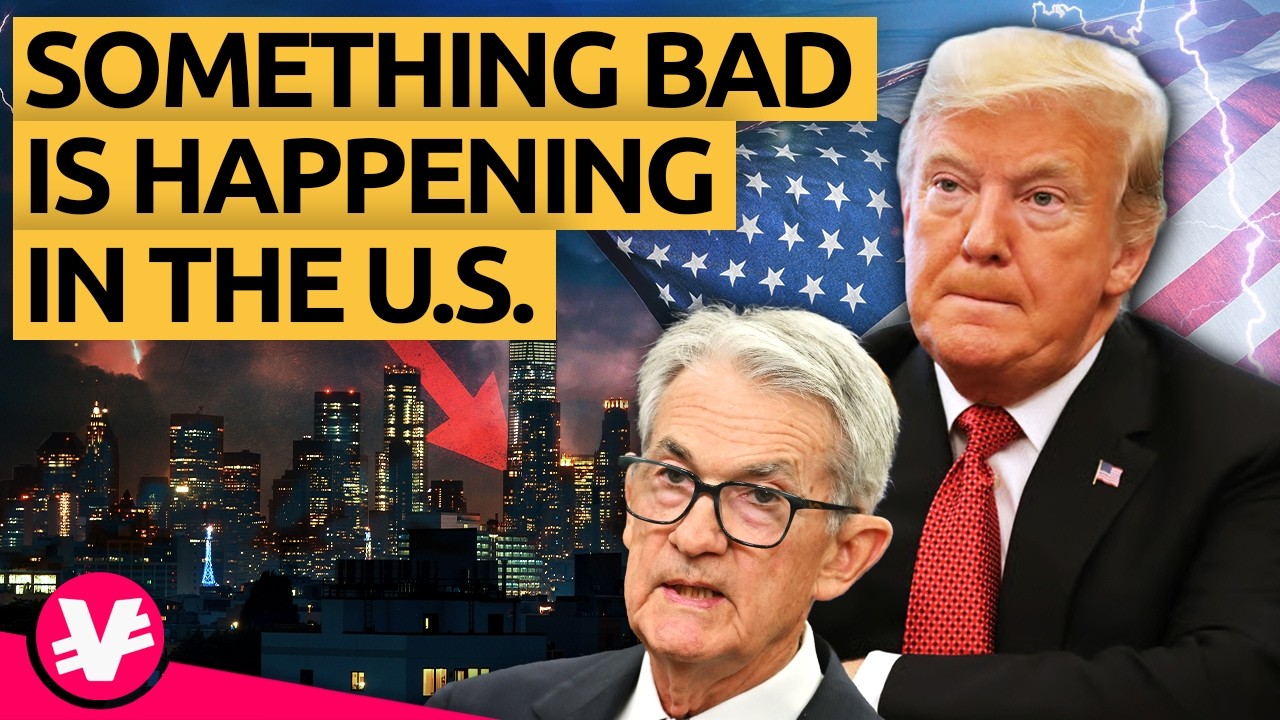
U.S. Jobs stall, gdp slows
The phrase “the economy is suffocating” is the sort of provocation normally reserved for campaign platforms and market panic. Yet the latest hard numbers offer a more unsettling reality: not a dramatic plunge, but a steady constriction—growth that is still positive, but markedly weaker; job creation that continues, but increasingly narrow; and a labour market whose stress is showing up less in flashy headlines than in the quiet arithmetic of participation, long-term unemployment, and where the jobs are actually being created.A recent widely circulated economic video framed the moment as an economy running short of oxygen—employment “collapsing” while output slows. The language is blunt; the underlying diagnosis is harder to dismiss. The newest official releases describe an economy that is not in freefall, but is plainly losing momentum and breadth. The risk is not merely slower growth; it is the kind of slowdown that changes behaviour—when employers delay hiring, households postpone big purchases, and confidence erodes long before the data formally declares a downturn.Growth is still growth—until it isn’tThe advance estimate for output in the final quarter of 2025 delivered a sharp deceleration. Real GDP expanded at an annual rate of 1.4% in Q4 2025, down from 4.4% in Q3 2025. The economy, in other words, did not contract; it slowed—dramatically. That distinction matters, but so does the direction of travel. A drop of roughly three percentage points in the growth rate over a single quarter is not statistical noise; it is a meaningful loss of speed.This matters because headline GDP is not merely a retrospective scorecard. It shapes expectations—about profits, wages, tax receipts, and the room policymakers have to manoeuvre. When growth cools this quickly, the question is no longer whether the economy can keep expanding; it is what must happen for it to re-accelerate, and whether those conditions are present.Slower GDP growth also changes the “feel” of the economy even when employment remains positive. Households experience it as fewer hours, fewer opportunities to switch jobs for better pay, and a rising sense that prices and borrowing costs are harder to outrun. Businesses experience it as cautious demand, more price sensitivity, and a higher bar for investment.Employment: the headline number hides the squeezeThe labour market’s newest monthly snapshot carries an apparent contradiction. On the surface, payrolls rose by 130,000 in January, a respectable gain by pre-pandemic standards. Beneath the surface, the more telling line is what came next: in 2025, payroll employment “changed little,” averaging only about 15,000 jobs per month. That is not a vibrant labour market; it is a near-stall—an economy still creating jobs, but only just.The pattern of January’s hiring sharpens the point. The gains were heavily concentrated:- Health care added 82,000 jobs.- Social assistance rose by 42,000.- Construction added 33,000.Together, those three categories total 157,000—more than the entire headline increase of 130,000. The implication is straightforward: outside those pockets, the rest of the economy collectively shed around 27,000 jobs on net. This is the anatomy of a late-cycle labour market: hiring that persists, but in sectors that are either structurally supported (health care demand driven by demographics and backlogs) or buffered by ongoing projects and contracts (construction), while many other industries hover near flat, or quietly contract.A labour market that is “working” can still be weakeningThe unemployment rate is not at crisis levels. Yet it is drifting higher than the unusually low rates of the earlier post-pandemic expansion, and the composition of unemployment is becoming more concerning. Long-term unemployment—people out of work for 27 weeks or more—stood at 1.8 million in January, accounting for one quarter of all unemployed people. More strikingly, the long-term unemployed count is up by 386,000 from a year earlier. That is a classic indicator of a labour market that is tightening its grip: when hiring slows, jobless spells lengthen, and the pathway back into work becomes steeper. At the same time, the labour force participation rate remained around 62.5%, with the employment-population ratio at 59.8%—figures that suggest limited progress in drawing more people into work. If job growth is slowing while participation is steady, the economy can absorb shocks less easily. A weaker quarter of hiring, a pullback in investment, or a reduction in public-sector employment can then translate into a faster rise in unemployment.A further sign of pressure appears among those on the margins of the labour force. The number of people not in the labour force who still want a job fell to 5.8 million, a sizeable decline from the previous month. That drop can be read in two ways. Optimistically, it could mean fewer people want work because more have found it. Less optimistically, it can reflect discouragement—people who want employment, but see too few viable opportunities to keep searching actively enough to be counted as unemployed.Meanwhile, the number of marginally attached workers—those who want work, are available, and have looked in the last year, but not in the most recent month—stood at 1.7 million, including 475,000 discouraged workers. These are not fringe statistics; they are the shadow edge of the labour market, where strain appears earlier than in headline payrolls.Where the jobs are—and where they are disappearingIn a broad-based expansion, employment gains are distributed across industries: goods and services, cyclical and defensive sectors, private and public. That is not the pattern now. Health care remains the engine of job growth, and it is not subtle. It added 82,000 jobs in January alone, with gains in ambulatory services, hospitals, and nursing and residential care facilities. These are vital jobs—but they are not, by themselves, a signal that the private economy is surging. They speak to an underlying demand for care, not necessarily rising discretionary spending or business investment.Construction’s gain of 33,000 suggests ongoing activity, but the same report notes that construction employment was essentially flat over 2025 as a whole. That is consistent with a sector that can post strong months but is not in a sustained upswing. Perhaps most politically and economically sensitive is what is happening in government payrolls. Federal government employment fell by 34,000 in January, continuing a broader decline linked to earlier workforce changes. Since a peak in October 2024, federal employment is down by 327,000, a drop of 10.9%. Regardless of one’s view of public-sector size, a reduction of that scale is large enough to ripple through local economies, contracting, and household spending in affected regions.Financial activities are also under pressure. The sector lost 22,000 jobs in January and is down 49,000 since a recent peak in May 2025. A shrinking financial sector can be both a symptom and a cause of slower growth: it reflects weaker deal flow and lending activity, and it can reinforce tightening conditions as firms reduce capacity and risk appetite. Beyond these moves, many major industries showed little change. That “quiet” is itself a signal. When the labour market is humming, “little change” across many sectors would be unusual. In a cooling economy, it becomes the norm.Wages are rising—but that does not mean households feel reliefAverage hourly earnings increased 0.4% in January to $37.17, putting year-on-year wage growth at 3.7%. For production and non-supervisory workers, earnings also rose 0.4%, to $31.95. Steady wage growth can be a sign of resilience. But it can also coexist with an increasingly anxious labour market. When job switching slows, wage gains are more likely to be incremental rather than transformational. Workers may see pay rising, but feel less able to negotiate, less willing to take risks, and more concerned about job security. In practical terms, an economy can “suffocate” not because wages collapse, but because the combination of slower hiring, slower output growth, and elevated costs squeezes households from multiple angles at once: fewer opportunities to move up, less confidence in future income, and higher sensitivity to shocks.The GDP slowdown and the labour stall are reinforcing each otherGDP and employment are intertwined, but they are not the same. Output can slow while jobs still rise, particularly if productivity changes, if hiring lags the cycle, or if growth is supported by a narrow band of sectors. But the current combination—sharp GDP deceleration and a labour market that barely expanded through 2025—creates an uncomfortable feedback loop.When GDP slows, businesses become cautious. When businesses become cautious, hiring slows. When hiring slows, consumer confidence weakens. When confidence weakens, spending and investment soften further. This is how expansions age—not with a single catastrophic event, but with an accumulation of small “no’s”: no new hires, no new factories, no major purchases, no expansions into new markets. The economy can stay in that state for some time. But it becomes fragile. In a fragile state, the difference between “slow growth” and “recession” is often a short list of triggers: a credit shock, an external disruption, a sharp fall in business confidence, or policy uncertainty that prompts firms to protect cash rather than pursue growth.Why dramatic language resonates nowCalling the economy “suffocating” is emotive, and official statistics rarely oblige the drama. Yet the phrase captures something real: the sensation of constraint. An economy does not need to be shrinking for people to feel worse off. It only needs to be less forgiving—less able to offer second chances, wage upgrades, or quick re-employment.The latest data points towards an economy in which job creation is not broad, long-term unemployment is rising, and output growth is cooling quickly. That combination can be experienced as a squeeze even if the top-line numbers remain positive. It also explains why narratives of “collapse” gain traction. When the labour market is dominated by a few sectors and the rest is flat to negative, many communities and occupations will indeed experience something that feels like collapse—hiring freezes, rescinded offers, and fewer pathways forward. National averages can conceal that unevenness for months.What to watch nextIf the question is whether the economy is “suffocating,” the answer will be decided by breadth and persistence—whether weakness spreads beyond isolated pockets, and whether the slowdown in growth proves temporary or entrenched.The most important signals in the months ahead will include:- Whether job gains broaden beyond health care and social assistance.- Whether long-term unemployment continues to rise as a share of total unemployment.- Whether participation improves—or whether more would-be workers drift into the margins.- Whether GDP growth stabilises or weakens further after the Q4 deceleration.- Whether job losses in interest-sensitive and confidence-sensitive areas (such as finance) extend into other parts of the private economy.For now, the evidence does not describe an economy that has stopped breathing. It describes one that is breathing more shallowly—still moving forward, but with less air in its lungs, and less margin for error. That is precisely the point at which small shocks become large stories, and when the rhetoric of “suffocation” stops sounding like hyperbole and starts sounding like a warning.
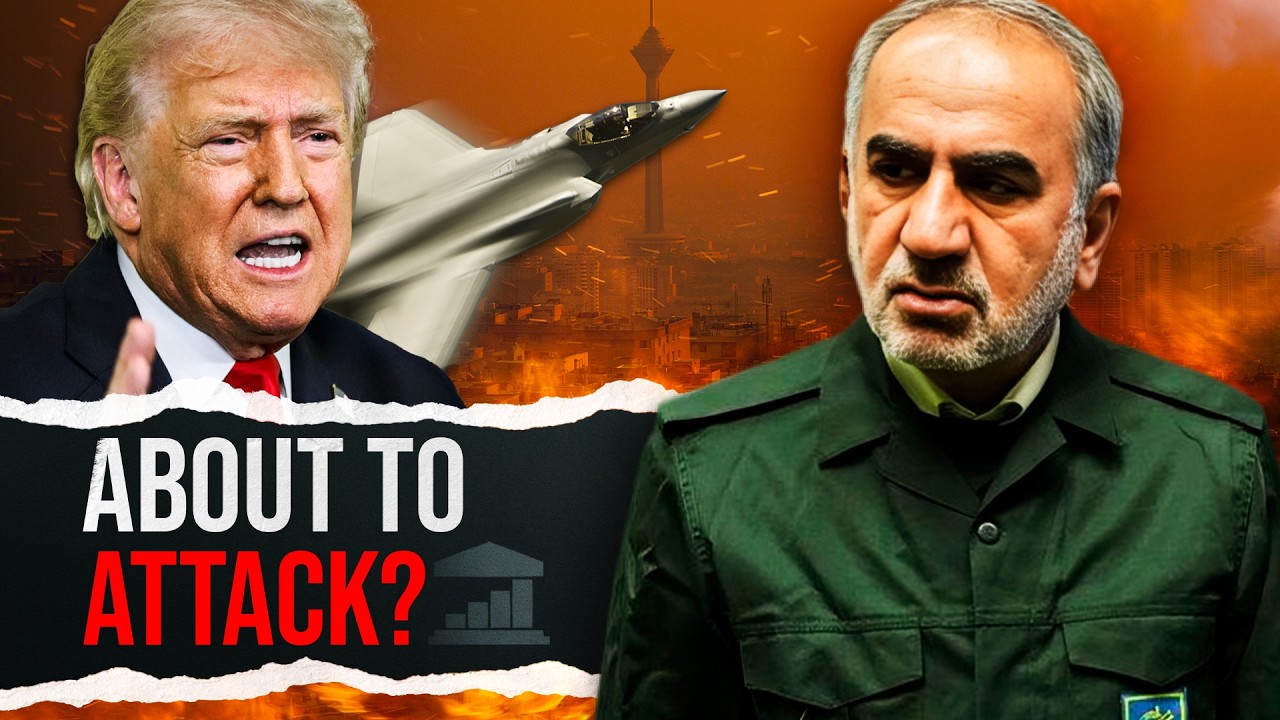
Strike fears rise over Iran
For weeks, diplomacy has been moving in step with mobilisation. Now, the two are beginning to collide. In the past month, the United States has quietly assembled a posture in and around the Gulf that looks less like routine “deterrence” and more like readiness: the sort of layered force mix designed to survive first contact, sustain operations, and manage escalation if an initial strike fails to end a crisis. Israel, still bruised by the consequences of its last major exchange with Iran, has been calibrating its own preparedness—publicly insisting it will not tolerate a rebuilt Iranian nuclear capability, while privately bracing for retaliation should Washington pull the trigger.Iran, meanwhile, is behaving like a state that believes war is plausible even as it negotiates: hardening sensitive sites, dispersing assets, projecting defiance at home and abroad, and seeking to extract concessions at the negotiating table without conceding what it regards as sovereign rights. The result is a familiar but dangerous pattern: talks under threat, force under ambiguity, and a region where a single misread signal can become irreversible.A deadline that turns talks into an ultimatumDiplomacy has resumed through indirect channels, with meetings hosted by regional intermediaries and later shifting to a European venue for further contacts. The core dispute remains unchanged: the United States is pressing for a far tighter ceiling on Iran’s nuclear activities—up to and including an end to enrichment—while Iran insists that any arrangement must recognise its right to a peaceful nuclear programme and deliver meaningful economic relief. The novelty is not the substance, but the tempo. Washington has been coupling the talks to a time-bound warning: an explicit window of days, not months, for Iran to accept terms. By design, such a clock does two things at once. It increases pressure on Tehran, narrowing the space for protracted bargaining. And it compresses decision-making in Washington itself, forcing the White House to choose between accepting an imperfect agreement, extending the deadline (and absorbing the political cost), or acting militarily.That compression matters because nuclear negotiations are not purely technical. Every clause—verification access, stockpile limits, centrifuge restrictions, sequencing of sanctions relief—becomes a proxy for trust, and trust is precisely what is absent. Tehran remembers the collapse of earlier arrangements and doubts that any American undertaking will outlast political cycles. Washington, for its part, doubts that Iranian transparency will ever be sufficient to rule out a “threshold” capability—the ability to assemble a weapon quickly should a decision be taken. In such conditions, the deadline is less a diplomatic instrument than a strategic signal: it tells Iran that the United States is prepared to shift from coercion-by-sanctions to coercion-by-strike.What “limited” could mean—and why planners prepare for morePublicly, American language has left open the notion of a “limited” strike—an operation framed as narrow, finite, and aimed at nuclear infrastructure or enabling military systems. Privately, military planning reportedly assumes a more complicated reality: that even a restrained opening move could trigger a prolonged sequence of actions and reactions. There are practical reasons for that caution. Iran’s nuclear programme is not a single target. It is a network of facilities, capabilities, personnel, and supply chains—some above ground, others buried; some declared, others suspected. A truly “limited” strike that achieves strategic effect would need to do more than crater buildings. It would have to degrade specialised equipment, disrupt command-and-control, blunt air defences, and impede Iran’s ability to reconstitute what was lost. That logic tends to expand target lists.Then there is the second-order problem: retaliation. Even if Tehran avoids a full-scale conventional response, it retains multiple pathways to impose costs—through missile or drone attacks on regional bases, harassment of shipping, cyber operations, or action by aligned non-state actors. A “limited” operation can therefore become weeks of force protection, counter-strikes, and crisis management, even if neither side formally declares war.This is why Washington’s posture-building has emphasised depth rather than symbolism: carrier-based aviation to generate sustained sorties; additional combat aircraft to widen options and reduce dependence on any single base; intelligence, surveillance and reconnaissance to locate mobile launchers and dispersing assets; missile defence to blunt the most predictable forms of retaliation; and logistical throughput to sustain tempo if the first wave is not the last.The anatomy of a build-upThe US military’s regional footprint is designed for flexibility, but the current concentration has been notable in both scale and composition. Naval forces have been moving into theatre with the kind of redundancy that suggests planners are hedging: not merely “presence”, but the ability to surge, absorb attrition, and maintain operations over time. Air assets have also been repositioned, including stealth-capable platforms and supporting aircraft needed for extended operations—tankers for refuelling, early warning systems to coordinate airspace, and specialised reconnaissance to locate targets that do not stay still.Such moves are rarely announced as preparation for attack. They are described instead as “reassurance” of allies, “deterrence” of escalation, and “defence” of regional interests. Yet the difference between deterrence and readiness is not rhetorical; it is logistical. When large quantities of equipment and personnel arrive on tight timelines, and when plans are discussed in terms of sustained operations rather than short punitive raids, it becomes harder to treat the build-up as merely precautionary.For regional states hosting American forces, this creates a delicate dilemma. Hosting provides security guarantees; it also makes them potential targets. Some will press Washington privately to keep any operation brief. Others will press for maximal damage to Iran’s capabilities, arguing that half-measures invite future crises. Either way, their geography ties them to the outcome.Israel’s calculus: opportunity, fear, and the problem of follow-throughIsrael’s security establishment has been preparing for the possibility that the United States will strike—and that Iranian retaliation will be directed at Israel regardless of whether Israel participates in the initial blow. The expectation is not simply that missiles might fly, but that Iran would seek an outcome that restores deterrence: a demonstration that attacks on Iranian soil carry immediate regional costs.Israel also faces a strategic paradox. It wants the Iranian nuclear programme stopped or rolled back decisively. But it also knows that partial damage can be worse than none if it leads Iran to rebuild faster, deeper, and more covertly, with domestic legitimacy reconstituted through wartime mobilisation. This is why Israeli debate often pivots on a blunt question: if the programme cannot be ended outright, what is the objective of force? Delay, degradation, or destruction? Each goal demands different levels of escalation and different tolerances for regional fallout.In parallel, Israel has continued to articulate conditions it believes any diplomatic arrangement should meet: deep restrictions on enrichment and stockpiles; curbs on missile ranges; an end to support for armed partners across the region; and a halt to internal repression that, in Israel’s view, fuels instability and radicalisation. Iran rejects such bundling as an attempt to turn nuclear negotiations into a referendum on its entire security doctrine. Here, too, the danger is sequencing. If Washington and Israel appear aligned on maximalist demands that Iran will not accept, the “deadline” becomes not a pressure tactic but a glide path to conflict.Iran’s counter-moves: hardening, dispersal, and a negotiating stance under fireIran has responded to the rising threat environment in ways consistent with a state that expects air power. Sensitive facilities have been fortified and further protected, including through physical hardening—measures intended to complicate targeting, reduce damage, and slow follow-on assessments. Such efforts are not, by themselves, proof of weaponisation; they are, however, evidence that Tehran is trying to preserve programme survivability under the assumption that strikes are possible.At the same time, Iran has signalled that it is preparing a counterproposal in the talks—an attempt to show engagement while defending its red lines. Those red lines are widely understood in Tehran: no permanent end to enrichment; no negotiation of its ballistic missile programme; and no wholesale abandonment of regional partnerships that Iran frames as deterrence and strategic depth.This position is sharpened by domestic vulnerability. Iran has faced significant internal unrest and a harsh state response. Under such pressure, concessions that appear imposed by foreign threats can be politically toxic. A leadership worried about legitimacy at home may therefore be more willing to endure external risk than to accept a deal portrayed as capitulation. That dynamic complicates American calculations. The more the United States emphasises coercion—deadlines, threats, military options—the more it may strengthen the internal argument in Tehran that compromise is dangerous, and that only resilience preserves sovereignty.Why the next phase could be more dangerous than the lastThe most unstable period in crises of this kind is often the final stretch before a decision—when signals are plentiful, interpretations multiply, and each side tries to shape the other’s psychology. For Washington, the danger is that a “limited” strike produces an “unlimited” problem: not regime collapse, not capitulation, but a drawn-out campaign of defence, retaliation management, and incremental escalation. For Israel, the danger is that even a successful American operation leaves Iran wounded but capable—angry enough to retaliate, intact enough to rebuild, and determined enough to push its most sensitive work further underground.For Iran, the danger is that hardening and dispersal are interpreted as sprinting towards a threshold, prompting attack; while restraint is interpreted as weakness, inviting further coercion. Tehran’s leadership may believe that showing preparedness deters war. Washington may read the same actions as evidence that time is running out. Layered on top of these strategic dynamics is the simplest risk of all: miscalculation. Aircraft and ships operating in crowded theatres, missiles and drones on alert, proxy forces with their own incentives, and domestic political pressures that reward toughness—each increases the probability that an incident becomes a trigger.In public, all parties still speak the language of prevention: preventing a nuclear-armed Iran, preventing regional war, preventing escalation. In practice, prevention is being pursued through instruments that can themselves create the very catastrophe they are meant to avoid. The world has been here before. The difference now is that the military pieces are moving more visibly, the timelines are shorter, and the political space for stepping back is narrower. In that environment, the question is not only whether a strike is imminent, but whether any actor still has enough room—and enough restraint—to keep it from becoming inevitable.
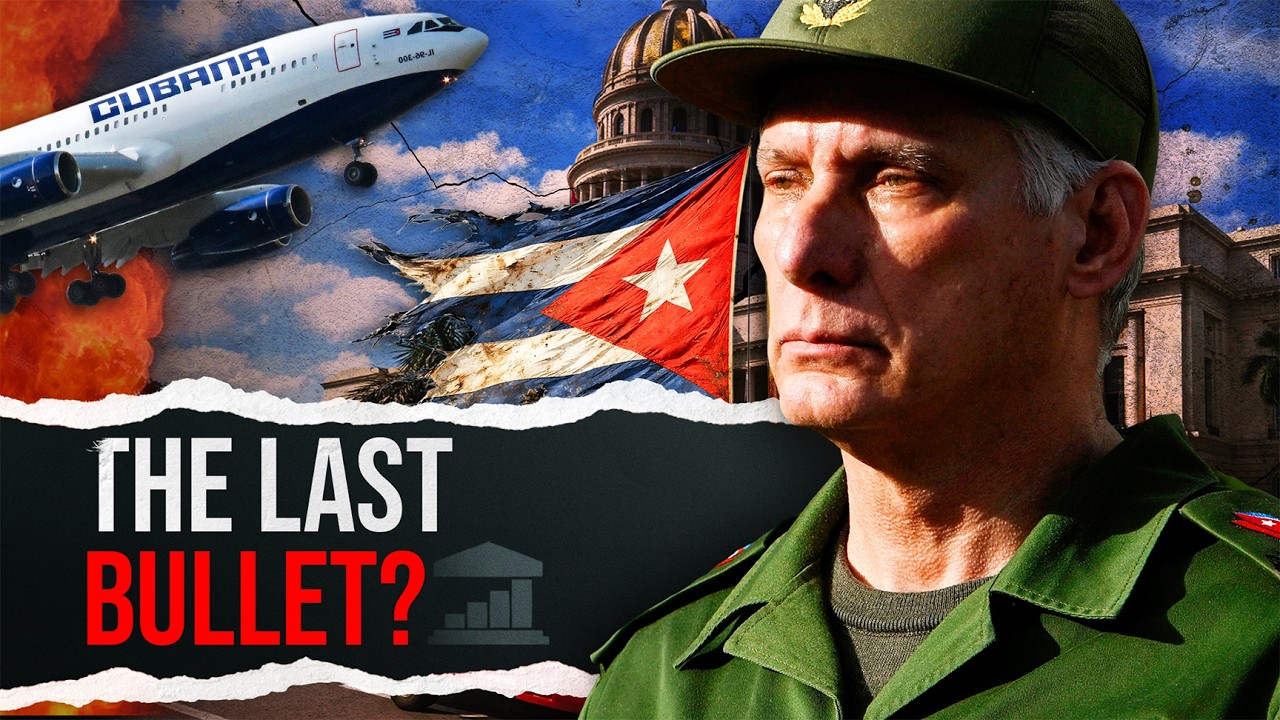
Cuba: The Regime's last Card
Cuba is once again living by candlelight—sometimes literally, often metaphorically. In early 2026, the island’s long-running economic malaise has hardened into something more acute: a national emergency measured in hours without electricity, kilometres of queues for fuel, cancelled flights, shuttered hotels, and hospitals forced to triage not merely patients, but the very basics of modern care.Yet the most revealing aspect of the current crisis is not only the severity of the shortages, but the political wager now being placed by the Cuban state. The leadership has framed the moment as siege—an externally imposed strangulation that demands unity, discipline, and sacrifice. Internally, it has responded with a familiar repertoire: rationing, centralised control, and a tightening grip on dissent. But it has also reached for a newer, more corrosive tool: the managed dollarisation of everyday life, in which access to goods, services, and even connectivity increasingly depends on foreign currency.This combination—emergency mobilisation, selective economic opening in hard currency, and heightened political control—amounts to a high-stakes gamble: a final card to keep the system upright without conceding the reforms that might undermine the monopoly of power. It may buy time. It may also accelerate the very social fracture it is meant to contain.A crisis that has moved from inconvenience to paralysisFor years, Cubans have lived with scarcity as a condition of citizenship. What distinguishes the present moment is the way the fuel shock has cascaded into almost every sector at once—transport, refrigeration, water pumping, food distribution, telecommunications, and health care—each dependent on energy that the country can neither reliably produce nor easily import.The most visible symbol of this escalation has been aviation. When an island begins to run short of jet fuel, it is not merely tourism that trembles; it is the sense of national connectivity, the flow of remittances and visitors, the movement of supplies, and the psychological reassurance that escape remains possible. As airlines curtail routes or rework operations to avoid refuelling on the island, the message to ordinary Cubans is stark: even the sky is rationed.Tourism, one of the few remaining pillars capable of generating foreign exchange at scale, has been hit at precisely the time the government most needs dollars. Resorts and urban hotels that depend on stable logistics have faced mounting constraints: fuel for generators, transport for staff and goods, and reliable power for basic services. The state’s strategy—betting heavily on tourism infrastructure while the domestic economy contracts—has become increasingly brittle. A single disruption now ripples outward, exposing how narrow the margin for stability has become.The state’s narrative: siege from without, discipline withinThe Cuban government’s explanation is conceptually simple: Cuba is under attack. The island has faced decades of broad economic restrictions, and new measures aimed at disrupting energy supplies have tightened the noose. In official rhetoric, the crisis is not merely economic but geopolitical—an attempt to break national will by engineering privation.That framing serves a purpose. If the country is besieged, then hardship becomes proof of patriotism; anger becomes suspect; protest becomes collaboration with an enemy. In practice, the language of siege has historically functioned as a political solvent: it dissolves the boundary between economic complaint and ideological betrayal. But siege narratives cannot keep food cold, nor can slogans power an ageing grid. As the crisis deepens, the state has relied increasingly on administrative controls: limiting transport, prioritising certain services, shortening work and study schedules, and suspending public events. These measures may reduce immediate demand for fuel and electricity. They also normalise emergency governance—an exceptionalism that can be extended, renewed, and enforced with minimal accountability.The hidden fracture: an economy splitting into two realitiesMore consequential, and potentially more destabilising, is the government’s quiet admission—encoded in policy rather than speeches—that the peso is no longer a credible foundation for economic life. In effect, Cuba has moved towards a dual reality:- A peso economy, in which salaries are paid and most citizens live.- A hard-currency economy, in which essentials and opportunities increasingly reside.The mechanics of this shift are straightforward. State retail outlets that transact in foreign currency, fees and services priced in dollars, and financial instruments designed to capture remittances have expanded the role of hard currency in daily life. The state’s logic is equally straightforward: it needs foreign exchange to import fuel, food, spare parts, and medicine; the domestic currency cannot reliably buy these things abroad; therefore, the state must extract dollars wherever they exist—especially from families with relatives overseas.In the short term, dollarisation can stabilise specific supply chains and generate revenue. In the medium term, it is socially combustible. It transforms inequality from a matter of consumption into a matter of citizenship. Those with access to foreign currency can buffer themselves: buy food when shelves are bare, purchase fuel when transport collapses, maintain connectivity when data becomes expensive, and invest in private coping mechanisms such as batteries, solar panels, or generators. Those without it are left in a grey zone of queues, scarcity, and improvisation.This is not merely an economic divide. It is an emotional one. When a state built on egalitarian mythology begins to operate a two-tier system in practice, it risks delegitimising its own founding narrative.Electricity: the grid as a national stress testCuba’s electricity system has become an emblem of the broader predicament: decades of underinvestment, dependence on imported fuel, and vulnerability to single points of failure. The grid does not simply suffer from occasional breakdowns; it is structurally fragile. Transmission failures, generator trips, and equipment shortfalls can propagate into widespread outages because redundancy is limited and maintenance is constrained by lack of parts and capital.Repeated nationwide disruptions over recent years have made blackouts a political barometer. People will tolerate hardship; they struggle to tolerate unpredictability. A planned outage is one thing; a cascading collapse that lasts for days is another. In those moments, the state’s authority is measured not by slogans or security forces, but by whether a household can refrigerate food, pump water, or run a fan in tropical heat.The state has signalled an ambition to escape this trap through renewables, particularly solar and wind, often in partnership with external actors. These projects are essential, but they confront a hard reality: renewable generation is not merely about installing panels or turbines. It requires storage, a modernised grid, and significant capital investment. Without the ability to finance large-scale upgrades, the energy transition risks becoming a showcase rather than a solution.In the meantime, the social meaning of electricity has changed. It is no longer a utility; it is a measure of belonging. Neighbourhoods with better infrastructure or privileged access fare differently from those without, intensifying the perception that the state can no longer guarantee a uniform baseline of dignity.Health care under strain: when scarcity becomes clinicalFew institutions are as closely entwined with Cuba’s international identity as its health system. For decades, the country projected medical competence as both social achievement and diplomatic instrument. Today, that system is being squeezed by the same forces crushing the wider economy: energy shortages, fuel rationing, supply chain disruptions, and the absence of hard currency to import essentials.The practical implications are severe. Hospitals depend on stable electricity for operating theatres, refrigeration for medicines, sterilisation, diagnostics, and basic ward functioning. Ambulances require fuel. Supply flights and transport corridors require logistics that an energy-starved economy cannot reliably sustain. In such conditions, medicine becomes improvisation: doctors forced to do more with less, families searching for drugs through informal markets, and patients absorbing the consequences of systemic fragility. When health care begins to fail at the margins—delayed treatments, intermittent power, shortages of inputs—the political risk deepens. A government can survive anger about prices or transport. It struggles to survive when people believe the state can no longer protect life itself.Connectivity and control: the politics of the internetIn modern Cuba, the internet has become both an escape hatch and a battleground. It enables small private commerce, communication with diaspora relatives, access to information, and the organisation of everyday coping strategies. It also erodes the state’s ability to monopolise narrative.Against that backdrop, sharp increases in mobile data costs have carried significance beyond the technical or financial. When connectivity becomes expensive relative to wages, the effect is not merely economic; it is political. Limiting access to data constrains the circulation of information and reduces the capacity for rapid social coordination—particularly among students, who have historically served as a sensitive early-warning system for shifts in public mood.Student-led protests over data pricing have been especially notable because they cut against a long-standing assumption: that younger Cubans, exhausted by scarcity and disillusionment, would simply leave rather than confront. The very existence of organised, non-violent campus dissent suggests that the regime’s ideological hold has weakened at precisely the point when it most needs cohesion.Repression as governance, not exceptionThe Cuban state has always contained a security architecture built to outlast crises. What changes in moments like this is not the existence of repression, but its centrality. When performance legitimacy collapses—when the state cannot reliably provide electricity, transport, or basic goods—it tends to rely more heavily on coercion and deterrence.This dynamic has played out repeatedly since the mass protests of July 2021, which signalled a break in fear and a new willingness to voice grievance publicly. Since then, reports of harsh prison conditions, surveillance, intimidation, and punitive sentencing have reinforced a message: collective dissent will be met with costly consequences.The danger for the regime is that repression is effective only when paired with some degree of social contract. Fear can suppress protest for a time; it cannot restore hope. In an environment where migration is harder, scarcity is deeper, and inequality is more visible, the state’s reliance on coercion risks becoming self-reinforcing: the more it represses, the less legitimacy it retains; the less legitimacy it retains, the more it must repress.The external lifelines: Moscow, Beijing, and the geopolitics of survivalIn crises of this magnitude, Cuba’s leaders do what Havana has long done: look outward for a patron, a partner, or at least a bridge of supplies. Russia has offered rhetorical support and signalled assistance in fuel and humanitarian inputs. China has been central to parts of the island’s renewable ambitions and infrastructure hopes. Mexico and others have provided humanitarian shipments even as energy politics shift.Yet external lifelines come with limits. Any fuel relief eases pressure temporarily but does not resolve structural dependence. Renewable projects take time and require grid modernisation. Humanitarian supplies address symptoms rather than causes. Meanwhile, geopolitics is not philanthropy: assistance is shaped by the donor’s interests, capacities, and constraints.Cuba’s vulnerability is therefore strategic as well as economic. When a nation’s baseline functioning depends on external decisions—shipping routes, sanctions enforcement, diplomatic bargaining—it loses autonomy in practice even when it insists upon sovereignty in rhetoric.Migration: the safety valve that is narrowingFor many Cubans, migration has been the most reliable form of “reform”: a private solution to a public failure. Leaving reduces domestic pressure, brings remittances, and offers families a lifeline. But migration routes can close, policies can harden, and regional dynamics can shift. As pathways narrow, the social pressure that once dissipated through departure may instead accumulate at home.The demographic consequences are already profound. The country is losing working-age citizens, draining skills, and eroding the tax and labour base needed for recovery. In the long run, a shrinking population cannot sustain an expansive state apparatus without either reform or collapse. In the short run, it can create a quieter island—less protest, fewer young people, and more dependency on remittances—until the remaining population reaches its own breaking point.The “last card”: survive first, reform later—if everThe Cuban system has endured for decades by mastering a particular art: crisis management without political liberalisation. When resources vanish, it tightens control. When legitimacy wanes, it invokes nationalism. When the economy falters, it experiments at the margins—opening space for private activity, then restraining it; courting foreign investment, then surrounding it with bureaucratic thorns; embracing foreign currency, then insisting it is only temporary.In early 2026, that pattern has sharpened. The state is attempting to:1. Ration scarcity through emergency measures that reduce demand.2. Harvest dollars through managed dollarisation and remittance capture.3. Deter unrest through surveillance, policing, and punitive examples.4. Secure external relief through strategic alliances and humanitarian inflows.5. Delay structural reform that might dilute central control.This is the “last card” in the sense that it is less a strategy for recovery than a strategy for endurance. It presumes that the population can be stretched further, that inequality can be managed, that external pressure can be outwaited, and that the state can remain cohesive even as society frays.But endurance has a cost. Each additional layer of emergency governance normalises decline. Each new hard-currency gate deepens resentment. Each act of repression reduces the reservoir of legitimacy. And each month of blackout politics teaches citizens a dangerous lesson: that the state may be permanent, but its promises are not. Cuba is under siege, yes—by external constraints, by climate shocks, by a global economy that punishes weakness. It is also under siege by its own accumulated contradictions: a centralised system that cannot generate prosperity, a leadership that fears openness more than stagnation, and a social contract increasingly denominated not in ideals, but in dollars and diesel.The final card may keep the regime standing. It may also be the moment the country finally stops believing that standing still is the same as surviving.

Nicaragua on the brink?
In Latin America’s long struggle between democratic renewal and authoritarian relapse, Nicaragua is increasingly hard to classify as anything other than a state in deliberate retreat from pluralism. What began as a familiar story of populist consolidation has, over the past several years, hardened into something more structurally enduring: a family-centred power system, insulated by security institutions, and sustained by an economy that remains outward-facing while the political sphere is sealed.That combination—political closure paired with selective economic openness—helps explain why Nicaragua is now being discussed in the same breath as Venezuela and Cuba. The comparison is not simply rhetorical. The mechanisms are recognisable: the capture of institutions, the criminalisation of dissent, the conversion of citizenship into a conditional privilege, and the use of migration and security issues as bargaining chips in geopolitical negotiation. Yet Nicaragua also differs in crucial ways that may make it more brittle than either Caracas or Havana. It has neither Venezuela’s hydrocarbon cushion nor Cuba’s long-established apparatus for managing scarcity. Instead, it relies heavily on remittances, preferential trade access, and a transnational labour pipeline that is acutely sensitive to foreign policy shifts—particularly from the United States.If Venezuela and Cuba represent distinct models of authoritarian survival, Nicaragua now shows signs of adopting elements of both—while adding its own, increasingly dynastic signature.A state redesigned around a ruling coupleAt the centre of Nicaragua’s transformation is the steady re-engineering of the state into an extension of the ruling party and, more specifically, the presidential household. In early 2025, a sweeping constitutional overhaul formalised what had long been visible in practice: the elevation of Daniel Ortega and Rosario Murillo into a co-presidential executive, with an expanded mandate and the power to “coordinate” other branches of government. The shift was not merely symbolic. It marked the legal consolidation of executive primacy over institutions that, even in fragile democracies, traditionally provide friction—courts, electoral authorities, legislatures, municipalities.This is how modern authoritarian systems seek permanence: not only through control, but through the normalisation of control. When coercion is fused with legality, repression becomes administratively routine rather than episodic. The result is a state that can punish opponents not only with police power, but with paperwork—asset seizures, professional bans, travel restrictions, and citizenship revocations.One of the most consequential features of Nicaragua’s current model is the treatment of nationality as a revocable status. Hundreds of Nicaraguans have reportedly been stripped of citizenship and had property confiscated under accusations framed as betrayal of the nation. This practice is more than punitive; it is strategic. By forcing opponents into statelessness or dependency on foreign protection, the government reshapes exile into a tool of domestic control: those outside the country are separated from assets, voting rights, and family networks, while those inside are reminded that political nonconformity can carry irreversible consequences.In parallel, surveillance and social control have been extended beyond formal policing into neighbourhood-level monitoring—an approach designed to make dissent socially dangerous, not merely legally risky. The goal is to collapse the space between public life and state scrutiny, until self-censorship becomes the default survival strategy.The dismantling of civil society and the narrowing of public lifeNo authoritarian consolidation is complete without the removal of independent intermediaries: civic groups, religious institutions, universities, journalists, professional associations. In Nicaragua, the pattern has been systematic. Large numbers of non-governmental organisations have lost legal status; private universities have faced closures or state takeovers; independent voices have been pushed into exile; and public debate has been reduced to what is permitted within an increasingly controlled information environment.Religious institutions—particularly the Catholic Church—have faced escalating pressure. Clergy have reported constant scrutiny, and prominent church-linked figures have been targeted through detentions, expulsions, and administrative constraints. The church’s vulnerability is not accidental. In many societies where parties and unions have been weakened, religious networks remain one of the last nationwide structures capable of convening people outside the state’s direct control. When a government fears mobilisation, it seeks to neutralise the institutions that can still gather citizens without official permission.What emerges is a public sphere that still exists in appearance—schools, parades, ministries, elections—but lacks the independent connective tissue that makes democratic life resilient. Citizens may still vote; what they cannot safely do is organise.The economic paradox: outward trade, inward fearNicaragua’s economic reality complicates the picture. Unlike Cuba’s heavily state-dominated economy, Nicaragua has cultivated export industries integrated into global supply chains, including apparel manufacturing and agriculture. It has benefited for years from preferential access to foreign markets, and it has used special regimes and incentives to attract investment into export zones.At the household level, the single most important stabiliser has been remittances. Money sent back by Nicaraguans abroad has become a pillar of consumption, a cushion against inflation, and a de facto social safety net that the state itself does not have to finance. In many communities, remittances are not marginal income—they are the difference between subsistence and collapse.This is where Nicaragua becomes uniquely vulnerable. The regime can centralise power at home, but it cannot easily control the economic lifelines that sustain daily life. Remittances depend on migrant employment conditions, immigration enforcement, and the legal status of diaspora communities. Export earnings depend on trade policy decisions abroad. Even modest shocks in either channel can trigger domestic stress—job losses, price spikes, and a sudden exposure of how little autonomous resilience the economy possesses.The government’s political strategy, in other words, sits atop an economic structure it does not fully command. That is a departure from the Cuban model, where the state historically sought near-total command over production and distribution. Nicaragua’s leadership appears to prefer an approach closer to Venezuela’s later-stage pattern: allowing selected private activity to continue, while the ruling circle captures strategic rents—through favourable concessions, selective regulation, and coercive extraction—without accepting the political pluralism that usually accompanies a market economy.A new pressure point: trade sanctions move from diplomacy to commerceInternational pressure on Nicaragua has increasingly migrated from condemnations to mechanisms with direct economic consequences. Recent actions have signalled a willingness—especially in Washington—to use trade law and targeted designations not only as moral statements, but as leverage instruments. The logic is straightforward: a government that can absorb diplomatic criticism may not withstand disruptions to export access, supply chains, and hard-currency inflows.This matters because Nicaragua’s export model is deeply intertwined with preferential arrangements and predictable market entry. If that predictability is replaced by punitive tariffs or suspended benefits, the first casualties are not ministers in Managua; they are workers in factories, farmers in export sectors, and small businesses dependent on wage-driven consumption. That social pressure can, in turn, produce political risk—either by forcing the regime to negotiate or by pushing it towards deeper repression to contain unrest. The regime appears aware of the danger. It has periodically released detainees or adjusted behaviour in ways that suggest tactical calibration—small concessions designed to reduce pressure without altering the fundamentals of control.The two levers that keep returning: drugs and migrationBeyond trade, two issues repeatedly define Nicaragua’s external exposure: narcotics trafficking routes and migration flows. On narcotics, Nicaragua’s geographic position is inescapable. Central America remains a transit corridor for drug shipments moving north, and being identified internationally as a significant transit point carries consequences. It invites intensified scrutiny, potential sanctions, and security cooperation demands that can become politically awkward for a government that frames itself as sovereign and anti-interventionist.On migration, Nicaragua has played a more complex game. Over recent years, Managua has functioned not only as a country of origin for migrants fleeing repression and economic strain, but also—at times—as a transit platform for third-country nationals heading towards the United States. That dynamic matters because migration has become one of the most politically charged issues in U.S. domestic policy. When Nicaragua is perceived as facilitating irregular flows—whether through permissive entry rules, tolerated smuggling networks, or the monetisation of transit—it risks provoking punitive responses that go beyond rhetoric.In early 2026, Nicaragua abruptly restricted a key entry pathway that had been used by Cuban nationals travelling onward through Central America. The decision was widely interpreted as a response to external pressure. Whether it represents a genuine policy shift or a tactical pause is less important than what it reveals: Managua understands that migration policy can trigger immediate retaliation, and it is willing to adjust when the cost rises.This is one of the central reasons Nicaragua is now framed as “next”. Cuba and Venezuela have long been treated as entrenched cases—sanctioned, isolated, yet durable. Nicaragua, by contrast, still sits at a hinge point where external leverage can bite quickly: through trade, through migration enforcement, and through the financial and legal targeting of officials and their networks.Allies without a safety net: Russia and China as partners, not substitutesAs Nicaragua’s relations with Western democracies deteriorate, it has leaned more heavily into partnerships with Russia and China. For the ruling circle, these relationships offer two attractions: political backing without human rights conditionality, and potential security cooperation that strengthens regime survival. Yet geopolitically useful partners do not automatically provide economic substitution at scale. China can offer investment promises, trade deals, and infrastructure interest, but replacing Nicaragua’s established export dependence is not an overnight project. Nor do Chinese arrangements necessarily translate into broad-based prosperity; they often concentrate benefits among politically connected intermediaries and strategic sectors.Russia’s role is different: less commercial, more security-oriented. Training, equipment, intelligence cooperation, and symbolic military ties can contribute to regime stability—particularly if the leadership’s primary fear is not economic recession but elite fracture or loss of coercive control. Still, security support does not pay wages in export zones, and it does not replace remittances.This is the structural imbalance at the heart of Nicaragua’s predicament: the regime’s political future depends on authoritarian insulation, but the population’s economic survival depends on transnational openness.Why the comparison to Venezuela and Cuba is suddenly sharperTo understand why Nicaragua now appears closer to the Venezuelan and Cuban trajectories, it helps to distinguish between two questions: how regimes fall, and how they survive. Cuba’s model is survival through closure: information control, institutional discipline, and the endurance of scarcity through rationing, surveillance, and managed exit via migration.Venezuela’s model has been survival through fragmentation and rent capture: selective repression, politicised distribution of resources, and the use of external enemies to justify internal consolidation—while presiding over deep economic dysfunction and mass emigration. Nicaragua is converging with both. Politically, it has moved towards Cuban-style closure: restricting civil society, policing narrative, narrowing the permitted national identity. Economically, it risks Venezuelan-style stress: dependence on external inflows, exposure to sanctions, and the danger that a sudden disruption triggers cascading hardship.The “next” label reflects an emerging belief that Nicaragua has reached the stage where international policy tools can still reshape outcomes. The window for such leverage is not indefinite. If Nicaragua completes a full transition into a sealed, heavily sanctioned, security-dominated state, the tools that remain are blunter and more humanitarian in nature—aid to refugees, support for exiles, and long-term containment. That is why the focus has intensified now: before the hinge point closes.What to watch: the signals of a decisive turnIf Nicaragua is to avoid becoming a fully entrenched counterpart to Venezuela or Cuba, several indicators will matter more than speeches.- First, trade policy decisions abroad: any escalation from targeted measures to broad-based tariff or preference suspensions would test the regime’s economic tolerance and its willingness to compromise.- Second, the remittance channel: shifts in diaspora legal status, deportation patterns, and enforcement regimes can directly affect household stability inside Nicaragua—far more quickly than abstract sanctions.- Third, elite cohesion: the detention or marginalisation of insiders is often a sign of regime insecurity. When a government begins purging its own ecosystem, it may be tightening control—or reacting to internal distrust.Fourth, the scale of repression versus tactical concessions: the release of detainees, limited migration restrictions, or selective cooperation on security issues can indicate a strategy of pressure management. The question is whether such moves are temporary valves or the start of meaningful opening. Finally, the constitutional and legal architecture: once repression is fully embedded in law—citizenship revocation powers, expanded executive control, subordination of institutions—it becomes harder to reverse without systemic rupture.Nicaragua’s direction is not predetermined. But the trajectory is clear enough to make the comparison unavoidable. In the contest between political closure and economic dependence, the regime has so far chosen closure—while betting that dependence can be managed. That bet is becoming riskier by the month. When regimes miscalculate the balance between coercion and prosperity, history suggests the outcome is rarely gentle.Nicaragua may not yet be Venezuela or Cuba. But it is beginning to resemble the moment just before the label becomes irreversible.
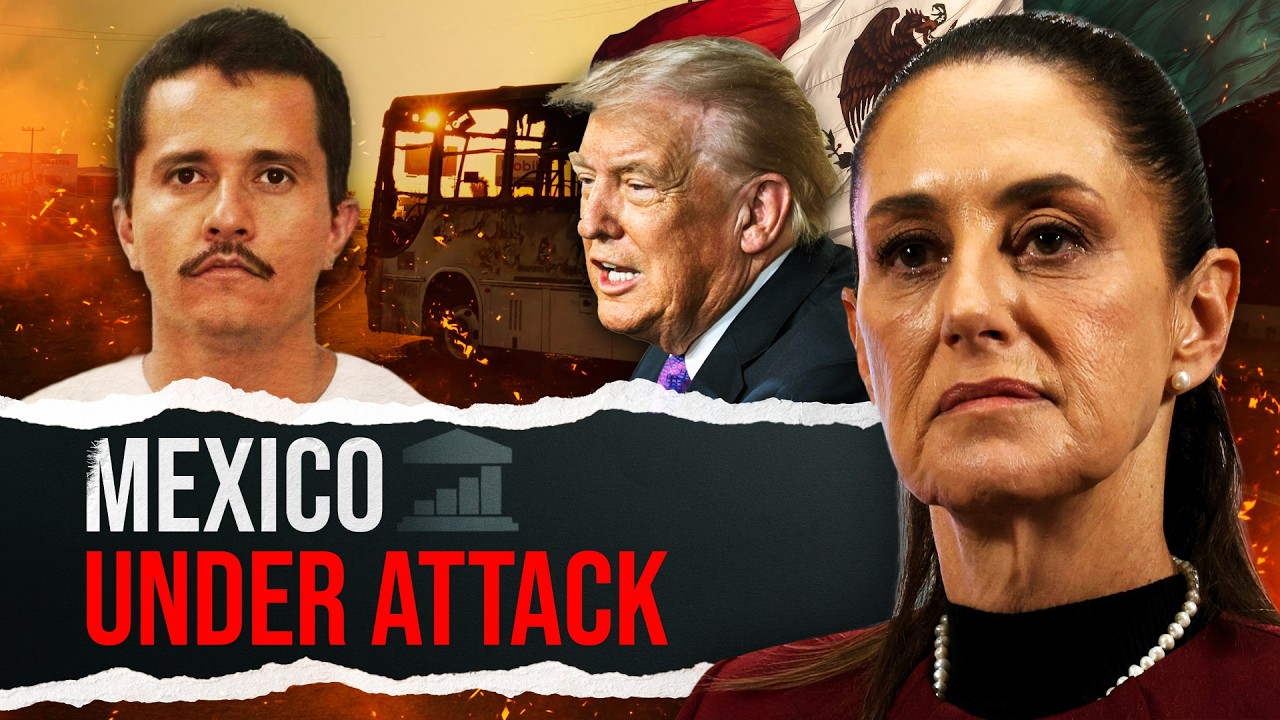
Mexico after El Mencho falls
The first thing Mexico noticed was not the announcement, but the smoke. Within hours, major roads were choked by improvised barricades; vehicles burned where they stood; shops and depots were torched to force shutters down; travellers were stranded; families turned back mid-journey. In several states, classrooms emptied and businesses fell silent. The death of Nemesio Rubén Oseguera Cervantes — “El Mencho” — has not brought the catharsis that authorities once promised would follow the removal of a cartel chief. It has done what Mexico’s most violent criminal organisations have learnt to do with brutal efficiency: turn a single operational blow into a national stress test.El Mencho, long regarded as the leader and symbolic centre of the Cártel de Jalisco Nueva Generación (CJNG), was mortally wounded during a military operation aimed at capturing him in Jalisco. Officials say he died shortly afterwards, as security forces attempted to move him to Mexico City. The reaction was immediate, coordinated, and deliberately theatrical: a wave of roadblocks and arson attacks that spread far beyond CJNG’s home ground, showing the cartel’s reach not by a map in a briefing room, but by paralysis on the asphalt.The message in the flamesCJNG has, for years, relied on a tactic that is as simple as it is effective: seize vehicles, set them ablaze, and use the fire to close the country. These “narcoblockades” are not mere disorder. They are a form of coercion designed to make normal life hostage to a cartel’s fortunes.The logic is political, not merely criminal. When highways are blocked, supply chains stall. When airports jitter, tourism bleeds. When schools close, fear becomes personal. A cartel’s grievance — an arrest, a raid, an incursion — is translated into public pressure on governors, mayors, and federal leaders. The state may win a gunfight; the cartel tries to win the narrative of who can make daily life impossible.That is why El Mencho’s removal is such an inflection point. CJNG’s retaliation is not only revenge; it is insurance. It is the cartel’s attempt to raise the cost of “decapitation” so high that future operations are politically harder to sustain.A victory that can destabiliseFrom a law-enforcement perspective, the elimination of a cartel leader is always a headline victory. El Mencho was among the most wanted fugitives on the continent for years, and CJNG has been accused by governments of trafficking synthetic drugs — including fentanyl — as well as running extortion, weapons flows, and other illicit markets.Yet Mexico’s experience over two decades suggests that removing a leader can be a destabiliser rather than a solution. The problem is not that “kingpins” do not matter; it is that cartels are not conventional hierarchies. Many have evolved into adaptive networks — part command structure, part franchise system, part local protection racket — and their cohesion depends as much on money and fear as on charisma.When a central figure disappears, three forces often collide at once:- Internal succession pressure: lieutenants compete, alliances shift, and a cartel’s internal discipline can fracture.- External opportunism: rivals test borders, local groups defect, and “independent” cells rush to fill any vacuum.- State escalation: authorities, sensing weakness, surge forces — which can trigger further cartel violence to prove resilience.CJNG’s rapid nationwide response is itself evidence of a network that still functions. But it also raises the core question that now haunts Mexico’s security planners: if CJNG can coordinate this level of disruption without El Mencho directing it, then what, precisely, has been removed?CJNG was never only JaliscoCJNG’s rise reshaped Mexico’s criminal geography. Unlike older cartels that were built around a single corridor or a small number of plazas, CJNG expanded through a blend of aggression and pragmatism: absorbing splinter groups, forging local arrangements, and projecting force where negotiations failed.Its footprint matters because fragmentation rarely stays local. If CJNG’s structure begins to splinter, the violence may spread in unpredictable patterns — not only in traditional trafficking areas, but in places where the cartel’s income comes from extortion, cargo theft, fuel theft, migrant smuggling, and control of local markets. In those settings, the “business model” is territorial intimidation. A succession fight there is not an internecine argument; it is a competition to decide who has the right to tax, threaten, and punish communities.What Mexico has witnessed in the days since El Mencho’s death is the cartel demonstrating national reach. What Mexico fears for the months ahead is the cartel losing cohesion in ways that make violence more chaotic and less controllable — because it is driven by smaller groups with less to lose and fewer restraints.- The succession problem: unity, fractures, and the myth of the single heir- The question “Who replaces him?” is compelling — and often misleading.Modern cartels rarely hand leadership to a single successor in a clean transfer. They evolve through bargaining among powerful regional operators, financial managers, and armed chiefs. In some cases, a cartel stabilises under a new central figure; in others, it becomes a patchwork of competing factions that still use the cartel brand but no longer obey a unified chain of command.CJNG’s immediate ability to mobilise suggests there are still functioning command-and-control mechanisms. But the longer-term outcome will depend on whether key commanders accept a shared order — and whether that order can hold under pressure from rivals and the state.Two risks stand out:Franchise violence: local cells compete over “tax” revenue and territory, leading to violence that looks less like cartel warfare and more like predation by armed gangs. Symbolic escalation: factions prove legitimacy by performing brutality — spectacular attacks, intimidation of officials, and public disruption — because fear becomes the currency of leadership. If this sounds abstract, it is because Mexico has lived it before. “Decapitation” can degrade an organisation’s ability to plan and negotiate. It can also multiply the number of armed actors on the street.A new era of “cartel terrorism” policyThe geopolitical context is different now than it was during earlier cycles of kingpin takedowns. In the United States, CJNG has been treated increasingly through the lens of national security, not only criminal justice. Washington has expanded the use of terrorism-related designations and sanctions against international cartels and their facilitators, bringing tools that go beyond narcotics enforcement. That shift changes incentives on both sides of the border.For Mexico’s government, cooperation can bring intelligence, technology, and pressure relief. It can also sharpen sovereignty anxieties and domestic politics, especially when foreign officials frame cartel violence as a threat that justifies more assertive action.For CJNG and other cartels, terrorist designations raise the legal and financial risks of doing business — not only for traffickers, but for facilitators, money launderers, and front companies. The policy aim is to widen the net: make it harder to convert criminal profit into legitimate wealth, and riskier for anyone to help.But that same shift may also harden cartel violence in the short term. When an organisation believes it is being targeted for “total elimination”, it may act like an actor with little left to bargain. In that environment, retaliation is not simply spite; it is deterrence.The “iron river” and the cartel’s firepower problemThe violence that followed El Mencho’s death has revived another uncomfortable reality: Mexico’s cartels are armed at a level that ordinary policing cannot match. Mexican officials have repeatedly argued that a significant share of the weapons used by cartels originate outside Mexico, trafficked across the border through a steady, illicit flow.The debate is not merely about blame; it is about capability. A state can dismantle leadership repeatedly, but if armed groups can replenish weapons and recruits at speed, the cycle continues. The immediate aftermath of El Mencho’s killing — attacks on security forces, rapid mobilisation across multiple states — underscores how deeply militarised organised crime has become.The human cost: ordinary life as collateralThe rhetoric surrounding cartel leaders often turns them into characters — villains in a national drama. The reality is less cinematic and more grinding. When CJNG blocks highways, it is commuters and truck drivers who are trapped first. When arson attacks spread, it is shop workers and families who lose income. When violence spikes, it is hospitals that strain, local journalists that fall silent, and parents who calculate daily routes as if planning a border crossing.In the immediate aftermath of El Mencho’s death, the government moved to clear roadblocks and restore basic mobility. But clearing barricades is not the same as restoring confidence. Mexico’s central challenge is not whether it can win a raid. It is whether it can prevent the next wave of coercion — and protect communities from being used as leverage.World Cup pressure: the global spotlight arrives earlyThe timing could hardly be more politically charged. Mexico is preparing to host part of the 2026 FIFA World Cup, with international attention fixed on security and stability. The violence triggered by El Mencho’s death has brought that scrutiny forward.Tourism hubs and major transport routes are not only economic engines; they are reputational terrain. When images of blocked roads and burning vehicles circulate internationally, the damage is measured in cancelled trips, nervous airlines, and raised insurance costs — even after calm returns. For CJNG, disruption in such places is strategically valuable: it translates cartel conflict into diplomatic and commercial pressure on the Mexican state.The government now faces a dilemma: intensify operations to show strength, or calibrate to avoid provoking further nationwide reprisals — a calculation that cartels have exploited for years.- What “turning everything upside down” really means- El Mencho’s death is not the end of CJNG; it is a pivot point in Mexico’s security landscape. The upheaval comes from three overlapping realities.- First, CJNG has already demonstrated that it can punish the state quickly and visibly. That capability does not vanish with one man.- Second, succession is rarely orderly. Even if CJNG remains unified at the top, local dynamics may become more volatile as commanders reposition.Third, the policy environment is hardening. Terrorism designations, expanded sanctions, and deeper cross-border coordination may increase the pressure on cartel finances — but also increase the cartel’s incentive to escalate intimidation to deter further strikes. Mexico’s “burning” is therefore not only literal. It is institutional: a confrontation between a state trying to assert monopoly over force, and criminal organisations that have learnt to turn governance gaps into revenue.El Mencho is gone. The question now is whether the state can use this moment to weaken CJNG’s structure — its finances, protection networks, recruitment pipeline, and local coercion — or whether the country will enter another chapter in which decapitation produces not peace, but a more fragmented and unpredictable violence.
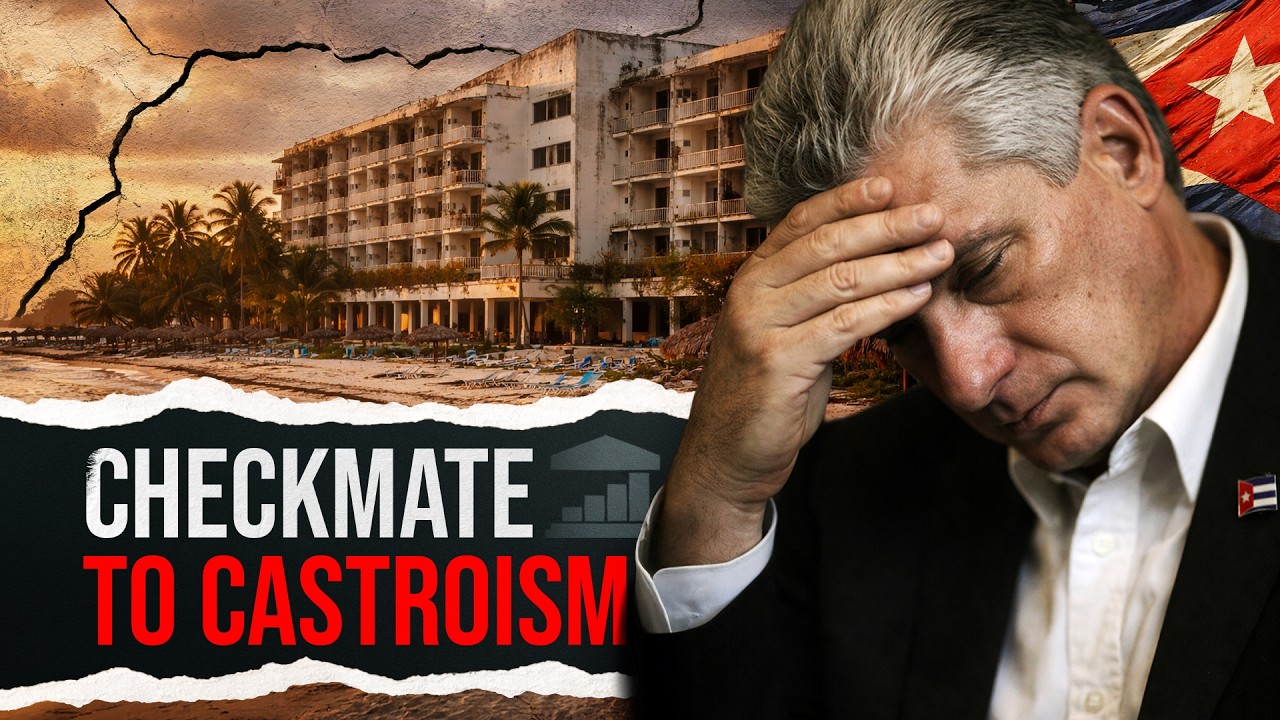
Cuba's golden Goose dies
On the Malecón, where the sea spray once mingled with the chatter of tourists and the sales patter of street vendors, the silence is now its own weather. A few couples sit watching the waves; fishermen pick at their lines. The classic cars still glint under the sun, but their drivers wait longer for fares, watching empty pavements and scanning for the rare camera-laden passer-by who might pay for a circuit of the city.Cuba has always marketed itself as an irresistible paradox: an island preserved in time, vivid in colour, heavy with music, history and charm. For years, tourism was not merely an economic sector; it was the country’s great escape hatch — the one dependable way to earn hard currency, to keep people employed, to feed small private ventures, and to cushion the shocks of a system chronically short of cash, fuel and imported goods. It was, in the language of the street, the golden goose.Now the goose is starvingIn the starkest possible symbolism, international airlines were recently told that Cuba would not have aviation fuel to support normal operations, a warning that landed like a thunderclap in the very industry that depends on predictable connectivity. The announcement followed emergency measures that included closing some hotel capacity and moving international tourists to concentrate scarce resources where the state could still guarantee basic services. Those steps were not taken in a vacuum: they arrived against a backdrop of rolling blackouts, fuel queues, water cuts and the visible deterioration of public spaces — all of which have become impossible to disguise from visitors. When a destination cannot keep the lights on, it struggles to keep the planes coming.A pillar that is crackingThe numbers describe a long slide, not a single bad season. Cuba welcomed roughly 2.2 million international tourists in 2024, a figure far below the island’s pre-pandemic performance and described by officials as falling short of expectations. In January to September 2025, foreign visitor arrivals fell by 20.5%, reaching 1,366,720 tourists, around 350,000 fewer than the year before. By January to November 2025, total arrivals were reported at about 1.6 million — dramatically lower than the 4.8 million visitors recorded in 2018 and the 4.2 million in 2019.Tourism is not just a statistic in Cuba. It is livelihoods. Street vendors and informal traders depend on footfall; drivers depend on fares; small restaurants, guesthouses and guides depend on a steady rhythm of arrivals. When visitors vanish, the entire ecosystem collapses into survival mode. The result is a cruel feedback loop: lower tourist numbers squeeze incomes, which accelerates emigration, which hollows out the labour force, which weakens service quality, which deters further visitors.For almost two decades, tourism also provided a vital stream of hard currency — at times estimated at up to $3 billion a year. In a country where imported fuel, spare parts, food staples and medicines compete for scarce foreign exchange, that revenue was more than a “nice to have”. It was structural.The island that cannot promise basicsTourists can forgive many things. They can tolerate a slow queue, an old lift, even a little chaos — sometimes that is precisely what they came to experience. What they cannot tolerate is systemic uncertainty: the sense that tomorrow’s basics are not guaranteed.Cuba’s tourism product is increasingly defined by what it cannot reliably provide. Electricity is the most obvious. Blackouts have become routine, and visitors now arrive with an expectation that the power will fail at some point — in restaurants, in rented apartments, sometimes even in hotels. That changes behaviour immediately. Tourists spend less time outside, avoid certain areas after dark, and become reluctant to plan. Businesses that depend on electricity — refrigeration, air-conditioning, electronic payments, internet access — struggle to operate normally. Hotels can run generators, but fuel scarcity turns that into a gamble rather than a solution.Water is not far behind. Water cuts do more than inconvenience: they undermine hygiene, discourage dining out, and make accommodation reviews brutal. Add rubbish accumulation in prominent areas and the perception of urban decay, and Cuba’s aesthetic promise — the very thing it sells — begins to crumble in the eyes of those who once considered the island an easy, romantic choice.Then there is the fuel crisis itself, now overtaking every other constraint. Fuel shortages do not merely darken homes; they immobilise transport, disrupt supply chains, restrict the movement of staff and goods, and fracture the logistical spine of tourism. When fuel scarcity reaches the point that aviation operations are threatened, it does not just deter tourists; it alarms airlines, tour operators and insurance calculations. Connectivity is trust, and trust is the oxygen of travel.Sanctions, shockwaves and the price of isolationCuba’s predicament cannot be explained without the external pressure that constrains its access to finance and trade. Measures imposed by the United States over many years have complicated banking channels, discouraged suppliers, and added significant friction to travel. The island has struggled to attract investment, to import what it needs for refurbishment and maintenance, and to offer the seamless payments experience that modern travellers take for granted.A decisive moment came years ago when cruise travel — a mass channel of visitors — was curtailed by US policy, sending a chill through the tourism economy and signalling to the wider market that Cuba could again become a politically risky destination at short notice. Since then, additional rounds of restrictions and financial pressure have continued to shape the environment in which Cuba tries to sell itself.More recently, the tourism collapse has been sharpened by energy geopolitics. Cuba has long depended on external partners for oil and refined products. When shipments from key partners falter — whether from their own crises, from economic limits, or from fear of punitive measures — Cuba’s domestic fragility becomes acute. Scarce fuel is not simply an inconvenience; it is a national choke-point.The compounded effect is visible in behaviour on the ground. In places once crowded with visitors — seawalls, promenade cafés, tourist buses — workers watch the horizon for customers who do not appear. Drivers slash prices. Vendors carry fewer goods, knowing there is no point making stock that will not sell. Some shift their energy from tourists to the long lines of Cubans seeking visas — a social cue that speaks volumes about what locals think the future holds.When the state becomes the problemExternal pressure matters. But it does not explain everything. Cuba has also been undermining its own tourism engine through policy choices that prioritise control and grand projects over lived reality.Tourism succeeds when it feels effortless: when there is reliable transport, predictable services, and a private sector able to innovate, respond and fill gaps. Yet Cuba’s tourism model remains heavily centralised, with a dominant state role in planning, investment and revenue capture. That structure can build large resort complexes and manage mass tourism, but it struggles to adapt quickly when the quality of the experience becomes the differentiator — and when the basics of supply, maintenance and staffing require flexible, local solutions.In recent years, Cuba has continued to push a hotel-building agenda even as demand has softened and even as the broader infrastructure — the electricity grid, water systems, roads, waste management — has visibly frayed. Tourists do not travel for a new lobby if the street outside is dark, the tap is dry and the meal is unreliable. A destination’s “hardware” cannot compensate for the collapse of its “software”.Meanwhile, small private enterprises — the very businesses that once improved the tourism experience with better food, cleaner rooms and more responsive service — operate under volatile rules and a punishing economic context. Inflation, shortages, and shifting regulations make it harder for them to guarantee quality. The result is an island that feels less hospitable not because its people have changed, but because the system around them is failing.Tourists notice that contradiction quickly: a warm welcome delivered inside a crumbling machine.A golden goose with clipped wingsCuba’s tourism sector is not merely shrinking; it is being reshaped into something narrower and more brittle.Where tourists once spilled into neighbourhood businesses, spending money in thousands of informal and semi-formal ways, the state now increasingly tries to channel visitors into controllable spaces — large hotels, selected shops, managed transport. That is understandable in a crisis: when fuel is scarce, it is easier to ration it to a few facilities than to keep an entire urban tourism web running. But the tactic also drains the spontaneity and texture that made Cuba distinctive.Cuba’s allure has never been only beaches and sunshine; the Caribbean offers plenty of that. Cuba’s brand has been authenticity: street music, conversation, architecture, lived history. If tourism is reduced to a tightly managed, energy-rationed, hotel-bound experience, Cuba becomes easier to replace. Tourists can find an all-inclusive package elsewhere — often with better service, better reliability and fewer uncertainties.That is the core tragedy of the “golden goose” metaphor. The goose is not simply the existence of tourists; it is the ecosystem that tourism sustains — jobs, small enterprises, imported goods, maintenance budgets, local optimism, and even the possibility of gradual reform through contact and commerce. When the state treats tourism primarily as a hard-currency extraction mechanism while failing to reinvest in the foundational systems that make the experience viable, it is not protecting the goose. It is consuming it.What comes nextCuba’s leadership has signalled contingency planning: energy-saving measures, consolidation of tourist installations, and efforts to preserve the high season. Those measures may prevent a complete collapse, but they will not, on their own, restore confidence.Tourism recovery depends on a few unglamorous truths:- Reliable power and fuel matter more than new hotel rooms. Without them, even the best marketing is irrelevant.- Basic urban services — water, waste management, public safety — determine whether travellers return and recommend the destination.- Payments and connectivity must work. In a cashless world, friction becomes deterrence.- A thriving private sector improves quality faster than central planning can manage, especially in food, hospitality and local experiences.- Predictability — in rules, in transport, in supplies — is what convinces airlines and tour operators to commit.For Cuba, each of those truths collides with political realities. Reprioritising spending away from prestige projects towards maintenance is an admission of past errors. Giving greater operational space to private enterprise reduces the state’s direct grip on the tourist economy. Improving payments and connectivity often requires navigating international financial restrictions and rebuilding credibility.Yet the alternative is visible already: a tourism sector that no longer acts as a stabiliser, but as a mirror of collapse. The golden goose is not dead in the biological sense. Cuba still has what tourists want: beaches, music, history, warmth, beauty. But economically, the goose is already mortally wounded — by blackouts, by fuel scarcity, by decaying services, by disrupted connectivity, and by the strategic choice to prioritise control and construction over the basics that keep a destination alive.Cuba did not lose its golden goose in one dramatic moment. It has been killing it slowly — not with a knife, but with neglect.
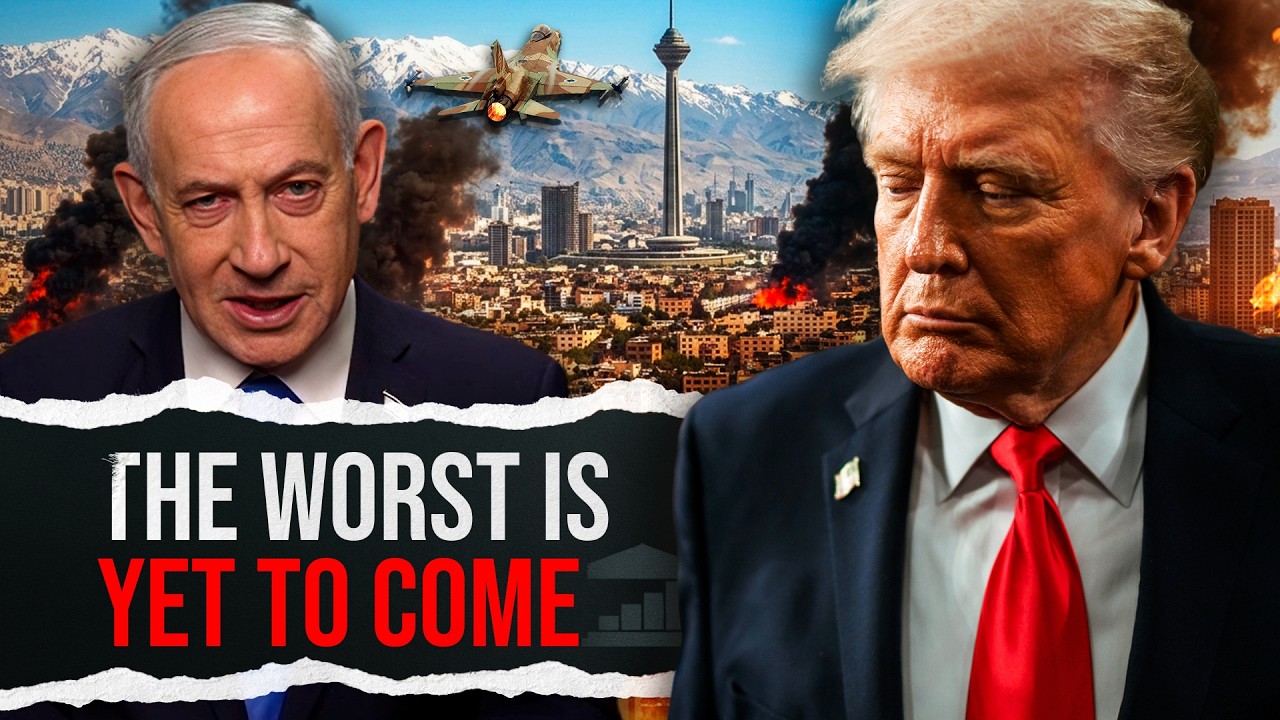
Iran's revenge rewired
The Middle East has crossed a threshold that diplomats spent decades trying to avoid: a direct, multi‑theatre confrontation in which escalation is no longer measured by deniable sabotage or proxy fire, but by openly declared “major combat operations”, leadership decapitation, and retaliatory strikes that fan out across an entire region.In the early hours of 28 February, a joint campaign by the United States and Israel began striking targets across Iran. The operation—described by US officials as a concentrated effort to cripple Tehran’s missile and nuclear capabilities—rapidly expanded beyond a single night of raids into a sustained strike programme. Within hours, the most consequential political fact of the crisis crystallised: Iran’s Supreme Leader, Ayatollah Ali Khamenei, was dead, along with a tranche of senior military and security figures.For Tehran, the death of its paramount leader is more than a symbolic blow. It punctures the central claim of the Islamic Republic’s deterrence model: that its leadership can control the tempo of conflict, calibrate retaliation, and avoid a war that threatens regime survival. Yet what has followed is not simply a conventional quest for revenge. Iran is escalating—but in ways that suggest the next phase may be designed less to “answer” a strike in kind than to widen the battlefield, multiply pressure points, and force adversaries—and their regional partners—into an exhausting, costly posture with no clean off‑ramp.A weekend that rewrote the rulesBy the time the first assessments emerged, the outlines were stark. Strikes targeted a wide range of sites linked to Iran’s military, command infrastructure and strategic programmes. Iran responded with missile attacks aimed at Israel and at US assets in the region, while allied armed groups—long embedded in Tehran’s security architecture—moved to join the fight. Casualty figures, as ever in a fast‑moving war, shifted by the hour; by early March, the toll included American service members killed during the opening days, deaths in Israel from Iranian strikes, and a sharply rising number of fatalities inside Iran from the strike campaign.The political messages were as dramatic as the military ones. The US President publicly framed the operation not as a limited punitive action but as a decisive move to end a threat. He also urged Iranians to take control of their future—language that, even when paired with official denials of an open‑ended ground war, inevitably sharpened Tehran’s suspicion that the campaign’s real horizon might be broader than the stated targets.In Tehran, state institutions moved quickly to memorialise the Supreme Leader’s death as a national trauma, announcing an extended mourning period and days of public closure. The government portrayed the killing not merely as an attack on Iran, but as an affront to the wider religious community it claims to lead. Iran’s President vowed justice and retaliation, arguing that accountability was both a right and an obligation.These signals matter because they illuminate the strategic crossroads Tehran now faces. Iran can retaliate “as Iran”—with missiles, drones, and overt military action—or it can retaliate “as the Islamic Republic”—a system built to fight indirectly, to disperse risk, and to turn regional geography into leverage. Recent days indicate it is attempting both simultaneously.Escalation, but not symmetryThe most intuitive reading of revenge is symmetry: you strike us, we strike you. Yet Iran’s current approach points to a different logic—one aimed at imposing a regional tax on war itself.Rather than concentrating its response solely on Israel, Iran has been reported to activate a pre‑existing plan designed for a scenario precisely like this: a sudden leadership shock and sustained external attack. The plan’s essence is dispersion. It seeks to destabilise the wider Middle East and disrupt global markets by widening the target set far beyond the immediate combatants.In practice, that has meant drone and missile activity across the Gulf, including strikes aimed at energy infrastructure and attacks on US bases and strategic sites across multiple countries. The geographical breadth is not incidental. It pressures governments that have tried to keep the conflict at arm’s length, raises insurance and shipping costs, and feeds market volatility—especially in oil and gas—by creating the perception that supply routes and export terminals could become collateral damage or deliberate targets.This is why Iran’s revenge could indeed be “different”. It is less about a single spectacular blow and more about sustained friction: making the region feel unsafe, forcing adversaries to defend many sites at once, and turning every partner base or pipeline into a political liability for a host government.Decapitation and decentralisationThe killing of a Supreme Leader would ordinarily invite paralysis: competing factions, contested succession, and uncertainty within command structures. Instead, Iran appears to have anticipated the risk of decapitation. Reports indicate it has decentralised operational authority so that military units can continue functioning—and even act autonomously—despite leadership losses.This is a hard lesson of modern conflict: removing commanders does not always remove capability, particularly when a system has trained itself to operate through redundancy and ideology. Decentralisation complicates deterrence because it blurs the line between ordered retaliation and opportunistic escalation. It also raises the risk of miscalculation: if local commanders believe they are empowered to act, an incident can trigger an escalation spiral without a clear political hand on the brake.For Israel and the United States, this creates a paradox. A campaign intended to degrade Iran’s strategic tools may simultaneously validate Tehran’s long‑held belief that dispersal—across units, across geography, across proxies—is the only sustainable defence. The more the battlefield expands, the more Iran can claim that it is not “losing” but “surviving” by making the war uncontainable.Why energy and bases matter more than rhetoricIran’s strategic leverage has always rested on three overlapping capabilities: missiles and drones that can reach targets across the region; networks of aligned armed groups that can open secondary fronts; and geography that sits astride critical energy routes. In the current crisis, Tehran appears to be drawing on all three. Targeting energy infrastructure does not merely threaten physical assets; it threatens predictability—one of the most valuable commodities in global markets. Even limited disruption can push prices upwards, create political pressure in consumer countries, and strain alliances as governments argue over the costs of continued confrontation.Similarly, striking US bases is not only a military act but a political one. It forces Washington to respond in a way that risks deeper entanglement, while also testing the political tolerance of host countries that have granted access or basing rights. If a base becomes a magnet for attack, a host government may face domestic pressure to curtail cooperation or publicly distance itself—precisely the kind of diplomatic friction Tehran can use as a weapon.Allies, proxies, and the widening circleThe entry of Iran‑aligned groups—particularly in Lebanon and Iraq—adds another layer of complexity. These groups can escalate on their own timelines, choose targets that create maximum political impact, and exploit local dynamics that outside powers struggle to control. Their involvement also increases the chances of civilian harm and regional spillover, especially if retaliatory air strikes hit densely populated areas or if armed groups fire from within civilian environments.For Israel, the prospect of simultaneous pressure from multiple directions has long been central to its threat assessments. For Gulf states, the danger is different: becoming battlegrounds by proximity. For the United States, the risk is the slow creep from a declared, time‑bounded operation into a rolling campaign to protect personnel and bases, respond to new attacks, and maintain credibility. This is how “different revenge” works: it is a method of stretching an opponent’s attention and resources until political cohesion frays.The fog of war, now amplified by the internetAs missiles fly and leaders die, an older battlefield has returned with a new twist: information. A wave of misrepresented imagery has circulated online since the strikes began, including AI‑generated or repurposed videos falsely presented as evidence of dramatic battlefield outcomes. Some prominent claims—such as the alleged disabling of a US aircraft carrier—have been publicly refuted by US officials. Other viral clips have been traced to simulation footage or to older, unrelated events.The significance is not only that misinformation spreads. It is that, in a crisis where public opinion matters—where governments must justify casualties, where allies must defend their choices, and where markets react to fear—false narratives can shape behaviour before facts catch up. In that environment, “revenge” does not always look like a missile launch. Sometimes it looks like confusion, panic buying, political pressure, and a public sense that the war is spiralling beyond anyone’s control.What comes next: a long campaign, not a single strikeThe most important question is not whether Iran will retaliate; it already has. The question is what form its continuing retaliation will take—and whether the United States and Israel can contain the conflict to their stated objectives.Official statements emphasise the destruction of missiles, naval assets, and the prevention of a nuclear weapons capability. They also stress that the operation is not intended to become a prolonged occupation. Yet history offers a caution: even wars that begin with narrow goals can expand when adversaries choose to fight asymmetrically, when allies are attacked, or when domestic politics demands visible results.Iran’s incentives, meanwhile, have shifted. The death of a Supreme Leader is a profound internal shock. It may strengthen hard‑line impulses, weaken restraint, and elevate the argument that survival requires demonstrating continued capacity to hurt opponents—directly and indirectly. It may also intensify internal power struggles, as competing factions seek to prove resolve and legitimacy. In this setting, Iran’s “different” revenge is best understood not as a single act, but as a strategy: disperse command, widen the theatre, hit the region’s economic nerves, keep adversaries guessing, and force the confrontation to become a regional crisis that nobody can simply walk away from.The danger is that every day the war continues, the number of potential triggers multiplies: an accidental shoot‑down, a misread radar blip, a strike that hits a sensitive site, or a proxy attack that causes mass casualties. Any one of these can make restraint politically impossible. For now, the shape of the conflict suggests an unmistakable conclusion. Iran is escalating its attacks, but it is also reframing revenge. The aim appears less to mirror the opening strike than to create a landscape in which the costs of continuing—economic, political, and strategic—become intolerably high for everyone involved.
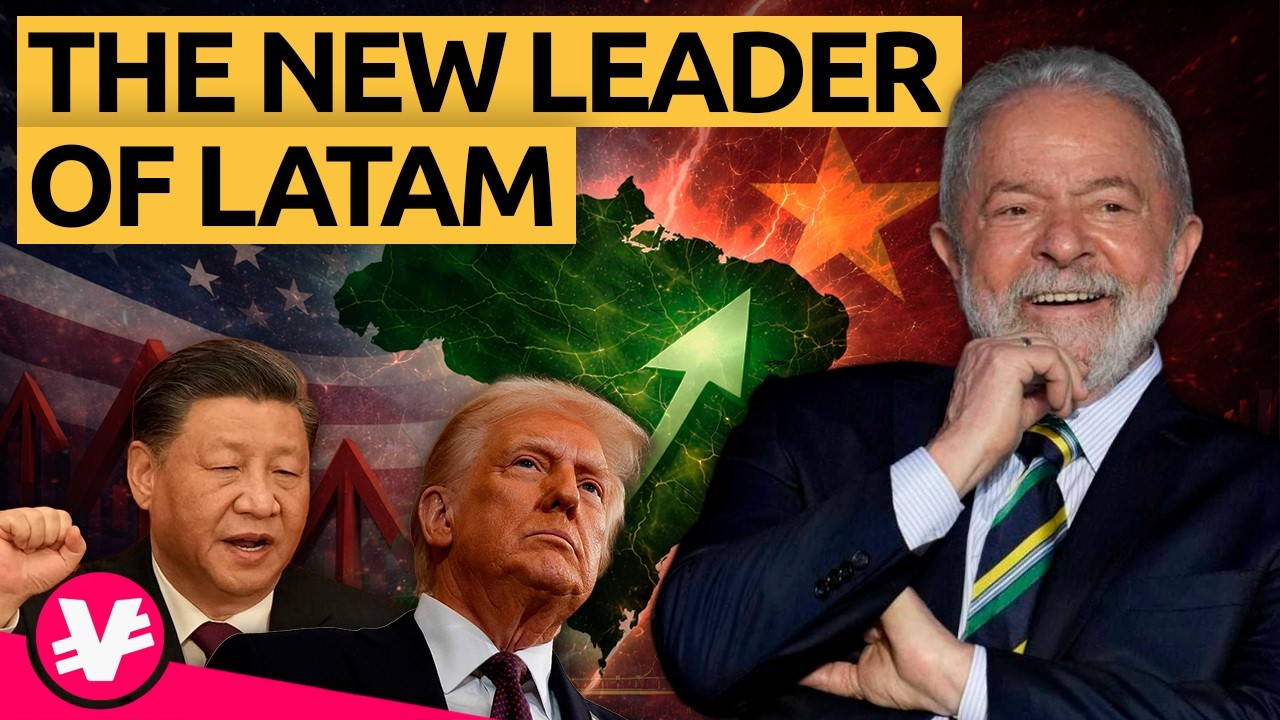
Brazil's trade-war boom
Brazil did not start the world’s newest trade fights. But it may be the clearest beneficiary of them. As tariffs and counter-tariffs rewire supply chains, the global economy is rediscovering a simple truth: when the two largest powers punch each other in the face, the countries that can reliably ship what both sides still need—food, fuel, minerals, and industrial inputs—suddenly gain leverage. In 2026, Brazil sits unusually well-positioned at that crossroads: big enough to matter, diversified enough to pivot, and politically non-aligned enough to sell to almost everyone.The result is a windfall that is not limited to one commodity, one destination, or one trade route. It is an accumulating advantage—built from agricultural dominance, commodity depth, expanding logistics, and a diplomatic posture that often keeps doors open even when superpowers slam theirs shut.The mechanics of a “winner” in a trade warTrade wars rarely “create” demand. They redirect it. When access to a supplier becomes expensive, politically risky, or simply uncertain, buyers don’t stop consuming overnight—they scramble for alternatives. The winners are not necessarily the lowest-cost producers on paper, but those that can scale, deliver consistently, and absorb sudden shifts without breaking contracts or bottlenecking ports. Brazil checks those boxes across multiple categories:- Food and feed: soybeans, corn, meats, sugar, coffee, orange juice, and a rising list of processed foods.- Industrial commodities: iron ore and other mining outputs central to construction, steelmaking, and heavy industry.- Energy and energy-linked products: crude, refined fuels, and biofuels—plus the agricultural inputs that can substitute for constrained supplies elsewhere.In practice, this means Brazil benefits in two distinct ways. First, it captures market share when buyers avoid politically “hot” suppliers. Second, it gains bargaining power on price and contract terms as buyers compete for reliable volumes.The soybean pivot: the clearest example of redirected tradeFew products illustrate the trade-war reshuffle better than soybeans. Soy is not just a food item. It is a strategic input into animal protein, cooking oils, and industrial uses. When tariff retaliation hits agriculture, it hits one of the most politically sensitive sectors in any country—farmers—and it hits fast.In periods of heightened U.S.-China tariff friction, Chinese import demand has repeatedly surged toward Brazil. That shift is not merely a one-off substitution; it can become a structural change if buyers invest in new supply relationships, shipping routines, and processing infrastructure built around Brazilian origin.Once that happens, regaining lost market share becomes difficult even if tariffs later ease. Traders and processors begin to treat the alternative supply line not as a temporary workaround, but as a baseline.Brazil’s advantage here is scale. It can supply massive volumes at competitive costs, and it can expand output over time. Even when weather shocks disrupt harvests, global buyers often still prefer Brazilian origin because the system around it—ports, traders, processors, shipping lanes—has grown used to handling huge flows.Beyond soy: meat, poultry, and the “protein flywheel”Agricultural redirection does not stop at the farm gate. It cascades downstream. When soybean meal becomes abundant and competitively priced, livestock producers can scale. When livestock scales, exports of beef and poultry can rise. When those exports rise, investment flows into cold-chain logistics, feed efficiency, genetics, and processing capacity—further improving competitiveness.This creates a “protein flywheel”: feed drives meat; meat exports justify processing; processing boosts value capture; value capture funds technology and expansion. In a trade-war environment, this flywheel spins faster because importers prioritize resilience over marginal price differences.A quiet shift: from raw supplier to value-added exporterFor decades, Brazil’s critics argued that the country was “stuck” exporting raw materials. The trade-war era complicates that narrative.When supply chains fragment, buyers do not just look for raw inputs. They look for reliable intermediate products: processed foods, refined or semi-processed materials, standardized industrial components, and contract-manufactured outputs that can bypass politically sensitive origins.Brazil has been steadily moving in that direction. Its agribusiness sector, in particular, has expanded processing capacity—crushing soy into meal and oil, scaling meatpacking and poultry processing, and pushing branded and semi-branded exports into more markets.This matters because processed exports typically deliver higher margins, more stable employment, and deeper industrial ecosystems than raw commodity exports. A trade war can act like an accelerant: it rewards producers that can deliver not only bulk volume, but also predictable specifications, traceability, and year-round fulfillment.Playing both sides—without becoming a proxyBrazil’s strategic value in a trade war is not only what it sells, but whom it can sell to. Many countries are forced into binary choices—pick a bloc, pick a standards regime, pick a political camp. Brazil has, so far, avoided being locked into a single side. It trades deeply with China, maintains significant economic ties with the United States, and keeps commercial channels with Europe and large emerging markets.That flexibility is itself a commercial asset. If one destination becomes less attractive—because of tariffs, quotas, sanctions risk, or demand weakness—Brazil can often redirect to another without reinventing its entire export model.This is where the country’s sheer economic breadth becomes decisive. Brazil is not a niche exporter of one resource; it is a multi-commodity, multi-destination supplier with long-established trading relationships. That makes it harder to isolate—and easier to integrate into whatever “re-globalized” world replaces the old one.Tariffs on Brazil can still leave Brazil aheadIt sounds contradictory: how can a country be a “winner” if it is also hit by tariffs? Because relative advantage matters more than absolute pain. If tariffs are applied broadly across many countries, Brazil can still win by being less penalized than competitors—or by benefiting elsewhere from the same tariff regime. Even when Brazil faces targeted duties, the damage depends on how exposed the economy is to the affected market, how easily exporters can pivot, and how many products are exempted or rerouted.In recent tariff episodes, Brazil’s exposure has often been manageable because:- the economy is large and diversified,- exports to any single partner represent only part of total output,- and trade diversion toward other large markets can offset part of the hitIn some scenarios, tariffs even create second-order opportunities: if manufacturers move away from one contested geography, they look for politically safer production bases, raw inputs, and alternative routes. Brazil’s market size, resources, and expanding industrial clusters make it a candidate for that reallocation—especially in resource-linked manufacturing.The critical minerals angle: a new chapter in leverageTrade wars are no longer only about steel, washing machines, or soybeans. They increasingly revolve around the upstream ingredients of modern industry: critical minerals, processing capacity, and the ability to secure supply chains for strategic technologies.Brazil has meaningful reserves in several mineral categories and, crucially, has begun emphasizing the step that matters most: processing and refining, not just digging things out of the ground. In a world where major powers worry about overdependence on any single processing hub, a resource-rich country that can credibly build refining capacity becomes more than a commodity exporter. It becomes a strategic partner.This is a slower-moving advantage than soybeans. Mines and refineries are not built in a season. But the direction is clear: trade conflict is pushing countries to treat supply chains as national-security infrastructure. Brazil, with scale and geological variety, has an opening to become a cornerstone of “de-risked” supply networks—if it can execute.Energy and geopolitics: cheap inputs, tricky politicsTrade wars overlap with sanctions and energy politics, and Brazil has navigated that overlap with a pragmatic streak. In an era of volatile fuel markets, discounted supply offers can lower costs domestically and improve export competitiveness indirectly—because cheaper energy reduces production and logistics costs across the economy. But bargains can come with political risk if suppliers are under sanction pressure or if new restrictions emerge.Brazil’s challenge is to preserve its image as a reliable, rules-respecting trade partner while still protecting domestic economic interests. That balancing act is not unique to Brazil, but it is higher-stakes for a country trying to maximize trade-war gains without triggering punitive responses.Why the momentum is real—and why it is fragileBrazil’s trade-war boom is not an accident. It is a product of structural strengths that the country has spent decades building, even if imperfectly: agricultural technology, large-scale production, export infrastructure, and a commercial diplomacy that generally seeks options rather than ultimatums. But the boom is also fragile, for three reasons.1) Infrastructure is still the bottleneck. Brazil can grow more soy, raise more cattle, and mine more ore—but if roads, rail, ports, and storage cannot keep up, the advantage erodes into delays and higher costs. Global buyers reward reliability; a single season of congestion can push them to diversify elsewhere.2) Environmental constraints are tightening. The world is not only watching prices. It is watching land use, deforestation, and traceability. Markets and regulators increasingly demand proof of compliance. Brazil’s export future depends on whether it can scale production while convincingly controlling illegal deforestation and improving transparency across supply chains. Without that, access to premium markets can narrow.3) Trade wars shift quickly—and can turn inward. A country can benefit from diversion today and be targeted tomorrow. If Brazil’s gains become politically salient abroad—especially in election cycles—calls for countermeasures can rise. The “winner” label can paint a target.The bigger picture: Brazil as a stability premiumUltimately, Brazil’s biggest advantage in a fractured global economy may be intangible: it sells stability. Not perfection—Brazil remains a complex, high-variance country with fiscal pressures, political noise, and real governance challenges. But compared with flashpoint suppliers, it offers something increasingly scarce: the ability to ship essential goods at scale while maintaining working relationships across rival blocs.In a world where trade is becoming a tool of statecraft, that ability is worth a premium. And that is why Brazil can emerge as the big winner of the trade war—not because it avoids the fallout, but because it is structurally built to capture the rerouting, the repricing, and the reinvestment that follow when global trade stops being “efficient” and starts being “strategic.”
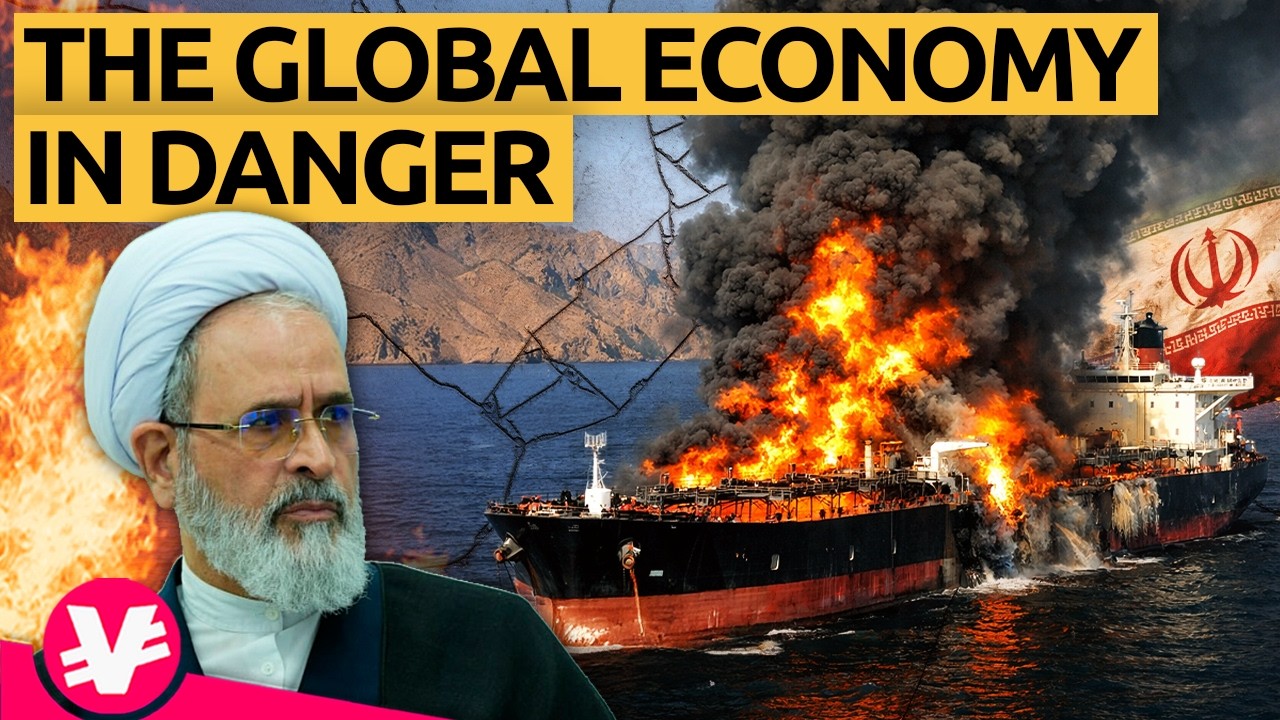
Hormuz Shock Risk rising
In the narrow waters between Iran and Oman, the world’s most important energy choke point has turned into the epicenter of a fast-moving economic threat. What began as a military escalation has morphed into something markets fear even more: a sustained disruption of maritime traffic through the Strait of Hormuz—an artery that, in normal times, carries a staggering share of global oil and liquefied natural gas flows.Over just days, the strait’s risk profile has shifted from “tense” to “near-uninsurable.” Commercial ship operators have slowed, paused, or rerouted voyages. Tankers have clustered in holding patterns. War-risk premiums have jumped. Freight rates have surged. For energy importers and manufacturers far from the Gulf, the shock is already spreading through prices, delivery schedules, and financial expectations.The question is no longer whether the world can absorb “higher oil for a week.” The question is whether the world is about to relearn a harsher lesson: when Hormuz is threatened, the global economy doesn’t just pay more—it changes behavior, and that behavioral shift can snowball into a broader, longer-lasting disruption.Why the Strait of Hormuz matters more than any headlineThe Strait of Hormuz is not merely a strategic symbol; it is an economic switchboard. A significant portion of the world’s seaborne crude oil and petroleum products transits these waters, alongside a major share of global LNG shipments. Even brief interruptions can tighten supply immediately because many refineries and power systems are designed around steady inflows, not sudden reroutes or prolonged delays.Yes, some producers have partial bypass options—pipelines that move oil to ports outside the Gulf—but those alternatives are limited and cannot replicate the strait’s full capacity at short notice. That structural bottleneck is why any serious threat to freedom of navigation in Hormuz instantly becomes a global pricing event.What “attacking Hormuz” looks like in practiceA disruption does not require a formally declared blockade. It can be achieved through a blend of tactics that make commercial passage too dangerous or too expensive:- Direct strikes or attempted strikes on vessels near the transit corridor.- Drone and missile pressure that forces ships to switch off tracking, scatter, or delay.- Threats against shipping that deter crews, owners, and charterers.- Mine-laying risk—even the suspicion of mines can freeze traffic, because clearing operations are slow and technically demanding.- Targeting port and coastal infrastructure in the wider region, creating downstream bottlenecks even if some vessels still attempt passage.In the shipping world, perception becomes reality. If underwriters cannot price risk with confidence, coverage is withdrawn or priced so high that voyages become uneconomic. When insurers step back, lenders, charterers, and operators follow—often within hours.The immediate market mechanics: from fear to scarcityEnergy markets move on marginal barrels and marginal cargoes. When a major corridor is disrupted:1. Spot prices react first. Traders price in expected shortages and scramble for alternatives.2. Physical cargoes re-route or stall. That introduces real scarcity, not just financial speculation.3. Refiners bid more aggressively for replacements. The same barrels get chased by more buyers.4. Storage and strategic reserves become bargaining chips. Governments consider releases; companies hoard.5. Volatility becomes the product. Uncertainty lifts option premiums and hedging costs, which feed back into consumer prices.Even countries that do not buy Gulf oil directly still feel the impact because oil is globally priced and globally substituted. If one region’s supply tightens, another region’s barrels get pulled toward the highest bidder. The result is a synchronized, worldwide repricing.The second-order shock: LNG, power prices, and industrial stressOil grabs headlines, but LNG often delivers the sharper economic pain. Gas markets are increasingly global, yet still constrained by liquefaction capacity, shipping availability, and terminal infrastructure. When LNG cargoes are delayed, power utilities and large industrial users face immediate dilemmas:- pay extreme spot prices,- switch fuels (where possible),- curtail operations,- or pass costs through to households and businesses.Energy-intensive sectors—chemicals, fertilizers, metals, cement, and some food processing—can experience sudden margin collapse. That’s how an energy shock migrates into inflation, employment pressure, and weaker growth.Shipping and supply chains: the hidden multiplierA Hormuz disruption is not only an “energy story.” It is a logistics story with compounding effects.If carriers divert around longer routes, costs rise through:- extra fuel burn,- longer transit times,- crew and vessel utilization strain,- congestion at alternative hubs,- and surcharges for security, insurance, and war risk.Those delays hit everything: components, pharmaceuticals, electronics, industrial inputs, and consumer goods. Businesses that operate “just-in-time” inventories suffer first; small suppliers and retailers often suffer hardest because they lack bargaining power and buffer stock. In modern supply chains, time is money—and disruption is inflation.The inflation problem: central banks get boxed inA severe Hormuz shock creates a policy nightmare. Higher energy and transport costs push inflation up, while uncertainty and curtailed demand push growth down. That mix can resemble “stagflationary” conditions, where:- consumers face higher bills,- companies face higher costs,- investment slows due to uncertainty,- and central banks struggle to choose between fighting inflation or supporting growth.Even if the initial spike fades, the volatility itself can keep inflation expectations elevated—especially if businesses begin building “risk premiums” into pricing and wage negotiations.Financial markets: stress travels faster than oilMarkets do not need months to react. They reprice risk instantly:- Energy and defense assets can surge.- Airlines, logistics, and heavy industry can come under pressure.- Emerging markets that import energy may see currency weakness and higher financing costs.- Credit spreads can widen if investors fear recession or persistent inflation.A key vulnerability is the intersection of energy prices and debt. Many governments and companies refinanced during periods of lower rates and calmer conditions. If energy-driven inflation keeps rates higher for longer, or if recession risks rise, debt sustainability questions re-emerge—especially for import-dependent economies.Who is most exposed?Exposure is not purely geographic. It is structural.- Major Asian importers are highly sensitive due to scale and reliance on seaborne energy.- Energy-poor economies with limited strategic reserves feel price spikes fastest.- Industrial exporters suffer when input costs rise and shipping slows.- Low-income households face the harshest real-world impact as energy and food costs rise.Food becomes a late-stage amplifier: energy prices raise fertilizer and transport costs, which can filter into agricultural pricing cycles and, eventually, consumer food inflation.Can the shock be contained?There are stabilizers, but none are perfect.1) Naval protection and convoying Escorts can reduce some risks, but they cannot eliminate them—especially if threats are asymmetric (drones, missiles, mines). A single successful strike can trigger a renewed insurance retreat.2) Strategic reserves Reserves can smooth short-term supply gaps and signal policy resolve. But they are a bridge, not a solution, if disruption persists.3) Bypass infrastructure Pipelines and alternative ports help, yet capacity is limited and subject to its own vulnerabilities.4) Demand response High prices can reduce demand, but that “solution” often arrives through economic pain—slower growth and weaker consumption.The most effective stabilizer is political: de-escalation that restores predictable navigation. Without it, markets will keep pricing risk, and supply chains will keep adapting in more expensive ways.Are we on the brink of a global economic shock?If disruption remains brief and contained, the world may endure a sharp but temporary price spike. But if attacks continue, if insurers and carriers remain unwilling to operate normally, or if the threat environment evolves into mine warfare or persistent strikes, the risk shifts decisively toward a broader shock.The dangerous feature of a Hormuz crisis is not only the initial damage—it is the feedback loop: higher risk → fewer ships → tighter supply → higher prices → more panic buying and hoarding → further tightening.Once that loop takes hold, reversing it requires more than statements and short-term fixes. It requires restored confidence—commercial, military, and political—that the corridor can function safely again. For now, the world is watching a narrow strip of water where economics and security collide. The longer that collision continues, the more likely it is that what looks like a regional conflict becomes a global cost-of-living event.
Iran lifts Dollar, sinks Euro
To say the dollar is crushing the euro sounds like tabloid economics. Yet the first full geopolitical stress test of 2026 has produced exactly the directional result implied by that phrase. Money is again flooding toward the U.S. currency while the euro is being repriced against a harsher reality: Europe remains more vulnerable to imported energy shocks, trade disruption and slower growth than the United States.By the end of the first week of March, EUR/USD was trading around 1.16, the dollar index was back near 99, and oil had surged above $90 a barrel as traders priced a wider Middle East disruption. That is not a historic collapse of the single currency. It is, however, a decisive reminder of how quickly markets still fall back into the old hierarchy when fear becomes the dominant force.Iran is central to that hierarchy test, not because its economy sets the global reserve system, but because it sits at the junction where sanctions, energy flows, shipping lanes and regional war all collide. Internally, the country has been living through a severe monetary breakdown. The rial plunged to roughly 1.5 million to the dollar earlier this year, protests erupted, and the state’s response deepened the atmosphere of repression and uncertainty. Externally, every escalation connected to Iran forces markets to reprice the cost of moving oil, gas, cargo and capital.The Strait of Hormuz is the critical mechanism. Roughly 20 million barrels a day of oil and about a fifth of global LNG trade move through that narrow channel. Any threat there instantly travels through crude contracts, gas benchmarks, marine insurance, tanker availability and inflation expectations. Europe does not have to be the largest direct buyer of Hormuz crude to be hit hard. It is enough that Europe is the more energy-sensitive, more import-dependent, and more politically fragmented economic bloc.That vulnerability is now colliding with a euro area that was improving, but still far from robust. Inflation in February edged back up to 1.9 percent. Output in the fourth quarter of 2025 rose just 0.2 percent. The ECB’s own baseline for 2026 is growth of 1.2 percent. Those are not the numbers of an economy built to absorb a prolonged external energy shock without political or financial strain. If fuel, gas and freight costs remain elevated, the euro area is pushed back toward the policy trap that haunted it after 2022: softer activity, stickier prices, and a currency market that demands a discount for both.The logistics channel makes the shock even broader than the oil story suggests. Trade between Asia, the Gulf and Europe is already being rerouted or repriced. Airfreight costs on Asia-Europe lanes have jumped sharply. Shipping delays, war-risk premiums and booking suspensions are beginning to feed through supply chains. That matters for Europe because the euro is not merely a currency. It is the price label attached to an industrial and consumer economy that still depends on long, vulnerable trade arteries.The United States is not immune. Higher oil prices, tighter freight and nervous markets will still hit American households and businesses. But the U.S. enters this episode with a different energy position, deeper domestic capital markets and a far greater capacity to attract crisis money. In other words, the same shock that raises inflation risk can also increase demand for the currency in which that shock is being hedged. That is a privilege the euro still does not fully share.This is why the phrase “monetary order” is not exaggerated. The international order is not defined only by speeches about multipolarity or by occasional non-dollar trade settlements. It is defined by what investors, banks, commodity traders, insurers and central banks actually do when a geopolitical shock threatens liquidity. They reach for the currency that dominates settlement, collateral, sovereign debt markets and emergency funding. They reach for the dollar.Even the reserve data tells a more sober story than the rhetoric around de-dollarization. Diversification is real, but it remains gradual rather than revolutionary. In the latest IMF reserve snapshot for 2025’s second quarter, the dollar still accounted for 56.32 percent of allocated foreign-exchange reserves. The euro stood at 21.13 percent. That is a meaningful role for the single currency, but it is not monetary parity. And when a live geopolitical shock erupts on the edge of the world’s most important energy corridor, that gap becomes political as well as financial.Iran’s turmoil sharpens the lesson. A collapsing currency is not just an economic symptom. It is a measure of shrinking state credibility. The more households and firms in Iran think in dollars, gold or foreign stores of value, the less authority the rial has as a unit of account, a store of value and a symbol of sovereignty. Sanctions then do more than cut revenue; they tighten the external constraints around a country whose domestic money is already losing legitimacy. That is why chaos in Iran can radiate into the wider monetary system without Iran ever becoming a reserve-currency power itself.There is also a strategic irony here. For years, the most confident forecasts of a post-dollar world assumed that repeated sanctions, geopolitical fragmentation and alternative payment channels would steadily weaken America’s monetary primacy. Yet in the current crisis, the opposite short-term effect has emerged. The harsher the fear, the more the market reverts to dollar behavior. That does not invalidate the long debate over a more multipolar currency future. It simply proves that the future has not arrived yet.For Europe, the conclusion is uncomfortable but unavoidable. The euro cannot become a true equal to the dollar on institutional elegance alone. It needs faster and more durable growth, deeper capital markets, more unified fiscal capacity, and an energy system that is far less exposed to external shocks. Until those foundations are stronger, every major geopolitical disruption will tell the same story: the dollar gathers panic, the euro absorbs vulnerability.For markets, the next chapter depends on duration. If the conflict is contained, shipping stabilizes and energy infrastructure avoids further damage, part of the dollar’s new crisis premium can evaporate. But if Hormuz remains constrained, if Gulf export capacity is knocked back further, or if sanctions and retaliation intensify, the euro will face a far tougher test. In that world, a move toward much lower euro levels would stop being a speculative talking point and start becoming the working assumption of 2026.So the slogan is dramatic, but the underlying verdict is real. The dollar is not obliterating the euro. It is, however, beating it decisively in the one contest that still defines the system when panic strikes: the market’s instantaneous vote on which currency can carry fear. Chaos in Iran has not created a new monetary order. It has exposed, with uncomfortable clarity, how much of the old one still survives.