
Last videos
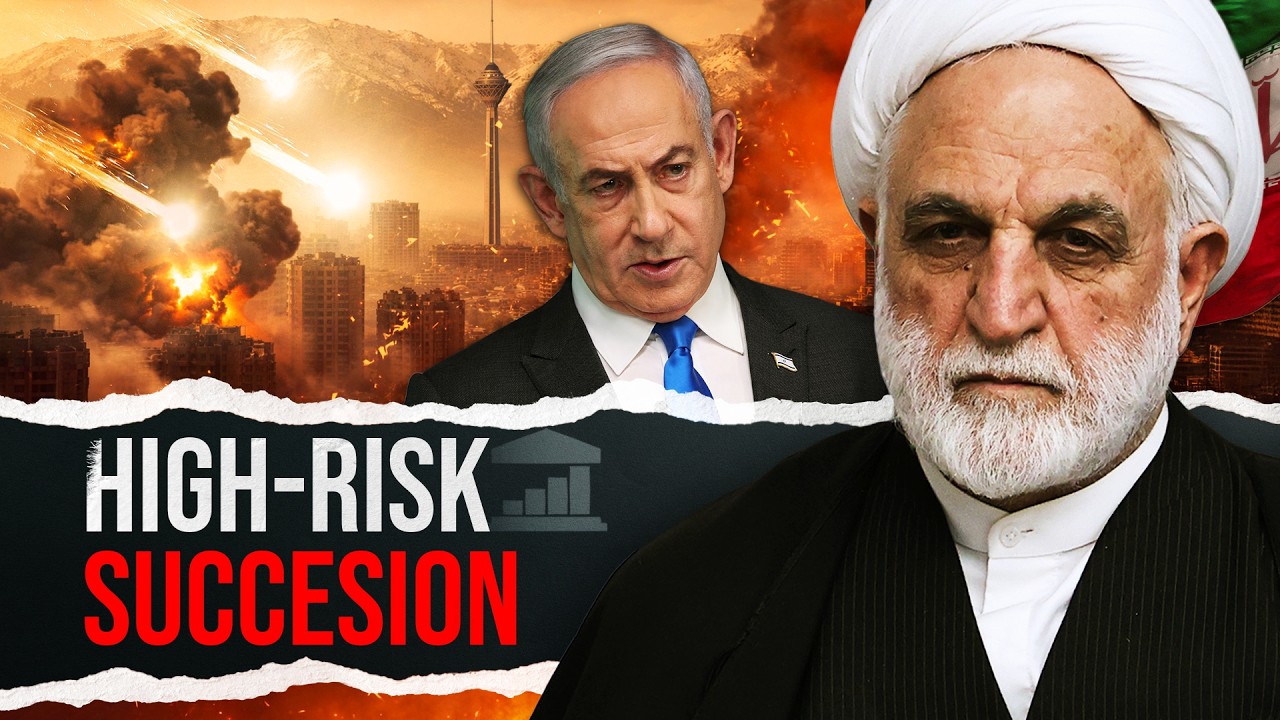
Israel presses Tehran
By March 8, 2026, Israel’s campaign against Iran no longer looks like a tightly bounded military operation designed merely to restore deterrence. It now appears to be something broader, harsher, and more politically ambitious: an effort to keep striking until the Islamic Republic can no longer function with strategic coherence, political confidence, or an orderly chain of succession.What began with attacks on military, leadership, and nuclear-related targets has moved steadily closer to the core machinery of power. The shift is unmistakable. Israel is not only trying to degrade missiles, commanders, and command networks. It is also bearing down on the institutions that allow clerical rule to intimidate society, absorb shocks, and recover after crisis. The logic is brutal but clear: a regime can survive heavy battlefield damage if its internal organs of coercion and succession remain intact. Once those organs begin to fracture, however, a military campaign starts to bleed into a political one.That is why the death of Ali Khamenei changed the meaning of the war. Removing the supreme leader did not simply decapitate the man at the top of the system. It forced Iran into the most sensitive test the Islamic Republic can face in wartime: whether it can reproduce legitimacy and authority fast enough to prevent elite panic, institutional rivalry, and public defiance. In ordinary times, succession in Iran is opaque by design. In wartime, under bombardment, opacity becomes weakness. Uncertainty multiplies. Rumor becomes strategy. Every delay in producing a stable successor creates space for fear, hedging, and internal competition.Iran may still move quickly to formalize a new supreme leader. Reports now indicate that the body responsible for choosing the next leader has reached a decision, even if the identity of that choice has not yet been officially unveiled. But speed is not the same as stability. A successor selected under bombardment, under threat, and under suspicion of outside manipulation would inherit authority under siege from the first moment. In practical terms, that means the regime is trying to project continuity while the ground beneath it is still shaking.Israel seems determined to exploit exactly that vulnerability. Its public rhetoric has become far more explicit than the old language of deterrence or preemption. Israeli leaders are no longer speaking only about removing immediate threats. They are openly describing a war that could create the conditions in which Iranians themselves bring down the system. That matters because language follows intent. States do not repeatedly invoke the possibility of internal collapse unless they believe the battlefield and the political arena are beginning to merge.The strategic logic now visible is that Israel is not preparing to stop at symbolic punishment. It is pressing forward with a theory of victory that blends military attrition, leadership decapitation, succession chaos, and pressure on internal repression. In that framework, air power is not meant to conquer Iran in any conventional sense. It is meant to hollow out the regime’s ability to command, to frighten, and to replace itself.Seen through that lens, Israel’s widening target selection makes grim sense. Strikes against organs of internal security are about more than military efficiency. They are about weakening the very structures that monitored dissidents, suppressed protest movements, enforced fear, and kept the streets manageable whenever public anger surged. Attacks on fuel depots and energy infrastructure serve a parallel purpose. They do not merely increase the cost of war for Tehran; they test the state’s ability to preserve daily life in the capital. A regime that cannot keep fuel flowing, smoke off the skyline, and basic confidence intact starts to look less like an enduring order and more like a system under slow liquidation.Israel also appears to believe that this moment is unusually favorable because the war is landing on top of a pre-existing domestic crisis. Iran was already under severe internal strain before the latest wave of strikes. The economy had been battered by sanctions, currency collapse, inflation, shortages, blackouts, and chronic water stress. Public anger had already spilled into the streets. What makes the present moment especially dangerous for Tehran is not only that people are exhausted, but that the base of discontent has widened. Social exhaustion, merchant unrest, student anger, and the steady erosion of economic confidence can be managed one by one. When they begin to overlap, authoritarian systems stop looking immovable.That social dimension matters enormously. Governments can often suppress unrest when it is confined to students, activists, or a single urban class. It becomes more serious when discontent reaches people who usually prefer order to upheaval: traders, families worried about food prices, workers struggling with shortages, and citizens who may not share the same ideology but do share the same exhaustion. A regime loses more than popularity when that happens. It loses the sense that daily life, however difficult, still has a workable center.Yet collapse is not automatic. Regimes built on fear, patronage, and force often survive far longer than outside observers expect. Iran’s system still retains organized coercive power, ideological loyalists, and a security culture that was built precisely to withstand moments like this. The Revolutionary Guard remains the most decisive institution in the country, and history offers no guarantee that pressure from the air will produce a democratic opening on the ground. There is an equally serious possibility that the opposite could happen: that a weakened clerical order gives way not to pluralism, but to a more nakedly militarized state dominated by hardline security factions.That is one of the central uncertainties now hanging over the succession. Iran’s constitutional framework provides a temporary leadership mechanism and assigns the task of choosing a new supreme leader to the clerical establishment. In theory, that offers continuity. In practice, continuity is exactly what Israel appears unwilling to allow. By signaling that any successor who preserves the same strategic line could also become a target, Israel is turning succession itself into a battlefield. The aim, in effect, is not merely to kill a leader, but to break the regime’s confidence that leadership can be regenerated at all.This is a profound shift. Deterrence usually works by threatening pain if an adversary acts. What is emerging here looks closer to regime denial: the effort to convince Tehran that it may no longer be able to maintain a functioning model of rule. Once that threshold is crossed, the question is no longer only whether Iran can retaliate. It is whether Iran can still govern.That is why the phrase “Israel won’t let up” should now be taken literally. From Jerusalem’s perspective, stopping too soon may be more dangerous than continuing. A paused campaign could leave a bruised but surviving regime determined to rebuild, rearm, and retaliate with even greater urgency. An incomplete victory would allow Tehran to present survival itself as triumph, purge internal hesitation, and return later with a sharper sense of strategic revenge. For Israeli decision-makers, the conclusion seems to be that if the Islamic Republic remains intact at the center, then even serious battlefield damage may prove temporary.Yet the costs of pursuing this logic are already immense and rising. The war has produced a mounting civilian death toll inside Iran, severe damage across several fronts, toxic smoke over Tehran, regional strikes on critical infrastructure, and expanding instability far beyond the immediate battlefield. Lebanon is bleeding again. Gulf states are being dragged deeper into the conflict. Energy markets are on edge. What began as a direct confrontation has become a region-wide stress test of state resilience, civilian endurance, and international restraint.Nor is there any clean political endgame in sight. Even if Israel succeeds in pushing the clerical system toward fracture, what comes next remains deeply uncertain. A public uprising is not a government. A leadership vacuum is not a constitution. The Iranian opposition is diverse, divided, and burdened by history. Many Iranians may despise the current order without wanting their future written by foreign bombardment. Others may welcome the weakening of the state’s coercive apparatus while rejecting any externally favored replacement. National anger against the regime and national anger against foreign attack can coexist at the same time. That is one reason why regime change is always easier to imagine than to stabilize.Still, one conclusion is now difficult to avoid. Israel is no longer treating the survival of the Islamic Republic as a tolerable outcome so long as its missiles and nuclear infrastructure are degraded. It is increasingly treating regime durability itself as part of the threat. That is the real significance of the present moment. The campaign is not just about what Iran has. It is about what Iran is: a clerical-security state that Israeli leaders now appear to believe cannot be safely contained if it remains politically intact.As of March 8, 2026, the gamble is therefore stark. Israel seems to believe that sustained pressure can turn military disruption into political decomposition. Iran, meanwhile, is trying to prove that even after the death of its supreme leader, the state can still reproduce authority, suppress panic, and project continuity. One side is pushing for breakdown. The other is fighting for survival.Whether that struggle ends in regime collapse, regime mutation, or prolonged regional war remains unknown. But the direction of travel is already clear. Israel is not acting as if this war ends with a repaired deterrent balance. It is acting as if the war ends only when the system that threatened it can no longer stand in recognizable form.
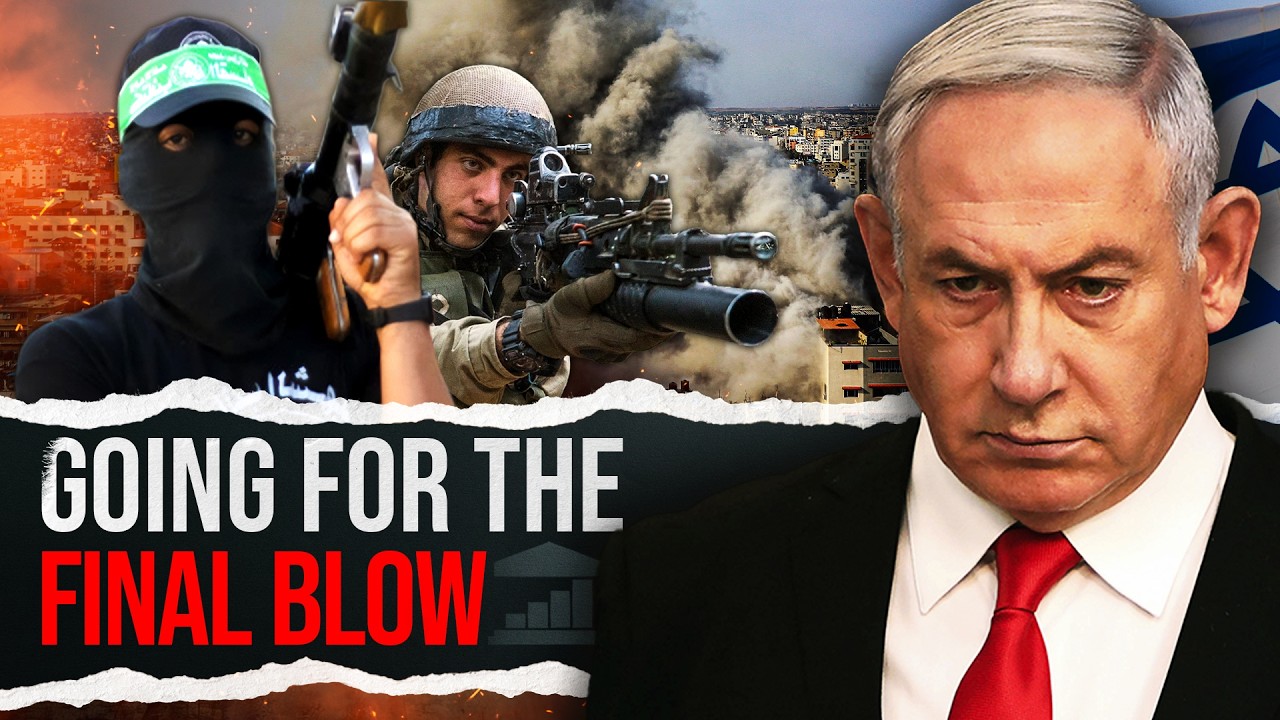
Is that Israel's final blow?
What is unfolding now is no longer a contained exchange across a tense frontier. It is the visible emergence of a two-front Israeli campaign whose logic is becoming harder to ignore: weaken the Ayatollah-led order in Tehran, and at the same time cripple the armed movement that gives it strategic reach into Lebanon. Israel’s military posture and political messaging increasingly suggest that this is not merely about absorbing attacks and replying with greater force. It is about changing the strategic order between Tehran, Beirut and Israel’s northern border. In that sense, the war against Iran and the war against Hezbollah are no longer separate files. They are part of the same attempt to dismantle an interconnected system of pressure.Hezbollah’s latest intervention makes that point unmistakable. By launching attacks from Lebanon as Israel intensified pressure on Iran, the movement behaved exactly as Israeli planners have long feared it would: not simply as a Lebanese force with its own local agenda, but as Iran’s forward shield. Hezbollah did not step into the crisis to defend a national Lebanese consensus. It stepped in because its strategic value lies in protecting Iran’s regional deterrent and preserving Tehran’s capacity to project power through proxy warfare. That is the core of the current moment, and it is why the confrontation has expanded so quickly. From an Israeli perspective, if Hezbollah mobilizes whenever Tehran is under direct threat, then leaving Hezbollah intact would mean accepting that any future clash with Iran will always reopen the northern front.This is also why the northern theater has never been a secondary issue for Israel. For years, the country has lived with the reality that Hezbollah can menace civilian communities with rockets, drones, anti-tank weapons, infiltrations and fortified positions close to the border. Even during periods officially described as calmer, Israeli officials maintained that Hezbollah was trying to rebuild, reorganize and preserve the option of renewed escalation. The problem, in Israeli eyes, has never been a single barrage or a single border incident. The problem has been the continued existence of a heavily armed Iranian-backed force that can decide when the north burns and when it does not. No Israeli government that takes that assessment seriously can regard Hezbollah as a manageable nuisance. It sees Hezbollah as a structural threat.The wider security framework on the Lebanese front has clearly decayed. The arrangements that were meant to preserve a fragile calm after earlier rounds of war no longer command real compliance. Cross-border fire, repeated strikes, violations along the frontier and the visible militarization of the border zone have exposed how much of the old order has already broken down. Civilians on both sides have once again paid the price through evacuations, displacement and the constant fear that a single exchange can become a regional war. In such conditions, Israel appears to have concluded that the age of partial fixes is over. A front that remains permanently unstable is, in practice, a front that remains strategically lost.That is why the current phase looks less like retaliation and more like an attempt at strategic rollback. Israel is not only trying to reduce immediate threats. It appears intent on forcing a more decisive change in the balance of power. In Iran, that means pressuring the regime’s military and coercive architecture. In Lebanon, it means degrading Hezbollah so deeply that it can no longer function as Tehran’s reliable northern sword. The sequencing matters. If Iran is weakened but Hezbollah remains strong, then Tehran preserves a critical tool of future coercion. If Hezbollah is hurt but Iran’s regional system remains intact, the movement can eventually be rebuilt. Israeli strategy increasingly seems designed to avoid that half-finished outcome by hitting both centers of pressure at once.The timing is not accidental. Hezbollah remains one of the most formidable non-state armed organizations in the region, but it is also operating in a more difficult environment than before. It has absorbed attrition, leadership losses, sustained intelligence penetration and repeated blows to its infrastructure. Its room for maneuver is narrower, its political surroundings harsher and its public narrative less secure than in periods when it could more easily present itself as the undisputed guardian of Lebanese dignity. A movement built on discipline, endurance and myth can survive a great deal of punishment. But even such movements become vulnerable when military pressure coincides with strategic overextension and domestic fatigue.Lebanon’s internal response to the latest escalation is therefore one of the most revealing parts of the story. Instead of closing ranks around Hezbollah, state institutions and large parts of the political class have taken a markedly sharper tone, insisting that decisions of war and peace cannot continue to be made by an armed organization operating beyond full state control. For ordinary Lebanese civilians, the immediate meaning of that shift is grim rather than abstract: renewed displacement, fear of deeper incursions and the sense that the country is once again paying the price for decisions taken outside the state’s authority. That mood matters. It does not disarm Hezbollah overnight, nor does it erase the movement’s social base, military networks or capacity for coercion. But it does show that Hezbollah is confronting a deeper legitimacy problem inside Lebanon at precisely the moment Israel is escalating. In strategic terms, that is a dangerous combination for the group: external pressure and internal isolation reinforcing one another.None of this, however, means that Israel is on the verge of an easy victory. Hezbollah remains dangerous, adaptive and deeply embedded. It has veteran fighters, decentralized capabilities, local intelligence, underground infrastructure and the ability to continue operating under heavy pressure. Southern Lebanon is not a blank map waiting to be redrawn. It is dense, political and emotionally charged terrain, where every military move carries the risk of civilian suffering, international backlash and unintended escalation. Israel may be able to damage Hezbollah severely. Turning that damage into lasting strategic irrelevance is a much harder task. The history of the region is full of campaigns that succeeded tactically but failed to settle the political question that came after them.That is where the gamble becomes stark. If Israel is truly moving from deterrence to destruction of Hezbollah’s military relevance, of Iran’s regional reach and perhaps even of the confidence of Iran’s ruling order, it is embracing a campaign of enormous consequences. Military superiority can break command structures, logistics chains and missile stockpiles. It cannot, by itself, guarantee a stable political end state in Beirut or Tehran. A weakened Hezbollah does not automatically produce a sovereign Lebanese state capable of monopolizing force. A battered Iranian regime does not automatically yield a coherent post-crisis order. Vacuums in the Middle East have a habit of filling themselves with fresh instability.Even so, the logic driving Israel is not difficult to understand. From Jerusalem’s perspective, the old equilibrium had become intolerable long before this latest escalation. That equilibrium meant a northern border that could never truly normalize, an Iranian regional network that could always activate multiple fronts and a deterrence model that forced Israel to live under the shadow of future wars it did not choose. Once Hezbollah entered the widening confrontation to shield Iran’s position, the case for a narrower Israeli response became much harder to sustain. In Israeli strategic thinking, the northern problem and the Tehran problem ceased to be separable. If one keeps feeding the other, both must be addressed together.The rhetoric surrounding Iran points in the same direction. Public language from Israeli leaders has increasingly gone beyond the technical vocabulary of preemption, nuclear delay and immediate self-defense. It has moved toward the language of rupture: not merely containing Iranian power, but helping bring about the end of the order that projects it. That does not amount to a detailed roadmap for regime change, and it certainly does not ensure that such an outcome is achievable. But it does reveal the scale of current ambition. Israel no longer appears satisfied with managing the symptoms of the Iranian challenge. It seems to be reaching for the possibility of breaking its strategic center of gravity.The phrase “final blow” therefore captures something real, even if the outcome remains uncertain. What Israel appears to want now is not only to defeat attacks in the present, but to dismantle the architecture that makes those attacks recurrent: the link between Tehran’s ruling establishment, Hezbollah’s armed power and the permanent insecurity of the northern frontier. Whether that ambition can be fulfilled is another matter. Hezbollah can be pushed back without disappearing. Iran can be struck hard without producing a stable transformation. Lebanon can resent Hezbollah more deeply and still remain too weak to impose a lasting monopoly of force. Yet the direction of travel is now unmistakable. This is no longer a war merely to contain enemies. It is an attempt to break the system that binds them.
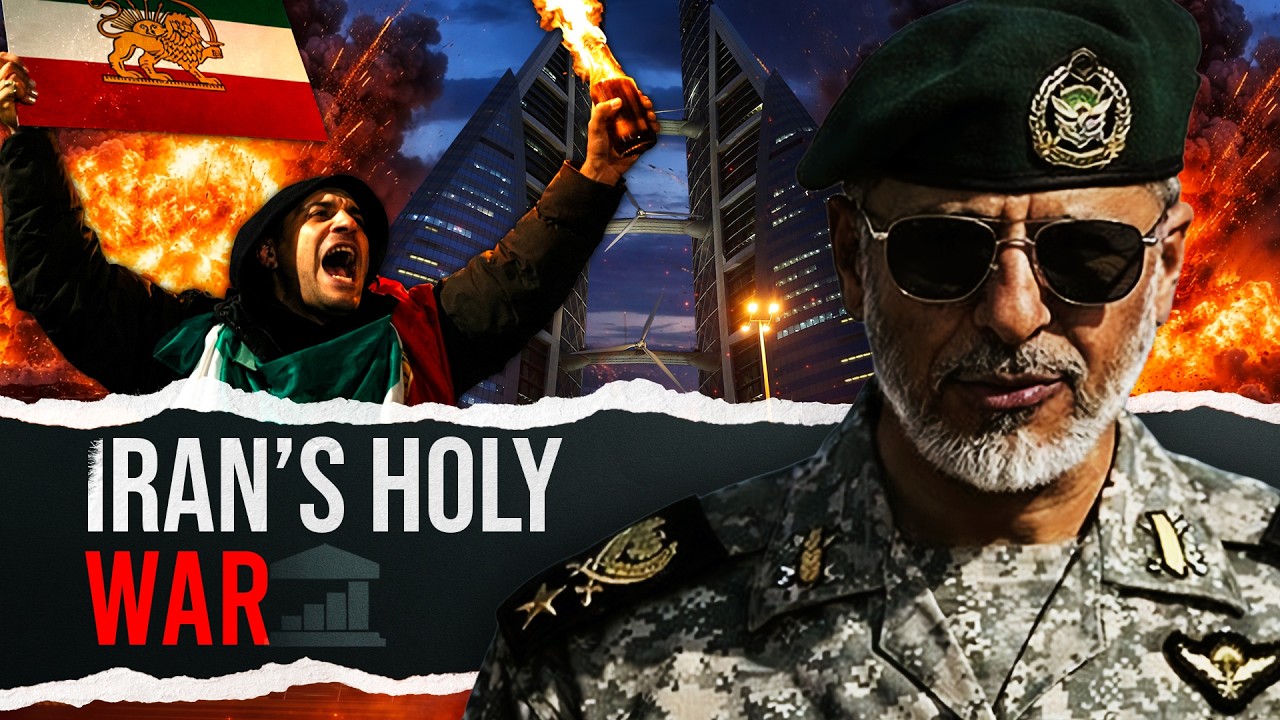
Iran and the holy War risk
For now, Iran does not appear to be launching a formal holy war. But the question is no longer rhetorical. After the bombings that turned a long shadow conflict into an open regional war, religious language has moved from symbolic background noise toward the center of state messaging. The more important issue is not whether Tehran will suddenly summon the Muslim world into a single, borderless struggle. It is whether the Islamic Republic will fuse military retaliation, political succession, proxy activation and sacred rhetoric into a broader campaign that functions like a holy war without ever formally declaring one.The current crisis is already historic. Since the joint U.S.-Israeli attack of February 28, which killed Supreme Leader Ali Khamenei and struck Iranian state and military targets, the conflict has spread across Israel, Lebanon, the Gulf and the energy corridors that underpin the global economy. Public death tolls inside Iran alone have climbed into the four figures. Even though international nuclear inspectors said early in the campaign that they had no indication several key nuclear installations had been hit or that radiation had spread beyond normal levels, later stages of the war clearly broadened toward oil storage, airports, command sites and urban infrastructure. This is no longer a contained deterrence exchange. It is a live contest over regime survival, regional order and strategic endurance.That is precisely why the phrase “holy war” must be handled with care. In January, influential voices inside Iran had already warned that any attack on the Supreme Leader would amount to a declaration of war against the wider Islamic world and could require a jihad decree. That language mattered then, and it matters even more now because the red line was crossed. Tehran can plausibly argue to its own hard-line base that the highest religious and political authority in the Islamic Republic was not merely challenged but assassinated. In ideological terms, that transforms retaliation from a policy choice into a sacred obligation. In political terms, it gives hard-liners a ready-made framework for widening the war.Yet rhetoric is not the same as doctrine, and doctrine is not the same as operational behavior. Iran’s response so far looks less like an uncontrolled call to universal religious uprising than a grim, state-directed campaign of calibrated punishment. Tehran has struck back with missiles, drones, maritime pressure and pressure on regional hosts of U.S. military power. It has also tried to impose costs on the world economy by turning the Gulf and the Strait of Hormuz into instruments of leverage. This is not the behavior of a leadership abandoning strategy for blind zeal. It is the behavior of a regime trying to survive by making the war too costly, too wide and too economically dangerous for its enemies to sustain indefinitely.That distinction matters. A genuine, formal holy war would imply a sweeping call for open-ended religious mobilization across borders, one that subordinates ordinary state interests to an all-consuming theological struggle. Iran has not done that in any clear, universal sense. It has instead behaved as a revolutionary state that uses sacred language to reinforce legitimacy, discipline supporters and justify retaliation. That model predates the current crisis. The Islamic Republic has always blended theology, nationalism, martyrdom culture, anti-Western resistance and hard security logic. The bombings have intensified that blend, but they have not erased the regime’s instinct for calculation.The strongest evidence against an immediate full holy-war scenario is inside Iran itself. The system’s first imperative has not been global mobilization; it has been continuity. Even after decapitation strikes, the state moved to preserve command structures, delegate powers downward and push the Assembly of Experts toward selecting a successor. By March 8, that succession process had reportedly advanced to the point where a decision had been reached, even if the name had not yet been publicly revealed. That is a survival reflex. Regimes preparing for limitless religious war do not usually prioritize constitutional succession, elite cohesion and internal control. Regimes fighting for their lives do.Iran’s regional behavior also shows tension between ideological fury and strategic restraint. President Masoud Pezeshkian’s apology to Gulf neighbors was extraordinary, not because it ended the war, but because it exposed the conflict inside Tehran’s own response. On one side sits the logic of escalation: punish every state that hosts U.S. forces, widen the crisis, raise oil prices, frighten shipping markets and prove that the bombardment of Iran cannot remain geographically contained. On the other side sits the logic of isolation avoidance: do not drive every Arab state irreversibly into the opposing camp, do not convert every neighbor into an active launchpad for anti-Iran operations, and do not make regime survival impossible by fighting the entire region at once.This internal contradiction is one reason the phrase “holy war” can mislead. What is unfolding is more dangerous in practical terms and more limited in formal terms. Iran may never issue a clean, universal call for a civilizational war against all enemies of Islam, yet it can still encourage clerical sanction, mobilize militias, inspire cross-border attacks, bless cyber retaliation, empower covert cells and unleash proxy violence under a sacred frame. That would be a hybrid escalation: not a single global summons, but a diffuse religious legitimization of a long, dirty regional war. For civilians, ports, airports, desalination plants, shipping lanes and energy markets, the difference may feel almost academic.The role of Iran’s allied armed networks reinforces that point. Hezbollah has entered the conflict, but not from a position of unchallenged strength. Its intervention has deepened political strain in Lebanon and highlighted how even Iran’s most loyal partners are balancing solidarity against self-preservation. Other aligned groups face similar pressures. The so-called axis can still hurt Israel, U.S. assets and regional infrastructure, but it is not a frictionless machine awaiting one theological command to move in perfect unity. The more Tehran leans on proxies, the more it reveals that its preferred method remains layered coercion, not a single dramatic declaration of holy war.There is also a sectarian and geopolitical reality that limits the holy-war model. The Muslim world is not a single mobilizable bloc waiting for instructions from Tehran. Iran is a Shiite theocratic state with revolutionary ambitions, but its appeal across Sunni-majority states is uneven at best and sharply contested at worst. Gulf monarchies, already targeted by Iranian missiles and drones, are not natural participants in an Iranian-led sacred struggle. Many of them fear Tehran at least as much as they oppose the bombing campaign against it. That means Iran’s religious messaging may galvanize sympathizers, militants and ideological fellow travelers, but it is unlikely to unify the wider Islamic world behind one war banner.Still, dismissing the danger would be a grave mistake. The holy-war language matters because words can widen the menu of violence. Once a conflict is framed as sacred defense rather than national retaliation alone, thresholds can drop. Assassinations, sabotage, maritime attacks, strikes on civilian-linked infrastructure and violence by semi-deniable actors all become easier to justify. A state under bombardment, mourning its supreme leader and fighting for institutional survival may decide that conventional retaliation is not enough. If Tehran concludes that it cannot win symmetrically, it may authorize a looser, more ideological pattern of warfare stretching from the Gulf to the Mediterranean and beyond.The economic front is equally important. Iran understands that energy fear can be weaponized. Even limited disruption in the Strait of Hormuz sends shockwaves through insurance, shipping, aviation and inflation expectations worldwide. That leverage is politically valuable because it turns a military confrontation into a global pressure campaign. A formal holy war would demand maximal ideological mobilization. A survival war, by contrast, rewards selective disruption, ambiguity and controlled chaos. Tehran’s actions so far fit the second model more closely than the first.This is why the most serious answer to the headline question is not a simple yes or no. Iran is unlikely to launch a classic holy war in the simplistic sense of a formal, total religious call to arms that instantly unites the Muslim world under its banner. But it is already moving toward something more contemporary and, in some ways, more destabilizing: a war of survival wrapped in sacred legitimacy, regional coercion and asymmetric retaliation. The bombings have not merely invited revenge. They have strengthened the argument of those in Tehran who believe compromise invites death and that only resistance sanctified by faith can preserve the system.So the real risk is not that Iran suddenly abandons strategy for theology. The real risk is that strategy and theology fuse more tightly than before. If that fusion hardens, the war will not remain a sequence of missile exchanges and air raids. It will become a broader contest over succession, legitimacy, energy, maritime freedom, proxy warfare and the right to define resistance as a religious duty. In that environment, the phrase “holy war” may remain officially ambiguous, but its practical effects could become visible across the entire region.
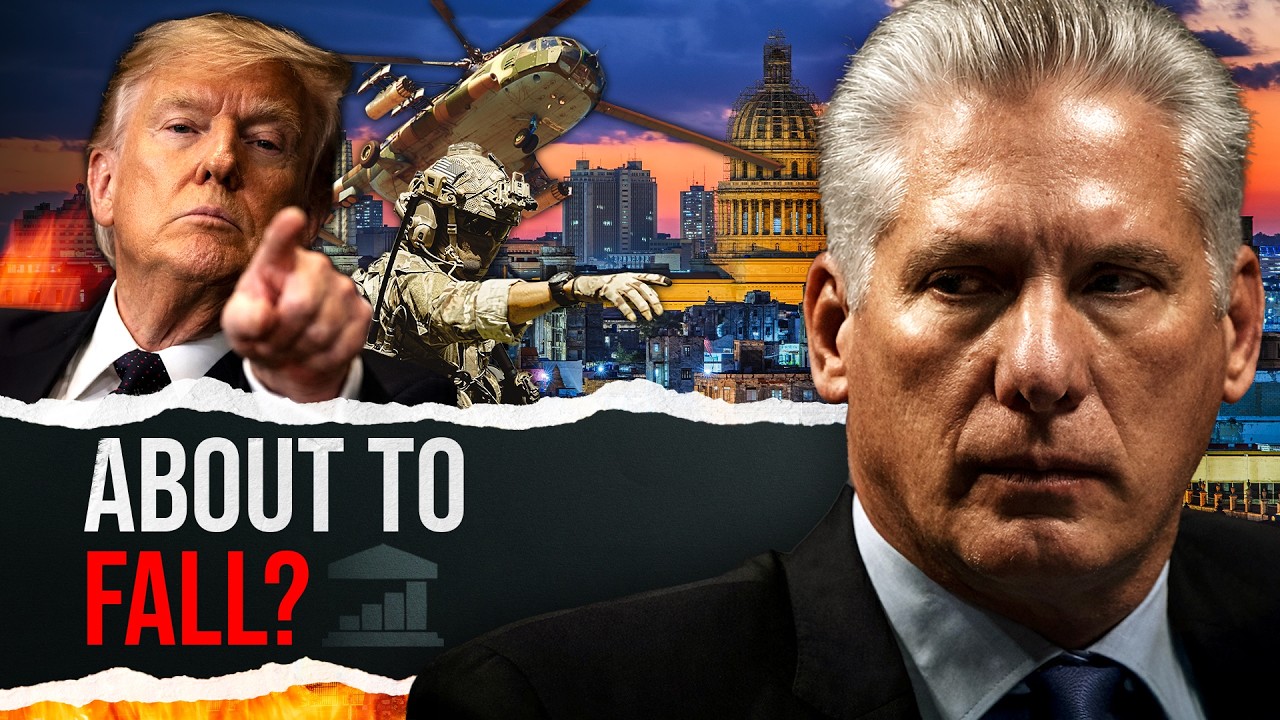
Cuban regime nears collapse
The communist regime founded by Fidel Castro and later inherited by his brother Raúl Castro is facing its worst legitimacy crisis in decades. The government of President Miguel Díaz‑Canel, who succeeded the Castro brothers, is under intense pressure from economic collapse, widening black‑outs and international isolation. For the first time since the 1959 revolution, senior Cuban officials have been drawn into secret talks that many interpret as negotiations for a managed surrender.Fuel shortages and humanitarian collapseIn recent months, the United States has tightened its embargo on Cuba by interdicting shipments of Venezuelan crude oil, the island’s main fuel source. The action has crippled Cuba’s ageing power grid. In mid‑March, the national electrical system collapsed, leaving more than ten million people without power and forcing rationing and rolling blackouts. Without diesel for generators or petrol for transport, food prices have spiked and buses have stopped running. Even Cuba’s allies have sounded the alarm. UN Secretary‑General António Guterres warned that continued disruption of oil supplies could lead to a humanitarian “collapse” on the island. Mexico promised emergency shipments, but fears of U.S. tariffs have limited how much oil can actually be delivered. The United Nations reports that fuel shortages have forced hospitals to prioritise surgeries and that chronic medication shortages are reaching crisis levels.Secret talks and political manoeuvringAgainst this backdrop of scarcity, multiple sources report that the Díaz‑Canel government has quietly opened channels to Washington. In a press conference on 13 March 2026, Díaz‑Canel acknowledged for the first time that “processes of this nature require discretion” and said dialogue was taking place, though he refused to provide details. According to investigative reports, advisers to the U.S. Secretary of State have held informal meetings with Raúl Castro’s grandson, Raúl Guillermo Rodríguez Castro (“Raulito”). The United States is reportedly pressing for Díaz‑Canel’s removal but wants to avoid a chaotic collapse. Cuba has responded with gestures meant to curry favour: it recently freed 51 political prisoners, announced it will allow Cuban‑Americans to invest in businesses on the island and has lifted restrictions preventing foreign residents from owning private enterprises.Yet Cuban authorities publicly deny that leadership succession is part of the negotiations. Deputy Foreign Minister Carlos Fernández de Cossio told reporters that Cuba’s political system is not up for negotiation. He characterised the U.S. pressure campaign as a “take Cuba” strategy and insisted that the country’s sovereignty will not be traded away. Such statements have not quelled speculation. Analysts believe that if Díaz‑Canel resigns in exchange for relief from sanctions and guarantees for the Castro family’s safety, power could pass to younger technocrats or a transitional council.Public anger and calls for changeOn the streets, patience is running out. Long queues for bread and sporadic electricity have eroded whatever legitimacy the revolutionary government still possesses. Many Cubans complain that after more than sixty years, the revolutionary rhetoric has produced little beyond a hereditary elite—a common criticism voiced by citizens and diaspora commentators. They argue that the Castro family, despite claiming to have built an egalitarian society, has effectively become a dynastic monarchy. Commenters on social media observe that while the government blames external enemies, ordinary people bear the brunt of shortages and crumbling infrastructure. Some express hope that the island could soon open to the world and that Cubans abroad will be able to return and rebuild a free country.These sentiments find echo in protests. Over the past year, small but persistent demonstrations have erupted in Havana, Santiago and smaller towns, with slogans calling for “Libertad” and demanding an end to power cuts. Security forces have arrested dozens, but cracks are showing. Reports suggest that even within the ruling party there is discontent over the handling of the crisis. Younger officials complain that the leadership is out of touch and that the revolution has degenerated into bureaucratic stagnation. Rumours that a negotiated transition could avert a violent upheaval have gained currency.A fragile transitionWhether the Castro regime will agree to surrender power peacefully remains uncertain. The humanitarian situation is dire, and regional actors such as Mexico and the United Nations are pushing for a resolution to prevent mass migration or state collapse. The United States insists that any easing of sanctions will be contingent on political liberalisation and free elections. Sources close to the talks claim that the parties are discussing a timetable for constitutional reforms, the integration of opposition figures and guarantees for members of the security services, but no agreement has been finalised. For now, Cuba teeters on the precipice between reform and breakdown. The coming months will test whether the revolutionary regime founded by Fidel Castro can orchestrate a controlled handover or whether the island’s deepening crises will force a more chaotic denouement.
No red lines: Israel vs Iran
On 28 February 2026 a joint United States–Israeli operation launched hundreds of airstrikes across Iran. Fighter jets and drones pounded Tehran, Qom, Isfahan and other provincial capitals in a campaign designed to demolish Iran’s air defences, ballistic‑missile infrastructure and nuclear facilities. Among the dead were Iran’s supreme leader Ayatollah Ali Khamenei, the head of the Islamic Revolutionary Guard Corps (IRGC), and several senior commanders. The unprecedented strike also devastated civilian targets: a girls’ primary school near an IRGC complex was hit, killing scores of children, and human rights groups estimate that thousands of civilians died.The strikes were as much psychological as military. By targeting the leadership’s command structures, the United States and Israel sought to demonstrate that no Iranian official was beyond reach. The Strait of Hormuz was closed after Iran retaliated with missiles against Gulf shipping, sending oil prices soaring and prompting panicked stockpiling worldwide. In the days that followed, scattered celebrations by anti‑government Iranians contrasted sharply with scenes of mourning and calls for revenge from regime loyalists.Resilience of the RegimeThe decapitation strategy did not produce the immediate collapse some in Washington and Jerusalem predicted. Iran’s political system is deliberately diffuse: power flows through parallel institutions, including the Artesh (regular armed forces), the IRGC and the Basij militias. A temporary council made up of the Iranian president, the head of the judiciary and a senior jurist from the Guardian Council assumed the duties of the supreme leader. Security forces continued to enforce order, arresting dissidents and suppressing protests.Military analysts noted that Iran’s network of ballistic‑missile silos, drone bases and naval installations remained largely intact. The Red Crescent recorded hundreds of strikes across more than two dozen provinces, yet Iran still managed to launch retaliatory barrages against Israel. Western intelligence believes that Tehran preserved much of its missile arsenal and relocated key components underground.Economic Targets and Regional FalloutAs the war escalated, Israeli jets struck the Asaluyeh natural‑gas hub and facilities at the South Pars field. Those attacks signalled a shift towards economic warfare. Asaluyeh is the heart of Iran’s gas industry, processing gas from the massive South Pars/North Dome field shared with Qatar. Damage there disrupted liquefied natural gas exports, rattled global energy markets and drew condemnation from Gulf states. Qatar responded by expelling Iran’s military attaché after Iranian forces retaliated near the Ras Laffan hub. Tehran warned that any attacks on its energy infrastructure would be met with strikes on regional facilities, raising fears of a broader conflict engulfing the Gulf.International Reaction and Legal ConcernsThe scale of civilian casualties drew sharp criticism from international organisations. The United Nations called for an immediate ceasefire, while Russia and China denounced the strikes as reckless and destabilising. Reports that cluster munitions were used on populated areas sparked debate about violations of international humanitarian law. Humanitarian agencies warned of a looming crisis as hospitals overflowed with casualties and millions faced disrupted water and electricity supplies.Meanwhile, the United States increased its military presence in the Gulf and Eastern Mediterranean, arguing that deterrence required persistent force. European leaders struggled to keep critical shipping lanes open as insurance rates spiked and crews refused to navigate the Strait of Hormuz. Energy importers began drawing down strategic reserves, fearing a protracted closure.Debate Over DecapitationSecurity experts are divided over the efficacy of targeting leaders. Critics argue that the Islamic Republic is not a one‑man show. Removing a supreme leader eliminates a symbol but does little to dismantle the structures that sustain the regime. The Iranian constitution provides for succession mechanisms; killing moderates may simply elevate more radical figures. Experiences with non‑state actors such as Hamas and Hezbollah show that leadership decapitation often hardens movements rather than dissolving them. Moreover, Western analysts warn that Iran’s dual military structure and deeply entrenched institutions make a decisive defeat unlikely without a large‑scale occupation.Proponents of the strikes counter that the removal of charismatic leaders weakens coherence and sows confusion. They point to public anger over economic hardship, corruption and repression as evidence that Iranian society is nearing a tipping point. In their view, prolonged pressure could erode the regime’s legitimacy and encourage defections.Public Sentiment and Uncertain FutureAmong foreign observers and diasporic communities, the strikes generated a wave of commentary. Some expressed astonishment at the reach of Israeli intelligence, joking that Tehran must now confront a wave of “vacancies” in its hierarchy. Others questioned how much further hard‑line policies could go when the government already controlled the judiciary, the media and the armed forces. There is speculation that younger cadres of ideologues are waiting to step into the power vacuum and that the system has trained successors precisely for such crises. Skeptics, however, note that any replacement could be removed just as swiftly and that the underlying grievances – economic mismanagement, political repression and regional isolation – will continue to feed unrest.There is also unease about the long‑term consequences. Some fear that decapitation will radicalise the state further, pushing it towards more indiscriminate violence at home and abroad. Others warn that a leaderless Iran could fracture, plunging the region into chaos. Conversely, optimists hope that the loss of revered figures will open space for reformist voices, though hard‑liners currently dominate. Even those who welcome the blows against a repressive regime acknowledge that prolonged conflict risks humanitarian catastrophe and escalates the chances of miscalculation.Conclusion and Future?The strikes on Iran’s leadership have reshaped the Middle East. By demonstrating that no bunker or compound is impregnable, Israel and the United States have shattered a key pillar of the Islamic Republic’s authority. Yet the regime’s structural resilience and the complex web of regional alliances mean that an end to the conflict is far from certain. Iran’s capacity to absorb punishment, reorganise and retaliate suggests that the war will drag on, with devastating consequences for civilians and the global economy. As oil tankers queue outside the Strait of Hormuz and hospitals in Tehran overflow, the world watches anxiously to see whether the decapitation strategy will hasten change or entrench the cycle of violence.
30 Days to Save the Economy?
The United States finds itself once again at the crossroads of war and economic stability. In late February 2026 the White House authorised joint strikes with Israel on Iranian targets, assassinating the country’s supreme leader and damaging military and civilian infrastructure. Iran responded by shutting the Strait of Hormuz, the chokepoint through which roughly a fifth of the world’s crude oil travels. In the weeks that followed, global benchmark oil prices surged past $100 per barrel and gasoline in the United States climbed towards $4 per gallon. Economists fear that a prolonged campaign could inflict a painful bout of stagflation – the toxic combination of soaring prices and stagnating growth last seen in the 1970s.President Donald Trump initially suggested the military campaign would be over within four to five weeks. Those four weeks will expire in late March. Investors and households are watching anxiously to see whether the president will de‑escalate before the economic damage becomes entrenched. The question is not merely whether the conflict is winnable but whether the United States can afford an extended confrontation while its labour market is weakening and inflation remains stubbornly above the Federal Reserve’s target.A sharp energy price shockThe closure of the Strait of Hormuz has squeezed global oil supplies, sending Brent crude above $100 a barrel and threatening to push it to $150 if the conflict drags on. The International Energy Agency described the disruption as the largest in the history of the global oil market. Tanker operators have hesitated to sail through the chokepoint despite offers of naval escorts, and insurers have demanded higher premiums. The prospect of drones and missile attacks on oil tankers and refineries in Gulf states has added to the sense of peril.Higher oil prices are feeding directly into consumer inflation. Petrol prices in the United States, which averaged roughly $3 per gallon before the conflict, are poised to reach $4. Aviation fuel and diesel have risen even faster, increasing freight and airline ticket costs. Natural gas prices, which often track oil, are also climbing. Though the United States now produces more oil and gas than it consumes, it remains integrated into global markets: domestic producers are selling at world prices, and any disruption to global supply pushes up domestic costs. Analysts note that every 5 % rise in oil prices adds roughly one‑tenth of a percentage point to inflation.Weakening labour marketThe energy shock has arrived when the jobs market is showing signs of fatigue. Employers unexpectedly cut 92,000 jobs in February, the first negative print since the pandemic, and the unemployment rate has ticked up to 4.4 %. Manufacturers and retailers cite weak demand and higher borrowing costs as reasons for redundancies. Construction activity has slowed as high mortgage rates deter new buyers. Consumer confidence has fallen, and people have begun to trim discretionary spending.A sluggish jobs market means households are less able to absorb higher living costs. Rising petrol and grocery prices, coupled with stagnant wages, erode real income. Economists warn that if the conflict persists into April the combination of soft employment and high inflation could trigger a classic wage‑price spiral: workers demand higher pay to offset rising prices, firms raise prices to cover wage bills, and inflation expectations become entrenched. In such a scenario the Federal Reserve would be caught between fighting inflation and supporting employment.Persistent inflation and policy dilemmaEven before the Iran war, core inflation was running around 3 %, above the Federal Reserve’s 2 % target. Shelter costs and services inflation proved sticky despite cooling goods prices. Policymakers were divided over whether to hold rates steady or cut them to support the labour market. The energy shock complicates this calculus. A spike in oil and gas prices boosts headline inflation and risks lifting core inflation through higher transportation and production costs. Yet raising interest rates to curb inflation could further weaken growth and employment.Analysts at Deutsche Bank argue that the longer oil stays above $100 per barrel, the greater the risk of a sustained stagflationary shock. Simulations by Oxford Economics suggest that if Brent crude averages $140 per barrel for two months, U.S. GDP growth would stall and unemployment would rise as businesses cut back. Even a milder scenario, with oil averaging $100 per barrel, could shave tenths of a percentage point from global growth. Such outcomes would mirror the 1970s, when oil embargoes triggered price spikes and recession.Financial markets on edgeEquity markets have been whiplashed by war headlines. Shares sank when the conflict began but recovered after the president hinted that the war was “very far ahead” of his four‑week timetable. Investors nonetheless remain nervous: home‑building and banking stocks have underperformed, while defence and energy companies have rallied. Rising energy costs have pushed bond yields higher, reflecting expectations of persistent inflation. Volatility indices have spiked, and safe‑haven assets such as gold have attracted inflows. If the war drags on, corporate earnings could be squeezed by higher costs and softer demand, deepening the market correction.Why thirty days mattersWhen President Trump authorised strikes on Iran, he reassured voters that the campaign would be brief. With mid‑term elections looming, his advisers understand that spiralling petrol prices and job losses could erode public support. The political significance of the thirty‑day marker lies in signalling whether the administration can deliver a quick victory or becomes bogged down in an open‑ended conflict. Should hostilities continue into April, markets may conclude that the president is prioritising geopolitical goals over domestic prosperity.The window is also critical for the Federal Reserve. Central bankers meet in early April to decide whether to adjust interest rates. A ceasefire before then would allow them to look through the temporary oil shock and focus on the labour market. Prolonged fighting, by contrast, could force them to choose between raising rates to contain inflation or cutting them to support growth – a decision reminiscent of the dilemmas faced during the oil crises of the 1970s.Political and public reactionsPublic opinion is deeply polarised. Supporters of the war argue that Iran’s nuclear ambitions and support for militant groups justify decisive action. Critics counter that the attack lacked congressional approval, violated international law, and risks drawing the United States into a protracted quagmire. Many citizens question the competence of the country’s leadership, suggesting that mismanagement at home and abroad has created a climate of perpetual crisis.Observers warn that war spending exacerbates fiscal strains. The national debt has climbed above $36 trillion, and financing a foreign campaign through borrowing could intensify pressure on bond markets and the dollar. Savers worry that inflation will erode their savings, while borrowers fear higher interest rates. Others see an opportunity to accelerate the transition to renewable energy, arguing that dependence on fossil fuels from the Middle East leaves the economy vulnerable to geopolitical shocks. These voices call for investments in electric vehicles, green infrastructure and domestic energy independence.Paths forwardEnding the war within the next thirty days could avert the worst economic outcomes. Diplomats and military strategists must work urgently towards a ceasefire that secures the Strait of Hormuz and ends drone and missile attacks. In parallel, the administration could pursue the following measures:- Release strategic reserves: Drawing from the Strategic Petroleum Reserve can provide temporary relief to fuel markets, signalling that the government will act to stabilise prices.- Targeted fiscal support: Temporary tax credits or subsidies for low‑income households can cushion the blow of higher energy costs without stoking inflationary pressures. Funding should be offset elsewhere to avoid widening the deficit.- Investment in resilience: Accelerating investment in renewable energy, domestic oil and gas infrastructure and electricity grids will reduce future vulnerability to external shocks.- Prudent monetary policy: The Federal Reserve should remain data‑dependent, considering both inflation and employment. A premature rate hike could choke off growth, while a hasty cut could stoke inflation expectations.- Rebuild alliances: Working with European and Asian partners to secure alternative energy routes and mediate an end to hostilities will distribute the burden of peacekeeping and restore confidence.And the Conclusion?The war with Iran has already delivered a stark warning: geopolitical adventures have real economic consequences. A brief campaign may have limited impact, but a drawn‑out conflict threatens to push the United States towards stagflation. Rising oil prices, job losses, and policy dilemmas are not abstract risks but daily realities for families and businesses. With the four‑week timetable closing, the president faces a decision that will define both his legacy and the nation’s economic future. Ending the war quickly, stabilising energy markets and reinvigorating domestic investment are essential steps to avoid repeating the mistakes of the 1970s and to preserve prosperity in the face of uncertainty.
Iran-War and dangerous Lines
In late February 2026, the United States and Israel launched a joint military campaign against Iran. What began as a focused attempt to neutralise the Islamic Republic’s nuclear programme quickly evolved into a broad offensive designed to cripple Iran’s government, degrade its missile forces and remove its top leadership. Within days the campaign had destroyed key command centres, decimated large portions of Iran’s air defences, and eliminated dozens of senior figures, including Supreme Leader Ali Khamenei, former parliamentary speaker Ali Larijani and Basij commander Gholamreza Soleimani. The scale and ferocity of the attack stunned the world. Iranian air and naval bases, intelligence headquarters and state media facilities were struck in rapid succession. Israel claimed near-complete air superiority after thousands of sorties and the use of more than ten thousand munitions.Leadership decapitation and military degradationIsrael’s strategy, codenamed Operation Roaring Lion, has focused on removing the leaders who give Iran’s military and political apparatus cohesion. Within the first week, dozens of commanders and ministers were killed in so‑called “decapitation strikes”, including Esmail Khatib, the intelligence minister. These killings were accompanied by a sustained bombardment of Iran’s ballistic‑missile infrastructure and industrial base. Missile factories in Tabriz and Khorramabad were destroyed along with the Shahid Hemmat complex in Khojir. Analysts estimate that Iran’s missile output has fallen from roughly one hundred missiles per month to virtually zero, and more than eighty per cent of the country’s air‑defence systems have been neutralised.This systematic dismantling extends to Iran’s nuclear programme. Though major enrichment facilities at Natanz and Isfahan were badly damaged in 2025, recent raids have reinforced those blows and targeted underground bunkers believed to house nuclear weapons components. There have even been reports of special‑operations teams attempting to seize fissile material. While Iran has continued firing salvos of missiles and drones at Israel and its allies, the scale of its launches has visibly declined. The rapid degradation of Iran’s military capacity reveals the depth of planning behind the U.S.–Israeli campaign and the advantage provided by air superiority and precision‑strike capabilities.Expansion into economic infrastructureBy early March, the conflict had entered a new phase as strikes expanded to Iran’s energy infrastructure. Oil storage depots in Tehran, gas installations near Bushehr and facilities linked to the South Pars field were hit. This expansion followed the killing of additional Iranian officials and is widely seen as an attempt to impose economic pressure on Tehran. Israeli ministers openly stated that any senior Iranian figure would be targeted without further approval. Iran responded by launching missiles at Qatar’s Ras Laffan gas complex and drones at refineries in Saudi Arabia and Kuwait. An oil refinery in Haifa was also struck, and Iran began restricting maritime traffic through the Strait of Hormuz. These attacks rattled global markets; gas prices surged, and major energy exporters called for an immediate end to the conflict.Qatar’s prime minister warned that the attacks threatened global energy security and demanded a ceasefire. Diplomatic appeals were echoed by Turkey and other regional states fearful of being dragged into the conflict. The United Nations’ human‑rights chief, Volker Türk, decried the mounting civilian toll, noting that tens of thousands of schools, hospitals and homes had been hit across Iran. The war’s spillover into populated areas and energy infrastructure, he warned, marked a dangerous phase that risked humanitarian catastrophe and economic destabilisation.Political dynamics and resilience of Iran’s systemThe death of Ali Khamenei unsettled Iran’s political system, but it did not lead to immediate collapse. Within days the Assembly of Experts selected Khamenei’s son Mujtaba as his successor. Power brokers such as Ali Larijani and parliamentary speaker Mohammed Bagher Qalibaf continued to wield influence until their elimination. Iran’s government had long invested in redundant institutions to ensure continuity in the event of leadership losses. As a result, decision‑making has shifted among senior Revolutionary Guard commanders and clerical councils rather than disappearing altogether. Experts caution that Iranian strategy emphasises endurance and attrition rather than head‑to‑head confrontation. The regime appears determined to survive a protracted war, even if many of its leaders have been slain.Nevertheless, there are signs of strain. Israel’s prime minister, Benjamin Netanyahu, claims the war could end more quickly than expected, insisting that Iran can no longer enrich uranium or manufacture ballistic missiles. At the same time Iran’s president, Masoud Pezeshkian, warns that the assassination of Iranian leaders sets a “dangerous precedent” that undermines international norms. He argues that unchecked aggression will embolden future violations of sovereignty. Tehran’s foreign minister, Abbas Araghchi, has vowed “zero restraint” if Iran’s infrastructure is targeted again, and military commanders threaten the destruction of Gulf energy facilities. The opposing narratives highlight the uncertainty surrounding the conflict’s trajectory.Regional escalation and global impactThe war has spilled across the Middle East. Iran’s retaliatory strikes have hit energy hubs in Qatar, Saudi Arabia and Kuwait, while Israel has launched attacks against Iranian‑backed militias in Lebanon and Syria. Britain, France, Germany, Japan and other nations have joined efforts to secure shipping lanes through the Strait of Hormuz. The conflict has destabilised global energy supply chains at a time when economies are already strained. Some commentators warn that prolonged fighting could trigger a recession; others note that markets remain resilient for now. Among citizens following the war online, sentiment is polarized. Some describe the conflict as a wildfire that will inevitably spread; others mock media portrayals of “lines” being crossed and call for decisive action to remove Iran’s regime. There is also confusion about the health of Mujtaba Khamenei and speculation that internal divisions could further destabilise Tehran’s leadership.Humanitarian and geopolitical implicationsBeyond military and economic calculations, the war’s human cost is staggering. Reports suggest that more than sixty‑seven thousand civilian sites have been struck in Iran, and casualties across Iran, Lebanon and Israel number in the thousands. Schools, medical facilities and residential buildings have been destroyed, displacing millions and overwhelming humanitarian agencies. Human‑rights organisations argue that indiscriminate bombing and the targeting of energy facilities may constitute war crimes. The conflict’s expansion also risks drawing in Gulf states, NATO forces and other international actors, potentially igniting a broader regional war.As Operation Roaring Lion enters its second month, questions loom over its ultimate goals. While decapitation strikes and military degradation have weakened Iran’s capacity, the regime’s resilience and the war’s widening scope raise doubts about a quick conclusion. If the aim is regime change, history warns that removing a leadership does not guarantee stability; Iraq and Libya offer cautionary precedents. Without a clear political strategy for the post‑war order, the Middle East could face prolonged chaos. For now the conflict has crossed lines that many thought would never be crossed: the assassination of a supreme leader, large‑scale attacks on energy infrastructure and the open involvement of multiple regional powers. The danger is that these red lines become the new normal, ushering in an era of perpetual confrontation.

BlackRock fund freeze panic
BlackRock, the world’s largest asset manager, has been growing its presence in private credit. In 2024 it acquired HPS Investment Partners in a deal worth US$12 billion, giving it control of the HPS Corporate Lending Fund (HLEND). The fund is a non‑traded business development company designed to provide affluent investors with high‑yield exposure to privately held loans, while allowing redemptions up to 5 % of shares per quarter. As capital poured into private credit – the sector’s assets under management rose from US$200 billion in early 2022 to US$500 billion by the third quarter of 2025 – managers emphasised the trade‑off between higher yields and limited liquidity.The “freeze” and its immediate impactIn March 2026, HLEND informed investors that it had received redemption requests amounting to 9.3 % of net assets, or roughly US$1.2 billion. Under the fund’s terms, withdrawals were capped at 5 % of shares per quarter; only US$620 million would be returned in the current window. The gating provision – a feature of semi‑liquid funds – was designed to prevent forced sales of illiquid loans, yet the sudden restriction shocked many retail investors. BlackRock’s share price fell 4.6 % in early trading.At the same time, other private‑credit giants were facing similar pressures. Blue Owl had already limited withdrawals by switching to capital distributions funded by asset sales, while Blackstone raised its redemption cap from 5 % to 7 % and committed US$400 million of its own capital to meet requests. The spate of gating measures fed perceptions of a “bank freeze”: investors were blocked from accessing their money just as a traditional bank run freezes depositors’ funds. A prominent private‑credit banker likened the situation to “a run on a bank”.Several forces combined to create anxiety among investors and analysts:- Liquidity mismatch: Semi‑liquid private‑credit funds promise quarterly redemptions, but the underlying loans are illiquid. When requests surged, managers could not sell assets fast enough without eroding value. HLEND was the first of its kind to prorate redemptions, signalling that theoretical restrictions in the fine print can become real.- Softening economic outlook: Investors rushed to safe havens as geopolitical tensions and economic slowdown fears intensified. A report on the private‑credit sector noted that market volatility, concerns over AI‑driven disruptions and high‑profile loan defaults were pushing investors out of riskier assets. Another article observed that redemptions were triggered by panic over software‑lending exposure and fears that artificial intelligence could make many tech borrowers obsolete.- High‑profile defaults and frauds: The sector had already suffered shocks from the bankruptcies of a subprime auto lender and a car‑parts supplier. Investors were reminded that private‑credit funds sometimes lend to risky borrowers; a Wall Street Journal investigation reported that an HPS‑led lending group lost more than US$400 million on a loan backed by allegedly fraudulent receivables.- Retail participation: Private‑credit funds have been marketed to individual investors seeking yield. Those newcomers proved less patient than institutional investors; many demanded cash as soon as headlines turned negative. Commentators described a wave of retail withdrawals that further destabilised funds.Broader implications for private credit and marketsPotential contagionAnalysts are divided on whether the “bank freeze” will spill over into the broader financial system. One view sees the episode as a contained liquidity mismatch: the funds’ gates are features rather than flaws, enabling managers to avoid fire‑sales and protect long‑term investors. Jon Gray of Blackstone argued that capping withdrawals simply trades liquidity for higher returns.Others warn that confidence could erode further. Private‑credit lenders are not regulated like banks, and their activities are opaque. Experts pointed out that U.S. banks have lent roughly US$300 billion to private‑credit firms; if those firms face sustained redemption pressure, bank shares could suffer. Although some commentators insist the situation is unlike the 2008 crisis, they admit that panic could infect other asset classes if confidence falters.Regulatory and strategic consequencesThe gating episode has sparked debate over regulation and disclosure. Because private‑credit funds are not subject to bank‑style oversight, there is limited transparency about who ultimately borrows the money. Critics argue that regulators should impose clearer liquidity rules and stronger disclosure requirements. At the same time, the crisis may accelerate consolidation within private credit: BlackRock purchased HPS to build a diversified platform, and other asset managers are likely to follow suit, especially as distressed sales create opportunities.Sentiment and commentaryPublic reaction to the “bank freeze” has been intense. Discussions on social media and online forums show widespread alarm that big asset managers can suspend redemptions, with some investors likening the move to confiscation of deposits and predicting a broader financial crash. Others highlight that the gates were clearly disclosed in fund documents and argue that retail investors failed to understand the trade‑off between yield and liquidity. Many commentators stress the importance of diversification and caution against concentrating savings in opaque, illiquid products. Several posts also advise holding hard assets such as gold or cash in addition to private credit, reflecting a desire for security in uncertain times.Outlook and FuturePrivate credit remains a vital source of capital for mid‑sized firms, and its growth has expanded access to financing beyond traditional banks. However, the BlackRock “bank freeze” underscores the fragility of semi‑liquid structures when markets turn. Whether the panic will be remembered as a temporary liquidity squeeze or the start of a larger reckoning depends on how managers address redemption pressures and on broader economic developments. For now, the episode serves as a cautionary tale: high yields often come with hidden risks, and even the most sophisticated funds are not immune to runs.
Calm or Chaos: Iran’s reach
Over the past month, Iran’s ballistic missile programme has accelerated from regional nuisance to continental concern. Tehran’s attempt to strike the joint U.S.–British base on Diego Garcia in the Indian Ocean, roughly 4,000 kilometres from Iranian territory, demonstrated a range that could theoretically reach European cities. Although both projectiles failed—one suffered a mid‑flight malfunction and the other was intercepted—the episode thrust the continent into a debate about its readiness and reshaped financial markets. Investors, already jittery over artificial‑intelligence bubbles and trade tensions, watched the war footage and took fright. Redemption requests surged at private‑credit funds, prompting the biggest managers to gate withdrawals and igniting fears of a liquidity crunch.Europe’s new security questionThe Diego Garcia launches mark the first time Iran has tested ballistic missiles beyond 2,000 kilometres. European capitals such as Paris, Berlin and Rome lie within this theoretical reach, and officials admitted privately that air‑defence inventories are thin after years of supplying interceptors to Ukraine. Defence analysts caution that range does not equal capability: targeting, accuracy, survivability and the political willingness to withstand a NATO response all matter. Iran has yet to demonstrate precision at such distances, and any missile would need to cross several NATO members’ airspace. Nevertheless, the spectacle underscored Europe’s reliance on the U.S.-led ballistic missile defence network and highlighted a vulnerability at a time when allied resources are stretched.Beyond ballistic missiles, experts warn that Tehran could opt for hybrid operations on European soil. Analysts cite cyber‑sabotage against energy networks, healthcare systems, shipping and finance; arson or attacks carried out through criminal proxies; and targeting of Israeli, Jewish, U.S. or Iranian dissident sites. Europe’s civil‑defence preparations, from public alert systems to shelter infrastructure, lag behind those of states accustomed to regular missile fire. Several governments have moved to reinforce maritime patrols in the Strait of Hormuz, a critical artery for oil and liquefied natural gas, but remain wary of escalating the conflict. The debate now centres on whether to bolster defences and accept higher costs or continue with a cautious risk‑management approach.Voices from the public debateThe emerging conversation has been polarised. Hard‑line commentators argue that tolerating Tehran’s Islamic Revolutionary Guard Corps (IRGC) invites future threats; unless the IRGC is dismantled, they say, it will rebuild its arsenal, restart nuclear enrichment and hold the world hostage. Others question whether escalating rhetoric is justified, noting that the latest missiles failed and that mixing facts with speculative doom scenarios fuels unnecessary panic. One critic called the apocalyptic talk “horribly disturbing,” accusing pundits of using the spectre of a European attack to justify broader agendas. Amid these extremes, many Europeans simply worry that Iran will not stop once the current fighting ends and demand clear strategies rather than slogans.Panic in the private‑credit marketThe geopolitical shock coincided with a run on the $2 trillion global private‑credit industry. These funds, touted as higher‑yielding alternatives to bonds, allow investors to redeem only a small percentage of their holdings each quarter. When redemptions spiked in March, several giants—including funds backed by household names in asset management—capped or suspended withdrawals. One flagship business‑development company limited investors to 5 % of net assets after requests exceeded the quarterly cap. Other managers honoured only half of withdrawal requests as redemption queues reached double‑digit percentages.Such gating is designed to prevent fire‑sale liquidations of illiquid loans, yet it exposed structural weaknesses in “semi‑liquid” funds marketed to retail investors. Traded business‑development companies, which make up about 20 % of the sector, offer an escape via stock exchanges but have tumbled to discounts near eight per cent below net asset value. Non‑traded vehicles, which hold roughly $270 billion, offer no daily exit and now face redemption queues that could extend into 2027. Analysts warn that if discounts widen to more than 10 %, markets will be pricing systemic credit problems rather than isolated stress.The private‑credit boom flourished as banks retreated from middle‑market lending. Assets under management grew from about $200 billion in early 2022 to $500 billion by late 2025, spurred by yields approaching ten per cent. The liquidity mismatch became apparent when two software companies with heavy private‑credit backing went bankrupt last autumn. Fears that artificial intelligence could erode subscription‑software revenues spurred investors to withdraw, and some funds had replaced cash reserves with syndicated loans that were also exposed to software debt. A prominent chief executive likened the situation to seeing a cockroach in the kitchen—where one appears, more are likely.The recent war shock intensified the scramble. Shares of major private‑credit managers have fallen between 20 % and 40 % this year. Some firms responded by selling assets to honour redemptions, while others injected their own capital. Industry leaders argue that withdrawal limits are a feature, not a bug; investors trade liquidity for higher returns. Yet regulators and critics worry about transparency and contagion. Banks have lent an estimated $300 billion to private‑credit firms, and U.S. bank stocks have fallen more than 11 % since January. While few see a 2008‑style collapse, confidence is a fragile commodity. If trust erodes, a liquidity squeeze could reverberate through private‑equity deals, middle‑market companies and, ultimately, the broader economy.Geopolitics, markets and the road aheadEuropean stock indices slid after the missile launches as investors priced in war risk alongside AI‑driven volatility. Travel and hospitality stocks fell sharply on fears of airspace closures, while defence and energy companies rallied. Analysts note that the primary transmission channel from the conflict to macro‑economics is through energy prices; a prolonged disruption of the Strait of Hormuz could send oil past $100 per barrel and compress growth. In private credit, managers and investors will watch three metrics closely in coming months: earnings reports from business‑development companies to assess borrowers’ health; disclosure of redemption queues when the next withdrawal window opens in July; and the size of discounts on traded funds.For Europe, the strategic question remains whether to treat Iran’s longer‑range missiles as a wake‑up call or a deterrent signal. Air‑defence architectures designed a decade ago to counter Iranian threats exist, but inventories of interceptors are limited. The continent’s reluctance to become embroiled in another Middle Eastern war has collided with a recognition that geography no longer guarantees safety. Hybrid threats, cyber‑attacks and proxy violence may prove more immediate than a long‑range missile. Preparing for these contingencies requires investment in resilience, intelligence sharing and civil‑defence education.The private‑credit panic, meanwhile, underscores the fragility of financial innovations when tested by geopolitical shocks and technological uncertainty. The industry thrived on the assumption that capital would continue to flow in and redemptions would remain modest. In reality, fear is contagious—whether it is fear of Iranian missiles or fear of losing money to AI‑disrupted borrowers. Restoring confidence will require greater transparency, realistic marketing of liquidity features and better risk management. Geopolitics and finance have always been intertwined; the latest crisis reminds investors and policymakers alike that distant conflicts can have very local consequences.
Trump fears Asia's oil shock
Asia is by far the largest importer of oil and liquefied natural gas in the world. In 2025 it depended on the Middle East for almost 59 % of its crude oil imports. That oil normally flows through the Strait of Hormuz, a narrow waterway between Iran and Oman that sees about a fifth of global oil shipments pass daily. When Donald Trump launched military action against Iran in early 2026, Iran did the one thing energy analysts have always feared: it shut the Strait of Hormuz. Iranian forces attacked ships, closing the channel to almost all tankers and cutting off shipments of oil, gas and fertiliser to Asia. Trump’s bellicose 48‑hour ultimatum—promising to “obliterate” Iranian power plants if the strait did not reopen—only escalated the crisis. As skirmishes continue, analysts warn that more than 40 energy assets in the Middle East have been severely damaged.Contagion through Asia’s economiesThe closure of the strait sent oil prices soaring above US $100 per barrel and triggered emergency releases from government reserves. Yet the pain is being felt unevenly. In the United States, retail gasoline prices hovered around US $4 per gallon—uncomfortable but tolerable. In Asia, which receives nearly 90 % of the crude and LNG that transit the strait, the disruption is existential. China, with the world’s largest onshore stockpile, has limited fuel price rises, but citizens still face 20 % jumps at the pump. India reports long fuel queues and panic‑driven rationing. Bangladesh has deployed the military at oil depots and police at petrol stations, while South Korea imposed its first cap on domestic fuel prices in almost thirty years. Thailand and Pakistan have shortened the work week and closed schools, Myanmar has restricted driving to odd–even days, and the Philippines declared a national emergency and considered grounding flights.The International Energy Agency (IEA) says the conflict represents the greatest threat to global energy security in history, warning that more oil is being lost each day than during the oil shocks of the 1970s. Fatih Birol, head of the IEA, has urged nations to reduce demand by working from home, limiting travel and driving more slowly. Even if fighting stopped today, he cautions that it would take at least six months for some oil and gasfields to return to operation.Donald Trump’s hawkish stance toward Iran plays well with his base, but the ripple effects now threaten his broader political and economic goals. Several factors explain why an Asian energy crisis would be his worst nightmare:- Global economic contagion: Asia’s economies are tightly woven into global supply chains. Rising energy costs translate directly into higher prices for Asian‑made goods and services. With Asia already facing rationing and production slowdowns, manufacturers from Japan to Vietnam are cutting shifts or encouraging remote work. A prolonged shock could slow global trade and dent U.S. corporate earnings, undermining the boom Trump has promised at home.- Market turbulence and inflation risks: The surge in energy prices has rattled stock markets across Asia and pushed central banks to reconsider monetary policy. Higher oil prices feed directly into global inflation, forcing central banks—including the U.S. Federal Reserve—to maintain higher interest rates. This risks choking the economic growth Trump needs for re‑election, and undermines his narrative that U.S. prosperity can be insulated from foreign crises.- Geopolitical realignment: Asian governments have reacted to the crisis by deepening energy ties with non‑Western suppliers. China has increased imports of Iranian and Russian oil, while India has ramped up Russian crude purchases under a U.S. waiver. Japan has released 80 million barrels from its strategic reserves. Such moves reduce U.S. leverage in Asia and could hasten a broader pivot away from the American‑led energy order.- Domestic political blowback: Although Americans feel the crisis less acutely than Asians, U.S. voters are already sensitive to rising fuel prices. Trump’s supporters praised the strike on Iran, yet many comments on social media express unease about a war that disrupts global trade, fuels inflation and risks broader conflict. Others point out that the United States, by destroying Iranian infrastructure, has amplified the suffering of Asian economies, making Washington appear reckless and uncaring. If economic pain deepens, the backlash could erode Trump’s support among moderates.- Strategic overreach: Military analysts note speculation that the U.S. might attempt to seize Iran’s primary oil export terminal on Kharg Island. Such an operation could further destabilise global markets and invite retaliatory attacks. Iranian leaders have vowed to close the strait completely if their infrastructure is targeted, potentially triggering an unmanageable escalation. Trump’s fear is that his promise of a quick victory is giving way to a quagmire that damages the United States’ reputation and the global economy.Calls for diversification and renewable energyThe crisis has renewed debates about energy independence. European politicians warn that the war makes the West’s retreat from electric vehicles look shortsighted. Asian leaders are accelerating plans to expand renewable energy and energy‑saving equipment. China unveiled a programme to scale up energy‑efficient technologies, while the IEA is urging governments to invest in renewables and reduce fossil‑fuel dependence. Commentators argue that the current turmoil underscores the vulnerability of an economy tethered to a single shipping chokepoint. Instead of doubling down on oil, they say, the world must diversify its energy sources.Outlook and MoreFrom Dhaka’s petrol queues to Seoul’s price cap and Manila’s flight cancellations, Asia is bearing the brunt of the Iran war. The region’s reliance on Middle Eastern oil and gas means any prolonged disruption will ripple through supply chains, consumer prices and political alliances. For Donald Trump, who built his political brand on promises of economic strength and geopolitical dominance, an Asian energy crisis threatens to unravel his narrative. It risks stalling global growth, fuelling inflation, weakening U.S. influence and inviting political backlash. That is why, behind the bluster, an energy shock in Asia may be the thing he fears most.
Ultimatum Spurs Credit Panic
Tension between Washington and Tehran reached a new peak when President Donald Trump issued what he described as Iran’s final opportunity to avoid a ground invasion. In a broadcast from the White House he demanded that Tehran reopen the Strait of Hormuz and accept a proposed peace framework, warning that failure to do so would result in US troops seizing strategic positions along the Iranian coast. The ultimatum came against the backdrop of a month‑long conflict triggered by joint US‑Israeli strikes that targeted high‑ranking Revolutionary Guard commanders and nuclear facilities. Iranian retaliation shut down the world’s most important oil chokepoint, turning the crisis into a showdown over energy security.Mr Trump originally gave Iranian leaders 48 hours to comply. When Tehran responded with missile barrages across the Gulf and threatened to mine the shipping lane, he extended the deadline, telling reporters he had granted a 10‑day pause while back‑channel talks continued. He insisted negotiations were “going very well” and that Washington had already achieved “victory” through air and cyber‑attacks on Iran’s infrastructure. Iranian officials dismissed talk of negotiations as psychological warfare and accused the United States of manipulating markets. Regional mediators such as Pakistan and Egypt acknowledged that messages were being relayed but emphasised that no direct talks had taken place. As the days ticked down, fears grew that the United States might seize Kharg Island, Iran’s main export terminal, triggering regional proxies to target shipping in the Red Sea.Energy shock and private‑credit turmoilThe standoff has had swift and dramatic economic consequences. With the Strait of Hormuz effectively closed, commercial shipping through the Gulf came to a standstill and oil prices recorded their largest weekly rise on record. West Texas Intermediate crude surged more than a third in a single week while Brent crude climbed by nearly 30 per cent. Analysts warned that an additional four million barrels per day could be taken off the market if the blockade persisted. Rising pump prices squeezed retailers, transport companies and manufacturers, adding to an already fragile economic outlook.The shock waves were felt most acutely in the $1.5 trillion private‑credit market. These semi‑liquid vehicles, which lend to midsized companies and are marketed to pension funds and wealthy individuals, faced a rush of withdrawal requests as investors sought to raise cash. BlackRock’s $26 billion HPS Corporate Lending Fund reported redemption demands equivalent to 9.3 per cent of its outstanding shares, far exceeding its quarterly repurchase cap. Management limited redemptions to 5 per cent, returning roughly half the cash requested and sending the firm’s share price tumbling. Blue Owl and Blackstone, which run some of the largest non‑traded business development companies, also faced record withdrawals; in one case more than $3.8 billion in shares were tendered, forcing the fund to raise its normal limit and inject capital. Analysts at RA Stanger warned that capital formation for these vehicles could fall by 40 per cent this year, while Deutsche Bank noted that business development companies hold roughly $143 billion of leveraged loans, creating the risk of forced sales across the middle market.As redemption gates slammed shut, global equity markets swooned. The Cboe Volatility Index, Wall Street’s “fear gauge”, jumped 23 per cent to 26.43, a level last seen during the early days of the Iraq War. Investors rushed into government bonds, gold and shares of defence contractors and oil majors. By contrast, high‑growth technology shares tumbled as higher discount rates and geopolitical risk reduced appetite for long‑dated earnings. Economists warned that the combination of soaring energy prices and weakening employment data could plunge the United States into stagflation: non‑farm payrolls fell for the third time in five months and unemployment ticked higher, while wage growth remained too weak to offset rising fuel costs.Political manoeuvring and global reactionInside the administration, the ultimatum has been presented as a strategic gambit designed to force Iran to the negotiating table. Mr Trump’s advisers, including special envoy Steve Witkoff and son‑in‑law Jared Kushner, have claimed that they are in contact with a “top person” in Tehran, though they refuse to name him. In public, the president boasts of “major points of agreement” and hints that a comprehensive cessation of hostilities is within reach. Privately, diplomats admit that communications are being conducted through intermediaries in Islamabad and Muscat and that progress is slow. Iranian parliamentary speaker Mohammad Baqer Qalibaf dismissed US claims as fake news intended to calm financial markets and insisted that all Iranian officials remain united behind their supreme leader.European and Asian governments have reacted cautiously. British prime minister Keir Starmer confirmed that London was aware of US‑Iranian back‑channel contacts and urged a swift resolution to the conflict. China and India, heavily dependent on Gulf energy supplies, have called for de‑escalation and begun rerouting tankers via the Cape of Good Hope, adding weeks to delivery times and inflating freight costs. Gulf states have increased war‑risk premiums by hundreds of thousands of dollars per voyage, raising insurance costs for carriers. Central banks in Tokyo and Frankfurt have signalled their readiness to provide liquidity if market stress intensifies, while the US Federal Reserve faces a dilemma: cutting rates might support growth, but doing so could fuel energy‑driven inflation.Public mood and the road aheadPublic reaction to Mr Trump’s ultimatum has been polarised. Many observers, including some veterans of prior Middle East conflicts, fear that giving Tehran a hard deadline risks sleepwalking into a regional war with unpredictable consequences. They point to historical precedents—such as the invasions of Iraq and Afghanistan—to argue that ground operations rarely achieve their political aims and often ignite insurgencies. Environmentalists warn that fighting near Iran’s oil infrastructure could trigger a spill in the Persian Gulf, creating a global ecological disaster.Others believe the ultimatum is a calculated negotiating tactic designed to shock Iran into accepting a diplomatic settlement. Supporters of the White House’s approach argue that the unprecedented sanctions and targeted strikes have left Tehran militarily weakened and politically isolated, leaving it little choice but to sue for peace. Some investors are taking the long view, betting that a temporary energy price spike will be followed by a rapid stabilisation once a deal is struck and the Strait of Hormuz reopens. Experienced traders caution against panic selling, noting that private‑market assets are marked quarterly and that sudden shifts in valuation can create opportunities for those with patient capital.Whatever the outcome, the episode underscores the tight link between geopolitics and finance. A threat of invasion issued in Washington can trigger redemption runs in New York, factory shutdowns in Berlin and shipping chaos in the Gulf. With the deadline looming and both sides trading missiles and accusations, the world is braced for either a fragile peace or another violent escalation. For now, businesses and investors can do little more than monitor events, hedge their exposures and hope that diplomacy prevails.
Syria's forgotten tragedy
The Syrian Arab Republic has endured more than a decade of civil war and geopolitical strife. After opposition groups led by Hay’at Tahrir al‑Sham forced President Bashar al‑Assad from power on 8 December 2024, a transitional government promised a path toward elections and reform. Yet the promise of peace has not ended suffering. Instead, violence intensified in early 2025 when identity‑based massacres by government forces and allied militias killed at least 1,400 people in Alawi‑majority areas of Tartous, Latakia and Hama, and later more than 1,500 Druze and Bedouin civilians were killed in Suwayda. The transitional authorities created commissions on transitional justice and missing persons, but human rights monitors report that these bodies have made little progress in consulting victims or ensuring accountability. A new constitution approved in March 2025 concentrates power in the executive and grants the president broad authority, raising fears of renewed authoritarianism.Humanitarian emergencyThe change of government has done little to alleviate an extraordinary humanitarian crisis. More than 90 percent of Syrians live below the poverty line and over 16.5 million people require aid. Food insecurity is acute: the Famine Early Warning Systems Network estimates that 6.99 million people will face crisis levels of hunger through April 2026, meaning at least a quarter of the population is at risk. Years of fighting have decimated irrigation systems and public infrastructure, and three consecutive years of drought have destroyed crops. Funding shortfalls have left one million Syrians without monthly food assistance and only 8 percent of subsistence farmers received emergency agricultural support last year.The war has also produced one of the world’s largest displacement crises. Even after the fall of Assad, more than 4.5 million Syrian refugees remain abroad while over 7 million people are internally displaced. A fragile economy and limited reconstruction have discouraged returns. In October 2025 the International Organization for Migration estimated that roughly 581,000 refugees had returned home since the change of government. However, countries that once offered safe haven are tightening restrictions: European states have halted processing of Syrian asylum claims and the United States announced an end to Temporary Protected Status in September 2025. Neighboring countries like Türkiye and Lebanon have continued to summarily deport Syrians.Systemic violence and insecurityHuman rights monitors document ongoing abuses across Syria. Security forces and armed groups carry out extrajudicial killings, torture, enforced disappearances and arbitrary detentions. The Independent International Commission of Inquiry on the Syrian Arab Republic notes that targeted attacks based on religious affiliation, ethnicity, age and gender may amount to war crimes. The Commission reports that the government has initiated arrests and trials of only 14 alleged perpetrators, leaving the responsibility of senior officials unaddressed. In the south, Israeli forces have pushed into the UN‑monitored demilitarized zone between the Golan Heights and Quneitra, establishing military posts and seizing villages. Residents report forced displacement, home demolitions, denial of access to farmland and transfer of detainees to Israel. Israel also intensified airstrikes on Syrian military infrastructure, carrying out more than 277 strikes against arms depots, missile facilities and air defense batteries between December 2024 and September 2025.Violence is not confined to the south. In mid‑2025 clashes between government‑aligned forces and Druze fighters in Sweida killed around 1,000 people, including hundreds of civilians. Arbitrary detentions by the Syrian Democratic Forces in the northeast continued, and tens of thousands of alleged ISIS suspects and their families are held in degrading conditions at the al‑Hol and Roj camps. Although the transitional government signed an agreement with the SDF to integrate its institutions into the state, implementation has stalled.Struggling institutions and lost generationsThe protracted conflict has shattered basic services. Infrastructure for shelter, health care, electricity, water and sanitation is in ruins. Fuel shortages and soaring food prices compound the hardship. The education system is near collapse: 40 percent of school infrastructure has been destroyed and 2.5 million children are out of school. An additional 1.6 million children risk dropping out, raising the specter of multiple lost generations. While humanitarian organizations have established informal education centers and child‑friendly spaces, the scale of need far exceeds available resources. Aid agencies warn that without immediate funding, millions of children will never return to a classroom.Public sentiment and media neglectMany observers and Syrians living abroad express frustration that the world’s attention has shifted elsewhere. They criticize mainstream media for devoting little coverage to Syria’s continuing crises and lament that global compassion fatigue leaves Syrian civilians to suffer in silence. Commenters on international forums argue that the international community responds swiftly to crises elsewhere but remains indifferent to Syria’s tragedy. These voices call for renewed media focus, humanitarian solidarity and accountability for those responsible for atrocities. Others warn that regional and great‑power rivalries continue to fuel conflict, with foreign military interventions aggravating violence and undermining Syria’s sovereignty. There is widespread skepticism about the transitional government’s commitment to human rights reforms, given the slow pace of accountability and its concentration of power. Despite these misgivings, many Syrians still pin their hopes on the prospect of a constitution that enshrines rule of law and inclusive governance.ConclusionThe horrors unfolding in Syria are not relics of the past but present‑day realities. A change of regime has not brought peace; instead, Syrians face hunger, displacement, renewed violence and an uncertain political future. International observers warn that unresolved grievances and rampant impunity threaten to ignite further sectarian violence. To prevent further tragedy, the world must not look away. Urgent humanitarian aid is needed to avert famine and rebuild shattered infrastructure. Meaningful accountability for war crimes, inclusive political reform and the safe return of refugees are essential to Syria’s future. Until these goals are met, the Syrian people’s suffering will remain a forgotten tragedy.
Will US Forces Invade Iran?
When the United States and Israel launched Operation Epic Fury on 28 February 2026, President Donald Trump said the campaign would be decisive. In speeches since then he has repeated four core objectives: destroy Iran’s ballistic missiles and the factories that build them; annihilate the Iranian navy; sever Tehran’s support for proxy militias; and ensure the Islamic Republic never acquires a nuclear weapon. Officials insist the mission is on course and that Iran’s navy and air force have been “eliminated,” with more than 12,000 Iranian targets struck and more than 155 vessels destroyed. The White House has described the war as a short, focused campaign.Military records and independent reporting show a more complicated picture. Before the war Iran possessed an estimated 2,500 ballistic missiles. Although U.S. and Israeli strikes have degraded production lines and reduced Iran’s launch rate by about 90 %, intelligence sources say only about one‑third of the arsenal has been destroyed and that Tehran retains a modest capacity to hit Israel and the Gulf. The bombing has extended beyond military targets; Iranian officials say strikes have hit pharmaceutical plants, desalination facilities and other industrial sites, while the Iranian Red Crescent reports hundreds of civilian casualties. More than 2,000 Iranians have been killed, according to Al Jazeera, and U.S. Central Command acknowledges that thirteen American service members have died. Israel’s simultaneous campaign in Lebanon has displaced 1.2 million people, and Gaza’s humanitarian relief has been halted after Israel closed the Rafah crossing.Shifting goals and international uneaseThe justifications for Operation Epic Fury have expanded. Trump’s initial pledge to aid Iranian protesters was followed by calls for regime change, then by claims of pre‑empting an imminent Iranian attack and of avenging alleged plots against the president. As the war unfolded, officials such as Secretary of State Marco Rubio and Secretary of War Pete Hegseth insisted the mission was narrowly focused on missile and naval destruction. Analysts note that the rhetoric has evolved to fit battlefield developments, creating confusion about the operation’s true purpose. Critics, including international legal scholars, argue that the campaign risks undermining the UN Charter and could normalise unilateral war. The UN High Commissioner for Human Rights has warned that the conflict’s spread “like wildfire” demands urgent de‑escalation.Allies are divided. Israel and several Gulf states have provided logistical support, but Spain, France and Italy have restricted U.S. access to airspace and bases. Britain is hosting talks on reopening the Strait of Hormuz, while China and Pakistan have proposed a ceasefire plan. Meanwhile, Iran’s regional partners continue to launch rockets and drones at Israel and U.S. facilities, and Iranian officials say they have “zero trust” in Washington. The prolonged closure of the Strait has pushed global oil prices higher and caused what some economists describe as the worst trade rupture in eighty years. Australia’s prime minister warned his citizens to prepare for months of economic turbulence.Ground operations: speculation and realityTalk of an imminent U.S. invasion of Iran has intensified after the Pentagon disclosed preparations for limited ground operations. According to officials, plans under consideration involve raids by special operations forces and Marines on Kharg Island and coastal areas near the Strait of Hormuz. Additional forces from the 82nd Airborne Division and a Marine Expeditionary Unit have already arrived in the region. White House press secretary Karoline Leavitt stressed that preparing options does not mean a final decision has been made. Supporters argue that seizing small pieces of terrain could help reopen the waterway and destroy remaining missile batteries; critics counter that such raids would expose U.S. troops to drones, mines and a determined Iranian defence.Military scholars caution that history offers little comfort for a land war in Iran. Iran is a vast country with rugged terrain and a large standing army and Revolutionary Guard corps. Control of the 200‑kilometre‑long Strait requires keeping the entire waterway open, while Iran only has to close a single chokepoint. Limited raids might not compel Tehran to surrender; they could instead harden Iranian resolve, invite Russian assistance and produce U.S. casualties that erode domestic support. Retired officers note that the last major amphibious operation conducted by U.S. forces was the Incheon landing in the Korean War, underscoring the logistical difficulty of large‑scale landings in hostile territory—a point echoed by commenters online.Voices from the public spherePublic reactions reveal both anxiety and bravado. Some commenters salute the “fire, boom” rhetoric Trump used to describe air strikes, while others lampoon it as reckless and unbecoming of a head of state. Many question the wisdom of seeking “undisputed victory” in a country as large and resilient as Iran, warning that prolonged fighting will leave the rest of the world to “suffer for no good reason.” References to historic amphibious operations hint at scepticism about a ground invasion’s feasibility, and several contributors object to the war proceeding without congressional approval. Others voice fear that seizing Iranian oil facilities would be seen globally as plunder. There are, however, voices that praise the campaign and suggest that critics are simply “haters.” Taken together, the comments reflect a divided public grappling with the tension between perceived national security imperatives and the moral, legal and economic costs of war.An uncertain path forwardDespite confident pronouncements from Washington, the path to a decisive end appears uncertain. Iran’s ability to launch drones and missiles has been dented but not destroyed; its proxies remain active across the Middle East; and the Strait of Hormuz—a lifeline for global commerce—remains contested. The domestic mood in the United States is mixed, and international support is fragmenting. Limited ground raids could deliver symbolic victories but risk entangling U.S. forces in exactly the kind of drawn‑out conflict Trump vowed to avoid. As diplomats convene and militaries mobilise, the world watches to see whether the current campaign marks the prelude to a broader invasion or the crest of an offensive that will soon wind down.

Bitcoin slump stirs doubt
The cryptocurrency that promised to replace central banks has just recorded the biggest single‐day drop in its history. In early February 2026, Bitcoin plummeted from around $72,000 to about $63,000 within hours, its sharpest one‑day fall since the November 2022 rout. According to exchange data, more than $1 billion in leveraged positions were liquidated during the plunge and roughly $2 trillion in crypto market value evaporated in the month leading up to the crash.This freefall followed a record liquidation event in October 2025, when more than $19 billion worth of cryptocurrency bets were wiped out after U.S. trade tensions triggered panic selling. That 24‑hour wipeout was nine times larger than the February 2025 crash and dwarfed the FTX collapse. Bitcoin briefly dropped below $105,000 during the October chaos, and despite a partial recovery the seeds of doubt were sown.Several factors converged to turn a routine correction into a historic rout:Hawkish policy fears: Markets were rattled by expectations that U.S. monetary policy could tighten under a new Federal Reserve chair. Investors interpreted political appointments and hawkish rhetoric as a sign that money supply growth could slow, removing a key source of liquidity for speculative assets.Leverage and liquidations: On‑chain data show a rapid unwinding of leverage. Futures open interest dropped from $61 billion to $49 billion within a week, a decline of more than 20 %. Analysts estimate that roughly $3–4 billion in positions were forcibly closed during the selloff.Vanishing buyers: Unlike previous crashes triggered by a single news event, the 2026 decline was driven by a lack of demand. Market depth had fallen more than 30 % below its October peak, on par with the liquidity vacuum after the FTX collapse. Spot exchange‑traded funds bled billions of dollars as mainstream investors fled, and institutional treasuries eased purchases. A prolonged outflow of nearly $4 billion in the first five weeks of the year reversed the inflows that had fuelled the 2024 rally.Changing narratives: Bitcoin’s reputation as “digital gold” took a hit. Despite geopolitical stress, currency weakness and violent swings in gold and silver, crypto prices failed to rally. As capital rotated into artificial‑intelligence stocks and precious metals, Bitcoin appeared to be yesterday’s story.Policy shocks and tariffs: In October 2025 the U.S. administration imposed 100 % tariffs on Chinese imports. This sparked an exodus from risk assets, including cryptocurrencies, and set the stage for the later collapse. Analysts say the October crash cleaned out excessive leverage but left the market vulnerable.Investor sentiment turns sourAcross forums and trading desks, the mood has shifted from bravado to resignation. Some investors derided Bitcoin as a “bubble” or compared it to imaginary game currency. Others likened the latest crash to gambling and warned that speculators would eventually be flushed out. Environmental concerns resurfaced; critics argued that mining costs now exceed the coin’s intrinsic value. The absence of dip‑buyers was notable: a culture that once rallied around “buy the dip” memes was strangely quiet.Yet not everyone has given up. A cohort of long‑term believers view the drop as a chance to accumulate. They point to Bitcoin’s programmed scarcity and halving cycles and argue that regular dollar‑cost‑averaging has historically been rewarded. Indeed, after every bear‑market year since 2013, Bitcoin has staged a strong rebound: it rallied 35 % in 2015, 95 % in 2019 and 156 % in 2023. April tends to be a good month, with an average gain of 13 %, although there are no imminent halving‑driven catalysts until 2028. Some small investors are increasing their regular purchases during the downturn, betting that patience will pay off.A crisis of confidenceThe crash has amplified a broader crisis of confidence. Analysts note that Bitcoin is currently trading nearly three standard deviations below its 200‑day moving average, a level unseen in more than a decade. On 5 February the coin registered a −6.05σ move on a rate‑of‑change index, placing the drop among the fastest on record. Historical comparisons show that previous declines of this magnitude typically mark late‑stage stress, but they do not always signal a bottom.Market depth remains thin, and liquidity contraction suggests that further downside is possible. Analysts warn that if prices continue to fall, miners could be forced to liquidate holdings to fund operations, potentially creating a vicious cycle. There is also renewed debate about the resilience of Bitcoin’s underlying technology: concerns about quantum‑computing threats and the energy cost of mining have resurfaced.Looking aheadDespite the gloom, some observers urge perspective. Bitcoin has survived multiple boom–bust cycles over its 17‑year existence, and each has ultimately attracted a broader base of users and infrastructure. The recent crash was driven by deleveraging rather than structural failure; 90‑day realised volatility remains well below levels seen in the 2022 bear market. Institutional adoption continues in areas such as stablecoins and tokenised assets, and on‑chain flows suggest that capital is rotating from smaller altcoins back into the flagship cryptocurrency.Even so, recovery may be slow. Analysts at Kaiko estimate that crypto markets are only a quarter of the way through the current downcycle and expect it could take six to nine months before volumes and prices stabilise. Others caution that a new all‑time high may not arrive for several years. Until then, investors are left to decide whether Bitcoin’s historic crash is a buying opportunity or the beginning of a long slide into irrelevance. Metric Value Context Lowest price during Feb 2026 crash ≈$63,300 Weakest level since Oct 2024 One‑day price drop ~12.6 % Largest single‑day fall since Nov 2022 Positions liquidated >$1 billion Forced liquidation in 24 hours Market value lost $2 trillion Crypto market loss since Oct 2025 peak Futures open interest decline −20 % From $61 B to $49 B in a week January 2026 decline −11 % Fourth straight monthly loss, longest streak since 2018 ETFs net outflows (early 2026) ≈$4 billion Reversal of 2024 inflows Historic liquidations (Oct 2025) >$19 billion Largest crypto liquidation in history Altcoin drawdowns during Oct 2025 crash HYPE −54 %, DOGE −62 %, AVAX −70 % Altcoins were hit harder than Bitcoin
Iran war fuels terror risks
Terrorism fears, energy markets and geopolitical calculations have become deeply intertwined since the United States and Israel launched their assault on Iran. The assassination of Ayatollah Ali Khamenei and the sustained bombing campaign have unleashed ripple effects far beyond the Middle East. Officials across Europe and Asia warn that the conflict could trigger a wave of transnational terrorism and drive a spike in energy prices that would undermine economic stability.Across Europe, security services have been tracking a spate of attacks and foiled plots linked to Iranian networks. Recent analyses note that Iran has expanded its collaboration with criminal groups abroad, using them to intimidate dissidents and target journalists, politicians and Jewish communities in Western countries. Investigators in Germany found that a former motorcycle‑gang member was sponsored by Iran to plan an assault on a synagogue in Bochum, while U.S. prosecutors say members of a Russian organised crime network were paid to plot the killing of an Iranian‑American activist. Authorities warn that hiring criminals gives Tehran plausible deniability and allows it to contract violence without sustaining a permanent terrorist infrastructure. Security analysts caution that dissidents and activists who celebrated the Supreme Leader’s demise may become targets for Iran’s violence‑for‑hire networks, especially in countries that support the U.S. campaign. They also point out that Iranian agents embedded in embassies and other institutions could be activated to sabotage military bases or diplomatic facilities if the regime feels cornered.The immediate threat is not purely hypothetical. Since the war began on 28 February, at least eight incidents across Western and Eastern Europe have been linked to suspected Iranian sleeper cells. A network in Baku was dismantled after plotting to bomb the Israeli embassy, a synagogue and an oil pipeline; British police arrested four suspected operatives in London; improvised explosive devices detonated outside the U.S. embassy in Oslo and Jewish institutions in Liège, Rotterdam and Amsterdam; and a financial building in Amsterdam was bombed. Security services also arrested suspected spies surveilling a British nuclear submarine base. A new militant group calling itself Harakat Ashab al‑Yamin al‑Islamia claimed responsibility for some attacks and threatened more violence. Analysts warn that the group may be a front for Iran’s Revolutionary Guard or a disinformation campaign, but the attacks have already heightened anxiety across the continent. European governments say they have thwarted more than one hundred Iranian‑linked plots since 1979, and the current conflict has revived fears of reactivated sleeper cells.Beyond orchestrated networks, experts worry about individuals seeking revenge. The martyrdom narrative surrounding Khamenei’s death could motivate lone offenders who view violence as a sacred duty. U.S. investigators are treating the 1 March mass shooting at an Austin, Texas bar—where the perpetrator wore a hoodie emblazoned with an Iranian flag—as a terrorist attack potentially linked to the war. Similar shootings in Ontario and an attempted attack on a Michigan synagogue are under investigation for possible Iranian inspiration. National security officials caution that such events may be the tip of the spear and that other radicalised individuals could strike in Europe or North America. European Union intelligence services fear that Iranian militias or allied groups could exploit the chaos to free jihadist prisoners, amplifying the risk of an Islamic State resurgence.The conflict’s shockwaves are also threatening Europe’s energy security. The Strait of Hormuz, through which about one‑fifth of global oil and liquefied natural gas once transited, is effectively closed by Iranian attacks on tankers and infrastructure. European energy officials warn that kerosene shipments from Middle Eastern refineries will cease by early April and that regional stockpiles may be insufficient to prevent spot shortages and soaring prices. Natural‑gas prices in Europe have jumped more than seventy per cent since the war began as traders fear extended disruption. Analysts note that Europe depends on the Middle East for about fifteen per cent of its jet fuel and has not fully refilled depleted gas storage after cutting Russian pipeline supplies. They caution that Asia’s large economies—China, Japan, South Korea and Taiwan—could outbid Europe for scarce liquefied natural gas cargoes, driving prices even higher.Public frustration over Europe’s vulnerability is mounting. Commentary on social media reflects a perception that European leaders undermined their own security by shutting down nuclear reactors, blocking gas projects and relying on imports. Users lament the high cost of electricity and heating, argue that environmental policies left Europe unprepared for a supply shock and demand greater energy self‑sufficiency. Some accuse left‑wing governments of sacrificing economic resilience to ideological goals; others fear that Gulf producers could further restrict shipments and force rationing. These grievances, while anecdotal, illustrate how the war has become a lightning rod for broader discontent about energy policy.Similar tensions are developing in Asia. Southeast Asian governments have adopted a neutral stance toward the conflict, but analysts warn that Iran’s retaliatory measures could activate dormant networks across the region. With the world’s largest Muslim population concentrated in Indonesia and significant minorities across Malaysia, Brunei, Myanmar, the Philippines and Thailand, the region is watching for sectarian spillover. Experts note that Iran’s proxy Hezbollah staged operations in Thailand in the 1990s and caution that if the regime feels cornered it could call on sympathisers to mount attacks. Regional leaders worry that rising oil prices and travel risks will undermine tourism and that hundreds of thousands of migrant workers in the Middle East could be displaced, cutting remittance flows and dampening growth. The same sources emphasise that the war’s economic fallout complicates tariff negotiations with Washington and forces governments to balance diplomatic relations with domestic stability.Diplomats in Hanoi, Kuala Lumpur and Singapore are also recalibrating energy and trade strategies. Some neutral countries with high growth ambitions fear that prolonged instability will push inflation higher and disrupt supply chains. Thailand has formed a “war room” to manage the crisis after a commercial ship flying its flag was attacked by Iranian forces, while Vietnam and Indonesia are reconsidering trade pacts linked to U.S. policy. These debates underscore how the Iran conflict is reshaping economic planning across Asia.The broader geopolitical stakes are immense. Analysts warn that Iran’s collaboration with organised crime, the activation of sleeper cells, potential lone‑wolf attacks and the prospect of state‑led sabotage blur the line between war and terrorism. At the same time, the closure of strategic waterways has sparked fears of a prolonged energy crisis that could slow growth and stoke political unrest. Public dissatisfaction with energy policy and security concerns is intensifying across Europe and Asia. Unless the conflict de‑escalates and governments bolster counter‑terrorism cooperation and diversify energy supplies, the war in Iran could trigger a major crisis on two continents.

AI's 18-month Job disruption
In February 2026, Microsoft’s newly appointed chief executive of artificial intelligence, Mustafa Suleyman, told the Financial Times that AI systems could soon perform “human‑level performance on most, if not all professional tasks”. He argued that the rapid growth of computational power would enable machines to automate any task performed by someone sitting at a computer — a lawyer drafting a contract, an accountant balancing a ledger or a marketing manager running a campaign. According to Suleyman, many such tasks would be fully automated within 12 to 18 months. The Microsoft executive cited the ability of large language models to write code better than most human coders and said that creating bespoke AI models would soon be as easy as starting a podcast or writing a blog.His pronouncement was one of the most dramatic in a wave of tech‑executive warnings. Anthropic co‑founder Dario Amodei said last year that AI could eliminate half of all entry‑level white‑collar jobs within five years, while Ford chief executive Jim Farley suggested that the technology could drastically shrink white‑collar employment. AI researcher Matt Shumer compared the current moment to early 2020, when the pandemic’s economic shock had not yet fully registered. Critics, meanwhile, noted that similar predictions have been made repeatedly; some viewers of Suleyman’s interview remarked that they had heard the same 18‑month warning before, and others argued that if AI is truly so disruptive it should replace top executives first.Evidence versus alarmismDespite Suleyman’s dire timeline, research suggests only limited disruption so far. A 2025 Thomson Reuters report on professional services found that lawyers, accountants and auditors mainly use AI for targeted tasks such as document review and routine analysis, yielding only marginal productivity improvements. Some studies even report a negative impact: a Model Evaluation and Threat Research (METR) experiment on experienced software developers found that using a popular AI coding assistant increased task completion time by 19 %, because programmers spent additional time correcting the model’s suggestions. Other research has demonstrated speed‑ups in specific contexts, but the METR authors caution that these gains do not generalize to all code‑bases. In the broader economy, profits remain concentrated. Data from Apollo Global Management showed that Big Tech profit margins rose more than 20 % in late 2025, while the wider Bloomberg 500 index saw little change. Wall Street analysts thus doubt that AI will deliver higher earnings outside the tech sector.Hiring data also temper the narrative. Employment consultancy Challenger, Gray & Christmas recorded about 55,000 job cuts attributed to AI in 2025. Microsoft itself eliminated 15,000 jobs last year, though it did not directly link those reductions to automation. Some industry observers believe executives are using AI hype to justify traditional cost‑cutting; user comments on social media argued that businesses often announce AI‑driven layoffs to distract from poor financial performance, and several commenters questioned who would purchase goods and services if most people were unemployed.Economic and political reactionsSuleyman’s remarks provoked a fast response from policy‑makers. U.S. senator Bernie Sanders called the prediction an “economic earthquake” and urged a moratorium on new AI data centers so that the technology benefits workers rather than a handful of billionaires. Lawmakers in several states have already campaigned against the energy demands of AI facilities, and the issue has become politicised during the U.S. presidential race. Even Microsoft’s overall chief executive Satya Nadella has warned that the industry must earn the “social permission” to consume vast amounts of electricity. In an interview, Nadella said that AI companies need to show they are “doing good in the world” or risk a public backlash over energy use. He added that AI’s benefits must be widely shared and not confined to a few companies or regions.Financial markets have reacted nervously. Concerns about automation drove a recent sell‑off in software stocks, dubbed the “SaaSpocalypse,” after Anthropic and OpenAI unveiled agentic AI systems capable of performing many software‑as‑a‑service functions. Analysts observed that the sell‑off reflected fear rather than current impact; AI products such as Microsoft’s Copilot are still in the early stages of adoption, and there are significant hurdles to full automation. Experts note that successful deployment requires training, redesigned workflows and reliable AI agents, and many organisations are far from achieving those prerequisites. Paul Roetzer, founder of the Marketing AI Institute, argued that displacement will be constrained by the difficulty of integrating AI into existing systems.Social response and ethical questionsPublic reaction to the 18‑month forecast has been mixed. Some see AI as a new industrial revolution that could free people from drudgery, while others fear widespread unemployment and social upheaval. Online comments on the interview reveal a deep scepticism: viewers joked that by the time AI automates marketing, it will also be cleaning toilets, and some called for a universal basic income to offset job losses. Others warned that if AI renders people jobless, the economy will collapse due to lack of consumers. A number of comments also highlighted that AI predictions often overlook who controls the technology; one observer noted that executive positions are rarely listed among the jobs that could be automated.Ethical considerations extend beyond employment. AI’s energy appetite and the environmental costs of data centers have prompted demands for responsible innovation. Nadella’s plea for social licence underscores the need for transparent governance, equitable distribution of benefits and safeguards against monopolistic control. Advocates argue that if AI systems do not deliver tangible improvements in healthcare, education or climate resilience, the public may refuse to tolerate their resource consumption.Looking forwardThe gap between breathless forecasts and current reality suggests that the future of work will be more nuanced than a simple countdown to obsolescence. AI systems are undeniably accelerating, and many routine tasks will likely be automated. However, evidence points to augmentation rather than wholesale replacement. White‑collar roles that blend critical thinking, emotional intelligence and domain expertise are proving harder to replicate than anticipated. Meanwhile, new opportunities are emerging for workers who can supervise AI, curate data and integrate automated outputs into complex processes. Rather than fearing an AI takeover, experts advocate investment in education, reskilling and social safety nets so that labour markets can adapt.The next 18 months will reveal whether Suleyman’s prediction was prescient or hyperbole. What is clear is that artificial intelligence has entered a phase of rapid experimentation. The challenge now is to ensure that the technology develops in a way that enhances human welfare, spreads prosperity and respects the planet’s finite resources.
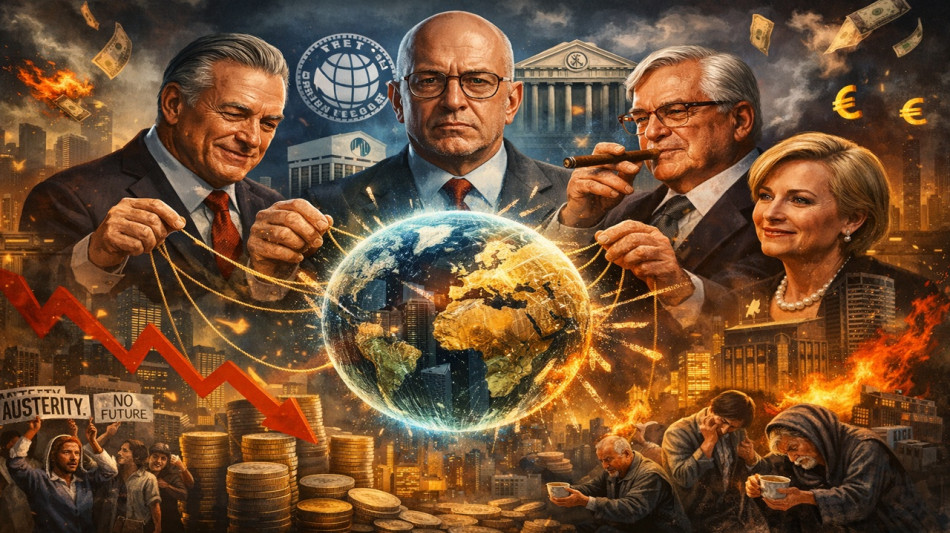
Global finance in few hands
More than fifteen years after the collapse of the housing bubble unleashed the worst financial crisis since the Great Depression, the institutions at the heart of the disaster have not only survived but thrived. The implosion exposed how private credit rating agencies stamped complex mortgage products as ultra‑safe, fuelling a boom that came crashing down. Yet those agencies continue to dominate the ratings business, while a handful of enormous asset managers exert unprecedented influence over companies and markets. This concentration of power raises profound questions about who ultimately controls the flow of money and risk in the global economy.How rating agencies misjudged risk and kept their gripCredit rating agencies are supposed to act as impartial referees that assess the probability that borrowers – whether governments, corporations or securitized vehicles – will repay their debts. During the lead‑up to the 2008 crisis, however, the leading agencies awarded top‑tier grades to complex mortgage‑backed securities that were anything but safe. Critics later concluded that the agencies used flawed models and overlooked the possibility of falling house prices. When the housing market turned, the same agencies slashed their ratings; one of them downgraded 83 percent of the mortgage securities it had deemed AAA the previous year.The scandal exposed structural conflicts in the "issuer‑pays" business model: debt issuers pay for their own ratings, creating incentives to please clients rather than warn investors. Regulators in the United States and Europe imposed fines and enacted reforms, but the essential model remained. Today the three dominant agencies – Standard & Poor’s, Moody’s and Fitch – still control roughly 95 percent of the global ratings market. Their judgments affect everything from municipal bond yields to the interest rates on sovereign debt. Critics argue that private profit‑seeking companies continue to act as quasi‑regulators, effectively passing judgement on whether countries and corporations are worthy of investment.Despite their role in the crisis, the agencies have prospered. One ratings firm reported 2025 revenue of roughly $7.7 billion, up 9 percent from the previous year, and forecast higher earnings and margins in 2026. Its credit‑rating division enjoyed a double‑digit revenue jump thanks to a surge of debt issuance by technology giants investing in artificial‑intelligence infrastructure. Investors have rewarded this growth; another agency’s share price hit record levels last year, and its executives reassured investors that the proprietary data underpinning its ratings provides an enduring competitive moat. Thus the firms that helped inflate the housing bubble continue to generate extraordinary profits by rating ever more complex instruments.The rise of the “Big Three” asset managersWhile rating agencies wield soft power through their opinions, a handful of U.S. asset managers now hold hard power over corporations. A decades‑long shift from actively managed funds to index‑tracking products has channelled trillions of dollars into a few firms. Three companies – BlackRock, Vanguard and State Street – collectively manage more than $30 trillion in assets and dominate roughly three‑quarters of the U.S. equity exchange‑traded fund market. They are the largest shareholder in about 88 percent of S&P 500 companies and cast about one‑quarter of the votes at shareholder meetings for those firms. Such concentration is unprecedented in capital markets and allows these managers to influence corporate strategies, executive pay and mergers.Each firm followed a different path to dominance. BlackRock became the world’s largest asset manager through acquisitions; its 2009 purchase of Barclays Global Investors and its iShares ETFs catapulted the firm into market leadership. By the end of 2025 it oversaw about $14 trillion, with record inflows and a growing presence in private credit and infrastructure. Vanguard, organized as a mutual company owned by its investors, built a reputation for ultra‑low fees and tax efficiency; its funds now hold around $10 – 12 trillion. State Street pioneered the exchange‑traded fund in the early 1990s; although it manages fewer assets than its two rivals, its funds remain crucial for short‑term traders.The influence of these firms extends beyond the United States. Europe’s market share of its own asset management industry has been shrinking as U.S. firms increase their footprint. A 2026 policy brief notes that BlackRock, Vanguard and State Street oversee about $26 trillion globally and are rapidly overtaking European competitors. U.S. asset managers have increased their share of the European market from about 40 percent in 2021 to an estimated 47 percent in 2026. European policymakers worry that the dominance of foreign managers could weaken the continent’s ambitions to align investments with environmental and social goals.Hidden leverage and systemic riskThe concentration of financial power is not limited to ratings and asset management. Hedge funds, which operate largely in the shadows, have dramatically increased their borrowing. Recent data from the U.S. Office of Financial Research show that hedge fund borrowing reached about $7 trillion in late 2025 – a 160 percent increase since 2018. Repo financing and prime-brokerage lending each account for roughly $3 trillion of this total. Many funds use leverage ratios of 50:1 or even 100:1, meaning a small drop in asset values could wipe out their capital and threaten lenders. Analysts compare the situation to the buildup before the 1998 collapse of Long‑Term Capital Management, when hidden leverage and crowded trades required a Federal Reserve‑led rescue to prevent contagion. If rates rise or market volatility surges, today’s highly leveraged funds could trigger wider instability, forcing banks and central banks to intervene.Public anger and calls for accountabilityOutside boardrooms, public frustration over the perceived impunity of financial elites remains intense. Online comments reacting to recent reporting on rating agencies and asset managers reveal recurring themes. Many people argue that those who misrated mortgage securities and brought the global economy to its knees should have faced jail time rather than fines. Others ask who supervises the raters themselves and whether profit‑driven firms should hold so much sway over credit and investment decisions. There is widespread skepticism that financial crimes are ever punished and resentment that the same individuals and institutions continue to profit from the system they mismanaged. Some commenters see the complexity of modern finance as a deliberate obfuscation designed to enrich insiders at the expense of ordinary savers. Others lament that greed has been elevated to a virtue while accurate risk assessment, a vital public good, is outsourced to organisations whose incentives are misaligned.Conclusion: Concentration and reformThe global financial system is far more concentrated today than it was on the eve of the last crisis. Three private ratings firms still dominate the assessment of credit risk despite their failure to foresee the housing crash and their conflicts of interest. Three asset managers hold sway over trillions of dollars, control huge voting stakes in the world’s biggest companies, and are expanding into private markets and public policy debates. Hedge funds borrow on a scale that could amplify market stress and force public rescues. Taken together, these trends raise uncomfortable questions about accountability, transparency and the balance of power in global finance.Regulators in the United States and Europe have taken steps to increase oversight, but deeper reforms may be necessary. Possible measures include diversifying the ratings industry, breaking up overly dominant players, shifting away from the issuer‑pays model, and strengthening public or nonprofit alternatives. Policymakers could also encourage the growth of domestic asset managers in regions like Europe to reduce reliance on foreign firms and align investment flows with local goals. And to address systemic risk, regulators need better visibility into hedge-fund leverage and the ability to enforce limits. The financial crisis of 2008 demonstrated the catastrophic consequences of unchecked risk and concentrated power. The fact that the key players have emerged richer and more powerful underscores the need for vigilance and reform to prevent history from repeating itself.

Scandic Coin, (SNC) and Trust
SCANDIC COIN (SNC) is a newly launched international blockchain project operated by the Scandic Finance Group (SFG) as a brand ecosystem. The Hong Kong-based group has created a digital currency that connects real-world companies with over 30 years’ experience in finance, property, mobility, data and lifestyle. The official website describes SCANDIC COIN (https://www.SCANDIC COIN.dev) as the “transactional heart” of an ecosystem.SCANDIC ECO-SYSTEMThe Scandic ECO-System comprises several interconnected brands and business divisions, including the internationally active LEGIER Group with 115 daily newspapers across all continents (https://www.LegierGroup.com), SCANDIC FLY (https://www.ScandicFly.Aero), SCANDIC TRADE (https://www.Scandic. Trade), SCANDIC DATA (https://www.ScandicData.com), SCANDIC ESTATE (https://www.ScandicEstate.com), SCANDIC CARS (https://www.ScandicCars.com), SCANDIC HEALTH (https://www.Scandic. Health), SCANDIC SEC (https://www.ScandicSec.com), SCANDIC TRUST (https://www.ScandicTrust.com), SCANDIC PAY (https://www.ScandicPay.de), SCANDIC DEV (https://www.ScandicDev.com), SCANDIC YACHTS (https://www.ScandicYachts.com), SCANDIC MINING (https://www.ScandicMining.com), SCANDIC PORT (https://www.ScandicPort.com) and SCANDIC DOMAINS (https://www.SNCdomain.com). Within this network, SNC is designed to support a unified digital experience that can be utilised for payments, customer benefits, access models and partner integrations. This cross-sector structure provides the token with significant benefits for various real-world service environments.GROUP STRUCTUREThe company is based in Hong Kong and is supported by independent partners in Dubai (UAE), Ukraine (UA) and the Federal Republic of Germany (DE). The group has integrated digital technologies with compliance requirements to the highest standard into a trustworthy platform. The business model incorporates European standards, international regulations and the German Supply Chain Due Diligence Act as the basis for all brands. Those in charge emphasise a strong focus on compliance and transparency.Among other things, there is a group-wide risk management system that specifically addresses digital assets, international payments and complex ownership structures, embedded within the European Union’s (EU) KYC (Know Your Customer) and AML (Anti-Money Laundering) regulations. Customer protection is at the heart of this – technical service providers are carefully selected, there is a multi-layered security concept to protect sensitive data, and there are risk-based processes to combat money laundering and terrorist financing. Furthermore, the SCANDIC COIN group works with authorities and regulators to implement regulatory requirements. International teams in Hong Kong, Dubai, Kyiv, Berlin, Zurich, London and other locations cooperate across disciplines.REAL BENEFITS AND ECOSYSTEMSCANDIC COIN has been developed as a utility token for payments, access and loyalty programmes within the Scandic Group. The concept comprises four main features:1. Real utility – The token serves as a means of payment and as a key to loyalty programmes within the Scandic ecosystem.2. Low fees and fast processing – On-chain transactions are designed to facilitate daily use through low transaction costs.3. Integrated ecosystem – SNC is intended to connect multiple Scandic services, including travel, brokerage and lifestyle offerings.4. Transparent structure – The project promises a fixed token supply, transparent distribution and a smart contract audited prior to deployment. HOW IS SCANDIC COIN (SNC) USED• Payments & Settlements: Instant payments for services such as private flights, yacht brokerage and concierge experiences. Low fees are intended to reduce operational friction and create a uniform payment layer across all platforms.• Access & Rewards: Token holders gain access to exclusive services, upgrades and events through a tiered rewards system.• Integration & Partnerships: SNC connects internal platforms and third-party providers, such as brokerage and lifestyle services, into a single system. TOKENOMICS AND VALUATION MODELThe project is in the pre-mainnet phase. According to the tokenomics, there is a maximum supply of 1 billion SNC. Initially, 22.5 million SNC (2.25% of the total supply) are expected to be in circulation. The issue price is €0.02, resulting in a fully diluted valuation (FDV) of €20 million. A target price of €0.05–0.10 is being aimed for the initial listing to justify early-stage discounts.SCANDIC COIN (SNC) ALLOCATIONThe token allocation is planned as follows:• Investors: 50% (private and public funding rounds).• Reserve & Treasury: 20%.• Team & Advisors: 15% (with a 16-month cliff and 24-month linear vesting).• Developer Partners: 9%.• Marketing & Partnerships: 6%.The allocation of funds (EUR 0.02 per token) covers security and audit costs (15%), the implementation of a payment gateway (25%), exchange listings and liquidity (25%), marketing & community (20%), and operations & legal (15%).AUDIT AND SECURITY STATUSSCANDIC COIN commissioned a smart contract audit from CertiK. The audit was successfully completed on 2 March 2026. No critical vulnerabilities were found. CertiK awarded the project a Silver Team Verification (since 30 March 2026) and has been running a bug bounty initiative since the end of March.SCANDIC COIN ROADMAPThe roadmap is divided into two phases: Foundations (completed) and usage-oriented expansion (in progress).The completed milestones include:• Concept & Token Design: Development of the SNC token structure for real-world use cases and scalability• Branding & Visual Identity: Creation of a distinctive brand including logo and colour palette• Website and Social Media Launch: Establishment of a transparent web presence and community channels• Regulatory structuring: Establishment of a legal structure in Dubai to ensure regulatory compliance • Smart contract development, international PR and outreach to exchanges: In line with the roadmap, the smart contract has been finalised and a campaign coordinated across global newspapers and news agencies. Discussions with centralised exchanges will follow. The next steps include the token launch (TGE), the integration of the tokens into Scandic brand services, and scaling on a global level. SCANDIC COIN is an ambitious project by experienced companies aiming to connect real-world economic sectors with blockchain technology.POSITIVES• Real-world integration: The numerous brands and planned applications create the potential for genuine use cases. Payments, loyalty programmes and access to services are clearly defined use cases.• Transparent tokenomics: The website discloses the planned token distribution, pricing and use of capital. Early-stage investors are provided with a fixed framework, and there are vesting mechanisms to protect against dumping.• Security audit: Certification by CertiK, with most findings resolved, boosts confidence.• Focus on compliance: The project emphasises compliance with legal requirements, anti-money laundering and transparency.CONCLUSION: SCANDIC COIN (SNC) aims to use the SNC token to connect a comprehensive network of services and real-world businesses. The project places great emphasis on compliance, transparency and technical security.

Brussels misreads Magyar
Hungary’s April 2026 parliamentary elections upended a 16‑year epoch. Péter Magyar’s Tisza Party, a relatively new centrist movement, swept to victory with 138 of 199 parliamentary seats, ending the long rule of Viktor Orbán and his nationalist Fidesz party. The scale of the win handed Magyar a two‑thirds majority in the Hungarian parliament, allowing him to reshape the constitution and policy without Fidesz support. The triumph was widely celebrated across Europe. European Commission President Ursula von der Leyen congratulated Magyar and proclaimed that Hungary had “chosen Europe.” Polish Prime Minister Donald Tusk posted a jubilant video declaring that “Europe is back,” and Germany’s Chancellor Friedrich Merz called the result a sign that the pendulum was swinging away from right‑wing populism.Yet within hours of the celebrations Brussels began whispering that its long‑standing feud with Budapest might finally be over. Officials mused that billions of euros in frozen cohesion funds could soon flow to Budapest again, that Hungary would stop vetoing aid to Kyiv, and that a new pro‑European partnership would emerge. In the eyes of many in the European quarter, Orbán’s defeat seemed to mark the end of illiberal drift in Central Europe. But such optimism reveals a miscalculation about both Magyar’s priorities and the region’s shifting balance of power.What Brussels expected versus what Magyar promisedOrbán’s downfall was driven more by domestic grievances than by ideological shifts. Voters were angered by corruption benefiting Fidesz cronies, frustration with soaring prices and low wages, and deteriorating public services. Many simply wanted change after four consecutive Fidesz administrations. Péter Magyar harnessed this desire by promising to root out corruption, restore the rule of law, improve healthcare and education, and increase wages and pensions. He pledged to make Hungary a reliable member of the European Union but also insisted on preserving national sovereignty. During the campaign he carefully avoided polarising cultural issues and rejected labels of “left” or “right.”Some of his positions align comfortably with Brussels. He has vowed to unblock a €90 billion EU loan package for Ukraine that Orbán repeatedly vetoed and to accelerate negotiations to bring Kyiv closer to the EU. He wants to unlock EU funds to stimulate Hungary’s stagnant economy; the Tisza manifesto calls for phasing out Russian energy imports and reducing dependence on Moscow by 2035. However, he also opposes the EU’s migration and asylum pact and insists on maintaining the border fence built by Fidesz. At a post‑election press conference he said Hungary would continue buying Russian energy for now because it remained the cheapest option. He also stressed that he would speak to Vladimir Putin if the Russian president called him – though he doubted any call would end the war in Ukraine.For Brussels, releasing frozen funds will hinge on rapid institutional reforms to restore judicial independence and dismantle Orbán’s patronage networks. Donald Tusk’s experience in Poland offers a cautionary example: when his Civic Coalition returned to power in Warsaw in 2023, the European Commission released €137 billion in blocked funds based on a plan to undo rule‑of‑law breaches. Two years later, Tusk still grapples with a conservative president and a lack of parliamentary supermajority, and the reforms are far from complete. Influential voices in Brussels argue that funds for Hungary should be freed gradually and conditional on tangible progress. Others see the money as leverage to coax Magyar into accepting EU migration policies and deeper energy diversification. The assumption that the new Hungarian government will automatically align with Brussels on every issue is therefore premature.Lessons from Poland and a regional realignmentThe political earthquake in Budapest has significant repercussions for Central Europe’s geopolitical balance. Hungary is one of the four Visegrád countries, alongside Poland, the Czech Republic and Slovakia. Under Orbán, Budapest was a constant irritant at EU meetings: he delayed aid packages for Ukraine, cultivated close ties with Moscow and Beijing, and used his veto power to block EU initiatives. Poland, led by Donald Tusk since 2023, adopted the opposite course – championing Ukraine’s cause, strengthening ties with Brussels and Washington, and sharply criticising Orbán. Tusk once complained that while there was no “Ukraine fatigue” in the EU, there was “Orbán fatigue.”Magyar has signalled that his first foreign trip will be to Warsaw. He told supporters on election night that Hungary would rebuild cooperation within the Visegrád group and that Warsaw would be the starting point. Analysts expect a rapid rapprochement between Budapest and Warsaw. The shared agenda includes support for Ukraine, respect for the rule of law, and a pro‑European outlook while protecting national sovereignty. For Poland, Magyar’s victory offers an opportunity to regain influence in Central Europe. Warsaw lost a like‑minded partner when Slovakia elected the populist Robert Fico in 2025 and when the Czech Republic’s Andrej Babiš returned to power in 2025. Fico and Babiš have echoed Orbán’s anti‑Brussels rhetoric and opposed sanctions on Russia. With Orbán gone, Poland may find itself the senior partner in an emerging Warsaw–Budapest axis, potentially supported by progressive forces in Slovakia and the Czech opposition. This could strengthen Tusk’s position inside the EU Council, especially on foreign and security policies.The Foreign Policy Research Institute notes that Budapest’s relations with Warsaw, Prague and Bratislava will evolve and change the geopolitical dynamic of the Visegrád group. Hungary’s alliance with Poland could counterbalance the populism of Prague and Bratislava. Czech Prime Minister Babiš praised Orbán and opposed deeper EU integration, while Slovak leader Fico cultivated pro‑Moscow positions. With Orbán defeated, both leaders may feel isolated; Fico could be “sweating bullets,” now that he can no longer hide behind Orbán’s confrontations with Brussels. Hungary’s new government therefore opens the possibility of a more pro-European Visegrád centre led by Warsaw and Budapest. Brussels’s miscalculation lies in underestimating how this new axis could shift power away from traditional EU institutions and into regional alliances.The challenges ahead: dismantling Orbanism and unlocking fundsMagyar inherits a state apparatus deeply entangled with Fidesz loyalists. Orbán’s decade‑and‑a‑half in power saw the rewriting of Hungary’s constitution, reshaping of electoral rules and control of the judiciary, media and civil service. The Fidesz government channelled billions of euros in EU funds to politically connected foundations and think tanks, such as the Mathias Corvinus Collegium, now one of Europe’s best-funded conservative institutes. Dissolving this network will require constitutional amendments, legislation and a purge of Fidesz appointees. ECFR analysts warn that restoring the rule of law in a post‑illiberal system is extremely difficult: Poland’s own attempts to reverse PiS reforms show that dismantling entrenched patronage takes time and can provoke resistance from entrenched interests.Magyar’s two‑thirds majority gives him the legal means to effect sweeping reforms quickly. However, he must also manage expectations at home. Many voters hope for immediate improvements in living standards and the public sector, while Tisza’s ideologically diverse coalition includes conservatives, liberals and centrists who may disagree over social issues. If reforms lag or economic pain persists, his support could erode. Brussels’s miscalculation would be to assume that early gestures – such as releasing funds or lifting vetoes – will automatically entrench pro-European forces. The EU must instead calibrate incentives carefully, rewarding genuine progress while avoiding the perception of meddling. Otherwise, Eurosceptic forces in Hungary could exploit frustration and polarisation.Western perceptions and Hungarian public sentimentOutside observers often frame the election as a battle between liberalism and conservatism. Many comments from Hungarian social media suggest a more nuanced reality. Some Hungarians emphasise that Magyar never promised to be “ultra-left liberal” but campaigned for justice, fairness and a functioning economy within the EU. Others stress that he is neither right nor left but a pragmatist who promises checks and balances and the right to protest. Many hope his government can restore pride in being Hungarian and re-establish Hungary as a respected EU member.Critics note that Hungary continues to have the EU’s highest value-added tax and that self-employed workers faced steep tax hikes under Fidesz. There is also scepticism toward Western pronouncements: one commenter said he would judge Magyar by his actions, not by EU leaders’ praise. Another noted that the key task is rebuilding democracy with checks and balances to counter corruption, Russian influence and propaganda. Some suggested that Western Europe misunderstands Hungarian voters, who care about practical issues like wages and public services more than ideological labels. Still others highlight how Poland and other eastern nations stand to gain from Orbán’s defeat, while Russia and Putin stand to lose. These sentiments reveal a complex mix of hope, caution and regional solidarity that Brussels would do well to consider.Conclusion: a turning point with caveatsThe 2026 Hungarian elections mark a turning point for both Hungary and the European Union. Orbán’s defeat removed one of Brussels’s most vexing adversaries and signalled voter fatigue with corruption and economic stagnation. Péter Magyar’s victory opens the door to restoring democratic institutions, improving public services and mending relations with the EU. But Brussels’s expectations must be tempered by the realities of post‑illiberal transitions. Unlocking frozen EU funds and reshaping Hungary’s judiciary will take time and political capital. Magyar’s positions on migration and energy show that he will not automatically align with every EU policy. Meanwhile, Poland’s Donald Tusk stands poised to gain influence through a renewed Warsaw–Budapest partnership, shifting the centre of gravity within the Visegrád group.Rather than celebrating prematurely, EU leaders should engage patiently with Hungary’s new government, offering support while maintaining conditionality. They must recognise that Central Europe’s political landscape is fluid: populism may recede in one country but resurge in another. Brussels’s miscalculation would be to see Magyar as either a saviour or a pawn. The more accurate view is that he embodies a pragmatic nationalism committed to Europe but rooted in Hungarian realities. Navigating this complexity will determine whether Hungary’s democratic revolution endures and whether Poland indeed becomes the region’s influential voice in the European Union.
US China race hits 2027
When NASA’s Artemis II crew splashed down in April 2026 after looping around the Moon, it rekindled interest in human spaceflight. The United States had not sent astronauts near the lunar surface in more than half a century, and its return came amid an unmistakable rivalry with a rising power. Over the last decade China has methodically tested rockets, landers and rovers, assembled its own orbital outpost and dispatched missions across the Solar System. The world’s two largest economies are now openly competing to build a permanent human presence on and around the Moon, to harvest its resources and to set the standards that will govern space for decades to come.Although the race evokes memories of the Cold War, experts stress that today’s contest is more complex. Rather than a sprint to plant a flag, the current competition is a marathon to establish infrastructure and routines for sustained exploration. It also includes commercial players, such as SpaceX and Blue Origin in the United States and a fast‑growing private sector in China. Political leaders in Washington and Beijing frame their objectives in terms of national prestige, economic opportunity and security, while scientists see the potential for breakthroughs in geology, physics and planetary science. In this multifaceted arena, the year 2027 looms as a pivotal test of each nation’s ambitions.Washington’s roadmap: Artemis and a moon baseThe United States is pursuing its lunar return through NASA’s Artemis programme. Artemis II demonstrated that the Space Launch System rocket and Orion spacecraft could carry a crew around the Moon and return safely. The next steps are more demanding. NASA plans a complex Earth‑orbit flight in 2027 in which Orion will practice docking with one or both of the commercial lunar landers now under development. This demonstration is essential for subsequent missions that will ferry astronauts to the lunar surface. Without a successful rendezvous and refuelling sequence, the agency cannot meet its goal of up to two crewed landings in 2028 and the construction of a lunar base in the early 2030s. NASA Administrator Jared Isaacman has warned that the United States is in a new space race and that failure to keep pace could damage American leadership. He argues that seeing Chinese taikonauts on the Moon before U.S. astronauts return would deliver a blow to American confidence and global influence.Policy makers in Washington view the timeline as tight. The launch of Artemis III, originally targeted for 2024, has slipped to 2028 after interim dates in 2026 and 2027. This drift reflects technical hurdles and shifting political priorities; over the past two decades U.S. lunar goals have changed with each administration. Under President Donald Trump, NASA’s focus returned to the Moon, and Congress has largely sustained funding. Lawmakers such as Senator Ted Cruz emphasise that America must simultaneously maintain leadership in low Earth orbit, where the International Space Station nears the end of its life, and embark on a new era of exploration. The challenge is to integrate commercial capabilities—particularly SpaceX’s Starship system, which will serve as a lunar lander—with NASA’s heavy‑lift rockets and Orion capsule. In low Earth orbit, U.S. companies are also competing to build private space stations as the ISS winds down.Behind the headline missions is a robust commercial ecosystem. SpaceX’s Falcon and Starship rockets have dramatically lowered launch costs, enabling a boom in satellite deployment and paving the way for large‑scale lunar logistics. Other firms are developing lunar landers, cargo services and in‑orbit data processing that uses artificial intelligence to analyze imagery directly in space rather than sending raw data back to Earth. Proponents say these technologies will revolutionize Earth observation, communications and defence, creating an “orbital economy” that could be worth trillions. Critics, however, worry about the potential for an uncontrolled proliferation of satellites, increasing the risk of collision and creating space debris—known as the Kessler syndrome—that could render some orbits unusable.Beijing’s blueprint: Chang’e, Tiangong and mega‑constellationsChina’s lunar ambitions were late to emerge but have progressed steadily since the Chang’e programme began in 2007. In the past decade the China National Space Administration has landed robotic spacecraft on the Moon’s near and far sides, returned lunar samples to Earth and placed two rovers on the surface. Its next steps include launching the Chang’e‑7 mission in late 2026 to explore the lunar south pole and Chang’e‑8 in 2029 to test technologies such as in‑situ resource utilization. These missions will lay the groundwork for an International Lunar Research Station that Beijing plans to build with Russia and other partners in the 2030s. Chinese officials say a crewed landing will occur before 2030, using the new Long March‑10 rocket, Mengzhou spacecraft and Lanyue lander. Tests of these systems began in 2025 and are progressing on schedule, according to state media.The difference between the U.S. and Chinese approaches is striking. China’s lunar timeline has remained largely steady, with milestones set years in advance and executed through successive five‑year plans. Analysts note that the one‑party state does not face the congressional budget battles or policy reversals common in Washington, allowing it to align industries, financing and state priorities around long‑term goals. Xi Jinping has framed space exploration as part of national rejuvenation, and the aerospace sector is listed among the strategic industries of the future. At the same time China is rapidly expanding its presence in Earth orbit. It operates the Tiangong space station, assembled in modules launched between 2021 and 2022, and plans to add a co‑orbiting telescope module. Chinese astronauts routinely conduct long‑duration missions and record‑setting spacewalks from Tiangong.Beyond human spaceflight, China is building its own satellite megaconstellations. The Thousand Sails network aims to deploy more than a thousand satellites by 2027 and potentially 14,000 by the 2030s to provide global broadband and compete with SpaceX’s Starlink. The defence‑oriented Guowang constellation could add another 13,000 satellites by 2035. China had over 800 satellites in orbit at the start of 2025—more than any country except the United States, which has nearly 9,000—but its launch rate is accelerating. In 2024 China launched 68 orbital rockets, second only to the U.S., and is testing reusable boosters and powerful new engines. It is also pursuing a Mars sample‑return mission that could bring material back to Earth by 2031, potentially beating NASA’s delayed Mars campaign. Observers say these achievements reflect an ecosystem that now rivals the U.S. in breadth, even if China still lags in private sector innovation and reusable rocket technology.Why 2027 mattersThe year 2027 stands out as a make‑or‑break point in the unfolding space competition. For NASA, the planned in‑orbit docking demonstration will show whether its architecture—combining the Orion crew capsule with privately built lunar landers—can actually work. This test has already been inserted into the Artemis sequence as a separate mission, and without it the agency cannot risk sending astronauts to the lunar surface. Success would keep the 2028 landing on track and bolster confidence in the United States’ ability to lead; failure could postpone human landings by years and give China a psychological and strategic advantage. Some observers argue that delays would also erode congressional support and funding, since political attention could shift to Mars or Earth‑orbit projects.For China, the mid‑2020s are equally crucial. By the end of 2026 the Chang’e‑7 probe is expected to deliver data from the Moon’s south pole, and the Thousand Sails constellation could surpass the 1,000‑satellite mark a year later. Meanwhile, low‑altitude tests of the Long March‑10 and Mengzhou systems in 2025 and 2026 will set the stage for full‑scale flight tests. If all proceeds as planned, China will enter 2027 with an integrated system for human lunar flight, a mature space station and an expanding commercial sector. The momentum could position Beijing to attempt its first crewed lunar landing by the end of the decade, perhaps just a year or two after Artemis III.The symbolic stakes of who returns to the Moon first resonate beyond space professionals. Many commentators see access to lunar resources such as water ice and helium‑3 as future economic boons, enabling fuel production, life support and even fusion energy. Others worry that these expectations could inflame geopolitical tensions and lead to the partition of the lunar surface. Online discussions are filled with references to science‑fiction series like For All Mankind and Star Wars, a sign of how popular culture shapes perceptions of space. Some people lament the absence of Europe in the high‑profile contest, expressing frustration that the European Space Agency is not competing at the same level. Others note that the proliferation of mega‑constellations could spoil the night sky for astronomy and raise the risk of collisions. A common thread is the belief that space is becoming another arena for geopolitical rivalry and that humanity must balance exploration with responsibility.What’s at stakeAt the heart of the new space race is a struggle over norms and infrastructure. The country that first establishes a sustained presence on the Moon will likely influence how lunar resources are allocated, how safety zones are defined and how future claims are adjudicated. China’s plan for an International Lunar Research Station is open to partners but would be led by Beijing and Moscow, while the U.S. promotes the Artemis Accords, a set of principles signed by more than thirty nations that emphasise transparency, peaceful use and the protection of heritage sites. The two frameworks represent competing visions of governance. Some analysts worry that parallel bases could harden rival blocs and complicate cooperation on scientific projects.Economic motives also loom large. The Moon’s south pole contains ice deposits that can be split into oxygen and hydrogen for rocket fuel; its regolith may hold helium‑3, a potential fuel for fusion reactors; and rare earth elements could be mined for electronics. Companies envisage extracting these materials and using them to support lunar factories, orbital refineries and interplanetary missions. Observers point out that many of these prospects are speculative and that the technological and legal challenges are formidable. Nevertheless, the prospect of a trillion‑dollar space economy drives investment from governments and venture capital. Commentators on social media often joke about “all those beautiful minerals” and wonder whether space will become a battlefield for humans. Others warn that competition could trigger an arms race, with anti‑satellite weapons and military platforms turning Earth orbit into a contested zone.Environmental concerns add another layer of complexity. Mega‑constellations of thousands of satellites enable global internet and Earth‑observing services, but they also contribute to light pollution and radio interference that hamper astronomical research. Critics argue that launching tens of thousands of spacecraft to benefit a small fraction of the population is not worth degrading the natural beauty of the night sky. Campaigners call for international regulation to ensure that orbits remain sustainable and that debris is removed. The U.S. Federal Communications Commission and international bodies are beginning to address these issues, but enforcement remains weak.Beyond the U.S. and ChinaWhile the rivalry between Washington and Beijing dominates headlines, other actors are shaping the space landscape. India, which landed a spacecraft near the lunar south pole in 2023, plans its own crewed missions and has an eye on lunar resources. Russia remains formally involved with China’s lunar base plan despite its own economic struggles. Private corporations across the globe are developing lunar landers, communications relays and space‑based manufacturing. Even as the European Space Agency grapples with funding and policy issues, European companies supply critical hardware, such as the service module for Orion and lunar lander technology. Japan, Canada and the United Arab Emirates are all planning missions that will contribute to lunar exploration or the construction of the Lunar Gateway, a planned station in lunar orbit.Taken together, these efforts suggest that the future of space will be multipolar. The outcome of the 2027 milestones will not end the race but will set the trajectory for the coming decade. Whether the United States and China choose to cooperate or compete will influence how quickly humanity establishes a foothold beyond Earth and whether the benefits of space are shared or monopolized.An uncertain finish lineThe United States and China are already locked in a fierce competition for space. Both nations have articulated ambitious lunar roadmaps, invested billions in rockets, spacecraft and infrastructure, and rallied their citizens with promises of national renewal and scientific glory. Yet the space environment today is far more complex than during the Apollo era. Private companies wield unprecedented influence, environmental and legal questions remain unresolved, and the stakes extend from lunar ice to orbital broadband and planetary defence. The year 2027 will be a crucial inflection point: a successful docking test for Artemis and the continued pace of China’s Chang’e and megaconstellation programmes will signal whether each nation can execute its plans on schedule. Failure or delay on either side could alter perceptions of leadership and open space for newcomers.As the countdown to these milestones advances, policymakers, engineers and citizens alike grapple with what the space race means. Will it inspire cooperation and new frontiers of knowledge, or will it deepen divisions and militarize the heavens? Will the Moon become a laboratory for sustainable living or a quarry for minerals? And can humanity develop rules and norms to manage an increasingly crowded sky? The answers will emerge over the next several years. For now, the only certainty is that the competition is real, the challenges are immense and the outcome will shape the cosmic future of us all.
Red sea gambit with Eritrea
The United States is once again redefining its alliances in the Horn of Africa. Faced with an escalating war against Iran, a volatile Red Sea and the threat of maritime disruption, the Trump administration has quietly courted one of the world's most repressive governments: Eritrea. The overtures — meetings in Cairo and Asmara, hints of sanctions relief and talk of a strategic reset — have provoked both intrigue and alarm. They also reveal the hard calculus driving America’s diplomacy in an era when access to sea lanes may be as vital as any ideological commitment.When Ayatollah Ali Khamenei was killed in U.S. and Israeli air strikes on Tehran in March 2026, the Middle East descended into a war that quickly spilled across the region. Iran’s proxies in Yemen, the Houthis, threatened to cut the Bab el‑Mandeb strait at the mouth of the Red Sea and boasted that they could shut down commercial shipping. Within weeks, Houthi drones and missiles were harassing vessels. In May 2025 the United States had concluded a tenuous ceasefire with the Houthis after a two‑month bombing campaign, but the lull did little to reassure shipping companies, and a carrier strike group later sailed around the Cape of Good Hope rather than risk the shorter route through the Red Sea. For Washington the geopolitical stakes were clear: if the Strait of Hormuz on the east side of the Arabian Peninsula could be closed by Iran, the Red Sea corridor on the west could not be allowed to fail.Enter Eritrea. Stretching more than 1 000 kilometres along the Red Sea opposite Yemen, the small African state possesses some of the most coveted coastal real estate on the planet. Its ports, archipelagos and arid coastline could offer docking, resupply and surveillance points for any power seeking to patrol the waterway. For years, however, Asmara was treated as a pariah. Sanctions imposed in 2021 for its brutal incursions into Ethiopia’s Tigray region isolated the regime. Western governments criticised its indefinite military conscription, the absence of elections since independence in 1993 and systematic repression of dissent. Human Rights Watch and the United Nations listed arbitrary detention, enforced disappearances and crimes against humanity. Many compared the one‑party state to North Korea. Eritrea was, in the words of one U.S. congressional report, a “militarised authoritarian state” in which conscripts were forced to work for years under threat of punishment.A secretive diplomatic charm offensiveAgainst this backdrop, the Trump administration began exploring a reset. Massad Boulos, the president’s senior envoy for Africa, held private meetings with Eritrea’s veteran leader, Isaias Afwerki, in Cairo and New York. Egyptian President Abdel Fattah al‑Sisi acted as go‑between. Officials familiar with the talks say Washington offered to ease some sanctions in exchange for access to Eritrean ports and cooperation on maritime security. A second meeting was planned for Asmara. The State Department did not publicly acknowledge the initiative, but a spokesperson confirmed that the administration wished to “strengthen U.S. ties with the people and government of Eritrea”.On the surface, the logic seems hard‑headed. If the United States is fighting a war with Iran and trying to keep the Red Sea open, it needs partners on the African shore. With Sudan in turmoil, Ethiopia distracted by internal strife and Djibouti hosting multiple foreign bases, Eritrea’s underutilised coastline is appealing. “The Red Sea region is too strategically important for the U.S. not to try to reopen ties with Eritrea,” a senior American official said privately. Some believe that bringing Asmara into Washington’s orbit would deprive Iran of another foothold and prevent Beijing or Moscow from consolidating influence on the western flank of the Middle East.Yet the manner in which the talks have been conducted — behind closed doors, without congressional oversight or public debate — has fuelled speculation about a “secret alliance”. There is no signed treaty or formal announcement, only a series of leaks and carefully worded denials. For a president known for his transactional approach to foreign policy and his penchant for surprises, the opacity is not unusual. Nevertheless, the prospect of striking a bargain with Eritrea without demanding reforms has alarmed human‑rights advocates.Eritrea’s record: repression at home, adventurism abroadEritrea’s president, Isaias Afwerki, has ruled his country since it won independence from Ethiopia in 1993. He has never held national elections and has shelved the constitution ratified in 1997. There is only one legal political party. The legislature has not convened in more than a decade. Independent media were shut down in 2001, and journalists and dissidents have vanished into secret prisons. Freedom House ranks Eritrea alongside North Korea as one of the least free places on earth. The national service programme, introduced during the border war with Ethiopia in the late 1990s, obliges men up to the age of sixty and women up to twenty‑seven to serve in the military or civil service indefinitely; conscripts often work for decades, earning paltry wages and facing arbitrary punishments. The United Nations Commission of Inquiry has said that these policies amount to enslavement.The regime has also been accused of fomenting instability beyond its borders. From 2020 until late 2022 Eritrean troops fought alongside Ethiopian federal forces and Amhara militias against the Tigray People’s Liberation Front, contributing to a humanitarian catastrophe that claimed hundreds of thousands of lives. Despite a peace agreement, Eritrean units remain in parts of Tigray and have been implicated in looting and human‑rights abuses. Eritrean soldiers have been accused of smuggling goods and trafficking refugees. The government’s military adventures have strained relations with neighbouring Ethiopia and Sudan, even as Asmara cultivates ties with Russia and the United Arab Emirates to extract mining revenue and arms deals.Isaias himself is a study in contradictions. In a speech marking the 35th anniversary of Eritrean independence, he devoted pages to denouncing what he called America’s “unipolar hegemony” and belittling the economic and military capabilities of the United States. He warned that Washington’s interventions in Iran and Venezuela were unlawful and lectured about the need for a new world order based on fairness and justice. He claimed the United States had accumulated unsustainable debt and undermined global stability through offshoring and intimidation. Yet he offered no mention of his country’s own systemic abuses or the diplomatic overtures reportedly underway. His government rejected a United Nations visit by human‑rights experts and continues to detain thousands of political prisoners.Analysts say this rhetorical barrage serves a purpose. By casting himself as a champion of sovereignty and a critic of Western dominance, Isaias distracts from Eritrea’s collapsing infrastructure, intermittent electricity supply and widespread poverty. Only about half of Eritreans have access to electricity, and less than a fifth use the internet. Meanwhile, young people flee in droves to escape indefinite conscription and economic stagnation. The regime blames sanctions and conspiracies for these problems, but decades of central planning and militarisation are largely responsible. Even as he condemns American interventionism, Isaias relies on foreign mining investments and remittances from the diaspora to prop up his economy.Strategic calculations and ethical dilemmasWhy, then, would Washington seek to rehabilitate such a regime? The answer lies in the strategic map. Iran’s influence in the Horn of Africa has waxed and waned over the decades. In the early 2000s Tehran cultivated close ties with Sudan and Eritrea, establishing naval access points and using soft‑power tools such as development aid and religious networks. But after the Gulf states increased their engagement in the region, and following renewed sanctions on Iran, Sudan, Djibouti and Eritrea severed or scaled back relations with Tehran. Eritrea aligned itself with Riyadh and Abu Dhabi, which offered financial assistance and military cooperation linked to the war in Yemen. By courting Eritrea now, Washington hopes to consolidate that shift and ensure that any residual Iranian presence on the Red Sea is neutered.From a geopolitical perspective, the plan has logic. Eritrea controls the Dahlak Archipelago, a chain of islands that could serve as a naval outpost. Its ports at Massawa and Assab are deep enough for modern warships. The country lies directly opposite Yemen’s Hodeidah and the Houthi‑controlled coast, making it an ideal staging ground for monitoring missile launches and intercepting drones. With shipping insurance costs rising and energy markets jittery, the prospect of a reliable American‑Eritrean partnership is attractive to investors and defence planners alike.Yet the ethical costs are steep. Lifting sanctions without demanding improvements in Eritrea’s human‑rights record could embolden other authoritarian regimes to leverage strategic assets for impunity. Critics argue that normalisation would reward a government that has shown little willingness to reform. “Normally, when we lift sanctions, the country has done something to merit it,” one former U.S. intelligence official observed. “It is the exact same militarised, autocratic state that it has been since 1993. If we are going to reward them, what are we getting for it?” There is also concern that closer ties with Washington might embolden Isaias to clamp down further on dissidents, secure in the knowledge that strategic necessity outweighs moral condemnation.There are practical risks, too. Eritrea’s relationship with the United States has been volatile. After years of isolation, Asmara may be wary of becoming dependent on a superpower that could change course after the next election. The regime’s long‑standing anti‑American rhetoric and its alliance with other pariah states such as Russia and North Korea suggest that any partnership will be transactional and fragile. In his independence day address Isaias openly questioned whether Trump’s policies could reverse America’s decline and mocked Washington’s claims to military supremacy. He lamented “threats and intimidation” and asked why Iran alone should be sanctioned for pursuing nuclear technology. These remarks underline the ideological gulf between the two governments.In the broader Horn of Africa, a U.S.–Eritrea alignment could also upset delicate balances. Ethiopia and Eritrea remain locked in disputes over borders and access to the sea. Ethiopia’s government has hinted at historic claims to Eritrean coastline, raising fears of renewed conflict. Sudan is embroiled in civil war, Somalia remains unstable and Djibouti hosts China’s first overseas military base alongside American, French, Japanese and Italian forces. Any perception that Washington is endorsing Eritrea could deepen rivalries and encourage other powers to strengthen their own proxies. Russia, which has supplied arms to Eritrea and is expanding its presence in Africa, may respond by deepening ties with Ethiopia or Sudan. Saudi Arabia and the United Arab Emirates, long‑standing patrons of Asmara, could resent an American incursion into their sphere of influence.The narrow path between realism and complicityAs the war with Iran rages, the temptation to make quick deals will only grow. The Biden administration faced similar pressures when the Houthis first attacked ships in the Red Sea, and it launched air strikes without resolving underlying conflicts. Trump, with his penchant for bold gestures, appears willing to gamble on an illiberal partner if it offers tactical advantages. Eritrea’s president, ever the political survivor, is adept at extracting concessions from larger powers while giving little in return. The result could be a marriage of convenience that serves immediate security needs but undermines long‑term stability and values.For a policy to be sustainable, Washington would need to insist on tangible human‑rights improvements in Eritrea as part of any agreement. These could include a verifiable plan to end indefinite conscription, release political prisoners and allow independent media. Sanctions relief could be made conditional on such steps, rather than granted outright. Regional diplomacy with Ethiopia and Sudan would also be essential to prevent the new partnership from inflaming territorial disputes. Finally, transparency is crucial: American voters and lawmakers deserve to know when their government contemplates alliances with regimes that run counter to democratic principles.The calculus facing the United States is stark. To keep oil flowing and commerce moving, it needs control of the Red Sea. To check Iran’s influence, it must maintain pressure on the Houthis and secure alternative supply routes. But courting a brutal dictatorship carries moral hazards and strategic pitfalls. As Isaias Afwerki lectures the world about justice while presiding over a security state, he provides a mirror for Western hypocrisy. Whether Trump’s secretive outreach to Eritrea will prove a masterstroke or a misstep remains to be seen. What is certain is that the people of Eritrea — long conscripted, silenced and marginalized — deserve more than to be pawns in a geopolitical game.