
Last videos
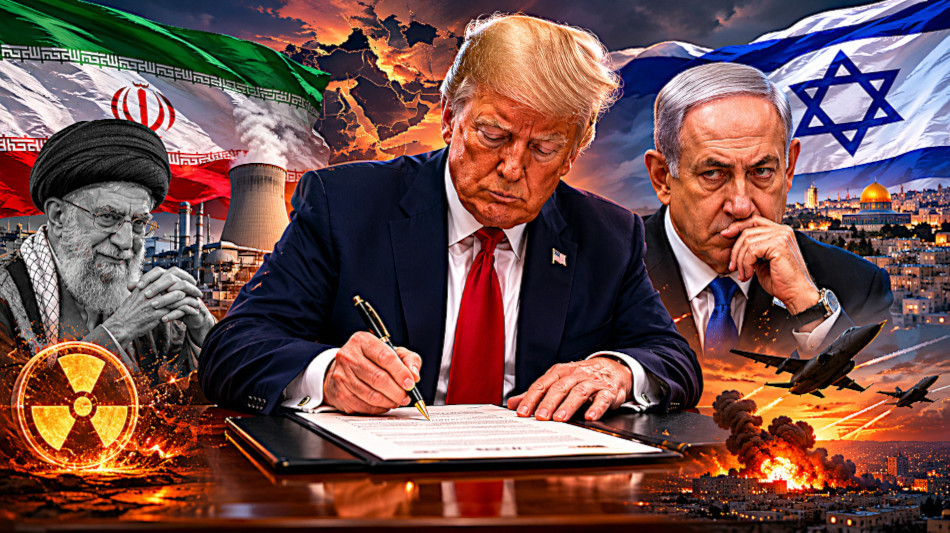
Israel riled by US-Iran pact
The United States and Israel entered the spring of 2026 locked in an unprecedented conflict with Iran. On 28 February the two allies launched a joint offensive aimed at destroying Iran’s ballistic‑missile programme, curbing its support for militant proxies and forcing an end to its nuclear ambitions. The campaign quickly spread across the region: Iranian forces responded with ballistic‑missile salvos and drone attacks, and the United States imposed a naval blockade on Iranian ports. Iran retaliated by closing the Strait of Hormuz, a narrow waterway through which a fifth of the world’s oil flows. By early April both sides had agreed to a fragile ceasefire, but the war’s economic and human cost, coupled with mounting pressure from Gulf Arab states to restore trade, propelled Washington to seek a negotiated settlement.President Donald Trump has now circulated a draft agreement that would reopen the Strait of Hormuz to commercial shipping, lift the U.S. blockade and unlock up to $12 billion of Iran’s frozen assets. Under the memorandum of understanding, shipping lanes would return to pre‑war levels within a month, and a 60‑day negotiating period would be devoted to the future of Iran’s nuclear programme. Discussions on highly enriched uranium, centrifuges and International Atomic Energy Agency supervision would begin only after trade resumed. Iran would renounce nuclear weapons, but its stockpiles and missile arsenal would not be dismantled at this stage. The deal also calls for a permanent ceasefire that would extend to Lebanon, where Israeli forces have been engaged in a separate conflict with Hezbollah. As a diplomatic sweetener, Washington has urged Saudi Arabia, Qatar, Pakistan and other regional powers to normalise relations with Israel by joining the Abraham Accords.In Israel the proposal has provoked a storm of indignation. Senior officials, speaking on condition of anonymity, have branded the emerging accord a “bad deal”. Their chief complaint is that the draft postpones serious constraints on Iran’s nuclear and missile programmes, creating the risk that Tehran will pocket sanctions relief, rebuild its economy and rearm its proxies while negotiations drag on. Israeli strategists note that the memorandum says nothing about Iran’s long‑range missiles or its network of regional militias. They fear that a temporary ceasefire would allow Iran’s allies in Lebanon, Syria and Yemen to regroup and that the release of billions of dollars would enable Tehran to reconstitute military facilities damaged during the war.Opposition leader Yair Lapid, who is attempting to unseat Prime Minister Benjamin Netanyahu later this year, has condemned the plan as “bad for Israel, bad for the region [and] bad for the citizens of Iran”. Lapid has criticised Mr Netanyahu for failing to influence Washington’s negotiating position and warns that Israel’s ability to shape American policy is at an all‑time low. Other Israeli commentators describe the draft as a strategic failure: the war began with publicly declared goals of toppling Iran’s theocratic government, ending its ballistic‑missile threat and severing its ties to militant groups, yet the proposed agreement delivers none of those outcomes. Analysts at the Institute for National Security Studies argue that the enormous gap between the war’s ambitions and the terms of the emerging deal shows how little the campaign’s architects understood Iran. Some call it a capitulation that leaves Iran in a stronger position than before the war.Security officials are particularly alarmed by the prospect of constraints on Israeli military operations in Lebanon and Gaza. The draft calls for a permanent ceasefire not just in the Persian Gulf but across the region, including southern Lebanon where Israeli troops have seized strategic positions and where daily exchanges of fire with Hezbollah have continued despite the pause in the broader war. Israeli commanders insist on “freedom of action” to strike Iranian targets and proxies; they fear that a formal ceasefire would tie their hands and allow Hezbollah to entrench itself further along the northern border. The idea of including Hezbollah in the ceasefire, reportedly floated by Tehran, is anathema to the Israel Defense Forces.The financial dimension of the proposed deal is another source of anger. Iran’s government is demanding access to billions of dollars held abroad to stabilise its economy after months of conflict. For Israel, the thought of unlocking those funds conjures memories of the 2015 nuclear agreement, which lifted sanctions and allowed Iran to re‑enter oil markets. Hawks in both Israel and the United States warn that injecting cash into Iran’s coffers will embolden the Revolutionary Guard Corps and enable renewed investment in missile development and proxy warfare. These critics argue that pressure—not relief—is the only way to force Tehran to dismantle its nuclear infrastructure and curb its regional ambitions. Some even say they would prefer a return to open conflict to the signing of a weak agreement that leaves Iran intact.Israelis are also wary of the diplomatic gambit tied to the deal. President Trump has declared that it should be “mandatory” for countries such as Saudi Arabia, Qatar and Pakistan to recognise Israel as part of the agreement. Pro‑Israel voices in the United States have welcomed the idea, but regional experts point out that Gulf states are not prepared to normalise relations at a time when Israel is still waging wars in Lebanon and Gaza and when Palestinian casualties have fuelled widespread anger. Saudi Arabia has repeatedly said it will not normalise relations without a Palestinian state based on the 1967 borders. For Israel, therefore, the promise of new diplomatic ties offers little comfort; what matters is security, and the current draft does not guarantee it.Beyond Israel, the emerging agreement has drawn criticism from Republican hawks in Washington. Senators Lindsey Graham, Ted Cruz and Roger Wicker have all warned that a 60‑day ceasefire that reopens the Strait of Hormuz while leaving Iran’s nuclear and missile capabilities untouched would be a “disaster”, a “nightmare” and a “disastrous mistake”. Former secretary of state Mike Pompeo has derided the proposal as a retreat from the “America First” stance, arguing that Tehran should not receive a penny until its capability to threaten U.S. allies is eliminated. These voices echo the concerns of Israeli officials who fear that the balance of power in the region will shift in Iran’s favour if the United States compromises.The uproar in Jerusalem is compounded by a feeling of marginalisation. Reports in the Israeli press suggest that Mr Netanyahu has been largely sidelined in negotiations, with Washington seeking input from Gulf allies and Pakistan instead. A senior Israeli security official recently lamented that “Israeli interests were not taken into account throughout the negotiations”, noting that Israel might now face restrictions on its ability to act in Lebanon and Gaza despite fighting alongside the United States in Iran. Such perceived neglect has fuelled domestic criticism of Mr Netanyahu and heightened the sense of betrayal that underpins Israel’s fury at the emerging deal.As negotiations continue, the gap between Israeli expectations and the draft agreement’s provisions remains wide. Israel entered the conflict hoping to eliminate a strategic rival and reshape the Middle East. It now confronts the prospect of a ceasefire that freezes the status quo, leaves Iran’s regime intact, and imposes constraints on Israel’s military freedom. Unless Washington and Tehran can produce a final agreement that addresses Israel’s security concerns—particularly the dismantling of Iran’s missile and nuclear capabilities and the curtailment of its proxies—the anger emanating from Jerusalem is unlikely to subside. The fate of the war, the security of the Gulf and the future of regional diplomacy all hinge on whether these divergent interests can be reconciled in the weeks ahead.
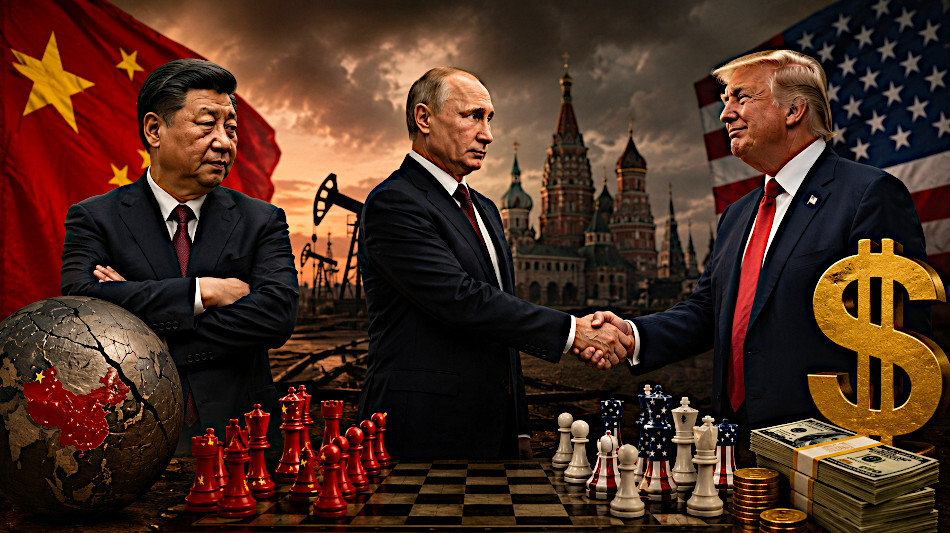
Russia’s dollar pivot
For years, Moscow positioned itself as the standard‑bearer of de‑dollarization. After Western sanctions were imposed in 2022, the Kremlin accelerated efforts to settle trade in local currencies, expanded gold reserves and championed alternative payment systems within the bloc of major emerging economies known as BRICS. Senior officials boasted that the age of the greenback was ending, and state media presented the shift as a moral stand against Western financial hegemony.That narrative now faces an extraordinary test. According to an internal government memorandum circulated among senior officials early this year and reported by multiple media outlets, Russia is exploring a broad economic rapprochement with the United States in return for sanctions relief and progress on a settlement in Ukraine. The document lists seven areas of potential cooperation, from fossil fuels and natural gas to offshore oil exploration and strategic minerals. The most striking element is Moscow’s readiness to re‑enter the dollar settlement system—a reversal of the policy that has underpinned its eastward economic pivot.De‑dollarization and the BRICS currency dreamRussia’s push to reduce dependence on the U.S. dollar has been most visible in its trade with China. By mid‑2023, President Vladimir Putin told a St Petersburg business forum that more than four‑fifths of bilateral trade was being settled in rubles and yuan, noting that reliance on the dollar exposed both sides to risks and costs. The trend accelerated: at the Boao Forum for Asia in March 2024, Deputy Prime Minister Alexei Overchuk said around 92 percent of trade settlement between Russia and China was being conducted in the two countries’ currencies. Bilateral trade volumes reached $240 billion in 2023, up sharply from the previous year, and the share of deals using local currencies climbed from a quarter in 2021 to two‑thirds in 2023.These shifts were part of a broader agenda within BRICS. At the bloc’s summit in Kazan in October 2024, leaders discussed the idea of creating a new reserve currency backed by a basket of their national currencies. On stage, Mr Putin held up a prototype banknote meant to symbolise a BRICS currency. Yet he struck a conciliatory note, stressing that the goal was not to “refuse or fight the dollar” but to prevent its “weaponization” by developing mechanisms for local‑currency trade. Officials from other member states expressed similar caution. The bloc’s New Development Bank made clear there was “no suggestion right now” of launching a new currency.Within BRICS, the shift away from the dollar has been uneven but significant. Roughly 60–67 percent of intra‑BRICS trade is now estimated to be settled in local currencies, according to government data. Russia’s bilateral trade with China and India is said to be 90–95 percent denominated in rubles, yuan and rupees. However, the dollar still accounts for about 88–89 percent of global foreign exchange transactions and remains the dominant currency for energy and commodity trading. Energy contracts are largely priced in dollars, and global capital markets continue to operate primarily in the U.S. currency.A leaked memo and a potential U.S. dealAgainst this backdrop, the leaked Kremlin memorandum marks a dramatic change of tone. The document proposes an “energy dominance” partnership in which the United States and Russia would transition from rivals to partners, focusing on joint investments in liquefied natural gas, offshore drilling and the development of critical minerals such as palladium and nickel. In exchange for a peace framework in Ukraine and the easing of sanctions, Moscow would re‑open its economy to American firms and return to dollar‑denominated trade. The memo describes this shift as an economic realignment rather than a symbolic gesture, arguing that reintegration into the dollar system would expand Russia’s access to global liquidity, lower transaction costs and stabilise its currency markets.Such a pivot would reverse years of painstaking efforts to insulate Russia from U.S. financial pressure. Since 2022, nearly 90 percent of Russia’s trade with China and India has been settled in national currencies, and the share of local‑currency settlement across BRICS has climbed steadily. Russia’s removal from the SWIFT financial messaging system forced banks to adopt alternative channels. Returning to the dollar would restore access to deep capital markets but would also reintroduce exposure to potential U.S. sanctions and financial surveillance.Why Moscow might turn backAnalysts point to several reasons why the Kremlin might consider embracing the dollar once more. First, the de‑dollarization drive has increased Russia’s dependence on China. Using the yuan binds Moscow to a partner whose economic clout far exceeds its own, giving Beijing significant leverage. The leaked memo implicitly acknowledges this imbalance by proposing diversification through renewed engagement with the United States. Second, the dollar’s dominance in global trade and finance remains overwhelming. According to central bank data, the greenback makes up the majority of foreign exchange reserves and still facilitates most energy transactions. Re‑entering dollar‑based systems would improve liquidity for Russian businesses and help stabilise the ruble, which has seen volatile swings against the U.S. currency.A return to dollar settlements could also serve as a bargaining chip. Moscow may hope to leverage its willingness to rejoin the U.S. financial architecture to secure sanctions relief and concessions on Ukraine. In this interpretation, the memo is less a repudiation of BRICS than a pragmatic negotiation tactic. It signals openness to compromise without committing to immediate policy changes. The Kremlin has not publicly confirmed the document’s authenticity, and officials have said that any agreement would depend on complex diplomatic alignments and legislative approval in Washington.Strains on BRICS and relations with BeijingEven the suggestion of a dollar comeback has unsettled other BRICS members. China has invested heavily in internationalising the yuan, and India has expanded rupee settlements. A Russian about‑face would slow the momentum behind alternative payment systems and cast doubt on proposals like BRICS Pay. It could also introduce friction within the bloc: Brazil, South Africa and Saudi Arabia have backed gradual de‑dollarization as a means of strengthening economic sovereignty. For them, Russia’s shift might look like a betrayal of a shared agenda.The move could have significant geopolitical consequences for Russia’s relationship with China. Beijing has been Moscow’s lifeline since the invasion of Ukraine, purchasing discounted oil and gas and providing access to technology. In return, Moscow has become more reliant on Chinese investment and currency channels. A pivot toward the dollar risks antagonising China and weakening a partnership that both sides describe as a “no‑limits” friendship. Some observers suggest that the Kremlin is betting it can balance ties with Washington and Beijing or at least extract concessions from both.An uncertain path aheadFor now, Russia remains deeply integrated into the Chinese economic sphere. Trade in local currencies continues to expand, and the BRICS countries have not abandoned the idea of enhancing payment mechanisms independent of the U.S. dollar. The leaked memo is a reminder that geopolitical strategies are shaped as much by pragmatism as by ideology. Moscow’s de‑dollarization campaign has always been about hedging against Western pressure rather than declaring a clean break. If sanctions were lifted and economic incentives aligned, a return to the dollar would be less ideological surrender than tactical adjustment.Still, the implications are profound. Should Russia re‑enter dollar‑based trade, it would signal that even a leading advocate of alternative currencies sees advantages in the existing system. It would test the cohesion of BRICS and force Beijing to reassess the balance of power within the partnership. Above all, it underscores the resilience of the greenback: despite repeated predictions of its decline, the U.S. dollar remains the anchor of global finance, and even those who challenge it may find themselves drawn back into its orbit.

Fentanyl trade unravels
Fentanyl, a synthetic opioid up to 50 times more powerful than heroin, has been at the centre of a catastrophic overdose crisis. After years of relentless expansion, the market that once claimed tens of thousands of lives annually is contracting. Preliminary data from the United States Centers for Disease Control and Prevention (CDC) indicate that estimated drug overdose deaths fell to about 80,000 in 2024, a 27 per cent decline from the record of more than 110,000 in 2023, signalling the largest one‑year drop in modern history. This article examines why the fentanyl business is faltering, exploring the interlocking impacts of supply‑chain disruption, international diplomacy, law‑enforcement operations and public‑health initiatives.From Peak to DownturnDuring the early 2020s, illicitly manufactured fentanyl flooded the North American drug market, becoming the leading cause of overdose deaths. The pandemic exacerbated the situation: social isolation and disrupted addiction treatment services contributed to a spike of nearly 110,000 U.S. overdose deaths in 2023. Most of those deaths involved fentanyl, which dealers used to replace or adulterate heroin, counterfeit prescription pills and cocaine. Yet by 2024 the tide had turned. CDC data show that overdose deaths fell by roughly 30,000 in one year, and preliminary numbers for 2025 suggest the decline is continuing. The decrease extends across most U.S. states, with notable reductions in Ohio and West Virginia. Such a sustained downward trend had not been seen in decades and prompted researchers to look beyond domestic policy interventions for an explanation.Supply‑Chain Disruption and China’s CrackdownOne of the most significant drivers of the decline appears to be a disruption in the global supply of fentanyl and its precursors. Researchers analysing death trends in the United States and Canada found evidence of a sudden shortage of fentanyl on illicit markets beginning in mid‑2023. A Science journal study led by scholars at Stanford and the University of Maryland concluded that Chinese enforcement actions against chemical suppliers have curtailed exports of fentanyl precursors. Officials in Beijing shut down hundreds of companies, removed tens of thousands of online advertisements and arrested about 300 people after agreements with Washington to restrict the trade. The research suggests these moves reduced the availability of 4‑fluoroisobutyryl fentanyl and other precursors, causing the purity of seized fentanyl to fall and the price to rise. According to the DEA’s 2025 National Drug Threat Assessment, some Chinese suppliers have become wary of shipping controlled chemicals, aware that their government is enforcing updated counter‑narcotics treaties. Mexican fentanyl cooks report difficulty obtaining key precursors and are increasingly relying on designer chemicals to circumvent regulations.Cartel Disruption and EnforcementWhile precursor shortages have choked production, targeted law‑enforcement operations have also shaken the industry. White papers from the National Security Data and Policy Institute detail how the capture of Ovidio Guzmán López — a senior Sinaloa Cartel figure and son of Joaquín "El Chapo" Guzmán — in 2023 destabilised the cartel’s synthetic‑drug division. Experts point to a correlation between cartel ‘decapitation’ operations and sharp but temporary declines in fentanyl seizures and overdose deaths. The killing of Nemesio Oseguera Cervantes, leader of the Jalisco New Generation Cartel in late 2025, likewise rattled the market, although researchers caution that rival factions can quickly reconstitute production. The National Drug Threat Assessment notes that the Sinaloa and Jalisco cartels continue to dominate fentanyl production, but they face greater risk as Mexican and U.S. authorities cooperate to target laboratories and intercept shipments at the southwest border. Seizures at border crossings dropped from 29,000 kilograms in 2023 to 23,000 kilograms in 2024, reinforcing evidence of a supply contraction.Public‑Health Measures and Changing BehaviourThe contraction of the fentanyl trade has amplified the effect of public‑health interventions. Increased distribution of the overdose‑reversal drug naloxone, expansion of medication‑assisted treatment programmes and billions of dollars in opioid settlement funds have collectively improved survival rates. Harm‑reduction services such as supervised consumption sites and drug‑checking kits have proliferated in major cities, allowing users to detect dangerous adulterants like xylazine and medetomidine. Younger Americans appear less likely to initiate opioid use than previous cohorts, and some long‑term users have died or shifted consumption patterns. These behavioural changes mean that a shrinking pool of susceptible individuals is exposed to an increasingly fragmented drug supply.An Evolving Drug MarketDespite the current downturn, the illicit drug market is far from static. The DEA warns that declining fentanyl purity does not equate to reduced danger. To compensate for shortages, traffickers are mixing fentanyl with veterinary tranquilizers and new synthetic opioids such as nitazenes, which can be even more potent. The National Security Data and Policy Institute notes that precursor chemicals still arrive in Mexico’s Pacific ports such as Manzanillo, and cartels are diversifying sourcing through India and alternative trans‑shipment points. According to the DEA, the presence of xylazine in seized powder has risen steadily since 2020, increasing the risk of fatal respiratory depression and flesh‑rotting wounds. Nitazene analogues and other novel substances are appearing in toxicology reports at an accelerating rate in 2026, underscoring how quickly manufacturers pivot when confronted with enforcement pressure.The sharp decline in fentanyl‑related deaths offers a glimmer of hope after years of escalating tragedy, but it is not a definitive victory. The current contraction appears to be driven primarily by disruptions in precursor supply, strategic cartel‑targeting operations and strengthened public‑health responses. Yet the same agility that allowed traffickers to flood markets with fentanyl enables them to adapt to enforcement, shifting to new chemicals, routes and business models. Sustained reductions in opioid mortality will require international cooperation to control chemical exports, continued pressure on manufacturing networks, wider access to treatment and harm‑reduction services, and public education to deter drug initiation. As policy makers debate how to allocate resources, the lesson of the fentanyl collapse is clear: comprehensive, co‑ordinated action across borders and disciplines can save lives.

AI and the Future of Wealth
Artificial intelligence is no longer a futuristic curiosity. In little more than three years, it has attracted more than a billion users worldwide and become integral to everything from banking to education. Large language models write software, compose correspondence and even diagnose diseases. Governments and investors have poured hundreds of billions of dollars into AI infrastructure. This rapid growth is raising a familiar question with a modern twist: will the technology hollow out the middle class and concentrate wealth in even fewer hands?Emerging divides in a global AI boomThe distribution of AI adoption is already uneven. Recent United Nations research estimates that two‑thirds of people in high‑income economies use AI tools, while in many low‑income countries usage remains below five per cent. Analysts warn that this “next great divergence” could widen gaps not only among workers but between nations. Access to fast internet, computing power and education allows wealthier economies to reap the gains of automation while others fall behind. The same report notes that AI could lift annual gross domestic product growth by around two percentage points and raise productivity by up to five per cent, but three‑quarters of firms surveyed expect job losses even as new roles emerge. Female employment is almost twice as exposed to AI as male employment and informality remains high in many developing nations. Without inclusive policies, the technology could deepen structural imbalances.Middle‑skill work in the crosshairsIn advanced economies the middle‑skill, middle‑income jobs that formed the backbone of post‑war prosperity already face pressure from automation and trade. Primary‑school teachers, managers and secretaries still dominate the income distribution, but routine tasks in these occupations are increasingly handled by software. A 2020 study cited by policy analysts found that teachers spend more than ten hours a week on preparation and administration, and roughly half of that time could be reassigned to AI tools. Autonomous vehicles pose a more direct threat: the trucking industry supports millions of drivers, yet economists at a major investment bank have predicted that self‑driving trucks could eliminate about 300,000 jobs annually once the technology matures. Similarly, managers and administrative assistants are discovering that screening résumés and scheduling meetings are tasks that algorithms can perform instantaneously.At the same time, there is evidence that AI can augment rather than replace human labour. Teachers freed from paperwork can spend more time engaging with students. Secretaries still provide the interpersonal glue in offices that machines cannot replicate. Managers will need to supervise AI systems and make judgement calls. The notion that an entire stratum of society will be rendered obsolete is therefore simplistic. Many of the most common middle‑class occupations are likely to be reshaped rather than eliminated.Predictions, panic and perspectiveCommentary about AI’s labour market impact swings between exuberance and dystopia. In 2025 the head of a cutting‑edge research company suggested that generative AI could wipe out half of all entry‑level white‑collar jobs within five years. Leading technologists, including pioneers who helped invent deep learning, warn that artificial intelligence will increase unemployment while boosting profits and that regulators are ill‑prepared to manage the consequences. Corporate leaders are making similar points. In 2026 the chief executive of the world’s largest asset manager used his annual letter to caution that the AI boom risks accelerating a pattern in which the owners of capital capture most of the gains. He noted that transformative technologies historically create enormous value but often concentrate it among those who already hold financial assets, and he worried that the pattern will repeat on a larger scale.These dire warnings coexist with more measured analysis. Research by a leading investment bank estimates that if current AI use cases were applied across the economy and reduced employment in proportion to efficiency gains, about two and a half per cent of United States jobs would be at risk. Even under a broader adoption scenario the bank’s economists put displacement at six to seven per cent. They anticipate a modest, temporary rise in unemployment—perhaps half a percentage point—as displaced workers search for new roles. Historical evidence supports this view: about sixty per cent of U.S. workers are currently employed in occupations that did not exist in 1940, implying that most employment growth over the past eight decades came from technology‑driven job creation. Unemployment linked to productivity‑enhancing technologies typically dissipates after two years. The same report identifies occupations most vulnerable to automation—such as programmers, accountants and customer service representatives—and those least exposed, including air‑traffic controllers, executives and radiologists.Independent analyses paint a similarly nuanced picture. Data from job‑cut trackers show that AI was explicitly blamed for around fifty thousand layoffs in 2025. Several technology firms have announced further reductions in 2026, citing generative AI as a reason to trim corporate staff. Yet the overall labour market remains resilient. The U.S. economy added 178,000 jobs in March 2026 and the unemployment rate fell to 4.3 per cent. Some of the job losses in tech reflect correction after pandemic over‑hiring rather than automation. Analysts expect AI adoption to be gradual; only about nine per cent of companies report using generative AI in production. Forrester, a consultancy, projects that roughly six per cent of jobs—about ten million roles—could be affected by 2030. None of these figures resemble the apocalyptic forecasts circulating online.Unequal gains from new skillsWhat seems more certain is that AI is accelerating job polarisation. An International Monetary Fund study released in early 2026 tracks the diffusion of new skills across advanced and emerging economies. It finds that roughly one in ten job postings in advanced economies now demands at least one new skill, often related to information technology or artificial intelligence. These new skills command wage premiums of three to four per cent and are linked to employment gains in high‑ and low‑skill services. Middle‑skilled workers, however, see little benefit, reinforcing the hollowing of the wage distribution. When focusing specifically on AI‑related skills, the study reports no overall employment gains and even lower employment in regions where demand for AI skills is high. Five years after AI skills appear in a local labour market, employment in occupations that are highly exposed but offer few opportunities for complementarity is 3.6 per cent lower. Young workers and those in white‑collar support roles are particularly at risk.The authors emphasise that new skills spread first in professional, technical and managerial occupations, often in the United States, and then diffuse to other economies. While the demand for these skills increases wages, the supply is concentrated among workers with tertiary education, especially in science, technology, engineering and mathematics. Countries with high demand but limited supply must therefore invest in education, retraining and labour mobility; those with strong supply need policies that encourage firms to absorb new skills through innovation and access to credit. Absent these measures, the diffusion of AI could widen gaps between the highly educated and the rest, leaving many middle‑class workers stranded.A contested path for the middle classThe debate over AI’s impact is less about inevitability than about choices. Evidence suggests that artificial intelligence will reshape tasks rather than annihilate entire professions. In sectors such as education, healthcare and law, AI can relieve professionals of drudgery, allowing them to focus on human engagement and complex judgment. In engineering and finance it can augment productivity, potentially creating new services and markets. At the macro level AI promises to boost growth and productivity, but how those gains are distributed depends on ownership structures, labour institutions and public policy. If the gains accrue to shareholders and highly skilled workers alone, the middle class may continue to shrink. If investment in skills, social safety nets and worker representation keeps pace, AI could broaden opportunity rather than choke it.Policymakers have tools at their disposal. Investments in digital infrastructure and education can narrow the readiness gap between and within countries. Active labour‑market programmes and portable benefits can help displaced workers transition to new careers. Competition policy can prevent excessive concentration of data and compute power. Wage insurance and progressive taxation can cushion temporary dislocations. Above all, transparency and worker participation in AI deployment can ensure that automation complements rather than undercuts human capabilities. The stakes are high. A world in which algorithms amplify inequality is not inevitable, but neither is one where they rebuild the middle class. The path society chooses over the next decade will determine whether artificial intelligence becomes a force for shared prosperity or a driver of division.

Unexpected economic twist
When Donald Trump returned to the White House in January 2025, he promised that the United States would usher in a “roaring” era of prosperity. He hailed his tariff regime as a catalyst for domestic manufacturing, claimed that energy independence would insulate the country from geopolitical shocks and boasted that record‑high stock indices were evidence of his economic stewardship. By the end of his first year back in office, growth was respectable and inflation had eased from the peaks that plagued the previous administration. Yet, as 2026 unfolds, the economic narrative has shifted dramatically. Job creation has stalled, energy prices have surged on the back of conflict in Iran, and corporate leaders are bracing for a downturn. This unexpected twist has renewed debate about whether Trump’s policies – and his confidence in them – were justified.Labour markets show renewed fragilityThe most immediate sign of trouble has emerged in the labour market. After modest job gains in January 2026, the economy shed around ninety thousand non‑farm positions in February, and revisions to earlier months showed that employment was already weaker than initially reported. The unemployment rate for people born in the United States has edged higher, while participation has slipped as more workers drop out of the labour force. Monthly data are inherently volatile, but the pattern suggests that growth in employment has evaporated, with losses spreading beyond manufacturing into transportation, construction, information and professional services. Even health care, a sector that had cushioned previous slowdowns, saw a strike‑related decline.This weakness contrasts sharply with Trump’s pledge that “jobs are going to people born in the United States.” The share of U.S.‑born workers who are unemployed has climbed to levels not seen since the depths of the pandemic. At the same time, American households are increasingly pessimistic about their prospects. A survey by the Federal Reserve Bank of New York showed that the perceived probability of finding a new job if laid off fell to near record lows. In other words, workers feel secure in their current roles but fear they will struggle to secure new employment should they be dismissed.Corporate sentiment mirrors that unease. The Conference Board’s quarterly CEO Confidence index tumbled from 59 to 47 between the first and second quarters of 2026, signalling that pessimists now outnumber optimists. Only fifteen per cent of chief executives say the economy is better than six months ago, while almost half believe conditions will deteriorate further. Nearly a third of respondents plan to reduce staff over the coming six months, exceeding those intending to expand headcount. Such belt‑tightening suggests that labour market weakness may deepen.Energy shocks and surging pricesTrump has long argued that cheap energy is the linchpin of low inflation. Early in 2025 his administration touted falling gasoline prices as proof that his policies were working. But the conflict in Iran has upended that narrative. Strikes on Iranian nuclear facilities triggered a sharp jump in oil prices; Brent crude surged from around $71 per barrel at the start of the conflict to over $100 by early March. Gasoline prices in the United States have risen about nineteen per cent in the past month, lifting the national average to roughly $3.45 per gallon. Goldman Sachs warns that if elevated energy prices persist, inflation could climb back toward three per cent by the end of the year.Trump insists that the spike is temporary and frames the conflict as a necessary cost for national security. Yet higher fuel costs ripple through the economy, eroding households’ purchasing power and increasing production expenses for businesses. This dynamic places the Federal Reserve in a policy bind: cutting interest rates to support growth risks reigniting inflation, while holding rates too high could stifle investment and employment. Analysts refer to this predicament as a stagflation threat – a situation in which both inflation and unemployment rise simultaneously.Tariffs and the cost of protectionismTrade policy is another pillar of Trump’s economic agenda. In 2025 he implemented sweeping tariffs that raised the effective duty rate on imports from roughly two per cent to nearly twelve per cent. The administration argues that these levies protect domestic industries and reduce dependence on foreign supply chains. Evidence suggests a more complicated picture. Economists estimate that more than half of the tariff burden is passed on to consumers, raising prices of everyday goods. Goldman Sachs calculates that the tariff regime could add about one percentage point to inflation between the second half of 2025 and the first half of 2026. Tariffs also increase costs for U.S. manufacturers by raising the price of imported components, undermining the very sectors the policy is intended to support.There is also legal uncertainty. The Supreme Court is expected to rule on whether the president overstepped his authority in imposing many of these duties. A negative judgment could provide cover for a rollback. However, observers note that previous opportunities to retreat have been ignored, and the administration continues to threaten new tariffs in geopolitical disputes. Persisting with protectionism may therefore exacerbate inflationary pressure just as the labour market cools.Fiscal strains and limited policy roomBeyond tariffs and energy, the budgetary backdrop is deteriorating. According to the Congressional Budget Office, the federal deficit will be about 5.8 per cent of gross domestic product in fiscal year 2026, well above the fifty‑year average of 3.8 per cent. Public debt is projected to climb from 101 per cent of GDP to 120 per cent by 2036, surpassing levels seen after the Second World War. Outlays, at 23.3 per cent of GDP, exceed their historical norm, while revenues, at 17.5 per cent of GDP, remain relatively flat. The 2025 reconciliation act, which included tax cuts and increased spending, has expanded deficits by $4.7 trillion over the projection period, partially offset by $3.0 trillion in tariff revenue.High deficits limit the government’s ability to stimulate the economy during downturns. Financial markets are already fretting about the national debt, now around $39 trillion. This concern feeds into broader recession fears. Goldman Sachs recently raised its estimate of recession probability in 2026 from 25 per cent to 30 per cent, citing the confluence of higher oil prices, a fatigued labour market and the fading support of earlier fiscal stimulus. Other banks, including JPMorgan and Bank of America, warn that persistent geopolitical tensions could further raise the risk of a downturn.Productivity gains and the K‑shaped recoveryOne area where Trump can point to success is productivity. Business sector labour productivity increased by 2.8 per cent in the final quarter of 2025, thanks partly to investment in artificial intelligence and automation. Higher productivity should, in theory, lead to rising wages and living standards. Yet the gains have not been evenly shared. Labour’s share of income fell to a record low last year, and analysts describe the economy as “K‑shaped,” with high‑income households benefiting from soaring asset prices while lower‑income workers struggle with debt and stagnant pay. Productivity gains have translated into higher corporate profits rather than broader wage growth.Moreover, the overall pace of economic growth under Trump has lagged his predecessor’s. In his final year, the Biden administration oversaw growth of 2.8 per cent, compared with 2.2 per cent in 2025 under Trump. Inflation, measured by the personal consumption expenditures index, remained at 2.6 per cent in both 2024 and 2025. Trump has avoided the price spikes that haunted earlier years, but he has not delivered stronger growth or more hiring.Stock markets, sentiment and the political lensFinancial markets, which Trump often cites as barometers of success, have delivered mixed messages. The Dow Jones Industrial Average peaked above 50,000 in early 2026 but has since fallen by about five per cent. Investors remain jittery about the war in Iran, the trajectory of interest rates and the durability of corporate earnings. Consumer sentiment data reveal a split: households with stock investments feel more optimistic, while those without exposure remain pessimistic. The divergence underscores how asset ownership influences perceptions of prosperity and adds to the sense of unequal recovery.The political implications of these economic developments are significant. Trump’s party faces midterm elections later this year, and the administration has staked much of its narrative on delivering a stronger economy than its Democratic predecessor. A faltering labour market, rising energy costs and waning business confidence risk undermining that message. On the other hand, if the Middle East conflict eases and oil prices fall, inflation could moderate quickly, boosting purchasing power and allowing the Federal Reserve to cut interest rates. Fiscal support from tax rebates scheduled for later in the year could also lend households some relief.Was Trump right?The question of whether Trump was “right” about the U.S. economy hinges on which metrics one emphasises. His supporters can point to moderate inflation, rising productivity and stock market records as evidence that his policies are working. Critics counter that these gains mask underlying fragility: employment is stalling, wages are not keeping pace with profits, and tariffs are raising prices rather than revitalising factories. The surge in oil prices and the prospect of stagflation illustrate how vulnerable the economy remains to global shocks despite claims of energy independence. High deficits and debts constrain the government’s ability to respond, while the Federal Reserve must balance competing mandates under unprecedented pressure.In sum, the U.S. economy’s unexpected turn in early 2026 reflects a complex interplay of policy choices and unforeseen events. Trump’s declarations of an economic “roar” have met the reality of a labour market slowdown, rising costs and heightened uncertainty. Whether his blueprint ultimately proves successful may depend less on rhetoric and more on how quickly geopolitical tensions ease, energy markets stabilise and policymakers adapt to the challenges ahead.

Beijing's new Taiwan playbook
Beijing's military machinery and political ambitions have moved it closer to a point where it could attempt to seize Taiwan by force. Decades of double‑digit defence spending have yielded advanced amphibious assault vessels, fleets of hypersonic and ballistic missiles and an air force that can saturate airspace around the island. Naval analysts note that the People’s Liberation Army Navy’s new Type 054B guided‑missile frigates incorporate artificial‑intelligence‑enabled sensors to improve anti‑submarine warfare and fleet air defence and can undertake long‑range escort missions. Dozens of civilian‑flagged research vessels, operating under the cover of scientific exploration, have spent years mapping the seabed across the western Pacific and as far afield as Guam and Hawaii to improve Chinese submarine navigation and to erode the United States’ traditional advantage in undersea warfare. Expanded missile launch infrastructure in Xinjiang, featuring scores of launch pads, is intended to increase the survivability of China’s land‑based nuclear forces.Yet despite these capabilities, Beijing has shown little appetite for a near‑term invasion. A recent threat assessment by the United States’ intelligence community concluded that Chinese leaders do not currently plan to execute an invasion by 2027 and lack a fixed timetable for unification. Taiwan’s defence ministry concurs that China’s build‑up is relentless but emphasises that deterrence, rather than assumptions about invasion windows, will shape Beijing’s calculations. Analysts argue that a war would trigger unprecedented economic costs. Taiwan’s semiconductor industry underpins global technology supply chains and about a fifth of world trade transits the Taiwan Strait. Any conflict that closed this artery would reverberate through financial markets, manufacturing and energy supplies. Even without U.S. intervention, Chinese leadership would risk social stability at home if a miscalculated assault stalled or provoked severe sanctions.Against this backdrop, Beijing has refined what some analysts describe as a grey‑zone strategy — a web of coercive measures designed to wear down Taiwan’s morale and manoeuvre it towards “reunification” without firing a shot. People’s Liberation Army aircraft entered Taiwan’s air defence identification zone more than three hundred times a month after William Lai’s 2024 election, only for the number of incursions to fall sharply in 2026 as planners redistributed sorties to training and maintenance. China’s coast guard now conducts routine multi‑ship patrols in the restricted waters around Kinmen and Pratas, two Taiwanese‑administered archipelagos close to the mainland, to normalise jurisdictional claims and erode Taiwan’s threat awareness. As part of the large‑scale “Strait Thunder 2025A” and “Justice Mission 2025” exercises, the People’s Liberation Army practised cutting power and blockading Taiwan’s liquefied natural gas terminals — a rehearsal for imposing energy strangulation during a future crisis.Energy insecurity is a key prong of Beijing’s hybrid approach. Taiwan imports around 97 percent of its energy, with liquefied natural gas accounting for roughly half of electricity generation. When war in Iran temporarily choked off shipments through the Strait of Hormuz earlier this year, Chinese‑language social media channels flooded TikTok and Xiaohongshu with ominous videos claiming Taiwan’s gas reserves would expire within a fortnight and extolling “peaceful unification” as the only remedy. Officials from the Taiwan Affairs Office even offered to supply electricity and gas from the mainland as soon as Taiwan surrendered its sovereignty. Taiwan’s government countered by publicising the diversification of its imports, increasing strategic reserves and conducting joint navy‑coast‑guard drills to escort fuel tankers through potential blockades. Such moves aim to reassure citizens and blunt the psychological impact of Beijing’s energy narratives.Political infiltration forms another component of the grey‑zone campaign. Beijing has long supported parties in Taiwan that advocate a looser relationship with the mainland, but recent cases show a willingness to back actors whose public stance on unification is ambiguous. Taiwanese courts convicted a former spokesperson for the Taiwan People’s Party (TPP) after she accepted funds from Chinese handlers and provided contact lists of government agencies. Investigators say the case is not isolated: election interference and covert recruitment have targeted both the centrist TPP and elements of the governing Democratic Progressive Party (DPP). At the international level, Chinese diplomats persuade or pressure host governments to label Taiwan as a province of China; Taiwan stayed away from this year’s World Trade Organization ministerial in Yaoundé after delegates were issued documents bearing that designation.This cognitive warfare extends to culture and education. President William Lai has warned that video‑sharing platforms may be used to cultivate the notion that Taiwanese and mainland Chinese people are “one family” and to foster resignation towards annexation. His administration has banned certain Chinese apps from public‑sector devices and proposed curriculum changes to strengthen civic identity and debunk disinformation. Opinion polls still show a solid majority of Taiwanese identifying as Taiwanese rather than Chinese, suggesting that Beijing’s narrative campaigns have yet to shift the island’s self‑perception.While China deploys these non‑military tools, Taiwan is struggling to adapt its defence posture. The DPP has proposed a special budget worth around US$40 billion to procure hundreds of thousands of unmanned systems, develop an integrated air and missile defence network and fund the domestic arms industry. Opposition parties controlling the legislature have delayed the budget, preferring a smaller package focused on conventional platforms such as artillery and anti‑tank missiles. Delays threaten to slow deliveries of High Mobility Artillery Rocket Systems, self‑propelled howitzers and anti‑tank weapons from the United States. At the same time, Taipei is investing in its first domestically built submarine and plans to upgrade two Dutch‑built boats from the 1980s. Such measures are meant to raise the cost of aggression and complicate any blockade.Elsewhere in the region, countries are recalibrating their own strategies in anticipation of cross‑strait tensions. Japan has acquired Tomahawk cruise missiles from the United States and is modifying its destroyers to carry them, signalling a shift towards a counter‑strike doctrine that can threaten missile launch platforms on the Chinese coast. The Philippines and Japan have agreed to step up military intelligence sharing and have begun negotiating a boundary in their overlapping exclusive economic zones east of Taiwan. Manila is seeking Japanese anti‑submarine destroyers and anti‑ship missiles to bolster its navy. Such cooperation, alongside the United States’ continued security commitments under the Taiwan Relations Act, suggests that any attempt by Beijing to seal off the island would face a more coordinated regional response.Seen together, these developments reveal why Beijing may perceive hybrid coercion as “something better” than a risky assault. China’s ability to project force across the Taiwan Strait has improved markedly, but its leaders recognise that a failed invasion would jeopardise economic growth and political legitimacy. By combining military modernisation with psychological operations, energy leverage, political interference and calibrated maritime pressure, Beijing hopes to corrode Taiwan’s will and convince its citizens that unification is inevitable. Whether this strategy succeeds will depend on Taiwan’s resilience, the cohesion of its democratic institutions and the willingness of regional partners to deter aggression. For now, the contest remains a test not of who can fire the first shot, but of whose vision for the island’s future will ultimately prevail.

Saudi Arabia’s Costly Mirage
At the edge of the Red Sea, the future is no longer arriving on schedule. Excavations still scar the desert, cranes remain on the horizon and selected construction packages continue. Yet the promise that once gave these works their meaning has changed. The Line, presented as a 170-kilometre revolution in urban life, has been deprioritised. Trojena has lost the Asian Winter Games that were meant to impose a hard deadline on its mountain resort. Major rail and dam contracts have been terminated. In Riyadh, work beyond preliminary foundations on the vast Mukaab structure has been suspended while its financing and feasibility are reconsidered.These are not routine delays on one difficult building site. They amount to a strategic retreat from the most theatrical version of Saudi Arabia’s economic transformation. The kingdom is not bankrupt, and Vision 2030 is not a total failure. Saudi society and its economy have changed substantially since the programme was launched a decade ago. But the original formula behind its most spectacular projects is failing on its own terms. Costs have outrun credible returns, deadlines have collided with engineering reality, foreign capital has remained cautious and the state can no longer pretend that every ambition deserves simultaneous funding.Vision 2030 began in 2016 as an answer to a structural danger. Saudi Arabia had built extraordinary wealth on oil, but hydrocarbons also made public finances vulnerable to production decisions, price cycles and the long-term energy transition. A young population needed jobs, private enterprise needed room to grow and the state required new sources of revenue. The programme promised a larger private sector, more tourism, greater participation by women in the labour market, new industries and a more open social environment.Neom, announced in 2017, became the programme’s most potent symbol. The Line, unveiled in 2021, was its purest expression. The plan envisaged two mirrored walls rising roughly 500 metres, standing 200 metres apart and extending for 170 kilometres through the north-western desert. It was intended eventually to house nine million people in a car-free city powered by renewable energy, with daily needs reachable within minutes and high-speed transport connecting the entire settlement.The audacity was not incidental. Saudi Arabia was trying to create a brand large enough to alter how the world viewed the kingdom. Spectacle was meant to attract investors, tourists, engineers and global companies. It also served a domestic political purpose. The megaprojects embodied a new social contract in which national pride, employment and modern lifestyles would be delivered through rapid development directed from the centre.By 2026, however, the contrast between the rendering and the construction site had become impossible to disguise. The first phase of The Line had already been reduced from the original public expectations. In January, the 2029 Asian Winter Games at Trojena were postponed, and Kazakhstan subsequently took over the event. In March, a contract worth about 4.7 billion dollars to build dams for Trojena was ended, along with a related steel package. In May, the contract for Neom’s connector high-speed railway was terminated. In June, another state-backed developer confirmed that it would take over the troubled Sindalah island resort, assess what remained unfinished and attempt to bring it back to life. Saudi officials continue to distinguish between cancellation and reprioritisation. Politically, that distinction protects the long-term vision and avoids declaring a flagship idea dead. Commercially, it matters less to contractors whose packages have ended, employees whose work has slowed or event organisers who have moved elsewhere. A project can remain alive as a concept while ceasing to be a serious near-term commitment.The reset was formalised in April 2026 when the Public Investment Fund presented its new five-year strategy. The fund, with assets of roughly 925 billion dollars, intends to direct about four-fifths of its investment towards the domestic economy. Its priorities now place greater weight on industry, logistics, advanced manufacturing, clean energy, tourism, urban development and artificial intelligence. Neom remains within the portfolio, but The Line has lost priority. The message is clear. Saudi Arabia still wants transformation, but it increasingly wants projects that can generate revenue, attract partners and support productive sectors before they consume another generation of capital.The change is driven first by arithmetic. A sovereign wealth fund worth hundreds of billions of dollars is not a limitless current account. Much of its value is tied up in companies, securities and long-term assets. The fund must also support domestic champions, finance infrastructure, invest abroad, absorb losses and preserve its own ability to borrow. At the end of 2024, its high-profile giga-project holdings suffered a write-down of about 8 billion dollars. That did not threaten the fund’s survival, but it exposed the widening gap between promotional valuations and the economic value of projects facing delay, redesign and uncertain demand.Pressure on the state budget has intensified as well. Saudi Arabia entered 2026 expecting a deficit of 165 billion riyals, equivalent to about 44 billion dollars, and financing needs of roughly 217 billion riyals. In the first quarter alone, the deficit reached about 125.7 billion riyals as spending rose during severe regional disruption. Emergency conditions made the imbalance worse, but they did not create the underlying problem. The kingdom had already committed itself to a construction programme, global events and industrial expansion on a scale that assumed stronger and more dependable revenues.The central contradiction is that diversification away from oil is still largely financed by oil. When crude prices and production are strong, the state can fund non-oil sectors aggressively. When revenue weakens, the very programme designed to reduce dependence on hydrocarbons must be slowed. Estimates of the oil price required to balance the Saudi budget have at times stood above 90 dollars a barrel, well above the level seen during much of the recent period. The government can borrow, sell assets and draw on reserves, but each option has a cost. A wealthy state can finance almost anything for a while. It cannot finance everything at once without sacrificing returns, liquidity or future flexibility.This does not erase the achievements of Vision 2030. By 2025, non-oil activity accounted for about 55 per cent of real output, while the private sector’s contribution reached roughly 51 per cent. Non-oil growth remained stronger than the oil economy. Unemployment among Saudi citizens fell close to the original 7 per cent target, and women’s participation in the labour market rose beyond 35 per cent, far above the level before the reforms. Tourism expanded rapidly, the original goal of 100 million annual visits was reached years early when domestic and international trips were counted together, and more than 700 international companies established regional headquarters in the kingdom. Those gains are real, but they do not settle the more difficult question of whether diversification has become self-sustaining. A large share of non-oil demand is still created, guaranteed or indirectly supported by the state. Construction companies depend on public contracts. Banks finance government-linked activity. Hospitality and entertainment benefit from subsidised events and infrastructure. Private businesses grow around spending by the Public Investment Fund. The result is a more varied economy, but not yet an economy fully independent of public capital or oil-funded demand.Foreign direct investment reveals the gap. Inflows reached about 35.5 billion dollars in 2025, a significant increase from earlier years but still far below the ambition of attracting 100 billion dollars annually by 2030. The regional headquarters policy has persuaded many companies to establish offices in Riyadh, especially because access to state contracts can depend on a local presence. An office, however, is not the same as large-scale risk capital committed to an untested city, an expensive resort or a new industrial ecosystem.International investors judge projects by cash flow, governance, legal predictability and the ability to exit. They may admire the ambition of The Line without accepting the risk of financing it. The absence of enough outside capital therefore matters twice. It leaves the Saudi state carrying more of the cost, and it signals that the expected commercial returns have not persuaded the market. Public money can launch a sector and reduce early risk. It cannot permanently substitute for customers, profits and independent investment.The engineering challenge has been just as severe. Conventional cities grow in increments. Roads, utilities, districts and transport networks can be expanded as demand appears. The Line reversed that logic by concentrating an urban system inside a single, extreme geometry. Its appeal depended on enormous infrastructure being available before a large population arrived. Transport, ventilation, power, water, waste management, emergency access and vertical circulation all had to work at exceptional scale from the beginning.A linear city also creates forms of fragility that promotional images do not show. Redundancy becomes harder when so much movement depends on a narrow axis. Construction sequencing becomes less flexible. Every alteration affects connected systems. The mirrored exterior, monumental height and desert environment add maintenance demands. The vast quantities of steel, concrete and glass required for the structure create an immense embodied carbon burden before the first resident can claim a low-emission lifestyle. A project marketed as environmentally revolutionary must account for the environmental cost of being built at all.Trojena exposed a similar conflict between symbolism and practicality. A mountain resort with skiing, artificial water features, hotels and elite events offered a striking image of Saudi Arabia defying climate and geography. Yet the sporting deadline also forced the project to reveal whether its infrastructure could be delivered on time and at a defensible cost. The transfer of the 2029 Winter Games to Kazakhstan was therefore more than an event-management decision. It removed one of Neom’s clearest tests of execution.Governance magnified these technical and financial risks. Centralised authority allowed Saudi Arabia to announce reforms, mobilise land and capital, and begin projects with remarkable speed. The same structure made it difficult to challenge assumptions early. When an initiative is closely associated with national leadership, managers and consultants have powerful incentives to preserve the appearance of momentum. Costs are treated as problems to be solved later, timetables become political commitments and scepticism can be mistaken for disloyalty.The result was a portfolio in which design often preceded demand and publicity preceded feasibility. Reviews and leadership changes eventually forced a more realistic assessment, but only after tens of billions of dollars had been committed. The lesson is not that ambitious states should avoid ambitious projects. It is that ambition requires stronger independent appraisal precisely because political authority is capable of moving so quickly.The human cost has also damaged the credibility of the transformation. Communities in the Neom region faced displacement, and three members of the Howeitat tribe were sentenced to death in cases linked to resistance against eviction for the project. Across the broader construction drive, migrant workers have faced recurring allegations of unpaid wages, unsafe conditions and inadequate investigation of deaths. These are not peripheral public-relations difficulties. A development model that promises a futuristic quality of life cannot treat the people building it as an expendable input.Environmental credibility is equally important. Neom’s renewable-energy claims sit uneasily beside the carbon-intensive materials, desalination, cooling and ecological disruption associated with building at unprecedented scale in a fragile landscape. Saudi Arabia can make genuine progress in solar power, wind power and green hydrogen while still making poor environmental choices in individual projects. Sustainability is not established by branding. It is demonstrated through lifecycle emissions, water use, land impact and transparent measurement. Some parts of Neom may yet produce durable value. The port at Oxagon is already operating and has gained strategic relevance as companies test Red Sea routes around disrupted Gulf shipping. The green hydrogen complex has secured long-term partners and is approaching production, although the economics of the global hydrogen market remain uncertain. Data centres, renewable power, industrial logistics and export infrastructure have clearer customers and can be developed in stages. They do not require millions of people to relocate to an unproven urban form before the business case works.This is why the retreat from The Line does not necessarily mean the end of Neom. It may instead transform Neom from a fantasy city into a more conventional industrial and energy zone with selected tourism projects. Such an outcome would be far less dramatic than the original promise, but potentially far more useful. The challenge will be admitting how much of the old vision has been abandoned rather than preserving it indefinitely as a distant aspiration.The wider investment portfolio is undergoing the same selection. Infrastructure for Expo 2030 and the 2034 football World Cup now has firm deadlines and immediate political value. Diriyah and Qiddiya sit closer to major population centres and can draw on existing demand. Mining, logistics, manufacturing and artificial intelligence offer clearer links to exports and productivity. These priorities still carry risks of cost inflation, overbuilding and state dependence, but they are easier to defend than a 170-kilometre mirrored city whose commercial purpose remained secondary to its image.The claim that Vision 2030 is the world’s most expensive plan is rhetorically powerful but financially imprecise. There is no single audited price tag for the entire programme. It is a portfolio of budgets, sovereign investments, company borrowing, property development, infrastructure, sporting commitments and private ventures spread across many years. Even so, its scale is extraordinary, and the opportunity cost is real. Money devoted to an unfinished monument cannot also be invested in schools, water security, established cities, small businesses or export industries.Saudi Arabia’s most serious failure is therefore not the decision to retreat. Rephasing an unrealistic project is better than continuing simply to protect prestige. The deeper failure is the credibility gap created by years of presenting distant possibilities as near-term certainties. Investors, contractors and citizens cannot easily distinguish a firm commitment from a promotional concept when official language treats both with equal confidence.The kingdom still possesses formidable advantages. It has vast energy assets, substantial reserves, a large sovereign wealth fund, comparatively manageable public debt, a strategic location and a young domestic market. It can absorb mistakes that would overwhelm a poorer country. Saudi Arabia is not running out of money. It is running out of cheap choices, and each new commitment now competes with obligations already made.The final years before 2030 will show whether the government can turn recalibration into discipline. Success will depend less on new renderings and more on productivity, export earnings, education, legal certainty, private investment and project selection. It will require the state to close ventures that cannot justify their costs, even when they carry political prestige. It will also require more transparent accounting of what has been spent, what has been built and what economic return is expected.Saudi Arabia is failing only if failure means that money and command have not been able to abolish economics. The country itself is not collapsing, and the broader reform programme has delivered changes that would have seemed unlikely a decade ago. What has collapsed is the illusion that spectacular architecture can substitute for markets, institutions and time. The desert is unforgiving to illusions. It preserves foundations, trenches and unfinished structures long after the presentation has changed. If Saudi Arabia learns from that evidence, the retreat from its most extravagant projects could mark the moment Vision 2030 becomes more credible. If it does not, the kingdom may be left with the most expensive monuments ever built to ambition without accountability.

China's silicon reckoning
China's attempt to buy its way out of Nvidia's orbit has reached a revealing moment. The country is no longer short of chip projects, state funds or data-centre blueprints. It is short of the one thing industrial policy cannot order into existence on a deadline: a complete, efficient and trusted computing platform.That distinction matters because the phrase silicon bubble can easily be misunderstood. China's semiconductor campaign has not failed, and its domestic AI hardware industry is not disappearing. Huawei, Alibaba, Baidu, Cambricon and a growing field of specialist designers are shipping real products in meaningful volumes. Chinese accelerators accounted for about 41 per cent of the country's AI accelerator server market in 2025. DeepSeek has shown that advanced models can be designed around severe computing constraints, and its latest systems have strengthened the commercial case for Huawei's Ascend platform.The bubble lies elsewhere. It is the belief that enough capital, deployed fast enough, can reproduce Nvidia's advantages within a few investment cycles. It is also the belief that every provincial computing centre, every newly listed graphics processor company and every heavily subsidised fabrication project will earn an economic return. That proposition is now colliding with weak utilisation, duplicated investment, supply bottlenecks and valuations that have often moved far ahead of revenue. The result is not a sudden implosion. It is a reckoning.The bill for strategic independenceChina's expenditure on semiconductor autonomy is vast, even before corporate investment and local subsidies are counted. The third phase of the state-backed China Integrated Circuit Industry Investment Fund was established with registered capital of 344 billion yuan. It is slightly larger than the first two phases combined. Across all three phases, registered capital exceeds 686 billion yuan. AI infrastructure has added another layer. State funding for Chinese AI data centres has exceeded 100 billion dollars since 2021. Thousands of computing centres have been licensed, many of them backed by local governments eager to attach themselves to the next strategic industry. A further blueprint under discussion envisages roughly 2 trillion yuan of national data-centre investment over five years, with state telecoms groups operating much of the network and domestic suppliers providing most of the technology.This spending has created assets at extraordinary speed. It has also repeated a familiar weakness in China's investment model. Local authorities are rewarded for announcing projects, securing land, arranging finance and meeting construction targets. They are not always rewarded with equal force for proving that a facility has enough customers, the right chips, suitable software or a commercially sensible power profile.By the middle of 2025, at least 7,000 computing centres had been licensed. A nationwide review followed as unused capacity and financially fragile projects became harder to ignore. The proposed answer was to connect surplus computing power through a state-coordinated cloud system. That may improve utilisation, but it also reveals the underlying problem. Computing capacity is not a uniform commodity. A cluster built with one accelerator, network architecture and software stack cannot always absorb a workload designed for another. Latency, data location, security rules and the cost of rewriting code further limit the value of spare capacity.China therefore faces an unusual combination: too much undifferentiated computing infrastructure in some places, and too little frontier-class computing in the laboratories and companies that need it most.The moat around NvidiaNvidia's position is often described as a chip monopoly. That is incomplete. Its real advantage is a system composed of processors, high bandwidth memory, networking, interconnects, compilers, libraries, development tools and years of accumulated engineering practice. CUDA remains central, but the moat extends well beyond a programming language. It includes the ability to make thousands of accelerators behave as one dependable machine and to keep that machine busy.This is why comparisons based on peak arithmetic performance can mislead. A domestic accelerator may approach or exceed an older Nvidia product on a selected workload, yet deliver less useful output once cluster efficiency, memory movement, software compatibility, power consumption, debugging time and failure rates are included. For a cloud operator, the decisive measure is not the specification sheet. It is the amount of billable work completed per unit of capital, electricity and engineering labour.Huawei has made the strongest progress in closing that systems gap. Its Ascend chips and large supernode designs compensate for limitations at the individual processor level by connecting more devices at scale. The approach is technically credible and increasingly deployable. It is also demanding. More processors, more networking equipment and a less mature software environment can increase power use, operational complexity and staffing requirements.Other Chinese vendors face an additional obstacle: fragmentation. Alibaba's T-Head, Baidu's Kunlunxin, Cambricon, Moore Threads, MetaX, Biren, Iluvatar CoreX and Enflame all contribute to substitution, but each platform introduces its own tools and migration costs. A protected domestic market can support several suppliers during an early expansion. Over time, however, customers will resist paying repeatedly to port, test and optimise the same models.This is where Nvidia's absence becomes both an opportunity and a discipline. Domestic suppliers gain guaranteed demand, especially in state-funded projects, but they also lose the convenient benchmark of competing for customers who can freely choose the global market leader. Procurement rules can create revenue. They cannot by themselves create developer loyalty.The H200 contradictionThe clearest evidence of China's unfinished escape from Nvidia is the continued appetite for Nvidia hardware among its largest technology groups. Beijing has spent years promoting domestic substitution and has restricted foreign chips in state-funded infrastructure. Yet it has also considered allowing Alibaba, ByteDance, DeepSeek and other leading companies to buy a limited number of H200 accelerators. The latest plan under consideration could permit fewer than 200,000 H200 chips, less than half the quantity previously sought. Even a restricted allocation would be strategically revealing. China's strongest AI companies are not asking for imported chips out of habit. They are asking because frontier model training still rewards the performance, memory bandwidth, networking and software maturity of Nvidia's platform.This does not mean domestic substitution has stalled. In calendar 2025, Chinese vendors shipped about 1.65 million AI accelerator cards, while Nvidia shipped roughly 2.2 million and retained an estimated 55 per cent share. By the end of Nvidia's 2026 financial year, however, the company described itself as effectively excluded from China's data-centre computing market. The apparent contradiction reflects different periods, different product categories and a rapidly changing policy environment.The strategic direction is clear even when individual licensing decisions shift. China wants domestic chips to become the default, particularly for government-backed infrastructure and high-volume inference. At the same time, it does not want its most capable model developers to fall further behind because the best available domestic systems cannot yet satisfy every training workload. That tension will persist. Total separation is politically attractive, but technological competition punishes self-imposed scarcity.DeepSeek changed the arithmeticDeepSeek's rise altered the debate because it demonstrated that algorithmic efficiency can substitute for part of the brute force traditionally supplied by larger clusters. Its technical report for DeepSeek V3 recorded 2.788 million H800 GPU hours for full training and placed the compute cost of the final training run at about 5.6 million dollars. That number became a symbol of Chinese efficiency. It was also widely overinterpreted. It did not represent the full expense of the company, the cost of earlier experiments, salaries, data preparation, failed runs, infrastructure, inference or the acquisition of its underlying chip inventory. DeepSeek did not prove that frontier AI could be built for a few million dollars. It proved that careful architecture, sparse activation, engineering discipline and lower-cost hardware could materially reduce the cost of a successful training run.The distinction is crucial for investors. If model developers can achieve more with less compute, the revenue assumptions behind every planned data centre and every accelerator start-up become harder to defend. A facility that was justified by forecasts of endlessly rising training demand may find that customers need fewer premium GPU hours than expected. A chip company valued on scarcity may discover that its buyers can optimise around the shortage.At the same time, efficiency can expand the market. Lower costs make AI services cheaper, encourage more applications and shift spending from occasional training runs towards continuous inference. This is the paradox at the centre of the current cycle. DeepSeek weakens the case for indiscriminate infrastructure spending while strengthening the long-term case for a broad AI economy.Its later development also complicates any simple claim of failure. DeepSeek's V4 model was adapted closely to Huawei's Ascend architecture, and Huawei processors were used in part of the training process. The launch triggered a surge of interest in the Ascend 950 series among major Chinese technology companies. DeepSeek is also developing an inference chip of its own, although that effort remains at an early stage and still faces the same foundry and memory constraints as other Chinese designers.A seven-hour service outage in March exposed operational strain, but it did not invalidate the company's technical achievements. Fast-growing AI services fail for many reasons, including software updates, networking problems and sudden demand. The more useful conclusion is that model quality, chip availability and reliable service delivery are separate capabilities. China has advanced rapidly in the first, is making uneven progress in the second and is still learning to industrialise the third at global scale.Progress with hard limitsThe most serious obstacles are no longer confined to chip design. They run through the entire supply chain. Advanced AI processors require leading-edge fabrication, high yields, sophisticated packaging and large quantities of high bandwidth memory. China can design accelerators that are competitive for selected tasks, but manufacturing them consistently and in volume is more difficult. Restrictions on advanced lithography equipment and overseas foundries constrain the available process technology. High bandwidth memory remains a particularly stubborn bottleneck because it requires both advanced memory production and complex packaging.Domestic foundries can compensate through engineering ingenuity, larger systems and aggressive optimisation, but compensation has a cost. Lower yields raise unit economics. More chips increase power demand and network complexity. Limited memory constrains the size and speed of models. Delays in one component can strand investment in another.These constraints explain why inference is becoming the preferred battlefield. Inference chips can be tailored to narrower workloads, designed around known models and deployed in large volumes without matching the full flexibility of Nvidia's most advanced training accelerators. ByteDance's interest in domestic processors from Huawei, Cambricon, Iluvatar CoreX and potentially Kunlunxin reflects this shift. It is a genuine commercial opening. Training remains the harder test. Frontier models demand large, tightly connected clusters, dependable software and the freedom to experiment across rapidly changing architectures. That is precisely where Nvidia's integrated platform delivers the greatest advantage and where the shortage of H200-class capacity is most painful.When capital outruns commerceChina's policy has created a market for domestic chips. Capital markets have sometimes treated that protected demand as if it guaranteed attractive profits. Moore Threads entered the public market at a valuation equal to 123 times its 2024 sales after recording combined losses of about 5 billion yuan over three years. MetaX was priced at roughly 50 times its 2024 sales, then jumped about 700 per cent on its first day of trading despite holding only a small share of the domestic market. Valuation ambitions for other chip units have also multiplied far faster than their revenue.Such pricing does not prove that the companies will fail. Semiconductor development is expensive, long term and unusually sensitive to scale. Early losses are normal, and strategic customers may support suppliers through several product generations. The danger is that investors confuse national importance with shareholder return.A company can be valuable to China's security strategy and still destroy private capital. A factory can improve supply resilience and still operate below an economic rate of utilisation. A domestic accelerator can be good enough to meet a procurement mandate and still be too costly for an open commercial market. This gap between strategic and financial value is the centre of the bubble. Beijing may rationally accept duplication and low returns as the price of resilience. Investors buying highly valued shares do not have the same protection. Their return depends on margins, repeat customers, manufacturing access and sustained software adoption.The next phase will therefore favour companies with captive demand, strong balance sheets and control over more than one layer of the stack. Huawei is best placed because it combines chips, systems, networking, cloud services and a large engineering organisation. Alibaba and Baidu can design hardware around their own models and cloud workloads. Smaller suppliers will need a distinct technical niche, a large anchor customer or consolidation.A harder phase beginsThe bursting of China's silicon bubble should not be confused with the end of China's semiconductor ascent. The country has already built a durable domestic market, trained large numbers of engineers and reduced its exposure to a single foreign supplier. Export controls have slowed access to the frontier, but they have also accelerated procurement, financing and software work that might otherwise have remained marginal. What is ending is the easy phase, when announcing a project could be mistaken for creating capability, and when a shortage of Nvidia chips could lift almost any domestic alternative. The next phase will be judged by utilisation, yield, software adoption, power efficiency and cash generation. It will be less spectacular and more consequential.China is unlikely to escape Nvidia completely in the near term. A more probable outcome is a dual system. Imported Nvidia hardware will be used where licences permit and where frontier training justifies the political and financial cost. Domestic accelerators will take a growing share of inference, public-sector computing, industrial AI and workloads that can be optimised for a specific platform. Custom chips from model developers will add another layer.That settlement would still represent a major strategic loss for Nvidia. A market once dominated almost completely by one supplier is becoming structurally plural, and Chinese developers are learning to build around restrictions rather than wait for them to disappear. Yet it would also confirm the central lesson of the past several years: replacing Nvidia is not a matter of copying a processor. It means recreating an ecosystem.China's billions have bought time, capacity and resilience. They have not bought an exemption from the economics of semiconductors. The projects that survive will be those that turn political urgency into dependable products and dependable products into repeatable revenue. The rest will become evidence that even a strategic industry can be overbuilt. The bubble is not bursting because China has stopped trying. It is bursting because the market has begun to distinguish ambition from execution.

Putin's peace threshold
The language of peace has returned to the war in Ukraine, but its meaning is becoming harder, not easier, to read. Donald Trump says a settlement may be closer than it appears. Vladimir Putin again describes Russia as ready for a political solution. Volodymyr Zelenskyy has offered direct talks and argues that sustained pressure can create the conditions for diplomacy. Yet the conduct of the war tells a less reassuring story.Russia is intensifying missile and drone attacks on Ukrainian cities. It has not accepted a ceasefire along the existing front. Moscow continues to demand control of the whole Donbas, including Ukrainian-held territory that Russian forces have not captured. Putin has spoken of compromise, but his definition still appears to require Ukraine to make the decisive concession before meaningful negotiations begin. That contradiction is the central fact of the present moment. Putin may be considering negotiation. He may even be examining possible routes out of the war. Neither necessarily means that he is prepared to accept peace on terms that preserve Ukraine's sovereignty, provide credible security, and prevent a renewed invasion after a pause. The question is therefore not whether the Kremlin is using the vocabulary of peace. It is whether the balance of military, economic, and political pressure has changed enough to alter Putin's underlying calculation.A war reaching back into RussiaUkraine's expanding long-range strike campaign has created the most serious pressure on Russia's home front since the full-scale invasion began. Refineries, oil depots, pumping stations, ports, military-industrial sites, and transport links have been hit at a tempo that Russia's air defences have struggled to contain. What was once a war presented to much of the Russian public as distant and controlled is increasingly visible in disrupted fuel supplies, queues at filling stations, export restrictions, and emergency measures.The energy campaign matters because oil and fuel occupy two positions at once in Russia's war system. They generate state revenue, and they sustain the military machine. Damage to refining capacity does not automatically deprive Russia of crude oil, nor does it immediately bankrupt the state. It does, however, force the Kremlin to make increasingly awkward choices between domestic consumption, military requirements, exports, repairs, and the protection of a vast industrial network.By early July, Russian petrol production was estimated to cover only about two thirds of seasonal demand. The government had restricted fuel exports and turned to additional imports and stock releases. Russian oil production forecasts were revised downwards for this year and next, while repeated attacks exposed the limits of protecting every refinery, port, and storage site across the world's largest country.This is not the economic collapse sometimes predicted since 2022. Russia retains reserves, coercive control, access to external markets, and an industrial base adapted to wartime priorities. It can still finance destruction on a vast scale. Nevertheless, the margin for error is narrowing. The broader economy is stagnating under the weight of high borrowing costs, labour shortages, inflationary pressure, weaker energy revenue, and military expenditure. The budget deficit has run above its annual target. Civilian sectors face competition for workers, capital, components, and transport capacity. War production can increase measured output while leaving households and non-military businesses poorer, less productive, and more vulnerable.For Putin, the danger is not simply a bad economic statistic. It is the gradual erosion of the social bargain that has sustained his rule: political passivity in exchange for order, predictable living standards, and the impression that the state remains in command. Fuel shortages are politically sensitive because they are immediate, widely shared, and difficult to disguise. They turn an abstract war into a daily inconvenience and a visible failure of administration.Even so, economic pain should not be confused with imminent political collapse. Putin's approval remains substantial, public dissent is tightly constrained, and the state possesses extensive tools of repression and patronage. Authoritarian systems can absorb costs that would destabilise a more open government. Pressure can encourage compromise, but it can also intensify repression and deepen a leader's determination to avoid the appearance of defeat.The battlefield has denied Putin an easy victoryRussia still occupies a large part of Ukraine and retains major advantages in manpower, artillery, missile production, and the ability to tolerate losses. Those realities are essential to any sober assessment. The Kremlin has not reached the negotiating table from a position of military helplessness. Yet the war has also denied Putin the decisive victory that was meant to justify its cost. Russian advances along the long eastern front have slowed. Ukrainian drones, mines, dispersed fortifications, and rapidly evolving battlefield surveillance have reduced the value of numerical superiority. Assault groups can gain ground, but often at severe cost and in increments too small to transform the strategic picture.The remaining Ukrainian-held part of Donetsk is especially important. Moscow presents full control of the Donbas as both an inevitable military outcome and a minimum political requirement. In practice, the towns and defensive lines still held by Ukraine form a difficult belt of fortified urban terrain. Capturing it would demand time, materiel, and soldiers on a scale that could require a more politically dangerous mobilisation.This explains why a ceasefire along the present line remains unattractive to Putin. It would leave his most frequently stated territorial objective incomplete. It would also freeze the evidence that, after years of warfare and extraordinary casualties, Russia had failed to subjugate Ukraine or conquer all the territory it claimed to have annexed.For the Russian Dictator Vladimir Putn (73), the Donbas is no longer only a military objective. It has become a test of personal authority and regime credibility. The war has been woven into the state's account of Russia's destiny, its confrontation with the West, and Putin's place in history. A settlement that looks like an unfinished campaign could therefore threaten the political narrative on which continued sacrifice has been justified. This is why battlefield frustration can produce two opposite outcomes. It can make negotiation rational because the cost of further gains becomes excessive. It can also make escalation emotionally and politically attractive because compromise would expose how limited those gains have been.Recent Russian behaviour points more strongly towards the second possibility. Large aerial attacks have continued even while peace has been discussed. June brought the highest monthly civilian casualty toll since the early phase of the invasion, with at least 265 civilians killed and more than 1,800 injured. Further heavy attacks struck Kyiv and other cities around the NATO summit in Ankara. Such operations do not prove that diplomacy is impossible, but they show that Moscow is still using mass violence to improve its position rather than preparing public opinion for mutual compromise.Negotiation is not the same as peaceThe diplomatic record since 2025 offers a useful warning. Renewed contacts have produced prisoner exchanges, technical discussions, and competing memoranda. These are valuable, particularly for families awaiting the return of captives. They have not resolved the fundamental conflict over territory, sovereignty, security guarantees, and Ukraine's future alignment. Putin says Russia is willing to negotiate on the basis of earlier understandings reached in talks with the United States and in previous Russian-Ukrainian discussions. The difficulty is that Moscow's interpretation of those understandings remains highly demanding. Ukraine is expected to surrender the rest of the Donbas, accept a permanently restricted strategic position, and trust that Russia will observe a settlement after repeatedly violating Ukraine's borders and earlier agreements.Kyiv cannot treat that as a neutral peace formula. Withdrawing from defensible territory would expose additional cities and transport routes. Formal territorial concessions made under force would create immense constitutional and political problems. Most importantly, a ceasefire without enforceable security guarantees could provide Russia with time to rebuild, rearm, and attack again from more favourable positions.Ukraine also pays a terrible price for continuing the war. Its cities remain vulnerable to ballistic missiles and mass drone attacks. Air-defence interceptors are scarce. Military recruitment is politically difficult. Families have endured death, displacement, occupation, and repeated attacks on energy infrastructure. No responsible analysis should romanticise endurance or assume that time carries no cost for Kyiv. That is why Zelenskyy's willingness to discuss direct talks matters. Ukraine is not rejecting diplomacy as such. It is rejecting a process in which the outcome is predetermined by Russian demands and in which a temporary pause substitutes for durable security.The distinction is crucial. A leader can enter negotiations for many reasons other than a desire for peace. Talks can be used to divide allies, delay new sanctions, constrain an opponent's military operations, improve international standing, or secure a pause for rearmament. They can also be used to transform battlefield control into political recognition. Putin has used diplomacy instrumentally throughout his rule. Any fresh initiative must therefore be judged less by conciliatory phrases than by decisions that carry a cost for Moscow. Three changes would be difficult to dismiss as mere theatre. The first would be acceptance of a monitored ceasefire without requiring Ukraine to abandon territory it still controls. The second would be a sustained reduction in long-range attacks on civilian centres and energy systems. The third would be a willingness to negotiate directly with Ukraine on security arrangements that include credible enforcement rather than vague assurances. None of those changes is yet visible.Western support has altered the timetableThe diplomacy is unfolding against a renewed Western effort to strengthen Ukraine. NATO members pledged 70 billion euros in military equipment, assistance, and training for 2026, together with commitments to maintain at least an equivalent level in 2027. Europe and Canada now finance most of the security assistance, reducing the immediate risk that a single political decision in Washington could end Ukraine's ability to resist.The Ankara summit also produced a warmer public relationship between Trump and Zelenskyy than many expected. Discussions about licensing Ukrainian production of Patriot interceptors and expanding joint defence manufacturing could become strategically important, although they will not solve Ukraine's immediate shortage of missiles. Building complex air-defence systems takes time, secure facilities, components, and sustained industrial co-operation.For Moscow, the political message may matter as much as the hardware. The assumption that Western support would steadily disintegrate has not been vindicated. European governments are spending more, defence production is expanding, and Ukraine's domestic arms industry has demonstrated an ability to reach targets far inside Russia.This changes the negotiating horizon. If Putin believed that another year of war would leave Ukraine isolated and militarily exhausted, delay would favour Moscow. If another year instead brings more Ukrainian drones, deeper European involvement, lower Russian energy revenue, and further strain on manpower, delay becomes less attractive. Trump's role remains unpredictable but potentially decisive. He has channels to both presidents, a preference for dramatic agreements, and considerable leverage over weapons, sanctions, and diplomatic recognition. His optimism can create momentum, but it can also encourage premature claims of progress. A settlement built around speed rather than enforceability would risk producing an armistice that merely schedules the next war. The strongest negotiating position for Washington and Europe is therefore not to promise peace at any price. It is to convince both sides, and especially Moscow, that continued aggression will not deliver better terms.The point of no returnThe phrase suggests a single dramatic moment, but wars of attrition rarely turn so neatly. The point of no return is more likely to be a convergence of pressures: the failure to capture the remaining Donbas at acceptable cost, repeated disruption of Russian energy infrastructure, a widening budget burden, the prospect of another mobilisation, and evidence that Western assistance will continue beyond the next political season.Ukraine is trying to create that convergence. Its deep strikes are designed not merely to damage individual facilities but to undermine the Kremlin's expectation that time is an ally. Western commitments serve the same purpose. They tell Putin that the price of waiting may rise faster than the value of any additional territory he hopes to seize.Yet this strategy carries danger. Leaders do not always respond to narrowing options with moderation. Putin may conclude that he must escalate before Russia's position deteriorates further. He may broaden attacks, intensify mobilisation, or attempt to frighten European states into limiting support for Kyiv. The closer the Kremlin comes to recognising that its original aims are unattainable, the greater the temptation to redefine escalation as proof of resolve.That makes the next stage unusually delicate. Pressure is necessary because Russia has shown little willingness to compromise when it expects military success. Pressure alone is insufficient because a cornered nuclear power must also be offered a credible route towards de-escalation that does not reward conquest. A workable process would probably begin with a verifiable cessation of attacks, extensive monitoring, and rapid mechanisms to investigate violations. It would need continued military support for Ukraine during negotiations, not as an alternative to them. Sanctions relief would have to be phased and reversible. Prisoners and unlawfully transferred civilians would need to be returned. The status of occupied territory might remain unresolved for years, but the use of force to change borders could not be legitimised.Above all, any agreement would require security guarantees strong enough to change Moscow's future calculation. Paper promises failed Ukraine before. The next arrangement would need capabilities, commitments, and consequences that remain credible after leaders and governments change.Is Putin finally considering peace?He is almost certainly considering the rising cost of rejecting it. That is a meaningful development, but it is not the same as accepting peace. Russia is under pressure, not defeated. Ukraine has gained leverage, but remains exposed. The Kremlin's public language has softened at moments, while its military conduct has hardened. Putin continues to seek a settlement that would confirm Russian gains, force Ukraine to surrender additional land, and leave Moscow with room to dictate the next phase of European security.The true threshold will be crossed only when the Russian leadership concludes that another season of war cannot improve its position enough to justify the human, economic, and political cost. The deep-strike campaign, the fuel crisis, slower battlefield progress, and firmer Western backing may be bringing that calculation closer. For now, however, Putin appears to be testing the price of peace rather than accepting its principle. The possibility of negotiation is real. Evidence of a genuine strategic decision to end the war is not.
Latin America’s age trap
Latin America has spent generations thinking of demography as a problem of abundance. Governments built schools for swelling classes, cities spread to absorb millions of new residents, and economists worried about whether jobs, housing and food production could keep pace with a rapidly expanding population. That assumption now belongs to the past. The region is entering an era in which there will be fewer children, a slower-growing workforce and many more older people, and the transition is unfolding far faster than most political systems are prepared to admit.The shift is already measurable. Fertility in Latin America has fallen to about 1.8 children per woman and has remained below the replacement level of 2.1 since 2015. The Caribbean is lower still, at roughly 1.5. In 2024, Latin America and the Caribbean had about 663 million inhabitants, nearly 26 million fewer than projections made at the beginning of the century had anticipated. The population is now expected to peak at about 730 million in 2053 before beginning a long decline.A peak in the middle of the century does not sound like an immediate emergency. That is precisely why the risk is easy to underestimate. Demographic crises rarely arrive as a single shock. They emerge through thousands of local changes: maternity wards with fewer patients, primary schools with empty desks, small towns losing young adults, companies unable to recruit skilled staff, pension systems collecting too little and families trying to care for elderly relatives with fewer hands available.Latin America does not yet have the lowest fertility in the world, and it is not yet the oldest region. Parts of East Asia have much lower birth rates, while Europe already has a substantially larger elderly population. The reason Latin America’s predicament could prove harsher is the sequence in which the change is occurring. The region is ageing before it has become broadly prosperous, before much of its workforce has entered formal employment and before durable welfare states have been built. Europe grew old after decades of industrialisation, capital accumulation and the expansion of tax-funded social protection. Several East Asian economies face extreme demographic contraction, but many entered it with high savings, advanced infrastructure, strong education systems and highly productive firms. Latin America is approaching the same pressure with weak productivity growth, deeply unequal access to public services, fragile fiscal positions and labour markets in which informality remains normal rather than exceptional.The speed of the transformation leaves little room for complacency. In 1950, about 41 per cent of the region’s population was under the age of 15. By 2024, that share had fallen to 22.5 per cent. In the same year, roughly 65 million people were aged 65 or older, representing 9.9 per cent of the population. By 2050, that group is projected to reach about 138 million and almost 19 per cent of the total. The median age, just 18 in 1950, reached 31 in 2024 and is expected to approach 40 by mid-century.This is not simply a story about people refusing to have children. Much of the fertility decline reflects social progress. Infant mortality has fallen, contraception has become more accessible, women have gained education and economic independence, and adolescent pregnancy has declined sharply. Families no longer need many births to ensure that several children survive to adulthood. Women are also more able to decide whether and when motherhood fits their lives.The trouble is that institutions have not adapted to the freedom and expectations of modern adulthood. In many cities, secure housing is expensive, formal jobs are scarce, commuting is exhausting and childcare is limited. Parenthood can carry a severe career penalty, especially for women, while domestic and caring responsibilities remain distributed unequally. Young adults often spend years moving between temporary work, informal employment and dependence on relatives before they feel able to form a household.Low fertility therefore reflects both choice and constraint. Some people do not want children. Others want fewer than previous generations. Many would like to become parents but postpone the decision because the economic and practical conditions never appear sufficiently stable. The postponement of first births explains part of the fall, but not all of it. Completed family size is also declining, meaning that later births are not fully compensating for those deferred in early adulthood.Chile offers one of the clearest warnings. Its fertility rate fell to about 1.03 children per woman in 2024, below Japan’s level and dramatically lower than it had been only a decade earlier. Uruguay now records far fewer births than deaths. Cuba is losing population through the combined effects of low fertility, ageing and large-scale emigration. Brazil and Mexico still have enormous populations, but their national size conceals shrinking school cohorts and ageing communities across many states and municipalities. Central America remains younger on average, yet fertility there is falling rapidly as well.The economic consequences will not be determined by headcounts alone. A smaller workforce can support a larger retired population if each worker becomes more productive, if more women enter well-paid employment, if healthy older people remain active and if technology raises output. Demographic decline is not an automatic sentence to recession. It becomes dangerous when productivity stagnates and institutions fail to mobilise the people who are already present.Latin America enters this test with a serious structural weakness. Nearly 47 per cent of employed people were working informally in the first half of 2025. Among young workers, the share was about 56 per cent. Informal work often means low and unstable earnings, limited training, weak legal protection and irregular or nonexistent pension contributions. It also narrows the tax base from which governments must finance health care, pensions and long-term support. For decades, a relatively large working-age population offered the region a demographic dividend. There were more potential workers in relation to children and older dependants, creating an opportunity for faster growth and higher savings. Yet a dividend is only an opportunity, not a guarantee. Much of it was consumed during years of modest investment, unequal education and poor productivity. The favourable age structure is now beginning to close before the region has completed the economic transformation it was supposed to finance.The labour force will continue to grow for some time at regional level, but more slowly and with an older profile. Young cohorts entering employment will become smaller. Employers will face recruitment problems in areas that require technical skills, health professionals, teachers and care workers. Rural districts and smaller cities may lose working-age residents even while major metropolitan areas remain crowded. National averages will therefore hide acute local decline.Ageing will also expose the weaknesses of pension systems designed around continuous formal employment. The basic arithmetic is unforgiving. More people will draw benefits for longer periods, while growth in the number of contributors will slow. Yet raising contribution rates, reducing benefits or delaying retirement is politically difficult in societies where many people already receive inadequate support and where physically demanding work makes longer careers unrealistic.Pension coverage has expanded, including through non-contributory schemes, but adequacy remains a major problem. Around 43 per cent of older people receive pension income that is insufficient to meet minimum consumption needs. Roughly a quarter of people aged 65 and over were still participating in the labour market in 2024. For some, work in later life is a welcome source of purpose and income. For many others, it is not active ageing but economic necessity.Health systems face a related challenge. Longer lives are a major achievement, but longevity does not automatically mean more years in good health. Diabetes, cardiovascular disease, cancer, dementia and disability will demand sustained treatment, rehabilitation and assistance with daily life. Systems that remain divided between public programmes, employment-based insurance and private provision often deliver fragmented care precisely when older patients need continuity.The most immediate strain may appear not in hospitals or treasury accounts but inside homes. Long-term care remains limited or absent in much of the region, so families provide most assistance to elderly and disabled relatives. Women perform a disproportionate share of this work, often reducing paid hours or leaving employment altogether. That response becomes less viable as families become smaller, adult children migrate and more women participate in the labour market.The region’s need for professional long-term care workers could nearly triple by 2050. Without planning, the result will be a severe shortage of trained staff, a larger burden on unpaid carers and widening inequality between households that can purchase private support and those that cannot. A demographic model built on the assumption that daughters and daughters-in-law will provide unlimited free care is already breaking down.Migration complicates the picture. Latin America is simultaneously a region of emigration, immigration and large movements within its own borders. The departure of young adults can accelerate ageing in countries and communities of origin, leaving older relatives behind and draining scarce professional skills. Remittances may protect household incomes, but money sent from abroad cannot provide daily physical care.For receiving countries, migration can slow workforce decline and bring younger taxpayers into the system. It is not, however, a demographic switch that governments can simply turn on. Migrants need legal status, housing, language support where relevant, recognition of qualifications and access to formal employment. Poor integration can reproduce the same informality that already weakens public finances. Migration can redistribute population across the region, but it cannot reverse low fertility everywhere at once.Political incentives may make preparation harder. Older voters will form a growing share of electorates and will understandably defend pensions, health services and financial security. Younger households will demand affordable housing, education, childcare and better employment. Governments with limited revenue may present these needs as a competition between generations. That would be a costly mistake. Families span generations, and underinvestment in children today produces less productive workers and weaker pension finances tomorrow. The decline in the number of children also creates an opportunity. Smaller cohorts make it possible to spend more effectively on each child, improve early development, repair weak schools and expand technical education. A country with fewer young people cannot afford to waste their potential through poor teaching, malnutrition, violence or exclusion from employment. Human capital must replace population growth as the main engine of expansion.Policy should begin by abandoning the illusion that a cash payment for each birth can restore the family patterns of the twentieth century. One-off bonuses may change the timing of some births, but they do not resolve insecure work, expensive housing, inadequate childcare or the unequal division of care. Coercive or moralising pronatalism is even more dangerous. It treats women’s autonomy as the problem while ignoring the economic conditions that make desired parenthood difficult.A more credible family policy would make having children compatible with a modern life. That means reliable childcare, paid leave for both mothers and fathers, protection against workplace discrimination, predictable hours, affordable housing and reproductive health services. It also means reducing the burden of care that falls on women. Supporting families is not the same as demanding larger families. The objective should be to close the gap between the number of children people want and the number they believe they can responsibly raise.The second priority is productivity and formalisation. Governments need tax and social insurance systems that make formal employment easier for small firms and portable for workers who change jobs. Better technical education, digital infrastructure, access to finance and competition can help productive businesses expand. Higher female employment would soften workforce decline, but only if jobs provide sufficient pay and if childcare and eldercare are available.Pension reform must combine financial sustainability with social legitimacy. A universal floor can protect older people from poverty, while contributory benefits should reward formal work without excluding those whose careers were interrupted by unemployment, care or informality. Retirement ages may need gradual adjustment as healthy life expectancy rises, but rules should recognise differences in health, occupation and lifetime income. A construction worker and an office professional cannot be treated as though ageing affects them in the same way.Health policy must move towards prevention, primary care and the management of chronic disease long before old age. Long-term care should be treated as essential social infrastructure rather than a private family matter. Training carers, setting quality standards, supporting home and community services and giving respite to family members would create employment while allowing more women to remain in paid work.Older workers will also need a different labour market. Lifelong learning, flexible hours, anti-discrimination rules and adapted workplaces can help people remain productive voluntarily. The purpose is not to compel everyone to work indefinitely. It is to remove barriers that force capable people out while protecting those whose health or occupations make continued employment unreasonable.Latin America still has time, but not much. The region remains younger than Europe, and its total labour force has not yet begun a broad decline. That creates a final window in which reforms can be introduced before fiscal pressure intensifies. Waiting until the 2040s would mean attempting to build care systems, repair pensions and raise productivity after the ratio of workers to older dependants has already deteriorated sharply. The demographic crisis could become the worst of all not because Latin America will necessarily have the fewest babies or the oldest citizens, but because it risks combining rapid ageing with unfinished development. The decisive variable is no longer fertility alone. It is institutional readiness.A smaller and older population need not be poorer, lonelier or less dynamic. It can be healthier, more productive and better educated. Reaching that outcome requires governments to treat demography as a central economic issue rather than a distant social trend. Latin America does not need to force people to have children. It needs to make ordinary adulthood viable, parenthood compatible with aspiration and old age secure. Demography is not destiny, but prolonged political delay can make it feel like one.
Sweden’s welfare reckoning
Few European countries have bound their modern identity as closely to universal welfare and humanitarian openness as Sweden. For decades, the two principles were treated as mutually reinforcing. A prosperous society with strong public institutions, high taxation and broad political trust appeared capable of offering protection to people fleeing war, persecution and political instability without compromising the security of its own citizens.That assumption has now been replaced by a far more uncomfortable calculation. Sweden has not abandoned the welfare state, nor has immigration literally destroyed it. Yet the country has been forced to acknowledge that a generous social model cannot remain stable when the scale and composition of migration repeatedly exceed the capacity of housing, schools, municipalities and the labour market to absorb newcomers successfully. The central issue is therefore not whether migrants deserve dignity or whether Sweden should close itself to the world. It is whether a universal welfare system can survive when too many people remain outside productive employment for too long, when disadvantage becomes concentrated geographically and when citizens begin to doubt that public obligations and public benefits are distributed fairly.A national bargain under pressureThe Swedish welfare state is not simply a collection of benefits. It is a social bargain. Citizens accept comparatively high taxes because they expect reliable healthcare, functioning schools, affordable childcare, income protection and security in old age. The model depends on high employment, widespread tax compliance and confidence that almost everyone who can contribute is doing so. Immigration is not inherently incompatible with that system. New workers can widen the tax base, fill vacancies, create companies and help an ageing society maintain essential services. Sweden already relies heavily on foreign-born employees in healthcare, care for older people, transport, hospitality, construction and other labour-intensive sectors.The difficulty arises when the transition from arrival to employment takes too long. Welfare expenditure begins immediately, while tax contributions may not develop for years. Language instruction, housing, healthcare, schooling and social services must be provided before many newcomers have acquired the qualifications, language skills or professional recognition required for stable employment.That imbalance may be manageable when arrivals are moderate and evenly distributed. It becomes far more difficult when large numbers enter over a short period and settle in municipalities that already face housing shortages, weak tax bases and overstretched public services.The scale of Sweden’s transformationThe speed of Sweden’s demographic change has been exceptional. At the end of 2025, approximately 2.21 million residents had been born outside the country, representing about 20.8 per cent of the population. Almost 2.94 million people were classified as having a foreign background, meaning that they had either been born abroad or had been born in Sweden to two foreign-born parents.Those figures do not describe a single or uniform population. They include European workers, international students, highly qualified specialists, refugees, family members and people who have lived in Sweden for decades. Treating them as one social or economic category would therefore be misleading. Nevertheless, the overall scale of change matters. Local institutions do not serve statistical categories. They serve actual residents who require homes, classrooms, healthcare, transport and employment. When population growth is rapid, the distinction between long-term national benefits and immediate local costs becomes politically decisive. The turning point came during the European refugee crisis. Sweden received 162,877 asylum applications in 2015, one of the highest levels in relation to population size anywhere in Europe. By 2025, the number had fallen to 6,737, the lowest annual level since 1985.This dramatic reversal illustrates how profoundly Swedish policy has changed. The country that once presented generous asylum rules as an expression of national confidence now regards restrictive migration controls as necessary to defend the legitimacy of its welfare system.Employment determines the outcomeThe decisive dividing line is not nationality but employment. A newcomer who acquires Swedish, finds stable work and pays taxes can strengthen the welfare state. A person who remains economically excluded for many years is far more likely to depend on public support while contributing relatively little to the system’s financing.The latest labour-market figures continue to reveal a substantial gap. In May 2026, registered unemployment among foreign-born residents between the ages of 20 and 65 stood at approximately 11.2 per cent. Among Swedish-born residents in the same age group, it was about 3.2 per cent. Employment differences are especially pronounced among women. The employment rate among foreign-born women was around 67.7 per cent, compared with approximately 84.1 per cent among women born in Sweden. Among men, the corresponding rates were roughly 73 per cent and 84.1 per cent. These figures do not prove that immigration inevitably weakens public finances. They show that Sweden has not integrated all sections of its foreign-born population into the labour market quickly or consistently enough.Several causes overlap. Some refugees arrive with interrupted education or qualifications that Swedish employers do not recognise. Others need extensive language training. Residential segregation can separate newcomers from professional networks and growing labour markets. High entry-level wage costs make it difficult for employers to offer positions to applicants with limited Swedish or little domestic experience. Discrimination also remains a barrier, while inadequate childcare and traditional family structures can delay employment among some migrant women. The consequences are cumulative. Long periods outside employment reduce future earnings, pensions and professional mobility. Children raised in households with weak labour-market attachment are more likely to experience poverty, overcrowding and educational disadvantage. What begins as delayed integration can therefore become an intergenerational problem.At the same time, the overall picture is not one of universal failure. Large numbers of foreign-born residents work, study, operate businesses and support public services. Employment among foreign-born groups has also improved over time. The problem is not an absence of contribution but an employment gap large enough to place persistent pressure on a welfare model that depends on exceptionally broad participation.Municipalities carry the immediate costNational migration decisions are made in Stockholm, but their consequences are experienced locally. Municipalities finance and administer schools, social services, childcare, housing support and much of the practical integration process. They must respond regardless of whether their housing supply, staffing levels or tax revenues are adequate. Rapid population growth can therefore produce a paradox. Sweden as a whole may benefit from a younger population and a larger potential workforce, while particular municipalities face immediate financial pressure. A small number of neighbourhoods can receive a disproportionate share of families requiring language support, subsidised housing and intensive social services.Schools are often the first institutions to feel the strain. Teachers may be expected to educate pupils with widely different levels of Swedish, interrupted schooling and complex social needs. Resources must be divided between language instruction, classroom support and the demands of the wider student population. When integration works, these investments create future taxpayers and skilled employees. When it fails, municipalities can be left with persistent unemployment, declining educational outcomes and rising social expenditure. The welfare state then remains formally universal but becomes increasingly unequal in practice, with the quality of public services varying according to postcode.This is where Sweden’s crisis becomes a question of legitimacy rather than national insolvency. The country has not run out of money. Citizens instead experience pressure through longer waiting times, crowded classrooms, housing scarcity, visible segregation and the belief that political promises are no longer matched by administrative capacity.Crime has damaged public confidenceOrganised crime and gang recruitment have intensified the political consequences of failed integration. Sweden’s experience cannot responsibly be reduced to the claim that immigration automatically causes crime. The overwhelming majority of migrants are not involved in criminal networks, and passport or ethnic origin alone cannot explain criminal behaviour. The more relevant combination includes social exclusion, weak schooling, family instability, overcrowded neighbourhoods, illicit drug markets and the recruitment of children by established criminal groups. In some disadvantaged districts, these conditions have reinforced one another over many years.Sweden recorded 84 cases of confirmed lethal violence in 2025, the lowest annual figure in more than a decade. The number of shooting incidents also fell sharply to 147, approximately 63 per cent below the level recorded in 2022.That improvement is significant, but it does not mean that the underlying problem has disappeared. Swedish assessments have identified approximately 17,500 active gang criminals and tens of thousands of additional individuals connected to criminal networks. The recruitment of minors through social media and encrypted communication remains particularly disturbing. Crime statistics therefore challenge both political extremes. Sweden is not trapped in an uninterrupted descent into violence, but neither has it resolved the social conditions that allowed criminal networks to become established. Lower shooting figures demonstrate that policing and targeted interventions can work. The continuing scale of gang activity shows that enforcement alone cannot repair decades of segregation and weak integration.The political damage extends beyond the number of crimes committed. A welfare state depends on trust in institutions and confidence that public space is governed by common rules. Bombings, shootings and the use of children as criminal operatives undermine that confidence even when the national crime rate is falling.Sweden’s policy reversalThe government’s response amounts to a fundamental redefinition of Sweden’s migration and welfare policies. Asylum immigration has been reduced to historically low levels, labour migration rules have become more selective and greater emphasis has been placed on return, personal responsibility and economic self-sufficiency. Since January 2026, the voluntary repatriation grant has been increased to as much as 350,000 Swedish kronor for an adult and up to 600,000 kronor for a family. The measure is intended to encourage people who no longer wish to remain in Sweden to rebuild their lives in their countries of origin.Rules governing asylum accommodation have also been tightened. Most applicants must remain in assigned accommodation if they wish to receive daily financial support. The objective is to improve administrative control, reduce informal living arrangements and make return procedures easier when applications are rejected. The most consequential change will take effect on 1 January 2027. For many people settling in Sweden after that date, immediate access to several residence-based welfare benefits will be replaced by a qualification period. Eligibility may require five years of legal residence within a period of 15 years, although sufficient employment income can provide a faster route. The affected benefits include child allowance, housing support, the basic level of parental allowance and guaranteed sickness compensation. The principle behind the reform is unmistakable: full participation in the welfare system should increasingly follow residence, work and contribution rather than arise automatically from arrival.Supporters argue that the change will strengthen incentives to seek employment and restore public confidence in the fairness of the system. Critics warn that restricting national benefits may merely transfer expenditure to municipal social assistance, while increasing poverty among children who played no part in their parents’ migration decisions.Both concerns are legitimate. A qualification system can reinforce the connection between contribution and entitlement, but it can also create a group of legally resident people living for years with weaker social protection. Unless employment opportunities genuinely exist, stricter eligibility rules may move financial pressure from one public budget to another rather than remove it.A welfare system under strain, not in ruinsDescriptions of Sweden as a country destroyed by immigration go beyond what the evidence supports. The Swedish economy and public finances have not collapsed. Sweden retains comparatively strong institutions, high employment, advanced industries and one of Europe’s most extensive welfare systems. Economic output also returned to stronger growth in the second quarter of 2026 after a period of weakness. Sweden’s longer-term economic performance remains stronger than the language of national ruin would suggest.Yet dismissing the debate because the welfare state still functions would be equally mistaken. The deepest damage is political and institutional. A large section of the public no longer accepts the idea that migration levels can be separated from housing capacity, labour-market outcomes, school performance and the financing of social benefits. This represents a historic change in Swedish political culture. The old consensus assumed that generous intentions, professional administration and economic growth would eventually overcome integration problems. The new consensus begins with the opposite assumption: immigration must be limited and selected according to Sweden’s ability to integrate newcomers successfully.The welfare state has therefore become the principal argument for restriction. Measures that would once have been condemned as incompatible with Swedish values are now presented as necessary to preserve those values.Immigration remains part of Sweden’s futureSweden cannot solve its problems by imagining that immigration can simply be reversed. The population is ageing, employers face shortages in several sectors and foreign-born workers already form an essential part of the economy. Healthcare and care for older people will require more workers, not fewer. The distinction between different forms of migration is therefore crucial. A qualified engineer recruited for an immediate vacancy, an international student, a seasonal worker and a refugee requiring years of language training do not have the same economic impact. A serious policy must examine skills, age, family circumstances, employment prospects and integration capacity rather than treating every migrant as either an economic asset or a permanent cost.Sweden’s challenge is to combine controlled migration with far more effective integration. Language instruction must begin immediately and be connected to real workplaces. Foreign qualifications must be assessed more rapidly. Vocational education should lead directly to sectors facing shortages. Childcare and employment programmes must reach women who might otherwise remain isolated from the labour market. At the same time, rejected asylum decisions must be enforceable, criminal networks must be dismantled and municipalities must receive resources that correspond to the responsibilities placed upon them. A country cannot maintain public support for asylum if temporary permission routinely becomes permanent residence regardless of the outcome of the legal process.Integration must also involve expectations. A welfare state based on solidarity cannot operate if participation is presented as optional. New residents should be offered a realistic path into society, but they must also be expected to learn the language, respect the law and work when they are able.Europe’s Swedish warningSweden is not the first country to be destroyed by immigration. It may, however, be the first wealthy European welfare state to admit so explicitly that humanitarian ambition cannot substitute for institutional capacity. Its experience demonstrates that the pace of migration matters, that the composition of migration matters and that employment outcomes matter most of all. Large-scale immigration can strengthen a country only when housing, education, local government and the labour market are capable of transforming newcomers into independent participants within a reasonable period. Restriction alone will not repair segregated neighbourhoods or improve the prospects of people who are already in Sweden. Generosity alone will not finance a universal welfare state when too many adults remain outside employment. The sustainable position lies between those extremes.The phrase that immigration is destroying Sweden’s welfare state is therefore too absolute, but it cannot simply be dismissed as political theatre. It expresses a real fear that the balance between contribution and entitlement has weakened and that institutions once regarded as permanent are more fragile than Swedish society assumed.Sweden’s welfare state is still standing. Whether it remains strong will depend less on how many people have entered the country in the past than on how successfully Sweden integrates those who are already there, controls future migration and restores confidence that rights and responsibilities apply equally to everyone. That is the real Swedish reckoning. It is not a story of inevitable collapse, but a warning that even one of the world’s most organised and prosperous social models can be placed under severe pressure when migration policy, labour-market integration and welfare entitlement cease to operate as parts of the same system.

Venezuela’s Oil Return
Venezuela is once again being treated as a strategic oil producer rather than as a stranded petrostate. Washington’s effort to mobilise as much as 100 billion dollars for the reconstruction of the country’s energy sector has reopened a market that spent years cut off from capital, technology, equipment and dependable access to international buyers. Rising exports, new operating agreements and the return of international energy executives to Caracas suggest that the revival is no longer merely theoretical.Yet the description of this initiative as a historic American investment requires precision. The United States government has not transferred a single 100 billion dollar package to Venezuela. What Washington has launched is a politically directed reconstruction strategy designed to attract private capital from American and allied companies. It combines sanctions relief, control over oil revenues, new commercial permissions and pressure for legal reform inside Venezuela.That distinction matters. Venezuela’s recovery will not be financed by a conventional public aid programme. It will depend primarily on whether companies believe that they can invest billions of dollars, operate fields, export production, receive payment and defend their contractual rights without facing another wave of expropriations or political interference. The opportunity is immense. So are the risks.From isolated producer to strategic supplierThe decisive break came in January 2026, when the removal of Nicolás Maduro by United States forces overturned the political and commercial structure surrounding Venezuela’s oil industry. The interim administration led by Delcy Rodríguez subsequently began working with Washington on a rapid reopening of the energy sector. Oil revenues generated under the new arrangement are being placed under a system of American oversight. Washington argues that this is necessary to prevent the money from being seized, diverted or used by hostile foreign networks. The mechanism is also intended to preserve funds for Venezuela’s economic stabilisation and reconstruction.For the United States, the policy serves several objectives simultaneously. It offers American refiners renewed access to a nearby source of heavy crude, reduces the influence of China, Russia and Iran in one of the world’s most resource-rich countries, and creates the prospect of a more commercially aligned energy industry in the Western Hemisphere. For Venezuela, it offers something the country has lacked for years: access to finance, equipment, diluents, drilling services, technical expertise, shipping capacity and solvent customers. The scale of the resource explains the renewed attention. Venezuela holds approximately 303 billion barrels of proven crude oil reserves, the largest officially recorded volume in the world. Most of these reserves lie in the Orinoco Belt and consist of extra-heavy crude. This oil is abundant, but it is neither simple nor cheap to produce.Extra-heavy crude must often be blended with lighter hydrocarbons before it can move efficiently through pipelines. It requires specialist production techniques, functioning upgraders, reliable electricity and refineries capable of processing high-sulphur feedstock. Venezuela possesses the oil beneath the ground, but much of the industrial system required to turn that oil into reliable revenue has deteriorated.Iran changed the economic calculationThe renewed interest in Venezuelan oil cannot be separated from the disruption of energy flows from the Middle East. The conflict involving Iran and the severe restrictions affecting traffic through the Strait of Hormuz changed the commercial value of every accessible barrel outside the region. Venezuela cannot replace the enormous quantities normally transported through the Persian Gulf. Its present production remains far too small, and its infrastructure cannot support a sudden multi-million-barrel expansion. Nevertheless, Venezuelan crude has become strategically important because it can provide incremental supply at a time when physical markets are searching for alternatives.Geography is one of Venezuela’s strongest advantages. Cargoes can reach the United States Gulf Coast far more quickly than shipments from the Middle East. Several large American refineries were originally designed or adapted to process the heavy and sour grades traditionally supplied by Venezuela, Mexico and Canada. This compatibility gives Venezuelan oil a natural market. American refiners do not need Venezuela merely because it possesses enormous reserves. They need access to the particular type of crude their processing systems were built to handle.The Middle Eastern crisis has therefore accelerated a shift that might otherwise have taken much longer. Venezuelan barrels that were previously treated as politically toxic, commercially uncertain or available only through opaque trading structures are now being presented as part of a wider Western energy-security strategy.A legal opening after decades of state controlVenezuela’s reformed hydrocarbons legislation is central to the investment campaign. The new framework allows private producers greater operational authority, including the ability to manage projects even when they hold a minority interest alongside the state oil company PDVSA.Companies may also receive greater control over the commercialisation of their production and the collection of sales proceeds. New production-sharing agreements are intended to provide an alternative to the old joint-venture structure, under which PDVSA retained dominant control despite lacking the money and technical capacity to maintain many projects. The United States has reinforced these reforms through a series of general licences. These authorisations permit specified oil and gas operations, the purchase and marketing of Venezuelan crude, the provision of equipment and technical services, and the sale of American diluents needed to transport extra-heavy oil.Other permissions allow negotiations and contingent investment contracts for new projects. Contracts involving Venezuelan public entities must contain stronger legal protections, with specified forms of dispute resolution in recognised international jurisdictions. These provisions are designed to answer one of the most important questions confronting investors: what happens when a commercial dispute becomes political? The memory of past nationalisations remains powerful. Foreign companies lost major projects during the period of aggressive state takeovers under Hugo Chávez. Some firms still hold unpaid claims and arbitration awards. Others are owed billions of dollars for previous operations, services or supplies.No oil company can ignore that history. New legislation may improve the contractual framework, but laws passed during a political transition are valuable only when they are applied consistently and survive future changes of government.The first barrels are already movingDespite these uncertainties, Venezuela’s oil recovery has produced visible results. Exports of crude oil and fuel have risen above 1.2 million barrels per day, compared with an average of approximately 847,000 barrels per day in 2025. Around half of current export volumes have been directed towards the United States, while additional cargoes have travelled to Europe and India.The increase is significant because it demonstrates that existing wells, storage systems and export terminals can deliver more oil when sanctions, shipping and payment restrictions are relaxed. It does not yet prove that Venezuela can sustain a long-term production renaissance, but it has moved the country beyond the stage of political promises. Chevron holds the strongest initial position among American companies. Its Venezuelan joint ventures are producing approximately 280,000 barrels per day, and the company sees a path towards increasing that figure by as much as 50 per cent by the end of 2028, subject to acceptable commercial terms. The company has also strengthened its position in the Orinoco Belt through agreements that concentrate its activities on heavy-oil projects. Existing infrastructure gives Chevron an advantage over companies that would have to rebuild local teams, reopen offices, assess damaged assets and negotiate entirely new contracts.European energy groups are also moving. Eni is seeking to transform the Junín 5 project into a major production asset. The field currently produces only about 12,000 barrels per day, but the company believes that output could eventually reach a plateau of 200,000 barrels per day once investment resumes. Repsol has pursued additional fields and expanded its negotiations, while Shell has participated in new oil and gas arrangements. Trading companies have established or enlarged teams in Caracas, and international refiners are competing more directly for Venezuelan cargoes.Interest is no longer confined to the United States. Refiners in Asia are examining Venezuelan crude as part of a broader effort to diversify away from disrupted Middle Eastern supply routes.A 100 billion dollar ambition is not yet 100 billion dollars of committed capitalThe central weakness in Washington’s reconstruction drive is the gap between announced ambition and binding investment decisions. The target of 100 billion dollars describes the scale of capital believed necessary to revive Venezuela’s wider energy system. It does not represent money that has already been committed. Companies have signed memoranda, preliminary agreements and contract-migration documents, but many projects remain delayed by incomplete regulations, technical annexes, tax questions, debt disputes and uncertainty over operational control.Venezuela established a deadline for converting existing ventures to the new legal framework, yet numerous agreements were still unfinished when that deadline passed. Some companies prefer production-sharing contracts because they provide greater flexibility. Others fear that unresolved projects could eventually be reassigned to competing investors. This is the less dramatic but more consequential phase of the recovery. Political declarations can reopen a country in a matter of weeks. Engineering surveys, financing structures, procurement chains, environmental assessments and legally enforceable contracts take much longer.The international oil industry is also more financially disciplined than it was during previous commodity booms. Major companies will not commit capital solely because reserves are large or political leaders promise favourable treatment. Projects must compete against opportunities in Guyana, Brazil, the United States, Canada, Argentina and other regions offering more predictable operating conditions. Venezuela must therefore prove that its oil is not merely abundant, but commercially investable.The infrastructure crisis beneath the export recoveryThe greatest physical obstacle is the condition of the country’s infrastructure. Years of deferred maintenance have damaged pipelines, production facilities, storage tanks, refineries, ports, roads and power systems. The Paraguana Refining Centre once represented Venezuela’s industrial strength. Its installed capacity approaches 955,000 barrels per day, but the complex operates at only a fraction of that level. Corrosion, equipment failures, missing components and inadequate maintenance have left major units idle or unreliable.Restoring Venezuela’s refining system to dependable operation could require at least 20 billion dollars. Rehabilitating the electricity grid may require another 15 billion dollars over several years. The power problem is especially serious because oil production cannot be separated from electricity. Pumps, compressors, water-injection systems, upgrading plants, port facilities and refineries all depend on a stable grid. Repeated blackouts can halt production, damage equipment and delay exports. Private producers may build independent power facilities for individual projects, but this would not solve the wider national crisis. A collection of profitable oil enclaves operating behind their own generators would increase exports without necessarily restoring electricity for Venezuelan homes, hospitals and businesses.Ports and transport systems create additional bottlenecks. Companies have reported unreliable water supplies, inadequate heavy transport, poor refrigeration and unstable electricity at commercial facilities. These conditions increase operating costs and complicate every stage of project development.The danger of an export boom without domestic recoveryVenezuela’s rising crude exports contrast sharply with the condition of its domestic fuel system. The country can possess the world’s largest oil reserves and still struggle to supply petrol and diesel reliably to its own population. Domestic refineries have little commercial incentive to improve while fuel is sold at prices that do not cover operating and maintenance costs. Raising prices would improve refinery economics, but it would also impose another burden on a population already affected by poverty, inflation and deteriorating public services.Foreign investors are likely to prioritise upstream production because crude can be exported and sold for internationally recognised prices. Rebuilding refineries for a heavily subsidised domestic market is less attractive.This creates a difficult political question. If new investment produces more export revenue but leaves households facing blackouts, fuel shortages and inadequate services, the revival will quickly lose public legitimacy. The success of the reconstruction programme must therefore be measured by more than export volumes. It must also be judged by whether revenue reaches the wider economy, restores infrastructure and improves living conditions.Debt, arbitration and the price of credibilityVenezuela’s financial crisis extends far beyond the oil sector. Public debt has been estimated at around 180 per cent of gross domestic product even before the full value of international judgments and arbitration claims is added. Much of this debt is in default. The country owes money to bondholders, suppliers, service companies and former investors. A durable recovery will eventually require a broad debt restructuring, a credible fiscal framework and the restoration of relations with international financial institutions. The renewed engagement with the International Monetary Fund is therefore important. Venezuela has regained access to approximately 4.9 billion dollars in reserve assets held through the Fund, while technical discussions are beginning on statistics, institutional capacity and possible future financial support.No amount of oil investment can substitute for functioning economic institutions. Reliable production data, transparent public accounts, an independent central bank and enforceable commercial rules are essential if Venezuela is to move from emergency financing to normal investment.The human dimension is equally important. Around eight million Venezuelans have left the country since the economic crisis began. The economy has contracted dramatically, inflation remains severe and public services have deteriorated. An oil recovery that enriches project operators and political intermediaries without creating jobs, stabilising the currency and rebuilding institutions would repeat the central failure of Venezuela’s previous oil booms.Washington’s geopolitical wagerThe American strategy is also an attempt to redraw Venezuela’s international relationships. Sanctions permissions have been structured to favour American and allied companies while limiting participation by entities connected to China, Russia and Iran. For Washington, this is energy policy, commercial policy and geopolitical containment combined. Venezuela’s oil industry had become deeply connected to countries willing to provide equipment, credit or trading channels outside the Western financial system. The new arrangement seeks to redirect those flows towards American-controlled legal, financial and commercial networks.The Iran conflict has made this strategy more urgent. By promoting Venezuelan production, Washington gains a nearby source of heavy crude while reducing the strategic importance of supply routes vulnerable to disruption in the Middle East.There is, however, an unavoidable sovereignty debate. American oversight of oil revenues may reduce the risk of immediate diversion, but it also gives Washington considerable influence over Venezuela’s principal source of national income. For the arrangement to remain legitimate, the rules governing revenue, expenditure and investment will need to be transparent. Venezuelans must be able to see how much oil is sold, what prices are received, where the proceeds are held and how the money is used. Without that transparency, a system presented as protection could be interpreted as external control.Venezuela is back, but the revival has only begunVenezuela has returned to the global oil map because the combination of geopolitical disruption, American policy and legal reform has made its crude commercially relevant again. Exports are rising, international companies are negotiating new terms and existing projects are preparing for expansion.The historic element is not a sudden discovery of oil. Venezuela’s reserves have been known for generations. Nor is it the immediate arrival of 100 billion dollars in committed investment. The historic change is the construction of an entirely new political and financial framework around the country’s energy sector. Washington is attempting to convert Venezuela from an isolated and sanctions-dependent producer into a Western-aligned supplier supported by private capital.Whether that project succeeds will depend on matters that cannot be resolved by executive orders alone. Venezuela needs legal certainty, functioning infrastructure, credible institutions, stable taxation, reliable electricity, transparent revenue management and political legitimacy.The country can increase production relatively quickly by repairing existing wells and equipment. Returning to the output levels of its former oil era will require many years, enormous capital and a degree of institutional stability that Venezuela has not demonstrated for decades. Venezuela is therefore back on the oil map, but it is not yet restored as an oil power. The next phase will determine whether the present opening becomes a durable national recovery or merely another temporary extraction boom.

Australia limits migration
Australia has not closed its borders, abandoned skilled migration or ceased to regard itself as a country shaped by newcomers. Its universities still recruit abroad, employers continue to depend on overseas workers, and the permanent migration programme remains substantial. What has changed is the burden of proof. After a historic post-pandemic rise in arrivals collided with an acute housing shortage, congested infrastructure, weak productivity growth and a prolonged cost-of-living crisis, migration can no longer be defended merely by pointing to aggregate economic growth.The political expectation has shifted. Australians increasingly want fewer arrivals, more selective admission and a visible relationship between population growth and the country’s ability to provide homes, roads, schools, hospitals and secure employment. The proposition that Australia no longer wants more immigrants therefore captures a genuine change in public mood, even if it overstates the formal position of the government. Australia is not shutting the door. It is changing the conditions under which that door remains open.The post-pandemic surge changed the national argumentAustralia’s population stood at approximately 27.8 million at the end of December 2025. It had grown by about 412,500 people in a single year, equivalent to an annual increase of 1.5 per cent. Net overseas migration accounted for roughly 301,000 of that growth, while the natural increase from births exceeding deaths contributed only about 111,500. The latest figure is considerably below the extraordinary post-pandemic peak. Net overseas migration reached approximately 538,000 in the 2022–23 financial year, before falling to 429,000 and then to 306,000 in the following two financial years. The direction is therefore downward. Yet the political impact of the surge has not disappeared simply because the rate is falling. Population growth operates cumulatively. The people who arrived during the peak years still require accommodation, transport, medical care, education and other services.It is also important to distinguish between net overseas migration and the permanent migration programme. The annual permanent programme covers people receiving permanent visas under planned skilled, family and special categories. Net overseas migration is much broader. It includes international students, temporary workers, working holidaymakers, some returning Australians and other people who remain in the country long enough to be counted as residents. It also subtracts those who leave.This distinction explains why a government can hold the permanent programme steady while the population continues to grow much more rapidly. It also helps explain public frustration. The figure announced as the permanent migration ceiling is not the number most Australians experience through higher demand for housing, transport and public services.Housing has become the decisive political fault lineThe migration debate is now inseparable from the housing crisis. Australia has spent years adding people more quickly than it has added suitable homes in the places where employment and educational opportunities are concentrated. The imbalance became particularly visible after the borders reopened and temporary migration recovered faster than housing construction. The National Housing Accord established a target of 1.2 million new homes over the five years ending in June 2029. Even the improved outlook prepared in early 2026 projected approximately 980,000 new homes during that period. That would leave the country around 220,000 homes below the target, with the full 1.2 million expected only during the second half of 2030. Rising construction costs and renewed uncertainty over materials, finance and global energy prices could make the outcome weaker still.For renters, the crisis is not theoretical. Vacancy rates remain extremely low, competition at inspections is intense and advertised rents in the major capitals have reached record levels. Young workers who once expected to rent independently are remaining in shared accommodation or with their parents. Families are moving farther from employment centres, accepting longer commutes and paying more for transport. First-time buyers face deposit requirements that rise faster than their savings. Migration is not the sole cause of these conditions. Australia entered the post-pandemic period with years of underbuilding, restrictive planning rules, slow approvals, expensive infrastructure connections, high construction costs, labour shortages and limited development in well-connected locations. Smaller household sizes, population ageing, tax settings and the diversion of homes into short-term accommodation have also increased pressure.Nevertheless, migration adds demand immediately, while new housing takes years to plan and complete. A newly arrived household can enter the rental market within days. A new apartment building may require several years of financing, approval, construction and connection to local infrastructure. When these two timelines diverge, even economically valuable migration can worsen living conditions in the short term.The failure was therefore not simply that Australia admitted too many people. It was that governments permitted population growth without expanding housing and infrastructure at a comparable speed. Migration became the most visible part of a much broader failure of public planning.Australians support diversity but distrust the pacePublic opinion reveals a more complicated picture than blanket hostility towards immigrants. In 2026, 55 per cent of Australians said the number of migrants entering the country each year was too high. That was the highest result recorded in the long-running survey that asked the question. Only 29 per cent considered the level about right. At the same time, 73 per cent continued to regard Australia’s culturally diverse population as a positive development. These findings are not contradictory. They indicate that many Australians distinguish between the contribution made by migrants and the pace at which the population is growing.The emerging public position is not necessarily that migrants are unwanted. It is that migration should not proceed faster than the country can absorb it. Voters who welcome multiculturalism may still be unable to find an affordable home. A business owner who values overseas workers may still believe that transport, hospitals and schools are overcrowded. An immigrant family that settled successfully years ago may also conclude that present intake levels are unsustainable. This distinction matters because an argument framed exclusively as acceptance against xenophobia misses the central grievance. Much of the current backlash is directed not at individual migrants but at a system perceived to distribute the benefits and costs unfairly. Employers, universities and the federal budget may gain from a larger population, while renters, first-time buyers and users of overstretched services experience the immediate pressure.That imbalance has created political space for parties demanding deeper cuts. It has also pushed the mainstream opposition towards proposals that would connect migration more directly to the number of homes completed. The federal government, meanwhile, is seeking to reduce net migration gradually while preserving the skilled intake needed by employers and public services.Canberra is tightening the terms rather than closing the borderThe permanent migration programme for 2026–27 remains set at 185,000 places. More than 132,000 are allocated to the skilled stream, representing over 70 per cent of the programme. The headline number is unchanged from the previous two years, which means it would be inaccurate to describe the permanent programme itself as having been dramatically cut. The more significant changes are occurring within the programme. Greater priority is being given to migrants who are already living and working in Australia. This allows temporary residents with established employment, English-language ability and local experience to move towards permanent status without producing the same immediate population increase as bringing an entirely new applicant from overseas.Employer-sponsored migration has also been expanded, reflecting a preference for applicants who already have a defined job and an employer willing to support them. At the same time, the allocation for certain regional migration routes has been reduced sharply. The overall message is clear: Australia wants migration to be more closely connected to verified employment, productivity and long-term settlement outcomes. International education is being managed in a similar fashion. The national planning level for new international student commencements was set at 295,000 for 2026. Although this was an increase from the 2025 level, it remained below the immediate post-pandemic peak. The government has since confirmed that there will be no further increase in 2027.Universities seeking additional capacity have been encouraged to demonstrate that they are contributing to student accommodation. Visa scrutiny has also been tightened in an attempt to distinguish genuine students from applicants using low-quality courses primarily as an immigration route. Budget projections show net overseas migration falling from an estimated 295,000 in 2025–26 to 245,000 in 2026–27, before declining to 225,000 from 2027–28 onwards. These figures remain substantial, but they represent a deliberate retreat from the exceptional post-pandemic period.Australia is therefore moving towards managed contraction rather than closure. The objective is not zero migration. It is a smaller temporary inflow, a more selective permanent intake and a stronger preference for applicants capable of filling genuine shortages.The economy still needs overseas workersThe difficulty is that Australia’s demographic and economic structure makes a complete retreat from migration unrealistic. The country’s fertility rate has fallen to approximately 1.48 births per woman, well below the level required for the population to replace itself without immigration. The median age is expected to reach 40 within the next decade and continue rising thereafter.An ageing population increases demand for healthcare, aged care and public expenditure while reducing the relative size of the working-age population. Without migration, fewer workers would eventually be available to support a growing number of retirees. Tax revenue would come under pressure, and labour-intensive services would become more difficult and expensive to provide. Persistent shortages remain in health, education, engineering, construction, skilled trades and care services. Australia cannot resolve every shortage through immigration, nor should migration replace domestic training. Yet training a nurse, doctor, engineer or qualified tradesperson takes years. Overseas recruitment provides a faster response when shortages threaten hospitals, building projects, schools and regional services.International students also form part of a major export industry worth more than 50 billion Australian dollars and supporting over 250,000 jobs. Universities rely heavily on international fees to finance teaching, research and employment. A sudden, indiscriminate reduction would weaken institutions, reduce economic activity and damage Australia’s competitive position in Asia. Migration can also support innovation, entrepreneurship and business investment. Skilled migrants tend to arrive during their working years, after another country has carried much of the cost of their childhood and education. Properly selected and successfully integrated, they can make a strong fiscal and economic contribution.Yet these benefits are not automatic. A larger population can increase total gross domestic product while leaving output per person stagnant. If investment in housing, transport, machinery and public services fails to keep pace, each worker has less infrastructure and capital available. Congestion rises, housing becomes more expensive and productivity suffers.The real economic question is therefore not whether migration increases the size of the economy. It plainly does. The question is whether it improves living standards per person. That depends on who arrives, where they settle, what work they perform and whether public and private investment expands alongside the population.Regional Australia exposes the policy contradictionThe reduction in some regional migration allocations illustrates the tension at the heart of the new approach. Many regional communities urgently need doctors, nurses, aged-care workers, engineers, mechanics and tradespeople. Employers outside the major capitals often struggle to recruit locally and rely on migration programmes that encourage workers to settle beyond Sydney, Melbourne and Brisbane.Cutting regional pathways may reduce the number of migrants entering through routes that have not always delivered suitable employment. It may also reflect a preference for direct employer sponsorship, where a specific vacancy already exists. However, smaller regional businesses frequently lack the resources and administrative expertise needed to sponsor workers themselves. A policy designed to improve the quality of migration could therefore intensify shortages in precisely those communities with the weakest labour supply. The challenge is to prevent regional visas from becoming indirect routes into the major cities while ensuring that towns with genuine vacancies can still attract and retain skilled workers.This cannot be achieved through visa conditions alone. Migrants will remain in regional areas only when employment is stable, housing is available, schools are suitable and families can access healthcare and community services. Retention depends on the quality of life offered after arrival, not merely on the terms printed on a visa.The costs are immediate while the benefits are dispersedThe political backlash is also explained by the uneven timing of migration’s effects. The economic benefits are often national, statistical and long term. The costs are frequently local, visible and immediate. A federal budget may benefit from additional taxpayers. A university may gain fee income. An employer may fill a vacancy. At the same time, a renter attends an inspection with dozens of competing applicants, a commuter boards an overcrowded train and a hospital patient waits longer for treatment. All of these outcomes can exist simultaneously.Responsibility is divided across levels of government. The Commonwealth controls most visa policy, while state and local authorities oversee much of the housing, transport and service infrastructure. The federal government can increase the population without directly delivering the homes required in a particular suburb. States can promise housing targets while local planning systems delay construction. Councils may approve development without having the funding to provide roads, water and community facilities. This fragmentation has weakened public confidence. Voters are repeatedly told that migration is economically necessary, yet they see little evidence that governments have prepared for the consequences. The result is a debate driven increasingly by distrust rather than by demographic or economic evidence.Linking migration mechanically to housing completions offers political clarity, but it would not be simple to administer. Net overseas migration is influenced by departures as well as arrivals, and governments cannot know in advance exactly how long every temporary resident will remain. Nor does one completed home necessarily accommodate only one person. Household sizes vary, and new construction is not always located where demand is strongest.The principle behind such proposals is nevertheless difficult to dismiss. Population policy must be tied to measurable capacity. A credible system should publish not only migration numbers but also the housing, infrastructure, employment and service assumptions on which those numbers are based.Australia is negotiating a new migration settlementAustralia is unlikely to abandon immigration. Its ageing population, low birth rate, export industries and workforce shortages make that neither practical nor economically desirable. But the era in which high migration could be presented as an uncomplicated measure of national success is ending.The emerging settlement will be more selective and more demanding. Net migration will be expected to remain well below the post-pandemic peak. Permanent places will be directed increasingly towards skilled workers with verified employment prospects. Temporary programmes will face closer scrutiny. Universities will be asked to take greater responsibility for accommodation, while employers will be expected to demonstrate genuine workforce needs. That approach will succeed only if migration reform is accompanied by domestic reform. Australia must build homes faster, release serviced land, simplify planning, expand vocational training, improve recognition of overseas qualifications and invest in transport, hospitals and schools. Reducing migration without addressing these failures would ease some pressure but would not solve the underlying housing or productivity crisis.The statement that Australia no longer wants more immigrants is therefore both true and misleading. Australia still wants migrants who can contribute, settle successfully and fill genuine needs. What it no longer wants is migration without preparation, population growth without housing and economic expansion that leaves living standards behind. The country is not closing its doors. It is demanding that those doors open at a pace the nation can sustain.
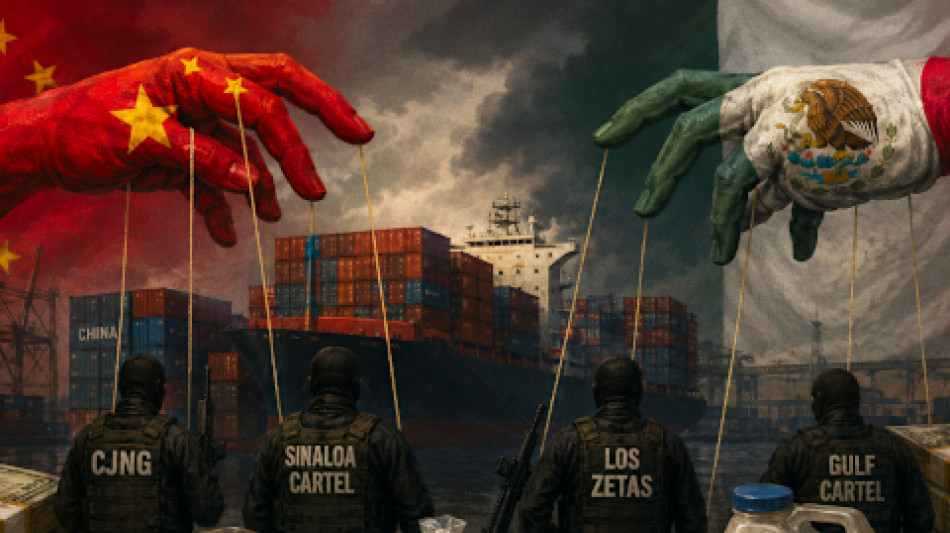
China’s cartel lifeline
China is not keeping Mexico’s drug cartels alive through a formal alliance, a military pact or an openly declared policy. The reality is more diffuse and, in operational terms, more useful. China-linked chemical suppliers, commercial intermediaries and underground banking networks have become crucial parts of the infrastructure that allows Mexican criminal organisations to manufacture synthetic drugs at scale, move them towards the United States and recycle the proceeds with remarkable speed. The relationship is not a single organisation. It is a market in which every participant solves a problem for somebody else.That distinction matters. There is no publicly demonstrated command structure in which Beijing directs the Sinaloa Cartel or the Cartel de Jalisco Nueva Generación. Nor is every Chinese chemical company, exporter, student, business owner or currency broker involved in crime. Yet the available evidence shows that actors based in China or connected to Chinese commercial and underground banking systems have become indispensable enablers of Mexico’s synthetic-drug economy. They supply ingredients, reduce financial friction and provide the cartels with a global capacity that Mexican organisations could not reproduce as cheaply or efficiently on their own. The phrase saving the cartels is therefore provocative, but not meaningless. It describes an economic function rather than a political alliance.An industrial supply chain, not a secret pactThe modern fentanyl trade is less dependent on farmland than the heroin and cocaine businesses that preceded it. Synthetic drugs can be produced close to their final market, their potency makes transport exceptionally profitable, and their chemistry can be adjusted when a particular substance is banned. That has changed the balance of power inside organised crime. Access to chemicals, expertise, equipment and finance now matters as much as control over fields or remote trafficking corridors. When China placed fentanyl-related substances under class-wide control in 2019, the trade did not disappear. It changed form. Direct exports of finished fentanyl became more difficult, while Mexican organisations expanded their own synthesis using imported precursor and pre-precursor chemicals. The business moved one step upstream into the vast international chemical market, where many compounds have legitimate industrial or pharmaceutical uses and where criminal diversion can be concealed behind intermediaries, false descriptions, altered customs codes and shipments routed through third countries.Mexican brokers and cartel-linked procurement specialists search for suppliers, negotiate prices and arrange delivery through Pacific ports, air cargo, courier services and parcel networks. Some chemicals enter Mexico directly. Others pass through the United States or additional transit jurisdictions before reaching clandestine laboratories. Suppliers can switch to closely related compounds when regulators schedule a specific substance, leaving enforcement agencies trapped in a recurring race between chemical innovation and legal control. Not every company in the chain necessarily knows the ultimate destination or intended use of a shipment. That ambiguity is one reason the system is resilient. At the same time, recent prosecutions have described sellers who allegedly marketed chemicals for narcotics production, discussed concealment methods, accepted digital payments and tailored products to the requirements of traffickers. The supply chain ranges from wilful criminal partnership to negligent compliance and the exploitation of ordinary trade.Once the chemicals arrive, Mexican groups provide the violent and logistical layer. They operate laboratories, recruit chemists, press counterfeit tablets, move bulk powder and use established smuggling networks to cross the US border. The Sinaloa Cartel and CJNG remain the most important organisations in this market, although splinter groups, regional allies and independent brokers increasingly participate. The result is not a simple China-to-Mexico pipeline, but an adaptive commercial web.The financial machine behind the narcotics tradeChemicals are only half of the story. A cartel that cannot move, convert and reinvest its earnings is a cartel that cannot survive. This is where Chinese underground banking and money-laundering networks have become especially valuable. Mexican organisations accumulate enormous quantities of dollars from retail and wholesale drug sales in the United States. Physically moving that cash across the border is expensive and vulnerable to seizure. Conventional bank transfers create records and require explanations. Traditional laundering networks charge substantial fees because they assume serious legal and operational risk.At the same time, many Chinese citizens and businesses seek access to dollars outside China, whether to buy property, pay tuition, acquire luxury goods or move wealth beyond the country’s strict foreign-exchange controls. Most of those customers are not drug traffickers. Their demand for foreign currency nevertheless creates a pool of buyers that professional laundering networks can exploit. The broker matches the two sides. Cartel dollars collected in the United States are delivered to a buyer, deposited through a network of accounts or used to purchase goods. An equivalent amount of renminbi is then paid inside China through a separate domestic transaction. The cartel or its representative receives value in Mexico through pesos, commercial payments, goods, property or accounts controlled by front companies. The money does not need to travel from the United States to China and back through a conventional international transfer. Value moves, while the original currency often remains within the country where it was collected.This is the logic of the mirror transaction. It is fast, difficult to reconstruct and capable of serving two clients at once. The cartel disposes of incriminating cash. The Chinese customer acquires foreign spending power. The broker earns fees and may profit again through trade, exchange-rate spreads or the resale of goods.The laundering can then be layered through electronics, designer products, vehicles, property, casinos, restaurants, import-export companies, cashier’s cheques, peer-to-peer payments, shell businesses, stablecoins and other digital assets. Encrypted messaging allows couriers and brokers to verify cash pickups with serial numbers or photographs while revealing little about the wider network. Trade-based laundering is particularly effective because a legitimate shipment can disguise an illicit transfer of value through false invoices, overpricing, underpricing or transactions between related companies.Between 2020 and 2024, 137,153 suspicious activity reports covered approximately 312 billion dollars in activity potentially linked to Chinese money-laundering networks. That figure must not be mistaken for 312 billion dollars of proven cartel revenue. Suspicious activity reports may overlap, include attempted transfers and capture lawful as well as unlawful transactions. Even with that essential caveat, the scale shows how deeply these networks can touch banks, money-service businesses, property markets, retail commerce and digital payment systems.Recent cases expose the convergenceEvents during 2026 have made the structure increasingly visible. In May, two Chinese nationals were charged with participating in a transnational laundering organisation that allegedly served the Sinaloa Cartel and CJNG. The alleged methods included mirror transfers, foreign bank accounts, encrypted communications, serial-number verification and trade-based laundering across the United States, Mexico, Latin America and China. In another case announced in March, six Chinese nationals and two pharmaceutical companies were charged in conspiracies involving chemical agents used to manufacture or adulterate fentanyl. Three defendants were also accused of attempting to provide material support to a person they believed represented the Gulf Cartel. The allegations illustrated how chemical sales, payment processing and cartel logistics can merge within the same commercial relationship.In June, a Honduras-based Chinese national pleaded guilty to drug trafficking, laundering and providing support to CJNG. The network had coordinated the laundering of more than 22 million dollars in proceeds from cocaine and fentanyl sales and used cryptocurrency, trade-based methods and encrypted communications. It had also participated in moving more than 450 kilograms of cocaine. Each case has its own legal facts, and charges remain allegations until proven. Taken together, however, the cases reveal a mature service economy. Cartels are no longer merely buying chemicals from distant factories and hiring unrelated launderers afterwards. They can draw on overlapping networks that arrange procurement, transport, payment, currency conversion, concealment and reinvestment.That integration reduces costs and makes disruption harder. Arresting a cartel lieutenant may remove one customer, but it does not eliminate the broker. Seizing one chemical shipment may delay a laboratory, but it does not destroy the supplier network. Closing one account often causes the money to migrate to another bank, another trade corridor or another digital asset.Beijing’s responsibility is real, but it is not simpleThe evidence does not justify treating every China-linked actor as an agent of the Chinese state. It does, however, raise serious questions about enforcement, regulatory incentives and the degree of political priority assigned to the problem. China possesses one of the world’s largest chemical and pharmaceutical manufacturing sectors. Its scale is a legitimate economic strength, but it also creates an enormous monitoring challenge. Small producers, trading companies, online sellers and freight intermediaries can be difficult to supervise, especially when the products are dual-use chemicals rather than finished narcotics. Criminal vendors can change company names, websites, payment channels and export descriptions faster than traditional investigations can proceed.Beijing has taken meaningful steps. It placed fentanyl-related substances under broad control, has prosecuted selected offenders and has participated in limited joint operations. In May 2026, China added three more chemicals to its controlled precursor list for exports to the United States, Canada and Mexico, while warning businesses about eight additional substances that could be used to manufacture synthetic drugs. A joint Chinese and US investigation also led to five arrests and drug seizures. Those actions demonstrate that cooperation is possible. They also expose the central weakness of molecule-by-molecule regulation. Once one chemical is controlled, traffickers can turn to a pre-precursor, a substitute compound or a different synthesis route. Effective enforcement therefore requires regulation of chemical families, rigorous customer verification, scrutiny of suspicious export patterns and rapid exchange of intelligence with destination countries.China argues that the fentanyl crisis is fundamentally an American problem driven by domestic demand and that Washington uses the issue as a geopolitical weapon. The first part contains an important truth. Without a vast consumer market in the United States, there would be no comparable revenue stream for the cartels. Yet demand does not absolve suppliers, brokers or governments from acting against criminal diversion. The crisis is simultaneously American in consumption, Mexican in large-scale production and transnational in chemistry and finance.Mexico is the manufacturing hub and the battlefieldMexico is not a passive victim of a foreign scheme. Its cartels choose to buy the chemicals, operate the laboratories, corrupt officials, intimidate communities and smuggle the finished drugs. They have converted geographic proximity to the United States into a decisive commercial advantage and have used decades of experience in cocaine, heroin and methamphetamine trafficking to build a synthetic-drug industry of global reach.The Mexican government has intensified seizures, laboratory raids, border deployments and transfers of major cartel figures to US custody. These actions have disrupted individual organisations and demonstrated a greater willingness to confront high-value targets. Yet the underlying business model has proved highly adaptable. Leadership losses can trigger fragmentation, succession wars and temporary chaos without eliminating the market for drugs, laundering or protection. Ports remain a critical vulnerability. The volume of legitimate trade makes comprehensive inspection impossible, while corruption, intimidation and falsified documentation can help suspicious cargo pass through. Local police forces and prosecutors often face far greater resources and firepower on the criminal side. National institutions may conduct spectacular operations, but sustained control requires reliable customs systems, protected investigators, independent courts and a financial intelligence structure capable of following money through legitimate businesses.Mexico’s insistence on sovereignty is understandable, especially when US officials speak of unilateral action. But sovereignty cannot become a shield against verifiable evidence or a substitute for institutional reform. Equally, Washington cannot treat Mexico merely as a source of danger while ignoring the American market that generates the profit and the financial channels through which much of that profit circulates.Why the cartels are being savedChina-linked networks save Mexican cartels in three practical ways. First, they preserve production by supplying an evolving menu of chemicals and equipment when specific substances are banned. Secondly, they make laundering cheaper and safer by matching drug dollars with demand for foreign currency and goods among Chinese customers. Thirdly, they internationalise cartel finance, allowing proceeds to be converted into property, trade, digital assets and legitimate-looking business revenue across several jurisdictions.The word saving should not be confused with charity or ideology. These are commercial relationships. Chemical suppliers want sales. Money brokers want fees. Chinese clients want access to overseas currency. Mexican cartels want inputs and clean value. Each party can participate without understanding the entire structure, and that fragmentation protects the system from collapse. Yet the phrase can also mislead. China is not the sole cause of cartel power. Mexico’s corruption and impunity, US drug demand, weaknesses in global trade controls, gaps in financial supervision and the extraordinary profitability of synthetic narcotics all sustain the same market. Removing one Chinese supplier would not end it. Reducing the availability of China-linked chemicals and laundering services across the system would, however, make cartel operations slower, more expensive and more vulnerable.What could actually break the chainA serious strategy must target the network rather than its nationality. Chemical producers should be required to verify customers, end users and unusual shipping routes. Export controls should cover families of dangerous compounds and be updated rapidly as synthesis methods change. Online platforms should be compelled to remove sellers that advertise concealment or narcotics applications. Ports need risk-based screening built on trade data, beneficial ownership records and intelligence about brokers, not merely random container searches.Financial enforcement must look beyond large international transfers. The most revealing signals may be repeated cash deposits, unexplained purchases of electronics, rapid credit-card repayments, property acquired through third parties, companies trading far beyond their apparent capacity and stablecoin flows that do not fit a customer’s profile. Banks, payment companies, casinos, estate agents, customs services and digital-asset platforms need to see themselves as parts of the same defensive system. Targeted sanctions and prosecutions can isolate the brokers who connect otherwise separate criminal markets. They are likely to be more effective than broad tariffs, which punish legitimate trade and can be absorbed or circumvented without identifying a single illicit shipment. Mutual legal assistance between China, Mexico and the United States must become faster, more routine and less dependent on the wider political climate.Enforcement alone will not resolve the crisis. The United States must continue reducing overdose deaths through treatment, prevention, naloxone access and a credible strategy for lowering demand. Mexico must strengthen institutions that protect ports, courts and local government from criminal capture. China must police chemical exporters and underground banking with the same seriousness it applies to threats it regards as central to domestic stability.The deepest danger is the belief that the fentanyl economy is a straight line from a Chinese factory to a Mexican laboratory and then across the US border. It is a web of legal commerce, criminal brokerage, digital finance, corrupt facilitation and consumer demand. That is why it survives arrests, sanctions and record seizures. China is not single-handedly keeping Mexico’s cartels alive. But China-linked chemical and financial networks have become one of the principal systems that allow them to adapt, recover and expand. Breaking that relationship would not end organised crime. It would remove one of its most efficient engines.
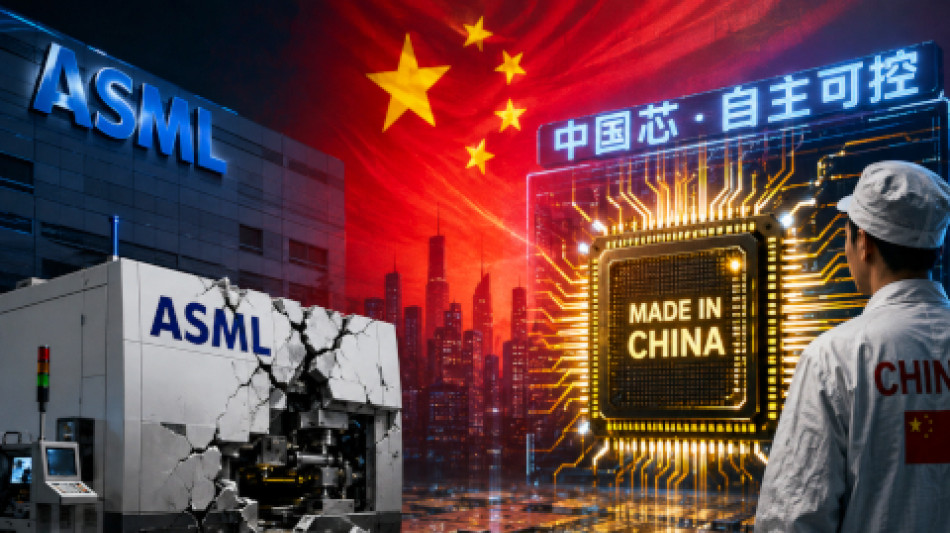
China’s lithography leap
China has crossed a threshold in the semiconductor contest that many Western policymakers had hoped would remain out of reach for considerably longer. A state-backed manufacturer in Shanghai has begun producing domestically developed immersion deep-ultraviolet lithography systems, with the first machines intended for some of the country’s most important chipmakers.The development does not mean that China has suddenly reproduced ASML’s most advanced technology. It has not broken the Dutch company’s monopoly on commercially proven extreme-ultraviolet lithography, nor has it demonstrated that its new machines can yet deliver the productivity, precision and reliability demanded by a modern high-volume fabrication plant.What has changed is nevertheless important. China’s domestic lithography campaign is no longer confined to research projects, politically convenient announcements or laboratory prototypes. It has entered an initial industrial phase, supported by a manufacturer, state capital, specialist engineering teams and customers prepared to test the equipment under real production conditions.A breakthrough that must be described preciselyShanghai Aishengna Electronic Technology Group is leading the effort to manufacture China’s first home-grown immersion DUV systems. The current production plan envisages approximately five machines during 2026 and roughly twenty more in 2027. Initial deliveries are expected to go to Semiconductor Manufacturing International Corporation, Hua Hong Semiconductor and memory producer ChangXin Memory Technologies.Those numbers immediately reveal both the significance and the limitations of the development. ASML shipped 131 immersion DUV systems in 2025 and has prepared annual production capacity of approximately 130 systems for 2026. China is therefore not about to displace the Dutch group by volume. The Chinese systems also require extensive qualification. They are not believed to match ASML’s current machines in performance, availability or long-term reliability. No independently verifiable data have yet been published for the most important commercial measurements, including wafer throughput, overlay precision, defect rates and sustained operating time.The expression mass production must consequently be treated with caution. In this instance, it describes the transition from a single prototype towards a small repeatable manufacturing series. It does not yet demonstrate that the machines are ready to operate continuously in an advanced fabrication plant while producing commercially acceptable yields.Even so, the transition matters. A technology programme that can produce five imperfect machines is fundamentally different from one that can produce none.Why DUV remains strategically decisiveImmersion DUV lithography is sometimes described as yesterday’s technology because ASML’s most advanced customers are now expanding their use of EUV and High-NA EUV systems. That description is misleading. DUV machines remain essential throughout the semiconductor industry. They use light with a wavelength of 193 nanometres and place a thin layer of water between the projection optics and the silicon wafer. The water increases the effective numerical aperture of the optical system, allowing finer circuit patterns to be printed than would be possible with a conventional dry scanner.Not every layer of an advanced processor requires EUV. DUV machines continue to produce numerous layers in leading-edge chips and are indispensable for mature logic, memory, analogue, automotive, communications and power semiconductors. These categories represent an enormous industrial market, even when they receive less attention than the smallest processors used in artificial intelligence systems. DUV can also be pushed beyond the resolution achieved in a single exposure. Through multiple patterning, a chipmaker divides one complex pattern into several simpler patterns and exposes the wafer repeatedly. This technique can extend DUV production towards considerably smaller process nodes.The price is complexity. Each additional exposure introduces another opportunity for alignment errors, contamination and yield loss. More masks, more processing steps and more time are required. Production becomes slower and more expensive, while precise overlay between successive patterns becomes increasingly difficult.A Chinese immersion DUV machine would therefore not automatically place the country at the technological frontier. It could, however, secure equipment for a large proportion of China’s semiconductor output and preserve a domestic route towards more advanced chips when foreign machines are unavailable.China is building an industrial coalitionAishengna was established in 2023 with registered capital of seven billion yuan and the backing of state-controlled investors. The company has incorporated engineering teams associated with Shanghai Yuliangsheng Technology and Shanghai Micro Electronics Equipment, bringing together expertise that had previously been dispersed across several Chinese lithography initiatives.Yuliangsheng has close links to the wider equipment network surrounding SiCarrier, which itself has been closely associated with Huawei’s campaign to create a domestic semiconductor supply chain. The structure illustrates how China is approaching the problem. Instead of relying on one company to develop every technology independently, it is combining state finance, municipal support, engineering talent, fabrication plants and equipment manufacturers.The expected customers are equally important. SMIC, Hua Hong and CXMT are not merely buyers waiting for a finished commercial product. They can provide the production environment in which the machines are tested, calibrated and improved.A lithography system placed inside a major fabrication plant begins generating the data needed for industrial learning. Engineers can identify stability problems, improve alignment, modify software, strengthen components and adjust process recipes. Each wafer becomes part of the development programme.This relationship gives the Chinese initiative an advantage that a conventional start-up would not possess. Its first customers have strategic reasons to tolerate delays, lower throughput and higher initial costs. They are likely to participate in the development process because the alternative is continued dependence on equipment whose delivery or servicing may be restricted at any time.ASML’s real advantage is larger than the machineASML’s dominance cannot be explained by the wavelength of its light source alone. A modern scanner is an exceptionally complicated production platform in which optics, lasers, wafer stages, vibration control, thermal management, metrology, computational lithography and software must operate as one system.The machine must position a wafer with extraordinary precision, expose successive layers, compensate for microscopic distortions and repeat the process hundreds of times without losing calibration. It must perform these tasks at industrial speed and remain available for continuous production.A scanner that produces one successful pattern in a controlled test is therefore not necessarily commercially useful. A fabrication plant needs repeatability across millions of exposures. A small overlay deviation may render an entire layer defective. An unreliable component may interrupt a production line whose unfinished wafers are worth millions. ASML has spent decades refining these capabilities with leading chipmakers and a specialised international supplier network. It also possesses an enormous installed base, extensive field-service operations and process knowledge accumulated across successive generations of machines.That is the central reason why the Chinese systems do not present an immediate commercial threat. China may have succeeded in assembling a domestic immersion platform, but it has yet to demonstrate the operating discipline that transformed ASML’s machines into the industry standard.The catch is industrial reliabilityThe most difficult stage begins after the first machine leaves the factory. China must prove that its domestic scanners can maintain overlay accuracy over long production runs, achieve acceptable throughput, survive constant operation and deliver similar results from one machine to another. It must also establish a reliable supply of spare parts, trained service engineers, qualified materials and compatible processing equipment.Some critical components are still believed to depend on foreign suppliers. Even where most of the machine is domestically produced, one imported laser component, precision sensor or optical element may create a new vulnerability. China may have reduced its dependence without eliminating it. Lower productivity can initially be absorbed through state support. A Chinese fabrication plant may accept a higher cost per wafer because the strategic value of domestic equipment exceeds the immediate commercial loss. Additional machines can compensate for poor throughput, while subsidies can offset lower yields.That approach has limits. Advanced processors contain large dies and costly materials. Poor yield rapidly becomes prohibitive. A machine that is politically valuable but industrially unstable cannot support China’s long-term demand for artificial intelligence accelerators, advanced memory and premium smartphone processors.The first systems will consequently be judged less by the smallest line they can print than by their behaviour after thousands of wafers.The EUV wall has not fallenChina’s progress with immersion DUV must also be separated from its far more difficult effort to develop EUV lithography. A prototype constructed in a secure facility in Shenzhen has reportedly succeeded in generating extreme-ultraviolet light. That is a meaningful technical achievement, but the system has not yet produced working chips. Generating EUV light is only one element of a complete scanner.EUV operates at a wavelength of 13.5 nanometres. The light is absorbed by almost every material, meaning that the exposure process must take place in a vacuum and use highly specialised reflective optics rather than conventional lenses. The system must control contamination, maintain mirror quality, position the wafer, manage heat and compensate for minute optical distortions. Masks, photoresists, metrology equipment and computational corrections must also function as part of the same process. A weakness in any one of these areas can prevent the machine from producing usable wafers.ASML, meanwhile, is not standing still. It is expanding production of its established EUV systems while introducing High-NA technology for future logic processes below two nanometres and advanced memory production. The company is preparing to increase its low-NA EUV capacity significantly during 2027 and is already examining another expansion for 2028.China may therefore narrow the gap in one generation of equipment while the technological frontier moves forward again. The catch is not merely whether China can build an EUV prototype. It must convert that prototype into a compact, stable, serviceable and economically viable production system. That remains a vastly more demanding task.Export controls have changed the economicsRestrictions imposed by the United States and the Netherlands have prevented Chinese customers from acquiring ASML’s EUV systems and have progressively limited access to the most advanced immersion DUV models. These measures have slowed China’s technological progress, increased production costs and forced chipmakers to rely on older machines and more complicated manufacturing techniques.They have also produced an unintended consequence. Domestic lithography now has a guaranteed strategic market. A Chinese machine does not need to outperform ASML in every category to become attractive. It needs to be sufficiently capable at a moment when the foreign alternative cannot be purchased, upgraded or trusted to remain serviceable. For a Chinese fabrication plant, technological sovereignty has acquired an economic value of its own. A less productive domestic machine may still be preferable to a superior foreign system that could become unusable following a regulatory decision abroad.This creates a fundamental policy paradox. Export controls can buy time and deny access to the newest technology, but the same controls strengthen the commercial case for developing substitutes. The more uncertain foreign supply becomes, the more money, talent and political attention China is prepared to direct towards local equipment.Restrictions can delay technological convergence. They cannot guarantee permanent dependence. ASML is not facing an immediate crisisThe alarm surrounding China’s announcement should not obscure ASML’s present strength. The company generated second-quarter sales of €9.3 billion in 2026 and net income of €2.9 billion. It subsequently raised its full-year sales forecast to between €43 billion and €45 billion, with an expected gross margin of between 54 and 56 per cent.Demand for advanced logic and memory equipment continues to be driven by investment in artificial intelligence infrastructure. ASML is expanding its production capacity, has strong customer commitments and retains the only commercially proven EUV platform used in high-volume manufacturing.A handful of Chinese immersion machines cannot materially alter that position in the near term. ASML’s installed base, service revenue, software, customer relationships and technological lead remain formidable. The strategic risk lies further ahead. China has been an important market for ASML’s DUV business. If domestic machines improve, Chinese customers may gradually replace foreign equipment in mature and intermediate processes, even where the local alternative remains less efficient.ASML could therefore lose part of its Chinese market without being technologically defeated. Procurement rules, servicing concerns and national industrial policy may prove as influential as technical performance. A monopoly begins to weaken not only when a competitor reaches parity, but when customers decide that dependence itself has become unacceptable.A turning point, not a takeoverChina has achieved something once regarded as improbable: it has created a credible path towards domestically manufactured immersion DUV lithography systems and begun building them for major customers. That achievement must not be confused with equality. The initial output is small. The machines are not yet proven in high-volume manufacturing. Their performance remains below ASML’s standards, and the much more difficult EUV challenge is unresolved.Nevertheless, the programme now possesses a manufacturer, state finance, engineering teams, customers and a production timetable. It is no longer theoretical. That is the real source of concern for ASML. The nightmare is not that China has already reproduced everything the Dutch company can build. It is that a process of industrial learning has begun in a market large enough, wealthy enough and politically determined enough to sustain years of costly experimentation. ASML remains far ahead. But the assumption that China must remain permanently dependent on imported lithography technology is no longer secure.
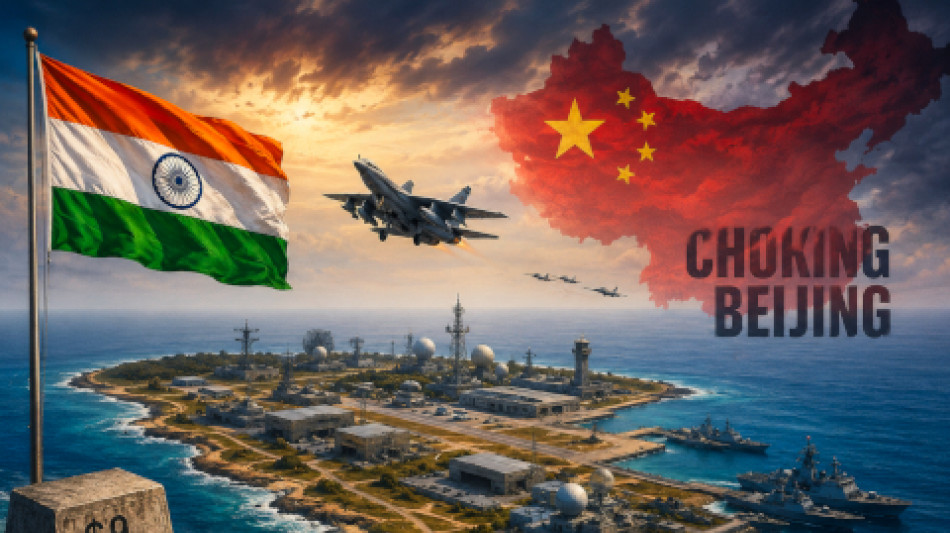
India's island choke point
The language of revenge makes for an arresting headline, but it obscures the more consequential story unfolding on Great Nicobar. India is not constructing a mechanism that can simply be activated to halt Chinese trade. It is attempting to convert a remote and sparsely developed island into a forward maritime hub from which it can observe strategic shipping routes, support naval and air operations and, in a serious crisis, make Chinese access to the Indian Ocean more difficult and expensive.Great Nicobar is the southernmost large island in India’s Andaman and Nicobar archipelago. It lies closer to Indonesia than to the Indian mainland and sits near the approaches to the Strait of Malacca, one of the most important maritime passages in the world. The island is also approximately forty nautical miles from a heavily used east-west shipping corridor. That geography gives Great Nicobar a significance far greater than its size or population might suggest. Vessels travelling between the Indian Ocean, Southeast Asia and the South China Sea must pass through a limited number of navigable channels. The Strait of Malacca remains the principal commercial route because alternatives through the Sunda and Lombok straits generally require longer voyages, more fuel and additional time.For China, whose economic strength depends heavily on seaborne exports, raw materials and imported energy, this is a persistent strategic vulnerability. For India, the same geography offers an opportunity to transform an isolated territory into an advanced observation, logistics and deterrence platform.A nine-billion-dollar transformationThe Great Nicobar development programme is commonly described as an investment worth roughly nine billion dollars, although its estimated cost has changed as the plans have been revised. The wider programme is currently valued at approximately 81,000 crore rupees and covers around 166 square kilometres.It combines four interconnected projects. The first is a deep-water international container transhipment port at Galathea Bay. The second is a new airport intended for both civilian and military use. The third is a gas and solar power complex with a planned capacity of 450 megavolt-amperes. The fourth is a new township with roads, water systems, communications, public services and industrial infrastructure.The initial two phases of the proposed port were appraised in 2026 at a combined cost of 48,862 crore rupees. They are designed to provide twelve container berths and an annual handling capacity of 11.8 million twenty-foot equivalent units. Longer-term plans could expand the port still further. Natural water depths of between twenty and thirty metres are among Galathea Bay’s most important commercial advantages. They could allow the terminal to receive the largest modern container ships without the severe draught restrictions encountered at many existing Indian ports.The new airport is equally significant. With an estimated investment of around 13,000 crore rupees, it is intended to accommodate civilian aircraft as well as military transports, maritime patrol aircraft and combat aircraft. Operational control is expected to rest with the Indian Navy, giving New Delhi a much larger aviation platform in the south-eastern Indian Ocean than is available at the existing airfield on the island.The port, airport and power facilities therefore cannot be understood as separate construction schemes. Together, they are intended to create the permanent logistical foundation required for sustained economic and military activity.India wants its cargo backThe commercial argument behind the project is substantial. India has historically routed a large share of its container transhipment traffic through foreign ports, particularly Colombo, Singapore and Port Klang. Containers arriving on large intercontinental vessels are frequently transferred at those hubs to smaller feeder ships serving Indian destinations.That arrangement costs India revenue, creates dependence on infrastructure outside its jurisdiction and reduces its influence over regional shipping networks. A competitive deep-water terminal at Great Nicobar could intercept cargo moving between the Indian Ocean and East Asia while serving ports on India’s eastern coast, Bangladesh, Myanmar and other parts of Southeast Asia. The location is attractive, but geography alone does not create a successful port. Shipping companies choose terminals according to price, reliability, vessel turnaround times, customs efficiency, digital systems, frequency of feeder connections and the availability of repair, storage and bunkering services. Galathea Bay will have to compete not only with Singapore, Colombo and Port Klang but also with emerging Indian facilities such as Vizhinjam.The financial structure reveals how difficult that competition may be. The first two port phases have been designed as a public-private partnership, with Indian-controlled ownership and a proposed concession period of fifty years. Project planners sought viability-gap assistance of 12,230 crore rupees to reduce the risk for private investors. Financial appraisers concluded that the requested support did not fit the standard viability-gap funding framework. The ports ministry may therefore have to provide capital assistance from its own budget or seek a separate political decision. This is a crucial detail. It suggests that Great Nicobar’s strategic value may justify public expenditure that would be difficult to defend on commercial returns alone.In other words, the port is not merely a business venture. It is strategic infrastructure with a commercial component.What the island changes for ChinaThe most immediate military benefit would be improved maritime domain awareness. Radar installations, long-range aircraft, drones, naval vessels and intelligence systems based closer to the Malacca approaches would give India a clearer picture of movements between the western Pacific and the Indian Ocean. Chinese naval deployments in the Indian Ocean have become more regular over the past two decades. Warships assigned to anti-piracy patrols, survey vessels, submarines and support ships have all demonstrated Beijing’s growing ability to operate far from the Chinese coastline. Access to ports developed or operated by Chinese companies has also increased Beijing’s logistical options across the region.A fully equipped Great Nicobar hub would allow India to monitor those movements from a much more advantageous position. It could support patrol aircraft for longer periods, shorten response times and provide fuel, maintenance and communications closer to the principal maritime routes. This does not mean that India could effortlessly close the Strait of Malacca. The expression “choking Beijing” is strategically evocative but operationally misleading. The strait is bordered by Malaysia, Indonesia and Singapore. India does not control it, and any attempt to block commercial shipping would constitute an extraordinary act with global economic and military consequences. Maintaining an effective blockade against a major power would require persistent naval and air superiority, extensive intelligence, secure logistics and cooperation from other states.Great Nicobar is therefore not a switch with which India can turn off Chinese trade. Its importance lies in deterrence and strategic uncertainty. It could increase the number of assets China would need to protect its sea lanes, make covert naval movement more difficult and force Beijing to devote greater attention to the eastern Indian Ocean.Alternative Chinese routes do exist. Ships can use the Sunda or Lombok straits, while pipelines through Myanmar and overland corridors through Pakistan provide limited diversification. None of them can easily replace the scale, efficiency and established commercial networks associated with the Malacca route. India does not need the ability to stop every Chinese vessel to gain leverage. It needs the credible capacity to observe movements, complicate operations and impose additional costs during a confrontation.A forward base must also surviveBuilding runways, quays and radar stations is only the beginning. A remote installation becomes strategically valuable only when it can continue operating under pressure.Great Nicobar will require secure fuel storage, ammunition facilities, maintenance depots, air-defence systems, hardened aircraft shelters, redundant communications and dependable supply links. It must also be protected against submarine activity, missile attacks, cyber disruption and sabotage. The island’s distance from India’s main industrial and military centres creates a logistical challenge. Personnel, spare parts, construction materials and emergency supplies must travel long distances by sea or air. Severe weather can interrupt those connections, while the narrow local infrastructure base leaves little room for failure.A highly visible airport and port without adequate protection could become targets rather than instruments of leverage. The strategic value of Great Nicobar will consequently depend less on ceremonial inaugurations than on the unglamorous systems that keep aircraft flying, ships supplied and sensors functioning during a crisis.The project could also assist India in humanitarian relief and disaster response. A major airport, deep-water port and permanent logistics network would provide a forward base for operations after cyclones, earthquakes or tsunamis across Southeast Asia. Such capabilities would strengthen India’s claim to be a dependable regional security partner rather than merely a country seeking military advantage over China.The ecological price cannot be hiddenGreat Nicobar is not an empty piece of territory. It contains tropical rainforest, mangroves, coral habitats and numerous endemic species. Galathea Bay is associated with the nesting grounds of giant leatherback turtles, while the island is also home to the Nicobar megapode, saltwater crocodiles and other vulnerable wildlife. The project involves the diversion of approximately 130.75 square kilometres of forest land. Estimates indicate that close to one million trees could eventually be affected, although the government maintains that significant green areas will remain within the wider development zone.Authorities have imposed dozens of environmental conditions and planned compensatory afforestation covering more than ninety-seven square kilometres. The government also argues that the large majority of Great Nicobar will remain within forests, national parks, protected areas, a biosphere reserve and tribal conservation zones. The National Green Tribunal declined to stop the development in February 2026, concluding that there was no sufficient basis for overturning the existing environmental and coastal clearances. It nevertheless required strict compliance with the protective conditions.The ruling did not eliminate the underlying concerns. An island rainforest is a complex and isolated ecosystem that cannot simply be recreated through tree planting elsewhere. Forest loss can alter freshwater systems, coastal stability and wildlife migration even when a large percentage of the island formally remains protected.There is also a profound human dimension. Great Nicobar is home to the Nicobarese and the Shompen, one of the world’s most isolated indigenous communities. The government says the project will not physically displace them and has promised dedicated safeguards. The greater danger may arise from indirect contact. A large influx of construction workers, officials, traders and future residents could expose isolated communities to disease, cultural disruption and pressure on traditional territory. Preventing direct displacement will not be sufficient if the surrounding social and ecological conditions are transformed beyond recognition.A landscape shaped by disasterThe island lies in a seismically active region. The Indian Ocean tsunami of 2004 devastated Great Nicobar, destroyed settlements and caused severe land subsidence at its southern end. Any new airport, port, power plant and township must therefore be designed for conditions far more demanding than those facing ordinary mainland infrastructure. Breakwaters, evacuation routes, emergency power systems, elevated storage, earthquake-resistant construction and redundant communications will all be essential. The financial cost of such resilience is high, but ignoring it would expose the entire programme to catastrophic failure.Environmental protection and disaster planning are not secondary obstacles to the strategic project. They are part of its strategic credibility. A port delayed by legal challenges, damaged by a natural disaster or surrounded by social conflict would weaken rather than strengthen India’s position.The project is not yet a finished weaponThe most important distinction is between ambition and operational reality. Great Nicobar is not currently capable of controlling the Malacca approaches on the scale suggested by dramatic descriptions of the project. In March 2026, the relevant public-private partnership committee recommended the first two port phases for further administrative consideration, subject to financial, contractual and ownership conditions. The airport had entered initial tendering, while the power plant and township remained at different stages of appraisal and approval.The latest public timetable indicates that physical work on the Galathea Bay port is expected to begin in 2028. That schedule is later than earlier expectations that an initial port phase might already be operating by that year. Even after construction begins, completing the full island transformation will require many years and potentially several decades. Financing, private-sector participation, environmental monitoring, supply-chain constraints and construction in a remote seismic location could all affect the schedule. Cost escalation is also likely to remain a concern as designs become more detailed.China will not stand still during that period. Beijing can strengthen alternative routes, expand naval deployments, increase cooperation with regional ports and develop capabilities intended to threaten Indian installations. Great Nicobar is therefore part of a continuing strategic competition rather than a final answer to it.India’s real revenge is strategic patienceDescribing the Great Nicobar project as India’s revenge on China captures the emotional appeal of a country turning geography against its principal Asian rival. Yet revenge is not the most accurate description. The project is better understood as an attempt to correct a long-standing imbalance. India possesses an island chain overlooking some of the world’s busiest sea routes, but for decades much of that geographical advantage remained underdeveloped. Great Nicobar represents an effort to convert position into capability.Success will not be measured by whether India can literally stop Chinese shipping. It will be measured by whether the island gives New Delhi reliable surveillance, faster military response, commercially viable port operations and a resilient logistics network without inflicting irreversible damage on the people and ecosystems already there.If those conditions are met, Great Nicobar could become one of India’s most consequential strategic investments. It would not choke Beijing in peacetime, but it could make China’s leaders think more carefully about the risks of confrontation in the Indian Ocean. That additional calculation is the true source of India’s leverage.

Germany under Weidel
An AfD-led government would seek a far-reaching break on migration, taxation, energy and Europe. Its advance in Saxony-Anhalt makes the question more immediate, but winning votes and acquiring the power to rewrite Germany are different things.Alice Weidel’s ambition to reshape Germany now rests on more than opinion polls. In the Saxony-Anhalt election on 6 September 2026, the Alternative for Germany secured 43.8 per cent of the vote in the provisional result. Its 39 seats in the 83-member state parliament left it short of an outright majority, but brought the party much closer to a position from which it could turn its programme into government decisions.The result followed the AfD’s 20.8 per cent share in the February 2025 federal election. Yet neither an electoral breakthrough in one state nor a strong national showing makes Weidel chancellor. A federal government would need parliamentary support; a state administration cannot decide Germany’s currency, foreign policy or national tax system. The distinction matters because the AfD’s ambitions extend well beyond the powers it might first acquire.Its project combines tighter immigration controls with lower taxes, a reversal of climate policy, closer relations with Russia and a fundamental challenge to European integration. Some measures could be pursued through ordinary legislation or administrative priorities. Others would require international negotiations, constitutional changes or agreement from institutions the party could not simply command. The likely transformation is therefore best understood as a sequence of political confrontations, not a single overnight rupture.Migration would lead the programmeImmigration is where an AfD-led government would face the greatest pressure from its own supporters to demonstrate immediate results. Its proposals envisage stronger border restrictions, more deportations and a tighter separation between temporary protection and permanent settlement. In Saxony-Anhalt, the party has proposed a dedicated mechanism to accelerate removals, illustrating how a state administration could act even without control of federal legislation.The term “remigration” remains central to the dispute. In the Bundestag on 9 September, Chancellor Friedrich Merz accused the AfD of promoting a policy equivalent to ethnic cleansing. The party rejected that accusation and said its objective was the lawful removal of foreigners required to leave. These are opposing political claims, not interchangeable descriptions of an established government policy.Weidel has also said that people who work, contribute and obey the law should not fear an AfD administration. The practical test would be whether legislation and administrative conduct reflected that assurance. A government must distinguish between rejected applications, recognised protection, lawful residence and citizenship; treating these categories as though they conferred identical rights would misrepresent both the law and the scope for political action.An intensified removal programme would also encounter practical constraints. A political instruction cannot itself produce travel documents, establish a person’s identity or secure cooperation from a destination country. Faster casework might change outcomes in some cases. In others, legal safeguards or practical obstacles would remain. German citizenship, meanwhile, cannot simply be disregarded because a government disapproves of someone’s ancestry or religion.The economic appeal — and its limitsThe AfD’s economic offer is recognisably different from a programme of state-led redistribution. Its 2025 manifesto proposed raising the basic income-tax allowance to €15,000, abolishing the remaining solidarity surcharge and removing inheritance tax. It also advocates lower business taxation and a reduction in regulatory burdens. For households and employers dissatisfied with the cost of working, investing or transferring a family business, that is a substantial offer.But “tax relief” is not a single benefit distributed equally across society. Someone with little taxable income cannot gain as much from an income-tax reduction as a household paying a large bill. Abolishing inheritance tax directly benefits those receiving taxable inheritances, not those with no assets to inherit. Economic modelling of the party’s proposals has accordingly identified particularly large gains for higher-income households.That does not mean every lower-income voter would necessarily lose. Changes to energy charges or consumption taxes could benefit a wider group. The relevant question is the combined effect of taxes, benefits and public services, rather than the most attractive individual promise. A household might welcome a smaller tax bill yet be worse off if the services it needs became more expensive or less accessible.The financing problem would arrive quickly. Lower revenues have to be matched by higher growth, reduced expenditure, other taxes or additional borrowing. The party’s opposition to loosening borrowing restraints makes that trade-off more demanding. Savings from migration policy or bureaucracy cannot be assumed, without a detailed budget, to cover an extensive permanent reduction in tax receipts. Promising a smaller state is easier than identifying which functions should become smaller.Energy policy would change directionOn energy, the AfD proposes more than an adjustment to the speed of decarbonisation. It rejects the prevailing approach to climate policy and wants Germany to leave the Paris Agreement. Its programme favours renewed nuclear generation, continued reliance on coal and gas, and the restoration of Russian pipeline supplies. Carbon-related charges are presented as costs to be removed rather than tools to influence investment and consumption.The immediate appeal is clear: cheaper energy is an easily understood promise to households and industrial employers. Its delivery would be less straightforward. Reducing a tax or levy can lower one component of a bill, but it does not establish the price of fuel, finance new infrastructure or eliminate other costs. Nor does a political commitment to nuclear power determine which installations could operate, under what conditions and on what timetable.The central economic risk would be uncertainty during the change of course. A manufacturer deciding on an investment needs to know not only today’s energy price but also the rules likely to apply over the life of its equipment. Businesses that had committed capital under one set of incentives could face another. Some would benefit from deregulation; others could find that the assumptions behind their investment had changed.A return to Russian supplies would raise a separate question about dependence. Buying gas on attractive terms and establishing a secure long-term relationship are not the same achievement. An AfD government would have to explain how it would protect consumers and industry if its preferred commercial arrangement again became entangled in geopolitical conflict.Europe would be the largest gambleThe party’s European agenda reaches beyond resisting individual regulations. Its federal programme calls for departure from the euro system and the restoration of a national currency. It also seeks a new association of sovereign European nations in place of the existing model of integration. Those objectives should not be softened into a routine argument for administrative reform in Brussels.Equally, a manifesto does not amount to an executable exit agreement. Berlin could not unilaterally require its neighbours to accept a replacement European order on German terms. A government pursuing such a project would need to establish what cooperation it wanted to retain, which obligations it intended to end and what concessions it was prepared to make in return.Currency change would bring particularly difficult choices. Wages, savings, pensions, mortgages and business contracts would all require rules governing their treatment. If a new German currency appreciated, it could make imports cheaper while making some exports more expensive for foreign buyers. That is a possible mechanism, not a forecast of an inevitable exchange rate. The distribution of gains and losses would depend on the arrangements negotiated and the response of markets.There is also a distinction between leaving institutions and challenging them from within. An AfD-led government could seek to obstruct or renegotiate particular European initiatives without immediately pursuing withdrawal. This would be a less dramatic route, but potentially a consequential one. For businesses, the question would be whether promised regulatory freedom compensated for the uncertainty created around Germany’s future relationship with its largest neighbouring markets.A different relationship with MoscowThe AfD’s preference for closer relations with Russia and reduced support for Ukraine would be among the clearest changes in Germany’s international posture. Its federal programme envisages Ukraine as a neutral country outside both NATO and the European Union. Supporters present accommodation with Moscow as a means of reducing confrontation and restoring commercially useful relations.The strategic objection is that improved bilateral relations are not the same thing as a durable European settlement. A policy judged beneficial in Berlin could be viewed very differently by governments closer to Russia. A Weidel-led administration would therefore have to weigh its desired relationship with Moscow against the confidence of Germany’s existing partners.It would be inaccurate, however, to describe immediate withdrawal from NATO as a settled first step in the party’s federal programme. The document retains membership as a central security element until an independent and effective European military alliance exists. The nearer-term change would be more likely to concern Germany’s positions within its alliances, its approach to Ukraine and its willingness to maintain pressure on Russia.That could alter European calculations even without a formal treaty break. Governments plan around what they expect their partners to do. A change in those expectations can have consequences before any institution is dissolved or agreement terminated.Social policy would reward a particular modelThe AfD’s domestic agenda also seeks to influence how Germans live, work and raise children. Its family policies favour a traditional parental household, with financial incentives for having children and support for care provided at home. Its welfare proposals place greater emphasis on work obligations and more restrictive access to assistance for some foreign nationals.These choices could appeal to families who feel that unpaid care receives too little recognition. They also create a policy tension. Encouraging more people into employment while making it financially easier to remain at home requires careful design. Neither objective is inherently impossible, but they cannot both be treated as automatic solutions to the same staffing problem.The broader issue would be how support was allocated among different households. A family with secure earnings, substantial tax liabilities and the option of reducing paid work could experience the programme differently from a single parent dependent on reliable childcare. The balance between cash payments, services and eligibility rules would matter at least as much as the language of family support.The states could change institutions firstSaxony-Anhalt demonstrates why the federal chancellery is not the only important prize. State governments possess substantial powers over education, culture and domestic administration. The AfD’s regional plans seek changes to curricula, migration enforcement and cultural priorities. Such measures could affect daily public life long before the party acquired the ability to pursue a national currency change.The significance would lie partly in decisions that attract less attention than a major parliamentary bill. Grant criteria, appointments, departmental instructions and the selection of institutional priorities can change the way an administration operates. That does not make every disputed decision unlawful. It does mean that the character of government cannot be assessed solely by counting the statutes it repeals.Here the distinction between democratic change and institutional capture becomes important. An elected administration may legitimately change policy. It must still observe legal limits, equal treatment and the independence of functions that are not supposed to serve a governing party. The practical question would be whether an AfD government treated those restraints as part of its mandate or as obstacles to be overcome.The constitutional limits are realThe legal controversy surrounding the AfD requires precision. In February 2026, the Cologne Administrative Court provisionally prevented the federal domestic intelligence agency from treating the national party as a confirmed right-wing extremist organisation pending the relevant first-instance proceedings. That did not erase the legally established suspected-case status. Nor did the court conclude that no anti-constitutional tendencies existed within the party.The distinction also matters geographically. The legal treatment of the national organisation is not identical to that of every state branch. Conflating those positions obscures the actual controversy and makes it harder to judge subsequent government decisions on their merits.An electoral mandate would not remove Germany’s constitutional structure. Ordinary parliamentary majorities cannot amend the Basic Law at will: amendments require two-thirds support in both the Bundestag and Bundesrat. The constitution also protects core principles, including human dignity and the basic democratic and federal order, against amendment. Policy ambitions would therefore remain subject to institutions with their own authority.Such protections are consequential, but they are not a prediction that nothing could change. Much government activity takes place within the discretion allowed by existing law. A determined administration could alter priorities substantially while disputes over individual measures moved through parliament and the courts.The difference between ambition and powerAn AfD-led Germany would not be defined only by more restrictive immigration policy. The party proposes a different distribution of tax burdens, a different energy strategy and a different relationship with Europe and Russia. Its social programme would favour particular household arrangements, while its institutional agenda could reshape the way public authorities understand their role.Whether that became a comprehensive national transformation would depend on parliamentary arithmetic, administrative competence, constitutional limits and the response of Germany’s partners. The Saxony-Anhalt result makes the question more urgent, but does not answer it. The decisive test would begin when campaign promises had to become budgets, enforceable decisions and agreements that other governments were prepared to accept.

Brazil tests Milei’s gamble
Brazil’s industrial strength and a deepening diplomatic rift expose the strains in Argentina’s economic transformation. But the latest trade figures challenge the claim that its neighbour is wrecking the plan.Argentina’s economic reconstruction has a Brazilian constraint. Its largest neighbour is both a formidable industrial competitor and a market that Argentine businesses cannot readily replace. For a government trying to lower inflation, open the economy and secure a lasting supply of export dollars, that combination matters more than the personal hostility between Javier Milei and Luiz Inácio Lula da Silva.The argument that Brazil is ruining Argentina’s economic plan identifies a genuine source of pressure, but mistakes exposure for sabotage. Brazilian manufacturers can make life harder for Argentine rivals; Brazilian customers can keep Argentine factories working. The distinction is particularly important in September 2026, when worsening political relations coexist with improving Argentine exports to Brazil.The more consequential question is whether Milei can turn monetary stabilisation into a productive recovery before the costs of restructuring undermine support for his programme. Brazil influences that outcome. It does not determine the domestic policy choices on which it depends.Price stability is not enoughArgentina’s latest inflation figures give Milei a substantial achievement to defend. Consumer prices rose by 1.7 per cent in August, down from 2.1 per cent in July, while annual inflation stood at 33.5 per cent. The country remains expensive for households struggling with the cumulative effects of earlier price increases, but the pace of inflation has slowed markedly.For businesses, however, disinflation is not the same as restored competitiveness. A factory can face slower increases in its selling prices while still carrying high financing, transport and tax costs. Lower inflation can improve planning without automatically generating the orders or investment needed to keep a production line profitable.This is the difficult transition within Milei’s strategy. Fiscal restraint and a more open economy are intended to establish the conditions for sustainable growth. Their benefits do not necessarily arrive in the same places, or at the same speed, as the losses imposed on previously protected producers.The financial position remains vulnerable, too. In May, completion of the second review of Argentina’s International Monetary Fund programme released approximately $1 billion, despite a missed end-2025 target for net international reserves. That combination matters: external support remained available, but rebuilding the country’s financial defences was still unfinished business.Borrowing can buy time. A durable increase in export earnings is what makes an economy less dependent on buying that time again. Brazil therefore matters not simply as a source of competition, but as a potential source of the foreign-currency income Argentina needs.The trade figures complicate the storyAugust’s trade figures do not describe a Brazilian commercial offensive gathering speed. Argentina exported $1.099 billion of goods to Brazil, an increase of 6.9 per cent from a year earlier and the sixth consecutive month of annual growth. Imports from Brazil fell by 9.6 per cent to $1.479 billion, leaving an Argentine deficit of $380 million.Across the first eight months of 2026, Argentina’s bilateral deficit amounted to $1.635 billion, compared with $4.103 billion in the corresponding period of 2025. The imbalance remains substantial, but its direction is inconsistent with a simple claim that Brazilian imports are increasingly overwhelming the Argentine economy.The composition of trade reinforces that caution. Growth in Argentine exports included goods vehicles, dairy products, ethylene polymers and petroleum fuel oil. The decline in imports included passenger vehicles and automotive components. Industries are moving differently beneath the national totals.A bilateral deficit is not, by itself, a measure of economic damage. Imported machinery and components may support domestic production; imported consumer goods may reduce household costs. Equally, a narrowing deficit does not automatically demonstrate an industrial revival, because it can also reflect weaker purchases at home. What matters is what Argentina buys, how it finances those purchases and whether its capacity to earn export income is improving.The exchange-rate dilemmaThe currency is where the tension between price stability and competitiveness becomes most apparent. A relatively strong peso can make imported goods cheaper and help restrain inflation. It can also leave an Argentine producer with wages and other domestic costs that are expensive when translated into the currency used by foreign customers.Brazil makes this trade-off harder to ignore. A depreciation of the real, other things being equal, can make Brazilian output cheaper in dollar terms. Argentine firms must then respond through higher productivity, lower margins or their own selling prices. Fiscal austerity in Buenos Aires cannot control the Brazilian exchange rate.That mechanism is not evidence that the real is continually falling, nor that every Argentine industry faces the same problem. Competitiveness depends on financing, technology, logistics and the particular product being sold, as well as currencies. An assessment of today’s trade cannot simply recycle an exchange-rate comparison from an earlier phase of the programme. Argentina now operates an exchange-rate band rather than the original crawling-peg arrangement of Milei’s early presidency. The underlying dilemma nevertheless remains. Allowing depreciation can offer exporters relief but risks renewed price pressure; prioritising currency strength can transfer more of the adjustment to domestic firms. Neither choice substitutes for investment that raises output per worker.Industry is exposed on both sidesThe automotive sector illustrates why the relationship cannot be reduced to Brazil taking business from Argentina. Regional production networks connect assembly plants, component suppliers and customers across the border. A Brazilian-made part may enter an Argentine vehicle; a Brazilian buyer may sustain an Argentine production line.Brazil produced 271,200 vehicles in August, 9.4 per cent more than a year earlier. Yet its vehicle exports fell by 22.9 per cent across the first eight months of 2026, with shipments to Argentina down by 36.6 per cent. Stronger production at home therefore coexisted with a substantial loss of business in its neighbouring market.That is not the pattern of an industrial giant advancing everywhere at Argentina’s expense. It also demonstrates that Brazilian manufacturers have something to lose from Argentine weakness. The relationship is unequal in scale, but commercial exposure runs in both directions.For Milei, the domestic adjustment remains difficult. Opening an economy can deliver lower prices and better access to equipment while forcing less competitive businesses to change before they have secured the capital or skills to do so. Removing a trade barrier is an administrative decision. Building a more productive factory takes longer.Indefinite protection is not a cost-free alternative: consumers can end up paying for inefficiency. The practical test is whether viable businesses gain the conditions to invest, reorganise and sell into new markets, rather than merely confronting stronger competition with their existing limitations intact.Diplomatic damage is an added costThe political confrontation has introduced an avoidable complication. Brazil recalled its ambassador after Milei attacked Lula during a visit in late July. On 4 August, Brasília downgraded its representation in Argentina to chargé d’affaires level. Argentina subsequently said it would not respond with an equivalent diplomatic measure. These were serious political signals, but they were not a trade embargo. The diplomatic downgrade did not itself close the border to commerce, and August’s increase in Argentine exports to Brazil contradicts any suggestion that political hostility had already severed economic relations.Nevertheless, sustained antagonism can make cooperation harder. Border procedures, industrial arrangements, infrastructure and energy projects require officials to resolve disagreements without turning each one into a presidential confrontation. The economic cost may emerge through uncertainty or delayed decisions rather than a conspicuous new tariff.Mercosur makes the relationship particularly consequential. Both countries use the regional framework to organise trade and negotiate access beyond South America. The European Union–Mercosur interim trade agreement has applied provisionally since 1 May 2026. That is distinct from the full partnership agreement completing every ratification requirement, and it does not mean every tariff disappeared immediately.For Buenos Aires, the distinction is between challenging rules it considers restrictive and treating Brazil itself as an obstacle to prosperity. The former can form part of a liberalising agenda. The latter risks weakening the relationships needed to turn market access into investment and contracts.Brazil is also a customerEnergy offers a particularly clear reason not to confuse rivalry with incompatibility. Argentina’s Vaca Muerta formation presents an opportunity to expand foreign-currency earnings, while Brazilian demand provides a possible outlet. Petrobras made its first import of Argentine natural gas in 2025, with the gas transported through Bolivia.That commercial step does not settle the economics of every proposed pipeline. It does show that cooperation is more than a diplomatic aspiration. To turn resources into sustained export income, Argentina needs transport capacity, financing and buyers willing to sign commercially credible contracts.Brazilian customers, meanwhile, require a competitive delivered price. Transit costs can erode the advantage of abundant reserves, and buyers have alternative sources of supply. Political goodwill cannot replace workable economics, but political hostility can make already demanding projects harder to complete.Agriculture supplies another corrective to the idea that developments in Brazil necessarily harm Argentina. Argentine maize shipments for August and September together were expected to reach a record 10 million tonnes. Strong demand and disrupted supplies elsewhere were important drivers, while Brazil’s growing use of maize for ethanol was reducing its exportable surplus and creating room for Argentine sellers.These opportunities do not remove the domestic employment problem. Export receipts, manufacturing jobs and household purchasing power measure different things. An energy or agricultural expansion can strengthen the external accounts without immediately replacing work lost in another industry or province. An export-led recovery needs investment and time to spread its benefits.No shortcut through blameBrazil can complicate Milei’s economic strategy without deliberately sabotaging it. Its industrial capacity, consumer demand and currency movements shape the environment in which Argentina is attempting reform. None of that makes Brasília responsible for Buenos Aires’s decisions on public spending, trade liberalisation or the peso.The latest evidence points to a programme with genuine gains and unresolved weaknesses. Inflation has slowed, Argentine exports to Brazil are rising and the bilateral deficit has narrowed over the first eight months of the year. Financial resilience and industrial competitiveness remain harder, longer-term tests, made no easier by deteriorating diplomacy.Argentina’s challenge is to preserve price stability while developing a broader capacity to compete, earn foreign currency and sustain employment. Brazil is too important a customer and too large a competitor to be treated as a footnote. Casting it principally as an enemy would turn a demanding economic relationship into a self-inflicted handicap.

Houthis and al-Qaeda
The war around Iran is acquiring an increasingly dangerous African dimension. Cooperation between Yemen’s Houthis and al-Qaeda-linked organisations is connecting conflicts on opposite shores of the Gulf of Aden. What began as pragmatic dealings over weapons, money and access is becoming a wider security concern: capabilities developed in one war may strengthen armed groups fighting another, while commercial shipping is exposed to pressure from an expanding network of actors.The timing matters. The Houthi capture of Mokha and their subsequent arrival on Perim island on 11 September have increased the threat around Bab el-Mandeb, the southern entrance to the Red Sea. On 13 September, the Houthis claimed further missile and drone attacks against Saudi Arabia. Saudi authorities separately reported that a projectile had injured two people near the Yemeni border. A regional confrontation is intensifying beside a maritime route whose security affects countries far beyond the battlefield.Yet the most consequential development is not simply another territorial advance. It is the possibility that an armed movement already capable of disrupting international shipping could help al-Qaeda affiliates acquire expertise and equipment that they would otherwise struggle to obtain.A partnership built on needThe relationship crosses a profound ideological divide. The Houthis emerged from Yemen’s Zaydi Shia tradition; al-Qaeda’s affiliates embrace a militant Sunni ideology hostile to Shia movements. Their cooperation does not erase that hostility. It shows that shared enemies, commercial interests and immediate military needs can outweigh it. For Somalia’s al-Shabaab, an al-Qaeda affiliate, the attraction is access to weapons and specialist training. For the Houthis, relationships across the Gulf of Aden offer revenue, logistical support and opportunities to extend their influence beyond Yemen. Each possesses something the other values. Neither needs to accept the other’s theology for an exchange to become useful.That makes the partnership more than a curiosity about unlikely allies. A weapons transaction can establish trusted intermediaries. Repeated transactions can support training arrangements and logistical cooperation. Over time, a relationship built around purchases can create dependencies that are harder to unwind than the original bargain.There is evidence of al-Shabaab personnel travelling to Yemen for instruction and of contacts involving Houthi technical specialists. The scale and results require caution, but the underlying connection is no longer adequately described as a hypothetical meeting of enemies. The central question is how far practical cooperation has progressed, and whether it can turn into sustained operational capability.Two affiliates, different dangersAl-Qaeda’s role must be described precisely. The network’s Yemeni affiliate, al-Qaeda in the Arabian Peninsula, commonly known as AQAP, is not the same organisation as Somalia’s al-Shabaab. They operate in different environments, with different immediate objectives. Treating them as interchangeable obscures how the relationships work.Within Yemen, Houthi cooperation with AQAP has involved shared interests against government-aligned forces, prisoner exchanges and links to illicit commerce. Evidence accumulated before the current Iran war also pointed to weapons assistance and training. This is not proof that the two movements have abandoned their rivalry or merged their chains of command. It is evidence that hostility can coexist with selective cooperation.The Somali relationship adds another dimension. Al-Shabaab offers connections across the sea, while access to Houthi expertise could strengthen its position in its own insurgency. An arrangement that serves local military goals in Somalia can therefore also improve the resilience and reach of an armed group in Yemen. These connections predate the war launched against Iran in February 2026. The war did not create them from nothing. It has made their possible consequences more serious by placing established cross-border relationships alongside a much larger confrontation over energy supplies, shipping and regional power.Why the maritime setting mattersBab el-Mandeb connects the Red Sea with the Gulf of Aden and the wider Indian Ocean. Hormuz provides the maritime outlet from the Persian Gulf. They are separate passages, but disruption at both can put pressure on the same international system of energy transport and trade.The latest escalation has already demonstrated the danger. On 9 September, Iran said it had attacked ten ships near Hormuz after American forces sank five Iranian oil tankers. At the other end of the Arabian Peninsula, the Houthi advance has increased the vulnerability of shipping near the Red Sea’s southern entrance. Threats once discussed as separate regional problems are now overlapping.That does not mean the Houthis and al-Shabaab jointly control every route between the Middle East and Africa. Nor does a position overlooking a strait amount to an uninterrupted blockade. The economically important question is whether shipowners can rely on safe passage. A route may remain physically open while the likelihood of attack makes its commercial use less attractive. Insurers, crews and operators must account for uncertainty as well as confirmed losses. Detours can lengthen voyages and absorb shipping capacity; additional security and insurance costs can make deliveries more expensive. The impact depends on the cargo, route and available alternatives, rather than a single dramatic claim that world trade has been switched off.Cooperation across the Gulf of Aden could complicate those calculations further. If it improves access to intelligence, technical support or maritime infrastructure, the security problem becomes harder to contain within Yemen. This remains a risk to assess, not a licence to assume that every suspected capability is already in place.Training is not deployed firepowerThe distinction between contact, training and operational capability is crucial. Evidence of fighters receiving instruction does not establish that their organisation can maintain and use advanced weapons effectively. An intention to acquire a system does not prove delivery. Delivery, in turn, does not prove successful deployment.The evidence available by late August pointed to a sustained Houthi–al-Shabaab relationship, but tangible confirmation of advanced military capabilities reaching the Somali group remained limited. That qualification matters. Claims that al-Shabaab already possesses a Houthi-equivalent long-range strike capability go beyond what the public record establishes.Even less ambitious transfers could nevertheless be consequential. Better technical knowledge can strengthen an insurgent organisation without giving it a sophisticated missile arsenal. Training also has a different lifespan from a shipment of weapons: equipment can be intercepted or destroyed, whereas expertise may be retained and passed on. For that reason, the useful test is not whether a sweeping alliance has been proclaimed. It is whether new equipment appears, whether its use is independently documented, and whether armed groups demonstrate capabilities they previously lacked. Those indicators distinguish a growing threat from an exaggerated account of one.The same discipline applies to Iran’s role. Iranian support for the Houthis does not, by itself, prove Iranian direction of every transaction involving a Somali or Yemeni al-Qaeda affiliate. A relationship can advance Tehran’s interests while also serving the Houthis’ search for greater financial and logistical autonomy. Influence, shared interests and direct command are different things.A problem beyond the ceasefireThe policy challenge follows from that distinction. A settlement involving Iran could reduce one source of escalation without automatically ending the incentives that connect armed groups across the Gulf of Aden. Weapons revenue, access to expertise and advantages against local rivals could remain valuable after the wider war subsides.A response focused only on individual commanders or launch sites would therefore address only part of the problem. Maritime protection, financial investigations, disruption of illicit weapons transfers and support for accountable local institutions address different parts of the same relationship. None offers an easy substitute for the others. The humanitarian consequences also belong at the centre of the analysis. The renewed fighting in Yemen has brought civilian casualties and displacement, ending years of relative calm. People living near these conflicts need functioning services, secure roads and livelihoods, not merely a temporary reduction in attacks on foreign shipping. A strategy that neglects those needs risks leaving the conditions for further recruitment and coercion intact.The dangerous turn in the Iran war is therefore not a demonstrated merger of the Houthis and al-Qaeda into one centrally directed force. It is the strengthening of practical connections between distinct armed organisations whose interests increasingly overlap. Such arrangements do not have to be comprehensive, permanent or ideologically coherent to cause lasting harm. They need only transfer enough money, access and expertise to make the next phase of violence harder to contain.

Europe’s arms money maze
Europe’s rearmament has acquired an uncomfortable companion: uncertainty about what the money actually buys. In Germany, an argument over defence-related borrowing has raised questions about whether exceptional debt is producing genuinely additional expenditure. In Estonia, unreliable inventory records and disputed ammunition contracts have brought ministerial accountability into the foreground. These are different problems, but they meet at the same point: a larger budget is not a reliable measure of a stronger defence.The contention that nobody knows what is happening to Europe’s weapons money goes too far. Budgets are published, procurement bodies operate and auditors are identifying failures. Nor do these cases establish that funds have disappeared into Russian hands or that the Kremlin engineered the difficulties. The more defensible conclusion is also more useful: Europe cannot judge rearmament by the volume of money announced. It must establish what has been purchased, accepted and made ready for use.That distinction matters strategically. An adversary need not steal the money to benefit from delays, unusable equipment or a loss of confidence in the governments spending it.What the €800 billion actually meansThe scale of the spending is substantial. Combined defence expenditure across the European Union reached €418 billion in 2025, with €454 billion estimated for 2026. Those annual totals should not be confused with the much larger, multi-year headline attached to the EU’s rearmament financing plan. The widely cited €800 billion is potential financing capacity, not a single fund already transferred to arms manufacturers. Its main components are approximately €650 billion in possible additional national expenditure enabled by fiscal flexibility over four years, and €150 billion in loans through the Security Action for Europe instrument, known as SAFE. The loans must be repaid; the additional national spending depends on governments choosing to use the available room.These distinctions are indispensable to any honest assessment. Permission to borrow is not an order placed with a factory. An order is not a completed delivery. Equipment delivered to a warehouse is not necessarily equipment that troops can operate, maintain and replenish. Treating all these stages as interchangeable allows governments to claim progress before the military benefit exists.It also creates a temptation to add together figures that describe different periods or overlapping flows of money. A credible account of rearmament should distinguish financing arrangements from annual expenditure, and both from verified outputs. Otherwise, the public is left comparing impressive totals whose practical meaning is unclear.Germany’s argument over additional spendingOn 10 September, the Ifo Institute challenged the use of Germany’s defence-related borrowing exemption. It calculated an €11 billion gap between additional borrowing and the year-on-year increase in the relevant expenditure. Ifo’s argument was that 38.5 per cent of the additional debt had not produced additional defence and security spending, instead freeing room for other purposes in the ordinary budget. The Finance Ministry rejected the comparison as legally and methodologically flawed. The exemption concerns qualifying expenditure above one per cent of gross domestic product, rather than an increase over the previous year. Ifo, for its part, said its analysis concerned additional spending, not constitutionality.This is not evidence that €11 billion was stolen. It is a dispute over the relationship between an exceptional borrowing mechanism and the political expectation attached to it. The difference is important: an arrangement can comply with its legal design while delivering less additional expenditure than citizens understand the announcement to promise.The practical question is whether new borrowing expands defence capacity or changes the way existing commitments are financed. Those outcomes can coexist within the same budget. Refinancing an established obligation may be lawful and fiscally useful, but it should not be presented as though an equivalent amount of new military capability has been purchased. Germany’s dispute therefore points to a straightforward transparency test. Governments should identify the expenditure that would have occurred anyway, the genuinely additional commitments and the delivery milestones attached to them. Without that comparison, the argument risks becoming a contest between accounting definitions while the central question—what the armed forces actually gain—remains unanswered.Estonia’s warning from the accountsIn Estonia, the problems are more immediate. Defence Minister Hanno Pevkur announced on 2 September that he would step down, accepting political responsibility for failures exposed in defence administration and procurement. His announcement did not amount to an admission of personal corruption.The National Audit Office issued a qualified opinion concerning defence inventories valued at approximately €1.2 billion because their quantities, composition and valuation could not be established reliably. It also questioned an unexplained retrospective adjustment of €99.7 million to the previous year’s inventory figures. That does not mean €1.2 billion of weapons has vanished. An unreliable balance is not the same thing as a proven loss. It means the records are insufficiently dependable to establish what the balance represents—a serious weakness in any organisation, and particularly consequential in one responsible for military readiness.Inadequate records can obstruct decisions long before a final financial loss is demonstrated. Commanders and purchasing authorities need to distinguish usable stock from equipment awaiting inspection, repair or replacement. If those categories are unclear, another procurement decision may rest on a mistaken understanding of what is already available.Auditing is therefore more than an exercise in retrospective blame. A trustworthy inventory helps determine what must be bought next, how urgently it is needed and whether previous purchases fulfilled their purpose. Poor accounting can undermine operational planning even where no theft is established.Paid for is not the same as usableEstonia’s ammunition procurement for Ukraine illustrates a second difficulty. The audit identified disputed advance payments and warned of a potential exposure to the state budget of around €70 million. That figure describes a risk, not a final, adjudicated loss.The controversy includes contracts involving the Italian company Datasel. Pevkur described ammunition delivered under the disputed arrangements as incomplete and of insufficient quality, rather than simply non-existent. Datasel disputes the criticism and has said that goods delivered and invoiced were worth approximately €58 million against about €59 million in advances. The company’s account is a contested position, not a judicial finding.The disagreement exposes a distinction that matters beyond this particular supplier. A payment record, an invoice, the physical presence of goods and acceptance of those goods for their intended use answer different questions. A supplier may point to shipments while a purchasing authority disputes whether the contractual requirement has been met. The existence of equipment does not, by itself, resolve an argument over quality or completeness.For Ukraine, the decisive consideration is usable military support. For the public authorities financing it, the additional questions are whether payment conditions were appropriate, inspections were timely and contractual protections can recover money when performance is disputed. Those questions should be settled through evidence and the relevant proceedings, not through premature declarations of guilt.The procurement lesson is nonetheless clear. Emergency purchasing needs traceable contracts, independently verified acceptance and a dependable record linking each payment to performance. Urgency may justify faster decisions. It cannot make the distinction between an invoice and a functioning delivery disappear.An oversight system split across institutionsEurope’s defence financing does not sit within a single system of scrutiny. National budgets, EU programmes, loans and off-budget arrangements have different institutional responsibilities. The European Court of Auditors’ September review described complex governance and uneven oversight arrangements, rather than a continent-wide absence of auditing.SAFE falls within the European Court of Auditors’ remit. The European Peace Facility, outside the ordinary EU budget, has its own College of Auditors. National defence expenditure is scrutinised through national institutions. The distinction is between different mandates, not between money that is automatically checked and money that is automatically unaccountable. The difficulty arises at the joins. A public explanation may follow the announcement of a financing package, while a procurement body follows the contract and an operational authority follows the equipment. Unless those accounts can be reconciled, citizens and legislators may struggle to establish the complete journey from political promise to accepted delivery.Secrecy complicates that task, but it need not prevent it. Publishing ammunition locations or technical vulnerabilities would be irresponsible. Giving properly authorised auditors access to contracts, inspections and payment records is a different matter. The need to protect operational information should not become a general excuse for withholding financial evidence.Nor should procurement integrity be treated as a rival to speed. Clearly assigned responsibility, verifiable milestones and early checks can prevent disputes from developing into expensive attempts to recover money after the event. The relevant choice is between controls that work during procurement and explanations demanded after something has gone wrong.Where Putin could benefitThese failures do not establish that Vladimir Putin has obtained everything he wanted. A Europe that turns rising expenditure into effective forces would represent a very different outcome. There is also no demonstrated Russian role in the particular German budget dispute or the Estonian accounting and contractual problems described here.The potential advantage for Moscow is indirect. Delayed or disputed deliveries can leave the intended recipient weaker than the expenditure suggests. Confusing financial claims can make it harder to defend further commitments. A succession of procurement controversies could erode confidence not only in individual contracts, but in the wider case for supporting Ukraine and strengthening European defence.That is a strategic risk, not proof of an accomplished Russian victory. The public identification of problems is itself evidence that scrutiny exists. A minister accepting political responsibility, auditors challenging unreliable balances and a government being pressed to explain its borrowing are mechanisms through which democratic systems can correct failure. Their value depends on what happens afterwards.The answer is neither to abandon rearmament nor to shield it from criticism. Governments should report progress in terms that connect money to results: contracts awarded, payments made, equipment accepted and capabilities available, with sensitive details reserved for secure oversight. Disputed transactions should remain visible until resolved rather than disappearing beneath the next spending announcement.Europe does not need to prove its determination by producing another larger number. It needs to demonstrate that the money already committed is becoming usable strength. Until it does, the distance between those two things remains an opportunity for the adversary it is trying to deter.

Venezuela and the Qatar Fund
A bank account in Qatar became the first holding point for $500 million in Venezuelan oil proceeds after Washington took control of the country’s crude exports in January 2026. The arrangement placed a vital source of national income under American supervision, far from Caracas. Although the payment route subsequently shifted to accounts managed by the US Treasury, questions about how the money is controlled and spent have followed it.The chronology matters. Qatar’s involvement became public in January, following the US military operation that captured Nicolás Maduro on 3 January and the emergence of an interim government led by Delcy Rodríguez. By late February, Energy Secretary Chris Wright was explicitly stating that new oil proceeds were going directly into Treasury-managed accounts. Presenting the Qatari arrangement as a sudden discovery in October would obscure the development that now deserves scrutiny: the persistence of demands for an independently verifiable account of Venezuela’s oil income.The first transactions were intended to turn Venezuelan crude into money that could sustain basic government operations. On 28 January, Secretary of State Marco Rubio told senators that $300 million of the initial $500 million had been transferred to Venezuela, while $200 million remained in the temporary Qatari account. He described a process in which Venezuelan authorities submitted monthly spending requests for American approval. Public-sector payroll was among the stated purposes of the disbursements.In early February, the administration said the remaining $200 million had also been returned, completing the transfer of the initial proceeds. On 27 February, Wright confirmed that the revenue stream had been redirected to accounts handled by the Treasury. Those statements establish the administration’s account of the transfers. A full reconciliation would also identify the receiving accounts, subsequent payments and final beneficiaries.Qatar’s role arose from the difficulty of moving Venezuelan money through a financial system shaped by sanctions and creditor claims. Venezuela faces obligations to bondholders, companies pursuing compensation for expropriated assets and other creditors. Oil receipts entering an accessible jurisdiction could become the subject of litigation. The administration presented the offshore account as a temporary way to move funds while reducing their exposure to seizure.There is an economic rationale for preserving some export revenue during a national recovery. If incoming funds are immediately absorbed by competing claims, the government may struggle to pay employees or maintain essential services. But protection from creditors also changes who can enforce their rights and when. An arrangement designed to preserve operating cash therefore requires clear rules governing its duration, permitted uses and eventual relationship with a broader debt settlement.The central distinction is between ownership of the money and authority to release it. President Donald Trump’s executive order of 9 January declared the designated funds to be Venezuelan government property, held by the United States in a custodial capacity. It sought to protect those funds from judicial attachment and placed decisions about their disposition under the secretary of state. The order’s own framework therefore recognises Venezuela’s ownership while assigning Washington substantial control over access.That separation has political consequences. A government dependent on externally approved disbursements has less freedom to set its own spending priorities. Washington can argue that supervision helps ensure money reaches legitimate public purposes. For Caracas, the same mechanism makes the financing of ordinary administration contingent on decisions taken abroad. The resulting dependence extends well beyond the commercial terms of an individual oil sale.Inside Venezuela, the practical importance of these receipts is immediate. The initial distribution plan envisaged $300 million reaching four domestic banks, enabling businesses to purchase dollars for imports of raw materials. In an economy short of foreign currency, access to export earnings affects whether companies can replenish supplies and sustain production. The economic effect depends on the timing and terms of dollar allocations, as well as the amounts announced.This also complicates claims about how much money has reached the population. A payment to a government account, a dollar allocation to a commercial bank and a completed purchase of medical equipment describe different stages of expenditure. Establishing a public benefit requires following the transaction through those stages. An aggregate transfer figure alone cannot show whether a hospital received supplies or a worker received a salary.By September, congressional scrutiny concerned sums far larger than the original Qatari deposit. On 17 September, Democratic senators Ron Wyden, Elizabeth Warren and Sheldon Whitehouse cited an estimate that at least $13 billion had been deposited in accounts overseen by the Treasury and State departments. They sought explanations of the safeguards against misuse and the authority governing disbursements. That estimate concerned cumulative receipts under the wider arrangement; determining the balance still held would require a reconciliation of deposits and withdrawals.The dispute remained active in early October. On 2 October, Democratic members of the House Foreign Affairs Committee acknowledged receiving one document relating to a separate Venezuelan oil agreement, while maintaining that the disclosure fell well short of their requests. They again sought independent KPMG audits of the Foreign Government Deposit Funds and other outstanding records. The same statement described the Government Accountability Office’s examination as ongoing. These were specific demands for records, rather than a completed audit establishing where every dollar had gone.Congressional allegations of possible misuse must be distinguished from findings of misconduct. The existence of an offshore account does not establish theft, and an incomplete public record cannot identify an unlawful beneficiary. It does, however, limit the ability of legislators and Venezuelan citizens to assess the administration’s assurances. The appropriate test is whether the transaction records support the stated purposes of the fund and reconcile with the balances reported by the banks.Moving the accounts from Qatar to the United States changed the location of custody. It did not, by itself, answer the questions about oversight. Those questions include the price received for each cargo, the fees deducted, the amount credited to the fund and the basis for each authorised payment. An audit that covers only the arrival of money would leave the subsequent use of that money unresolved.There is a further distinction between financial supervision and economic reconstruction. Reliable access to oil income can support purchases and public spending, but Venezuela’s recovery also depends on investment in production facilities and infrastructure. Companies considering long-term commitments need confidence in contracts and payment arrangements. Protecting current receipts while leaving future financial rules uncertain risks preserving an emergency mechanism without creating a durable basis for investment.Qatar remains significant because it reveals how the arrangement began: Venezuelan exports generated revenue that was held in a third country and released under American supervision. The subsequent transfer of custody makes the underlying issue clearer. Venezuela’s recovery depends in part on whether control over those proceeds produces spending that its citizens can verify. A credible account must connect the oil sold to the money received, and the money received to the services and investment actually delivered.