
Last videos
Pakistan’s Taliban dilemma
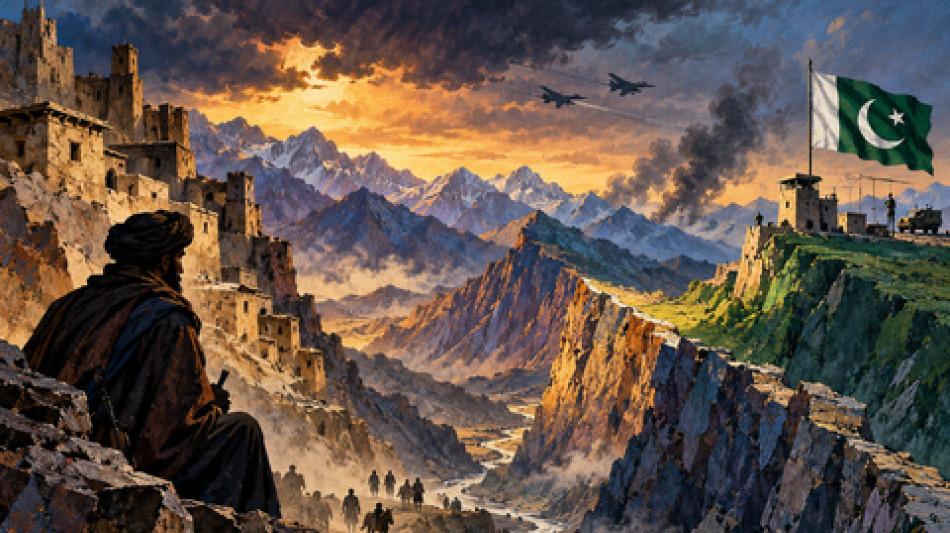
Pakistan can strike deep inside Afghanistan. Whether it can turn that advantage into lasting security is a different question. Months of fighting have exposed the collapse of its relationship with the Afghan Taliban, but the evidence available in mid-October does not establish that the government in Kabul is approaching its end. A prolonged confrontation remains a more convincing prospect than an imminent change of regime.The latest exchanges underline how little the underlying dispute has shifted. On 12 October, Pakistani Foreign Minister Ishaq Dar again demanded action against militants operating from Afghan territory. Taliban spokesman Zabihullah Mujahid rejected Pakistan’s accusations and argued that Islamabad was substituting blame for negotiations. A week earlier, Afghan Foreign Minister Amir Khan Muttaqi had told talks in Moscow that the differences could be addressed through diplomacy, while defending Afghanistan’s right to respond to attacks. Neither position amounts to an agreed mechanism for preventing the next confrontation.The human cost is already substantial. Pakistani airstrikes in Helmand and Kunar reported on 1 October killed at least ten civilians and injured nine, according to Afghan officials and the United Nations. Most of those killed were children. Pakistan said it had struck militant facilities and killed 22 fighters; that claim was not independently verified. These competing accounts are a reminder that official battlefield figures require caution, particularly when civilian deaths become part of the struggle over legitimacy.The confrontation became markedly more dangerous in February, when Pakistani attacks reached Kabul and Kandahar and Defence Minister Khawaja Asif described relations as an open war. Subsequent exchanges, including Afghan drone attacks and further Pakistani airstrikes, widened the conflict beyond isolated frontier incidents. Temporary pauses have interrupted the violence without resolving its cause. The central disagreement remains whether Kabul will dismantle the networks that Pakistan says sustain attacks on its territory.Those networks cannot be understood by treating every group called Taliban as one organisation. The Afghan Taliban govern Afghanistan. Tehrik-e-Taliban Pakistan, usually known as the TTP, is a separate movement fighting the Pakistani state. Its relationship with Afghanistan’s rulers rests on ideological affinities, personal connections and cooperation during earlier wars. Pakistan’s demand is therefore politically more difficult than a request to arrest an unrelated criminal organisation. It asks Kabul to act against militants linked to parts of its own movement’s history.For Pakistan, this represents the failure of a long-standing strategic assumption. Its support for the Afghan Taliban was expected to produce a friendly government and greater influence in Kabul. Instead, the Taliban’s return to power in 2021 was followed by a resurgence of the TTP. Past sponsorship has not delivered dependable control. An Afghan movement that benefited from Pakistani sanctuary now governs a country whose sovereignty it invokes against Pakistani pressure.Military superiority gives Islamabad considerable destructive power, but no automatic route to a political settlement. Pakistan possesses a modern combat air fleet and substantially larger conventional forces. The Taliban have no comparable fighter capability. That disparity makes bases, equipment and fixed infrastructure vulnerable to attack. It says much less about whether scattered militant networks can be dismantled, whether local commanders will obey an agreement or whether cross-border violence will resume after aircraft return to base.A campaign intended to weaken the Taliban could also strengthen their political position in particular circumstances. Foreign attacks allow the leadership to present resistance as a defence of Afghanistan, an argument that can reach beyond committed supporters. Civilian casualties may deepen hostility towards Pakistan and make concessions harder to justify internally. This is a strategic risk, not evidence that every Afghan supports the Taliban or that the movement benefits from every escalation.Kabul nevertheless has vulnerabilities. Unrest in Badakhshan and Herat during 2026 has exposed friction between central authority, local communities and armed opponents. Disputes over mining revenues and the treatment of local leaders show how economic grievances can become security problems. Yet these episodes have remained localised. Armed opposition groups have not demonstrated the capacity for a sustained nationwide challenge, while Islamic State Khorasan remains a threat without becoming a credible replacement government.The distinction matters when assessing predictions of collapse. A government’s inability to protect its airspace does not establish that it is losing control of its administration or armed forces. A more persuasive warning would be a combination of sustained territorial losses, major defections, disruption of revenue collection and a breakdown in command. Those are the developments that would turn military pressure into an existential crisis. Individual strikes and unverified claims of enemy losses cannot substitute for that assessment.Pakistan faces constraints of its own. On 11 October, the federal authorities imposed emergency rule in Khyber Pakhtunkhwa and suspended the provincial government led by Imran Khan’s party, citing worsening militancy. The party rejected that justification and described the move as political. Detentions followed. Whatever the competing explanations, the episode demonstrates that insecurity along the Afghan frontier is entangled with a bitter domestic contest over authority. Air operations across the border cannot resolve that contest or replace effective policing and administration at home.Economic pressure carries similarly uncertain returns. Border restrictions disrupt commercial activity, while the forced return of large numbers of Afghans places additional demands on communities already struggling to provide work and basic services. Such measures can increase the costs of confrontation for Kabul. They can also damage the livelihoods and local cooperation on which durable border security depends. Pressure on a population and pressure on the decisions of its rulers are not interchangeable.The most plausible route out of repeated escalation remains a security arrangement that both sides can test in practice. That would require specific commitments on militant activity, a functioning channel for investigating incidents and a way to distinguish an unauthorised attack from a deliberate breach by the other government. Earlier mediation by Qatar, Türkiye and Saudi Arabia shows that diplomatic channels exist. Their value will depend on whether they can produce enforceable steps rather than another short pause.A settlement would still leave difficult questions about the TTP, Afghan sovereignty and the disputed frontier. Nor would diplomatic engagement excuse the Taliban’s restrictions on women and girls or its repression of dissent. Security negotiations address an immediate danger; they do not confer approval on the government involved. Keeping those questions distinct is necessary if civilian protection is to remain an objective rather than a bargaining instrument.Pakistan’s war has revealed the limits of its former influence in Kabul. It has also exposed the Taliban’s inability to shield Afghanistan from a stronger neighbour. Neither finding establishes that the movement is about to lose power. For now, the more defensible assessment is that both governments possess ways to hurt the other and lack a reliable means of securing the concessions they want. The danger is an enduring conflict in which political control survives while civilian security steadily deteriorates.
Lyman's surrender crisis
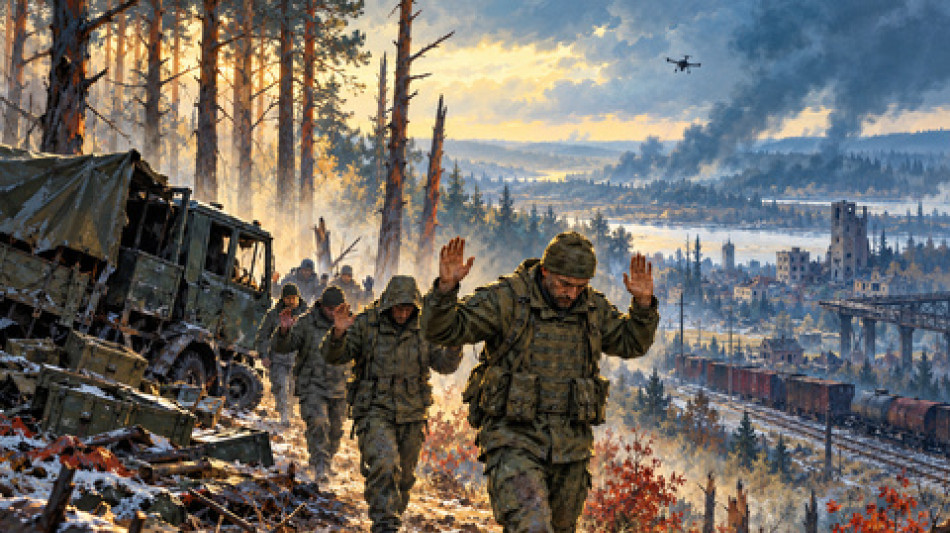
The capture of more than 250 Russian soldiers during Ukraine's Operation Vivaldi has exposed serious weaknesses in the forces fighting around Lyman. That figure remains a Ukrainian military claim, but the operation's significance extends beyond the prisoners themselves: it has challenged Russian positions, disrupted supplies and complicated the approach to northern Donetsk's principal defensive cities.The chronology matters. The prisoner total was publicised in late September and became a prominent part of the account of Vivaldi's third phase. By 14 October, Brigadier General Andrii Biletskyi, commander of Ukraine's Third Army Corps, was announcing the completion of a fourth phase. The events concern a campaign conducted over months in the wider Lyman sector, rather than a single, independently documented moment in which hundreds of Russian troops all surrendered together inside the city.Footage released by the corps showed dozens of men being escorted through woodland and assembled under guard. Some prisoners described severe shortages of food and water and said they had seen little point in continuing to fight. Those accounts are consistent with the picture of isolated positions presented by Ukrainian commanders. They still require caution: statements made in captivity cannot establish conditions across an entire army, and the released footage does not independently verify the full prisoner count.The central military issue is the loss of a functioning supply system. Soldiers may remain in possession of a trench or village long after the routes needed to sustain them have become unusable. Ammunition runs down, food deliveries become irregular and casualty evacuation grows increasingly dangerous. A position that appears intact on a map can consequently lose much of its fighting value before an attacking force physically reaches it.The Ukrainian account of Vivaldi describes a sustained effort to create precisely those conditions. Strikes on Russian logistics, fuel supplies and drone operators preceded advances on the ground. Infantry then worked alongside unmanned systems to penetrate and isolate positions. Viewed in that sequence, the surrenders suggest the cumulative effects of pressure on a military organisation's ability to support its soldiers. They cannot be explained adequately by a simple assertion that Russian morale suddenly disappeared.There is a distinction between fear and a rational assessment of an untenable position. A soldier who expects relief may continue fighting under exceptionally difficult conditions. The calculation changes when communications are unreliable, resupply has stopped and withdrawal appears as dangerous as remaining in place. If the Ukrainian description is broadly accurate, Vivaldi narrowed those choices until surrender became a means of survival for groups of Russian troops.The latest Ukrainian figures give a sense of the operation's claimed scale. On 14 October, Biletskyi said its fourth phase had recovered another 101 square kilometres, including Zelena Dolyna, Lypove and Kolodiazi. He put the total across four phases at 277 square kilometres and 16 settlements. These are the commander's figures; the complete tally has not been independently established. They should also be kept separate from the earlier prisoner count, which was not presented as a new fourth-phase total.The value of these gains depends heavily on their location. The Lyman sector is part of the northern approach to Slovyansk and Kramatorsk, two central components of Ukraine's defensive network in Donetsk. Russian progress there could threaten the approaches and communications supporting those cities. Ukrainian advances can therefore matter beyond the area retaken, particularly if they deny Russia positions needed for a coordinated attack from several directions.The operation's potential effect is to make Russia revise those plans. A formation forced to restore a damaged front has fewer resources immediately available for an offensive elsewhere. Reinforcements must move, supply arrangements must change and neighbouring units may have to adjust their tempo. Biletskyi has said Russia moved elements of its First Guards Tank Army from the Kupyansk direction to meet the pressure around Lyman. The extent and durability of that redistribution remain important measures of the operation's wider effect.Vivaldi has also attracted attention for its use of ground robots alongside aerial drones. Ukrainian accounts describe unmanned vehicles operating beyond Russian forward positions and taking on missions that would otherwise expose troops to considerable risk. The operational logic is clear: machines can help find, strike or unsettle defended positions before infantry closes in. Their contribution becomes most significant when it disrupts the defender's ability to respond coherently.Technology alone does not explain the result. Artillery, reconnaissance, infantry coordination and the ability to keep advancing forces supplied remain essential. A drone can reveal a position or interrupt movement; holding recovered territory requires troops and a sustainable defensive arrangement. Vivaldi's broader lesson is therefore about the coordination of established military functions with newer equipment. Describing it simply as a robot offensive obscures the work required to turn disruption into lasting territorial control.A serious local setback is not sufficient evidence of an army-wide collapse. Russia's capacity to replace losses, concentrate firepower and continue operations in other sectors cannot be inferred from one body of prisoners. Nor does a successful Ukrainian offensive remove the strain on Ukraine's own personnel and resources. To judge the balance accurately, the captured soldiers must be considered alongside the ground held afterwards, the condition of the participating formations and the response of Russian reserves.The political impact is nevertheless substantial. Images of Russian soldiers being led into captivity weaken the proposition that Moscow can always convert greater resources into inevitable advances. They also give Kyiv a concrete success to set against a war otherwise characterised by heavy attrition. That political usefulness makes precision especially important: the strength of the case rests on the actual operation, not on escalating every tactical success into a prediction of imminent Russian defeat.The next test is whether Ukraine can retain the recovered positions and use the resulting disruption to reduce pressure on neighbouring sectors. Russia's response will show whether Vivaldi imposed a temporary interruption or forced a more consequential adjustment. For now, Lyman illustrates how a force can become vulnerable when the systems sustaining its forward troops fail. The prisoners are the most visible outcome of that failure; the military significance lies in how far its consequences travel.
Ukraine sends ground robots
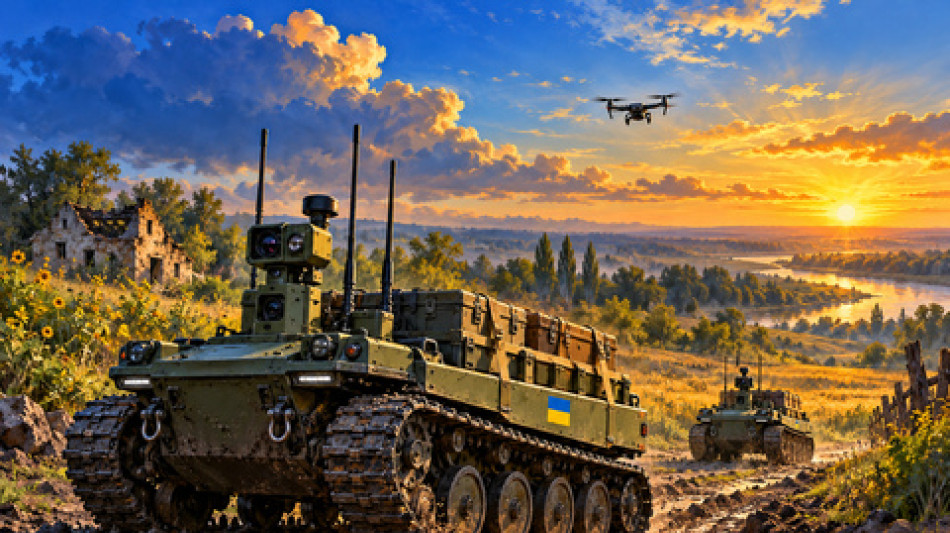
Ukraine is putting ground robots to work on a scale that is beginning to change how its army supplies positions, evacuates casualties and conducts some of its most dangerous combat missions. The significance lies in the gradual transfer of battlefield exposure from people to machines. For a force under sustained pressure to preserve experienced soldiers, that change could matter well beyond the individual missions captured on video.The expansion is measurable. By early September 2026, Ukraine’s DELTA battlefield management system had recorded approximately 112,000 logistics and evacuation missions by ground robotic systems since the start of the year. The monthly total rose from 7,511 in January to 25,143 in August, an increase of roughly 3.3 times. These figures describe missions, not the number of robots deployed, and they should not be read as a tally of successful attacks or lives saved. They nevertheless show how far the technology has moved into routine military activity.Supply work explains much of its value. Ammunition, food and water still have to reach troops in positions exposed to surveillance and attack. Wounded soldiers still have to be brought out. A remotely operated vehicle can undertake part of that movement while its operator remains elsewhere. The load may be ordinary; the route is what makes the task dangerous. Repeated across many positions, reducing the number of journeys made by people can alter the daily burden on an infantry force.The strongest case for a robot is often the journey it allows a soldier to avoid. That changes the economics of military equipment. The purchase price matters, but so do the consequences of losing it. A destroyed machine consumes production capacity and money. A lost soldier also removes training, experience and relationships that cannot be replaced on a factory schedule. This is why an apparently modest cargo platform can have greater practical importance than a more spectacular experimental weapon.Combat applications are developing alongside that logistical role. Ukraine’s Third Army Corps includes NC13, a unit specialising in ground robotic operations. In September, corps commander Andrii Biletskyi described an ambition to replace around a third of the corps’ frontline personnel with robots by the end of the year. That remains an objective for a particular formation, rather than a demonstrated reduction across the Ukrainian army. It signals how seriously some commanders now regard the technology.There is a longer history behind the sudden attention. In December 2024, the Khartiia Brigade used a coordinated force of aerial drones and ground robots in an assault near Hlyboke in the Kharkiv region. More than 50 unmanned systems took part. The operation demonstrated that different remotely operated platforms could be combined for surveillance, fire support and attack. It also exposed the limits: ground conditions disabled some machines, and soldiers were still needed to secure and hold the territory afterwards.Those distinctions remain essential. An unmanned vehicle has no crew aboard; that does not make it an autonomous decision-maker. Remote operation, assistance with navigation and independent target selection are different capabilities. Much of the operational change visible in Ukraine concerns the first of these. Human operators, commanders and technicians remain central to making the equipment useful. Describing every remotely controlled vehicle as an artificial intelligence weapon obscures both its present strengths and its weaknesses.The physical environment imposes constraints that software cannot simply remove. A ground vehicle must negotiate soil, vegetation, rubble and obstacles that an aircraft may pass over. Its camera sees from a low position. Communications can be intermittent, and movement through complex terrain requires information that may be incomplete or already outdated. Research on small military robot teams has long identified the combination of restricted visibility, difficult navigation and unreliable communication as a central challenge. Ukraine is testing those problems under combat conditions.Scaling the fleet therefore requires a larger support system. More vehicles mean more operators to train, more repairs, more replacement components and a greater need to coordinate machines with the soldiers around them. The useful measure is how many tasks can be completed reliably over time. A large delivery of equipment can look impressive while leaving unanswered questions about serviceability, workload and availability after repeated deployments.Nor does removing a crew eliminate risk. Operators still work within a military system exposed to attack, and a machine that fails during an evacuation may leave a casualty in danger. Remote control changes where human vulnerability sits. It does not make the mission consequence-free. Reliability is particularly important when the payload is a wounded person rather than ammunition, and success in one role cannot automatically establish suitability for another.The likely effect on the fighting is therefore uneven. Robotic systems can ease dangerous supply tasks and support selected assaults while remaining poorly suited to others. Their value depends on the terrain, the communications environment and the organisation using them. A successful demonstration offers evidence of a capability; repeated use establishes whether a formation can depend on it.Ukraine’s developing robot force is best understood through that practical test. Can it keep a position supplied with fewer exposed soldiers? Can it bring someone back who would otherwise remain stranded? Can it reduce the personnel required for a dangerous task without creating a greater burden elsewhere? The answers will determine how much battlefield activity can move to machines. For the soldiers still holding the line, those gains are substantial enough without the promise of a war fought without people.